Story analysis Reading Comprehension Worksheets for Ages 3-7
5 filtered results
-
From - To
Enhance your child's reading comprehension with our engaging Story Analysis Worksheets, designed specifically for children ages 3-7. Perfect for early grade teachers and parents alike, these printable resources foster critical thinking and analytical skills through interactive reading activities. Each worksheet encourages young learners to explore story elements such as characters, settings, and plots, promoting a deeper understanding of narratives. Our colorful and fun designs captivate children’s attention, ensuring they enjoy the learning process. Equip your little ones with essential comprehension abilities that lay the foundation for their future academic success while making reading an enjoyable adventure!
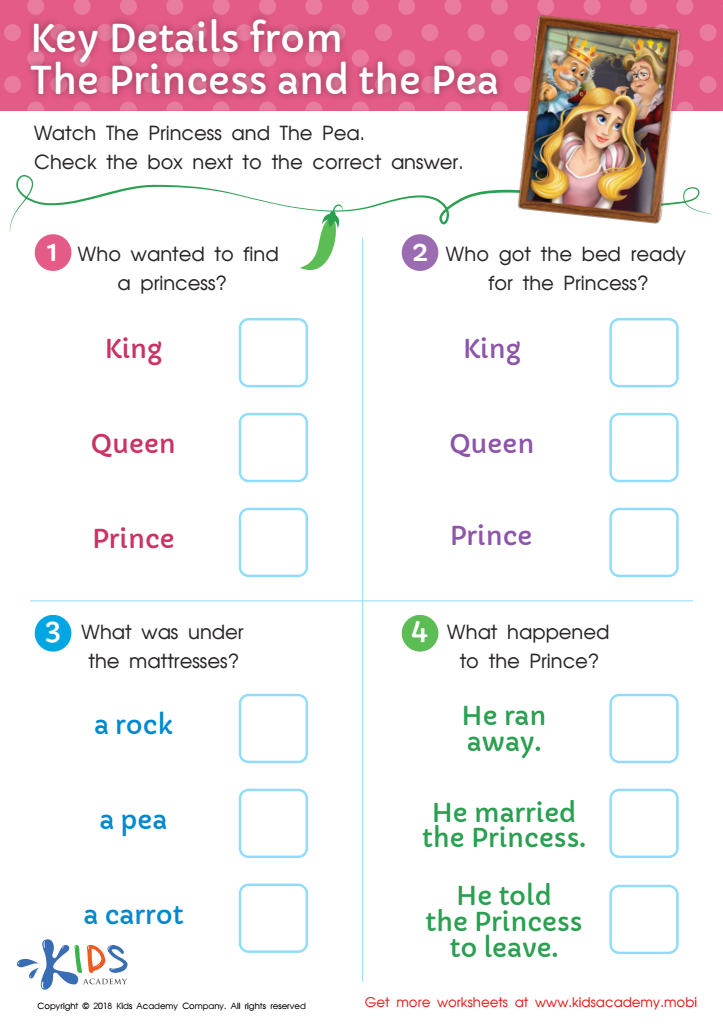
Key Details from the Princess and the Pea Worksheet
 Assign to My Students
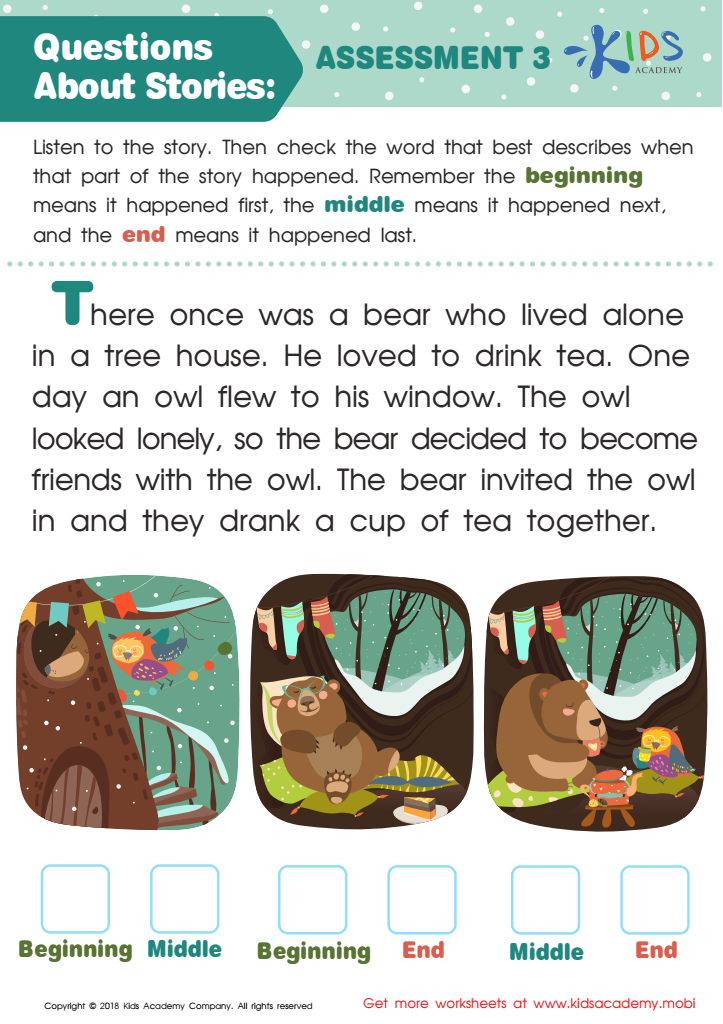
Questions About Stories: Assessment 3 Worksheet
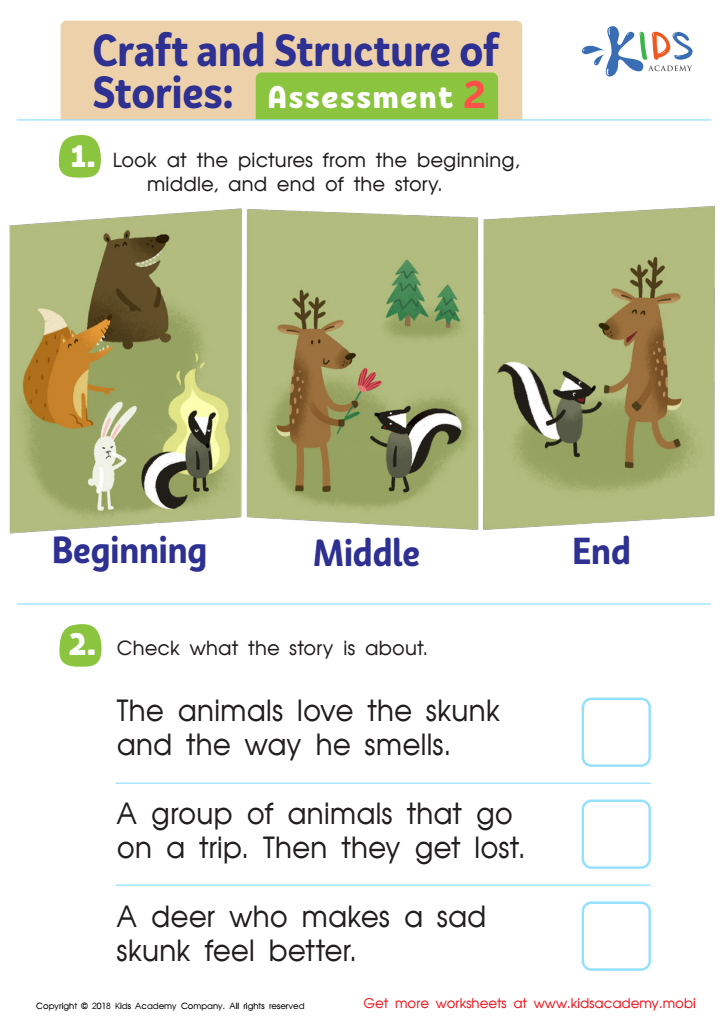
Craft and Structure of Stories: Assessment 2 Worksheet
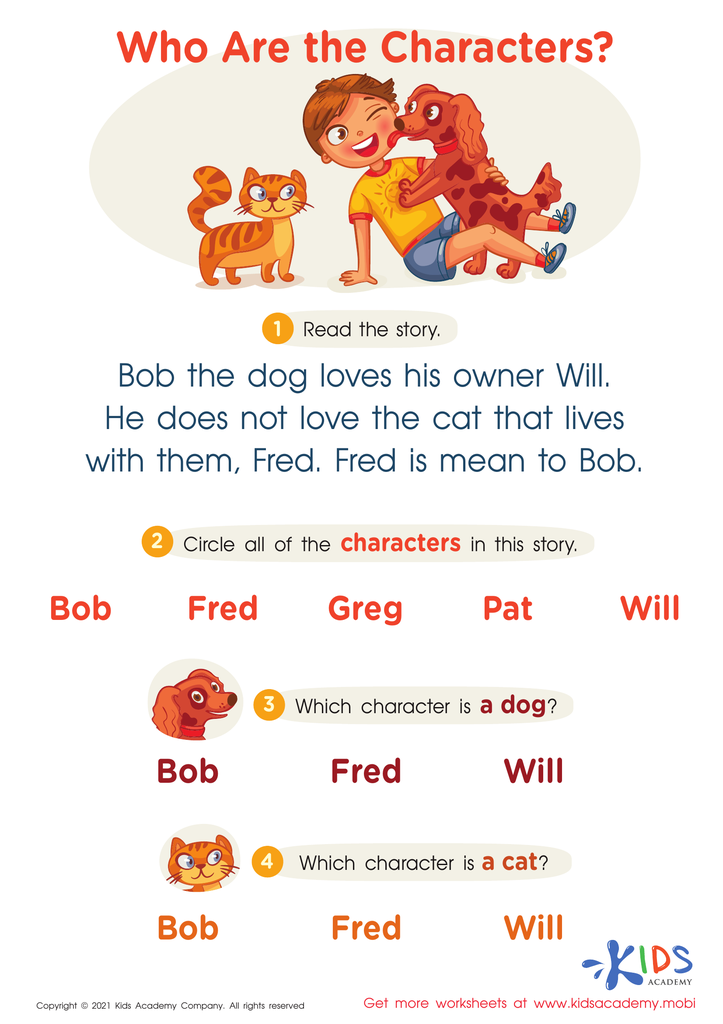
Who Are the Characters? Worksheet
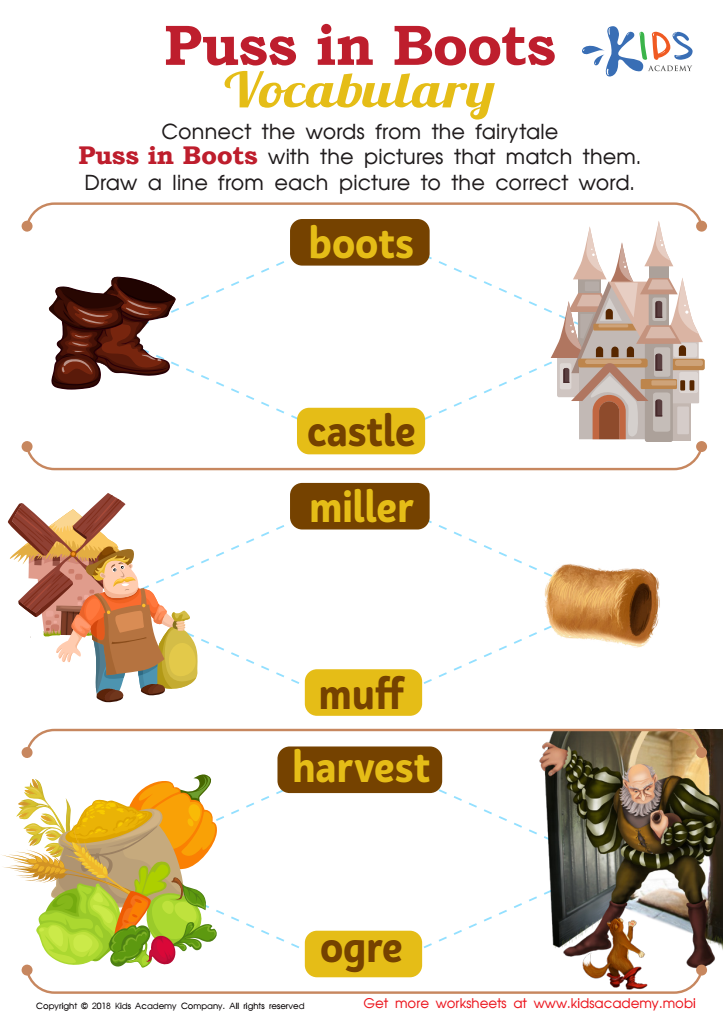
Puss in Boots Vocabulary Worksheet








Story analysis and reading comprehension are vital for children ages 3-7 as they lay the groundwork for lifelong literacy skills and cognitive development. At this age, children begin to engage with narratives, sparking their imagination and creativity. Through story analysis, children learn to identify main ideas, characters, and plot sequences, which helps enhance their understanding of structure and flow in narratives.
Understanding stories improves vocabulary and language skills, allowing kids to express themselves better and fostering effective communication. Engaging with stories also encourages critical thinking; children learn to interpret meanings, make predictions, and even empathize with different perspectives, developing emotional intelligence.
Moreover, story analysis nurtures a child’s love for reading by making it an interactive and dynamic activity. Parents and teachers can build deeper connections through discussions about the stories, using questions to promote analytical thinking. This supportive dialogue enhances comprehension and encourages children to articulate their thoughts and feelings about what they read.
In summary, prioritizing story analysis and reading comprehension in early childhood not only equips children with essential literacy skills but also promotes critical thinking, emotional growth, and a lifelong appreciation for literature and storytelling.








