Basic Addition Science Worksheets for Ages 3-7
3 filtered results
-
From - To
Welcome to our engaging collection of Basic Addition Science Worksheets, specially designed for children aged 3-7! These worksheets provide young learners with a fun and interactive way to grasp fundamental addition concepts through science-themed activities. Our resources combine colorful visuals with relatable scenarios, making learning enjoyable and effective. Kids will enhance their math skills while exploring the wonders of the natural world. Perfect for classroom settings or at-home practice, these worksheets encourage critical thinking and problem-solving abilities. Dive into our diverse range of worksheets today and watch your child's confidence and skills grow in both math and science!

African Wildlife: Giraffe Worksheet
 Assign to My Students
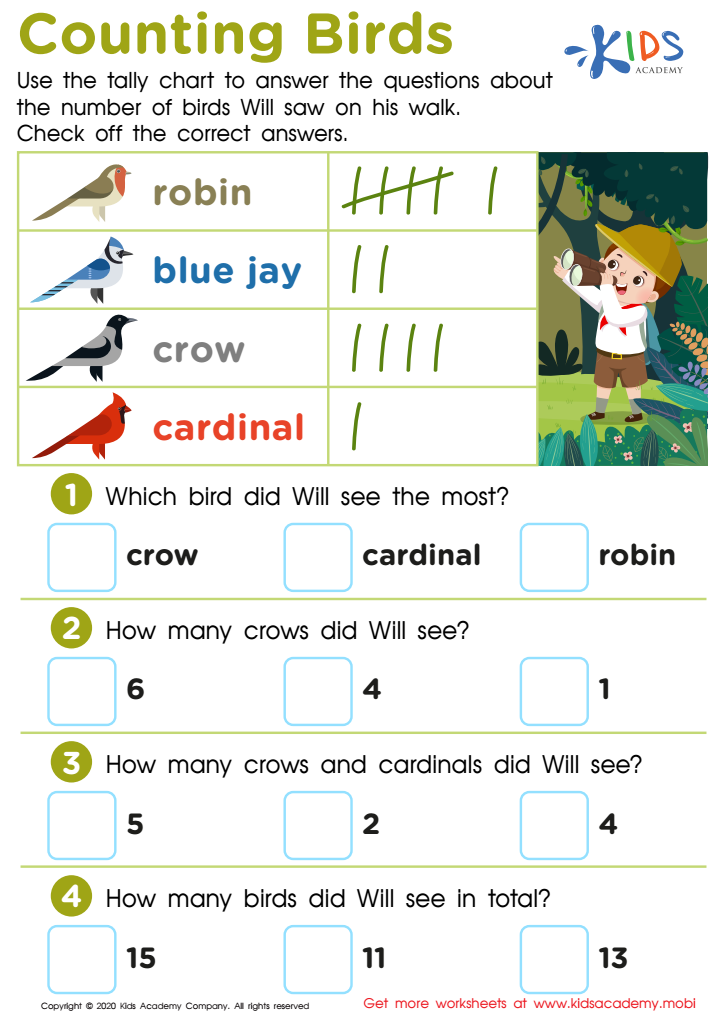
Counting Birds Worksheet
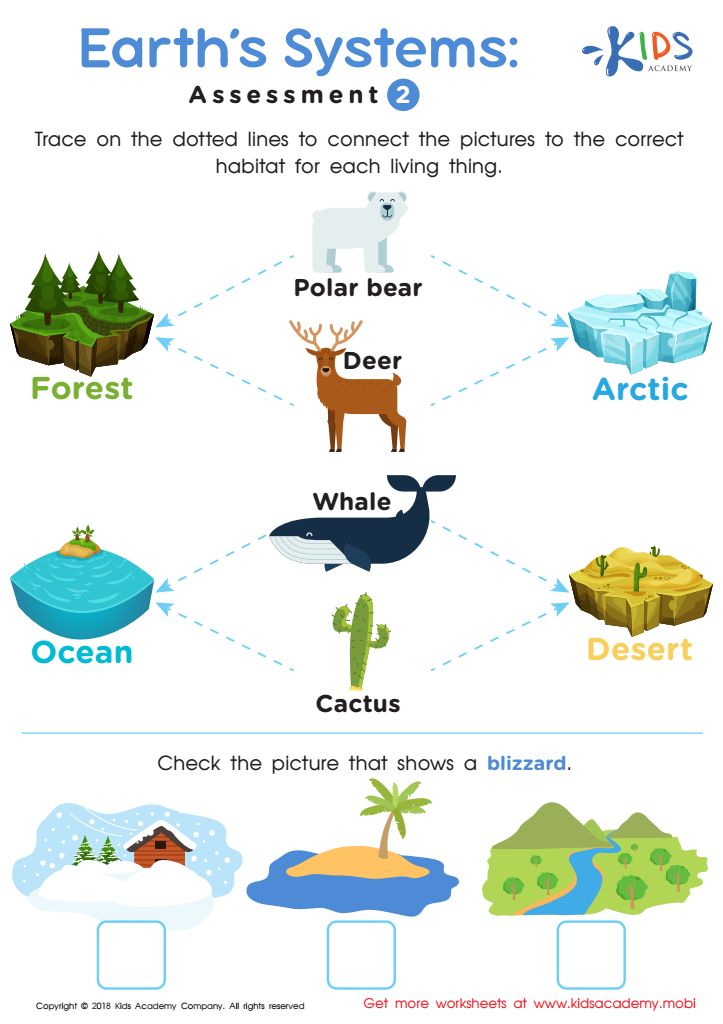
Earth's Systems: Assessment 2








Parents and teachers should prioritize Basic Addition Science for children aged 3-7 because it lays the foundational skills essential for future academic success and everyday problem-solving. At this developmentally crucial stage, children are naturally curious and eager to explore mathematical concepts, making it the perfect time to introduce fundamental addition skills.
Engaging in Basic Addition enhances cognitive development, allowing children to grasp the concept of numeric relationships and build critical thinking skills. Furthermore, this early exposure fosters a positive attitude towards mathematics, encouraging confidence and reducing the anxiety often associated with the subject later in life.
Moreover, mastering basic addition facilitates language skills as children learn to articulate their mathematical thinking, enhancing communication. It also promotes social skills through collaborative activities where they work with peers to solve problems, building teamwork and patience.
Finally, parents and teachers play a vital role in creating a nurturing environment that encourages exploration and repetition, which is crucial for mastery. By giving children the tools to understand number concepts early, adult caregivers help set the stage for lifelong learning and a strong mathematical foundation, ensuring their ability to tackle more complex concepts in the future.







