Categorization skills Science Worksheets for Ages 3-7
5 filtered results
-
From - To
Discover our engaging Categorization Skills Science Worksheets designed specifically for children aged 3-7! These worksheets are an exciting way for young learners to develop essential categorization skills while exploring the wonders of science. Through fun activities, kids will learn to group objects, identify patterns, and understand the relationships between different items in the natural world. Our worksheets promote critical thinking and help nurture observation skills, fostering a love for learning. Perfect for both classroom use and at-home practice, these resources are easy to print and incorporate into your teaching routine. Ignite creativity and curiosity with our interactive science worksheets today!
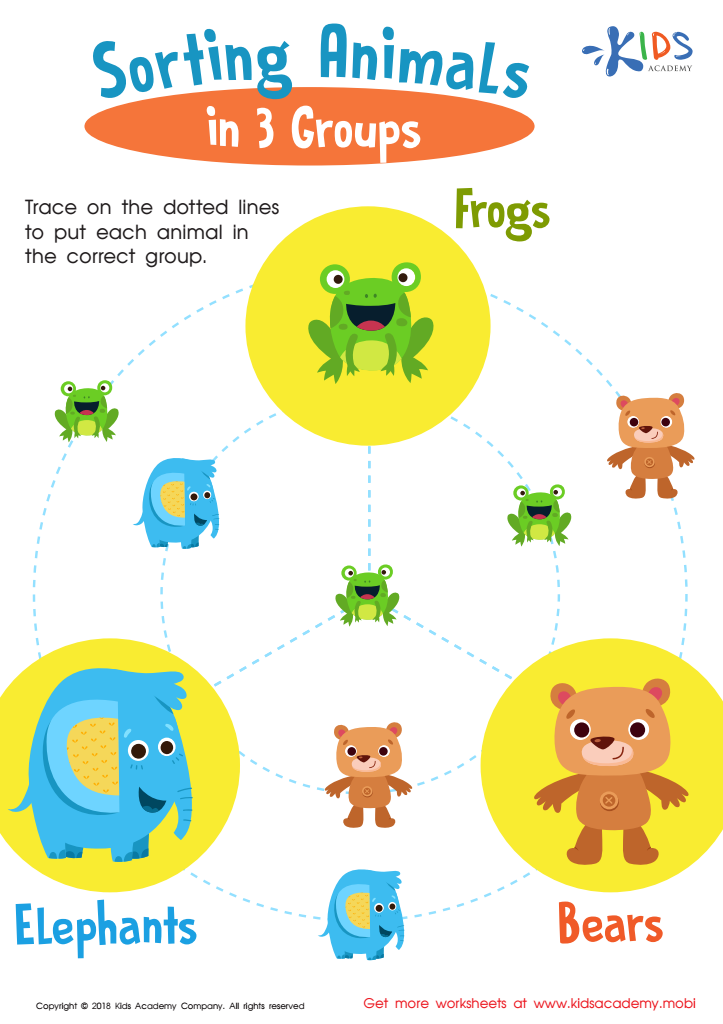
Sorting Animals in 3 Groups Worksheet
 Assign to My Students
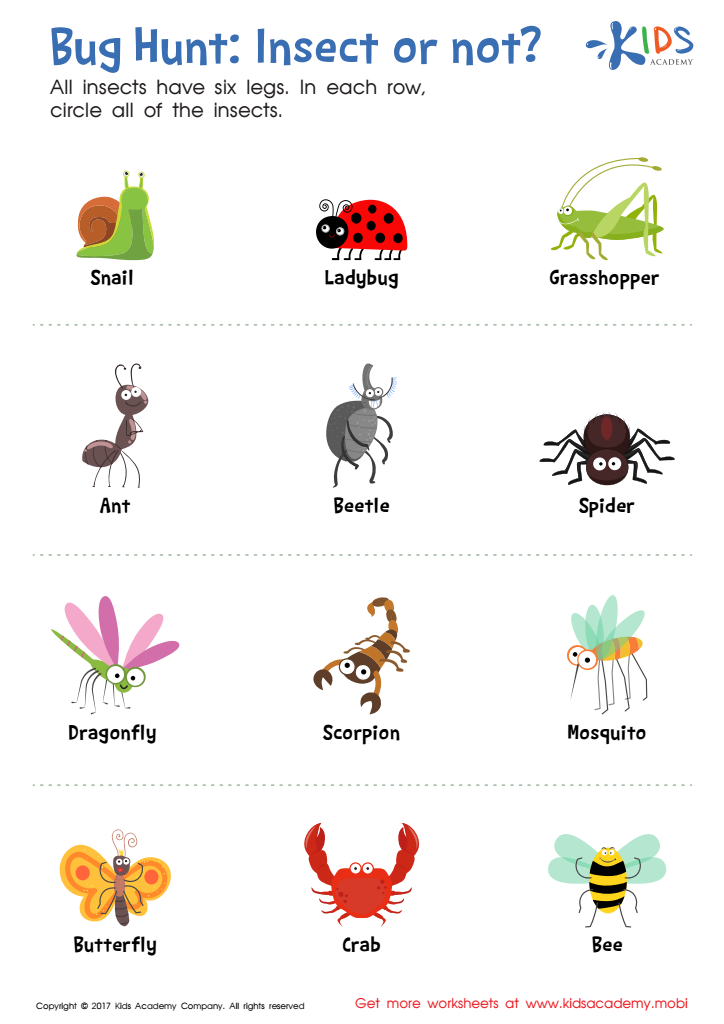
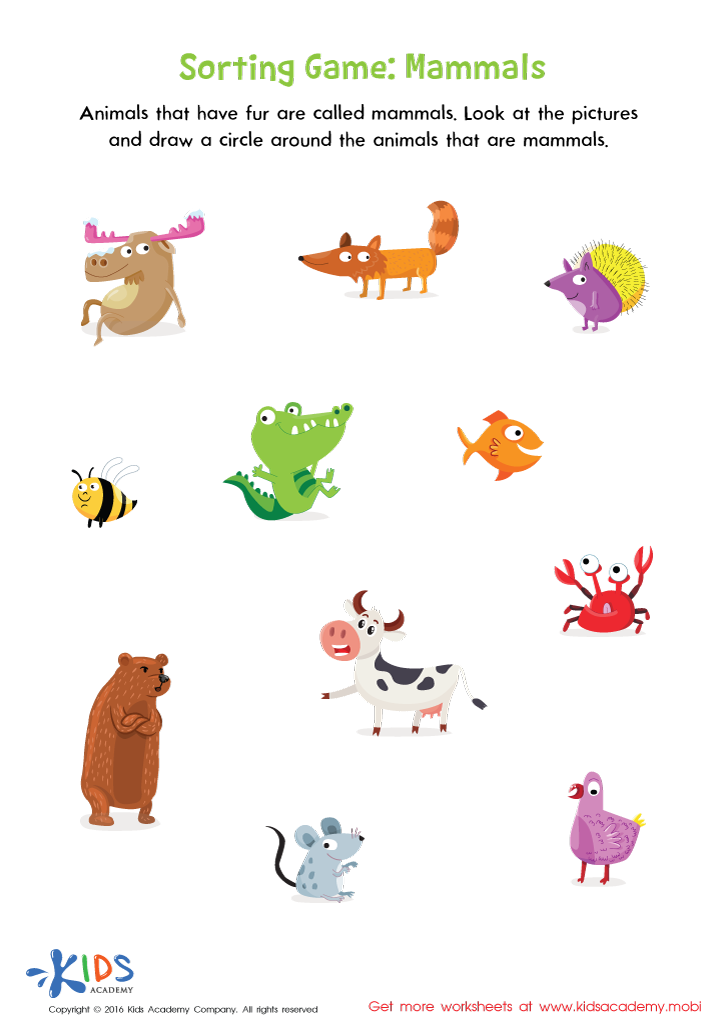
Mammals Sorting Worksheet

Identifying Living or Non–living Worksheet
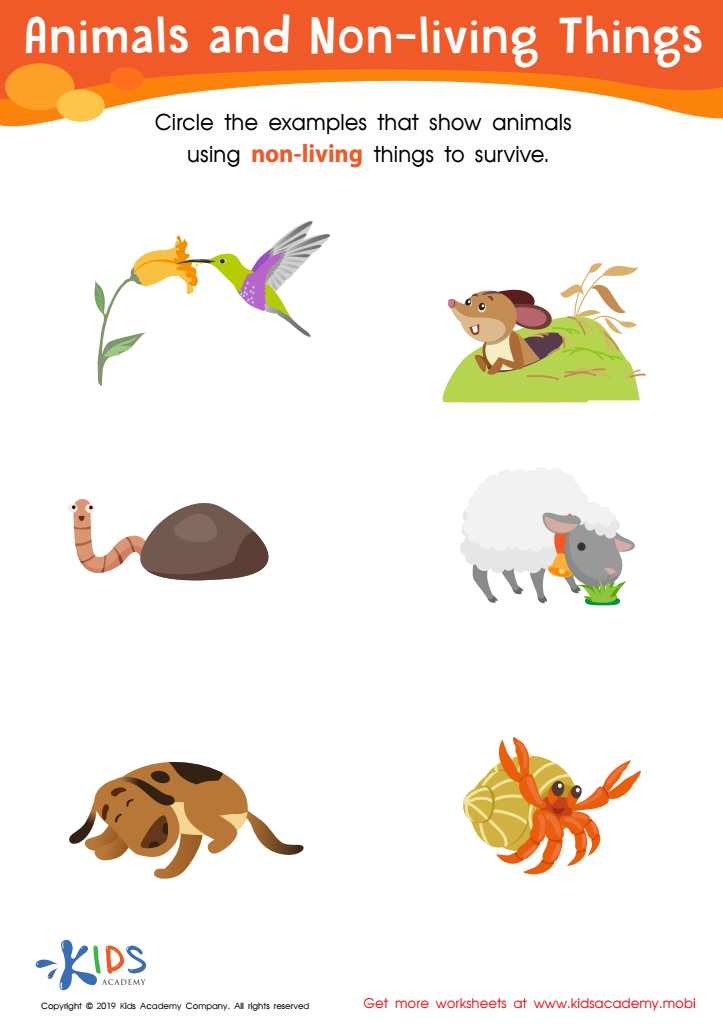
Animals and Non-Living Things Worksheet







Categorization skills are foundational for young children's cognitive development, making them critical for both parents and teachers to prioritize. From ages 3 to 7, children are naturally curious and eager to learn about the world around them. Developing categorization skills at this stage helps them make sense of complex information and experiences.
When children categorize objects, ideas, or experiences, they learn to identify similarities and differences, which enhances their critical thinking and problem-solving abilities. For instance, by sorting animals into groups like mammals, reptiles, and birds, children grasp essential scientific concepts, fostering a deeper understanding of biology. Additionally, these skills support language development as children label categories and engage in discussions about their classifications.
Fostering categorization skills through hands-on activities like sorting games or science experiments not only makes learning engaging but also promotes social skills as children collaborate on tasks. As they categorize, they enhance their organizational skills and prepare for the challenges of more complex subjects in later years.
Moreover, strengthening these skills can lead to improved academic performance, bolstering children's confidence in their abilities. For parents and teachers, nurturing categorization skills is a valuable investment in a child's lifelong learning journey, setting a strong foundation for inquiry and exploration.







