
Developing critical thinking Science Worksheets for Ages 3-7
3 filtered results
Difficulty Level
Grade
Age
-
From - To
Subject
Activity
Standards
Explore engaging and interactive science worksheets designed to foster critical thinking skills in children aged 3-7. Our thoughtfully crafted activities encourage young learners to question, analyze, and explore the world around them, promoting curiosity and a deeper understanding of scientific concepts. Each worksheet is filled with fun exercises, illustrations, and hands-on tasks that inspire creativity and enhance problem-solving abilities. Perfect for home or classroom use, these resources align with early learning standards and support children's cognitive development. Empower your little scientists to think critically while enjoying their learning journey with our comprehensive science worksheets!
Favorites
With answer key
Interactive
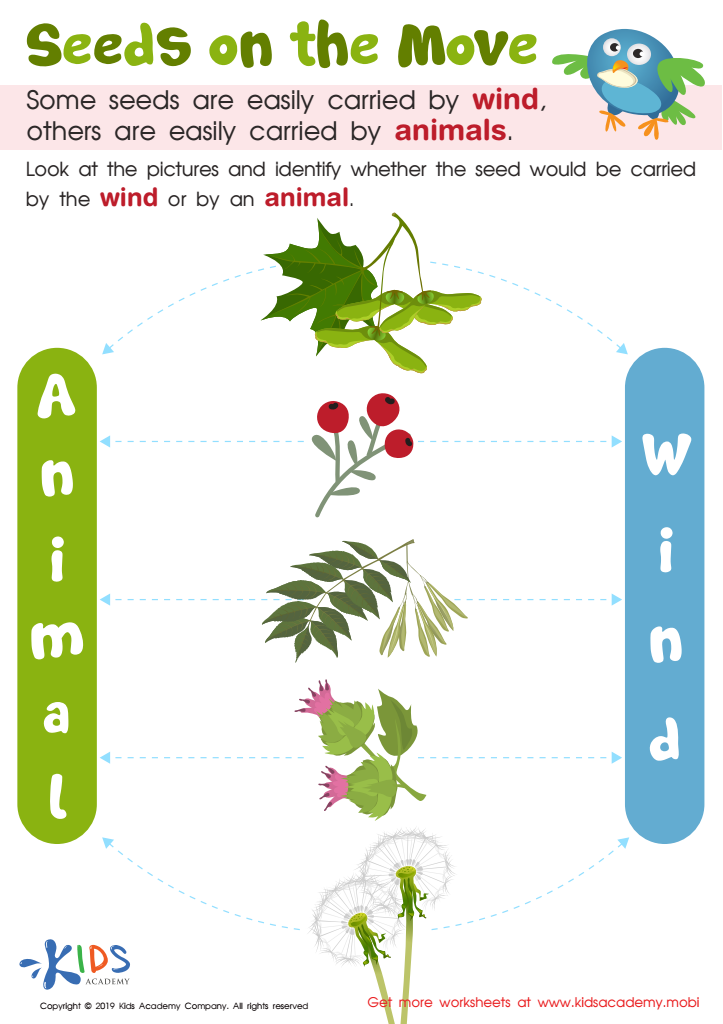
Seeds on the Move Worksheet
Help students understand the concept of spreading seeds with this fun traceable worksheet. Discuss the pictures, and see if they can identify whether the seed is carried by the wind or an animal. Explain how seeds can travel from place to place without human help, and how this helps them grow in new locations.
 Assign to My Students
Seeds on the Move Worksheet
Worksheet
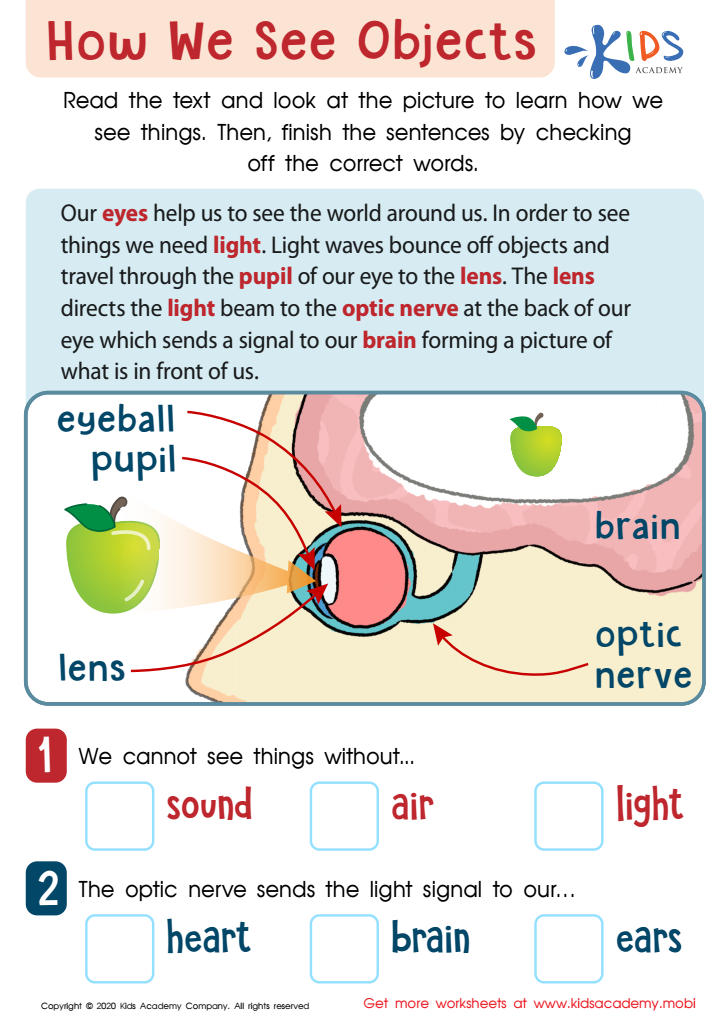
How We See Objects Worksheet
Remind your students of our five senses! This worksheet will teach them more about sight: read/listen to the text, look at pictures, then help them complete sentences. Check off the right words!
How We See Objects Worksheet
Worksheet
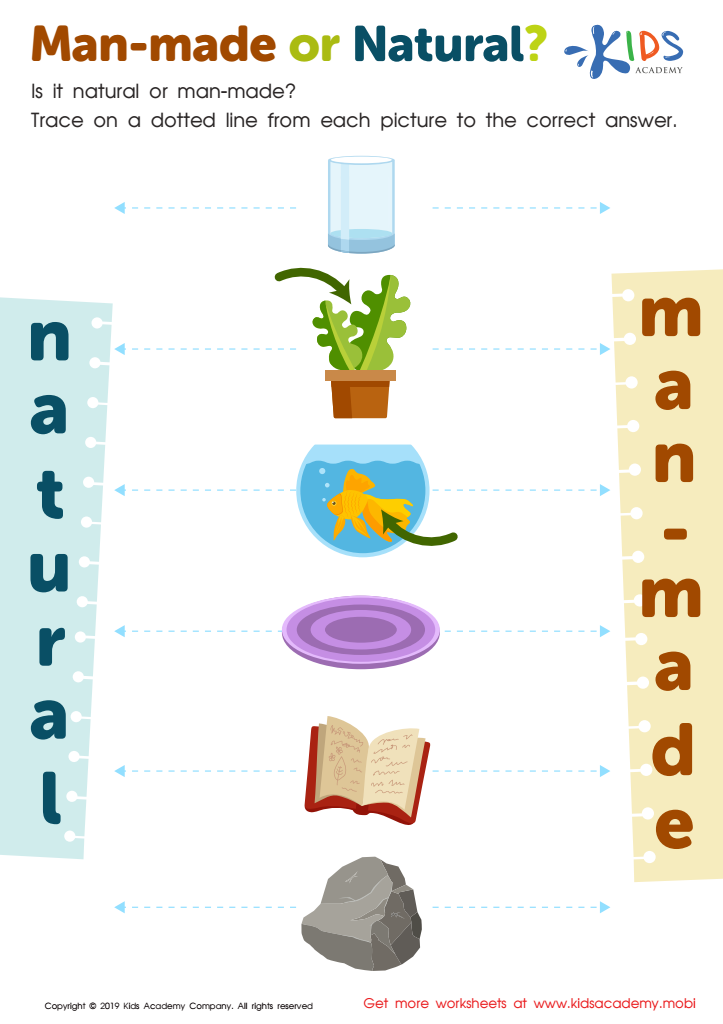
Man-Made or Natural? Worksheet
Ask your students to name natural and man-made objects. Check the worksheet to help them identify the objects, then trace the dotted line to determine if it's natural or man-made.
Man-Made or Natural? Worksheet
Worksheet
Learning Skills
Join Kids Academy for Free
Who is primarily going to use this learning content?








Developing critical thinking skills in young children, particularly in the realm of science, is crucial for their overall cognitive growth and future academic success. For children aged 3-7, engaging in scientific inquiry encourages curiosity, creativity, and problem-solving abilities. Early exposure to scientific concepts helps children learn to question, analyze, and make informed decisions, laying a foundation for lifelong learning.
Parents and teachers should recognize that critical thinking is not just about knowing facts; it involves the ability to interpret information, assess evidence, and draw thoughtful conclusions. In the science domain, children learn to observe their surroundings, form hypotheses, conduct simple experiments, and discuss their findings, all of which foster logical reasoning skills.
Moreover, developing these skills at a young age enhances children’s confidence and independence in learning, empowering them to tackle challenges both academically and in daily life. Integrating science into play and everyday activities nurtures their innate curiosity and cultivates a positive attitude towards learning. Ultimately, encouraging critical thinking in science equips children with essential skills needed for the rapidly changing world, ensuring they become not just consumers of knowledge, but also innovators and problem solvers of the future.







