Observational skills Physical Science Worksheets for Ages 3-7
3 filtered results
-
From - To
Enhance your child's observational skills with our engaging Physical Science Worksheets designed specifically for ages 3-7! These worksheets encourage young learners to explore and make connections with the world around them. Through fun activities and interactive exercises, children will develop critical observation abilities essential for scientific inquiry. Each worksheet promotes exploration of physical science concepts, fostering curiosity and creativity in little minds. Perfect for home or classroom use, these resources make learning enjoyable and effective. Empower your preschooler or kindergartener with the tools they need to become confident observers and future scientists. Dive into the exciting world of science today!
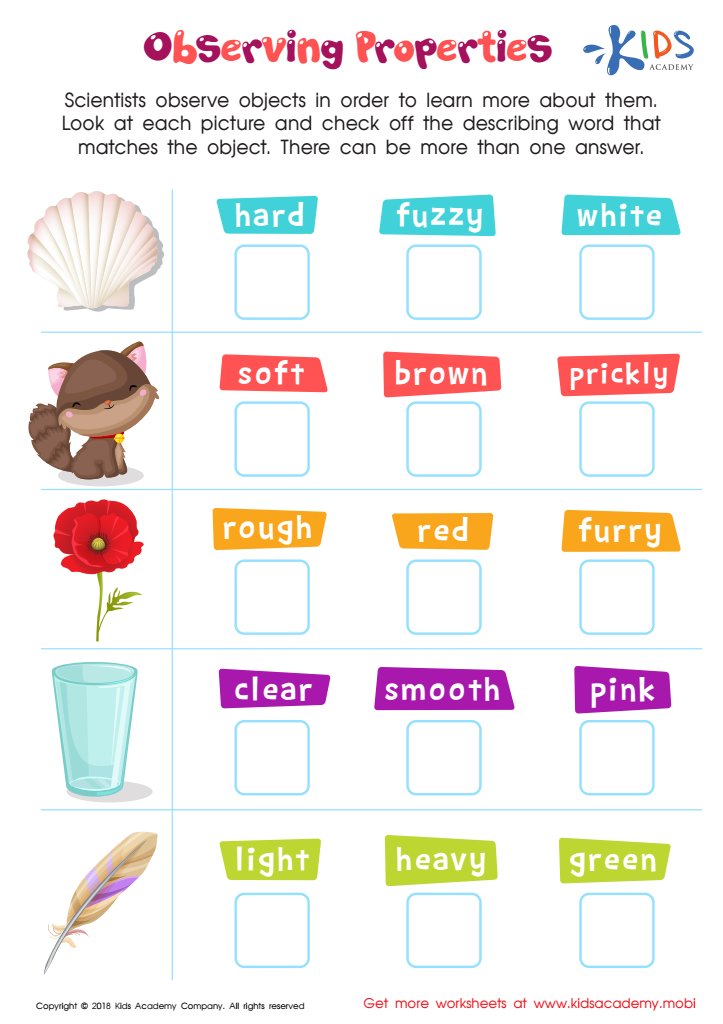
Observing Properties Worksheet
 Assign to My Students
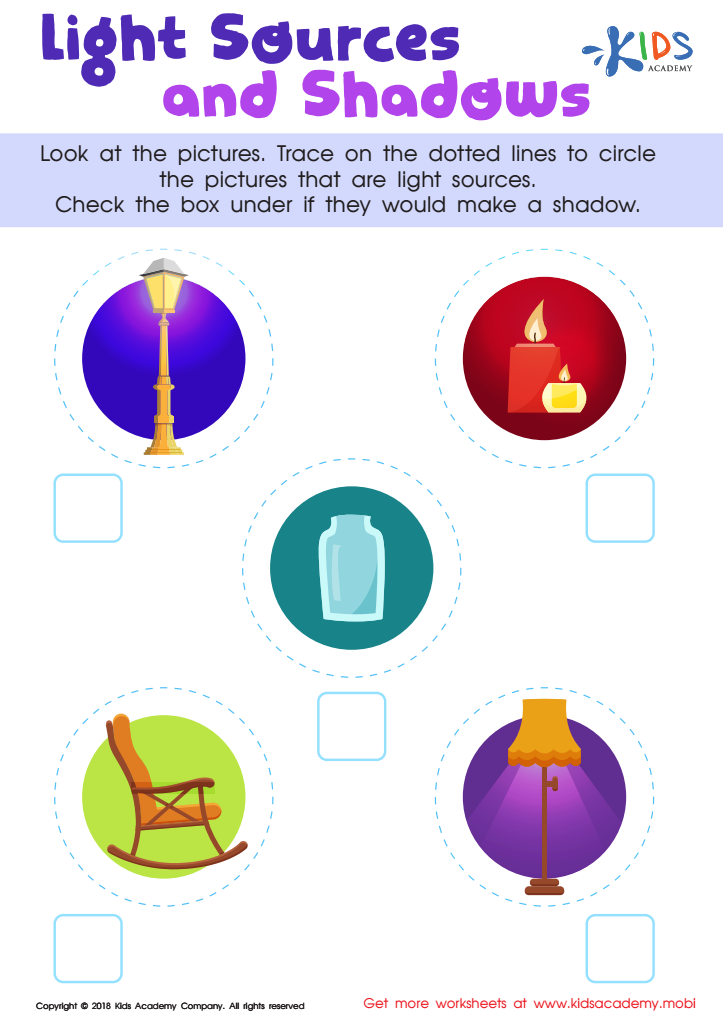
Light Sources and Shadows Worksheet
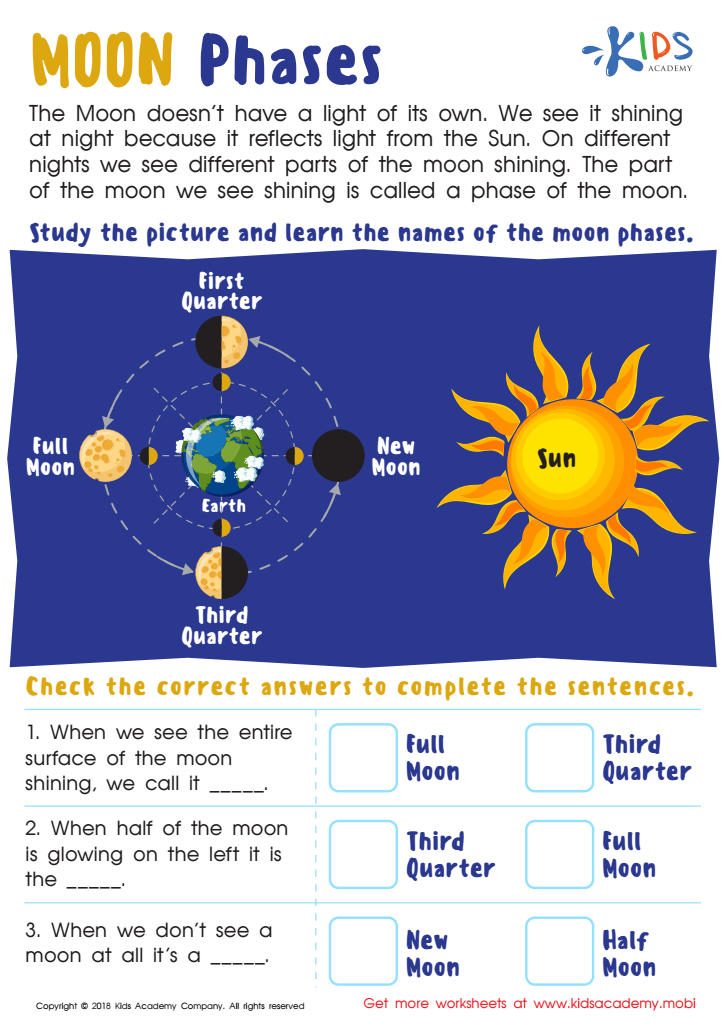
Moon Phases Worksheet








Developing strong observational skills in children ages 3-7 is essential for their understanding of Physical Science concepts. At this developmental stage, children are naturally curious and eager to explore their surroundings. Encouraging them to observe their environment foster scientific thinking and inquiry, which are foundational for lifelong learning.
Parents and teachers should care about these skills because they facilitate critical thinking. Observational skills allow children to notice details and patterns in nature and everyday occurrences, helping them to ask questions like "What happened and why?" This process enhances their ability to make connections, integrate knowledge, and develop hypotheses.
Moreover, engaging children in observation promotes active learning. When they participate in hands-on activities—such as examining plants, watching objects move, or observing weather changes—they become active participants in their learning journey. This experiential learning reinforces comprehension and retention of scientific concepts.
Finally, developing observational skills builds confidence. Children learn that their observations are valuable and that they can contribute meaningfully to discussions. This empowerment can inspire a passion for science that continues throughout their education. Therefore, fostering observational skills in young learners lays the groundwork for their curiosity, confidence, and understanding of the world around them.







