Shape Recognition Physical Science Worksheets for Ages 3-7
3 filtered results
-
From - To
Discover the perfect blend of fun and education with our Shape Recognition Physical Science Worksheets designed for ages 3-7! These engaging worksheets enhance early learning by helping young minds recognize various shapes while delving into basic physical science concepts. Each worksheet offers vibrant images and interactive activities tailored to preschool and early elementary children, making learning enjoyable and effective. By associating shapes with real-life objects, kids develop critical thinking and observational skills. Perfect for home or classroom use, these resources provide a solid foundation in both geometry and physical science for curious young learners. Download now and spark a love for learning!
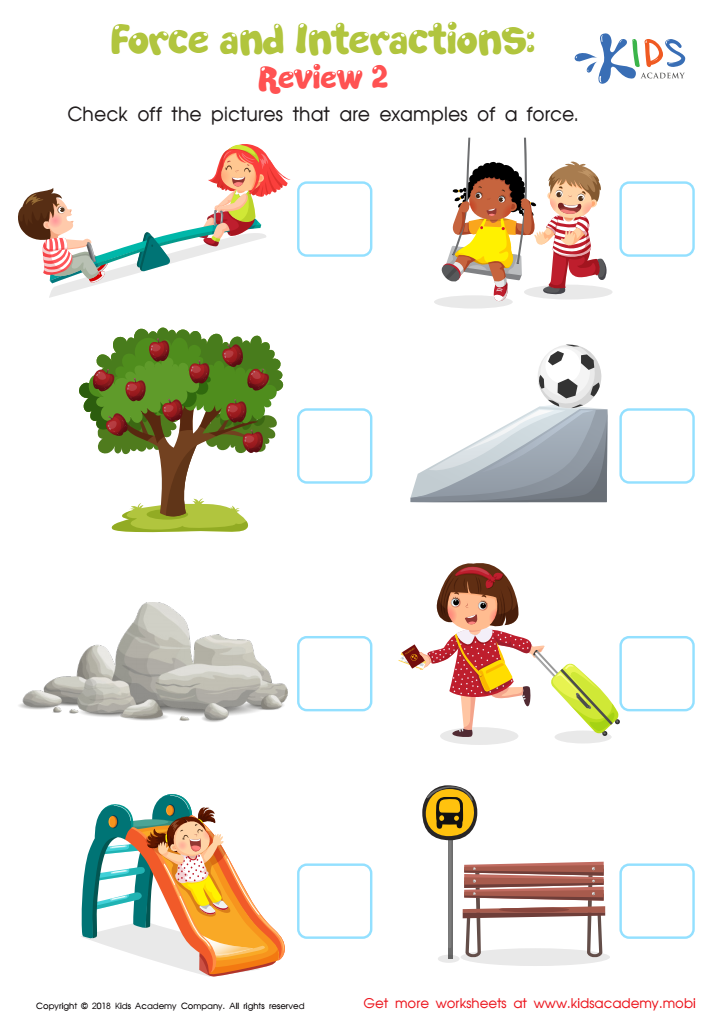
Force and Interactions: Review 2 Worksheet
 Assign to My Students
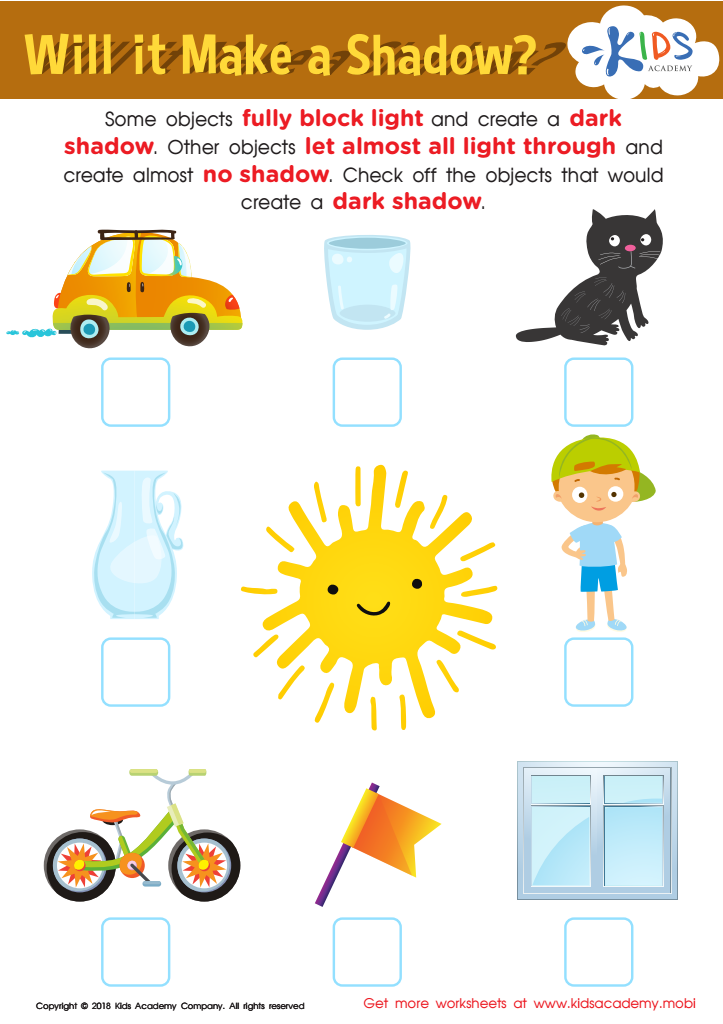
Will It Make a Shadow? Worksheet
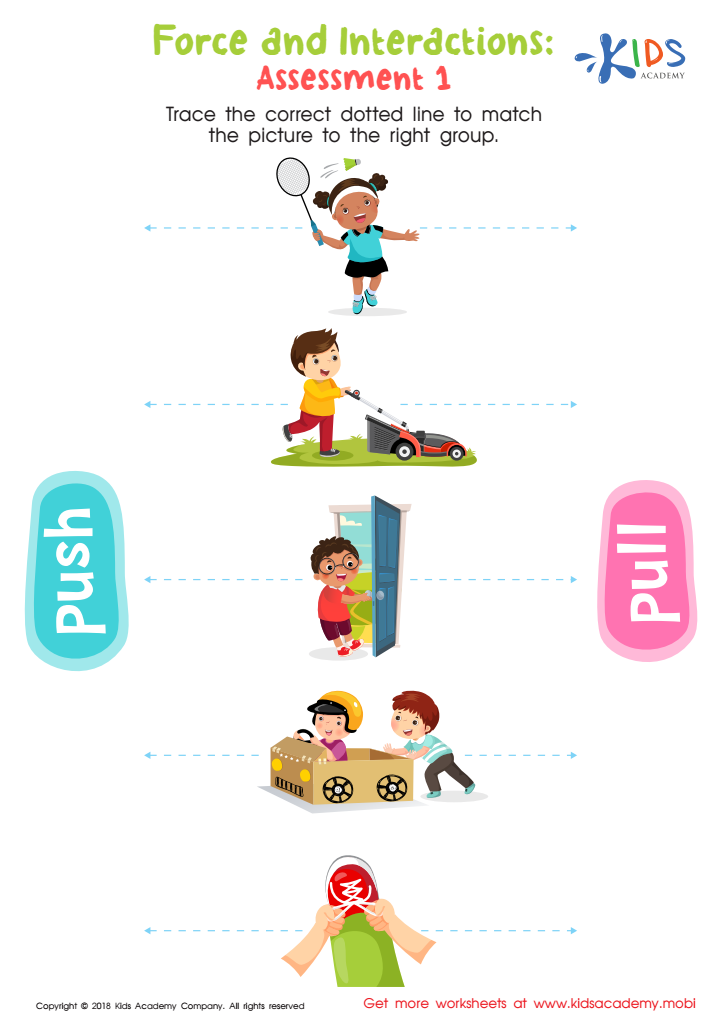
Force and Interactions: Assessment 2 Worksheet








Shape recognition is a fundamental aspect of early childhood development and lays the groundwork for various cognitive and academic skills. For ages 3-7, recognizing different shapes not only helps in understanding and organizing information visually but also promotes critical thinking and problem-solving abilities. This capability is integral in subjects like mathematics, where geometric concepts are essential, and in daily life as children identify and relate to the shapes in their environment, from toys to everyday objects.
Incorporating physical science at this age involves introducing concepts through hands-on, playful activities, which can make learning engaging and more effective. When children explore shapes through physical science projects, such as building structures or sorting objects, they also develop spatial awareness and motor skills. These activities foster curiosity, encourage experiential learning, and enhance creativity, as children learn by experimenting and observing outcomes.
For teachers and parents, focusing on shape recognition combined with physical science ensures a holistic approach to learning. It supports foundational literacy, aids in language development as children describe shapes and their properties, and prepares them for future challenges in STEM (Science, Technology, Engineering, and Mathematics). Ultimately, this enhances their confidence and interest in learning, making the educational journey enjoyable and enriching.







