Spatial awareness Space Worksheets for Ages 3-7
3 filtered results
-
From - To
Discover an engaging collection of Spatial Awareness Space Worksheets designed for children ages 3-7! Our worksheets help young learners develop crucial spatial skills through fun activities and captivating space themes. From identifying shapes and positions to engaging with vibrant illustrations of planets and stars, these worksheets encourage exploration and creativity. Tailored to align with early education standards, our resources support the development of critical thinking and problem-solving abilities. Perfect for both classroom and home learning, these worksheets inspire curiosity about outer space while promoting vital cognitive skills. Explore the universe of learning with our Spatial Awareness Space Worksheets today!
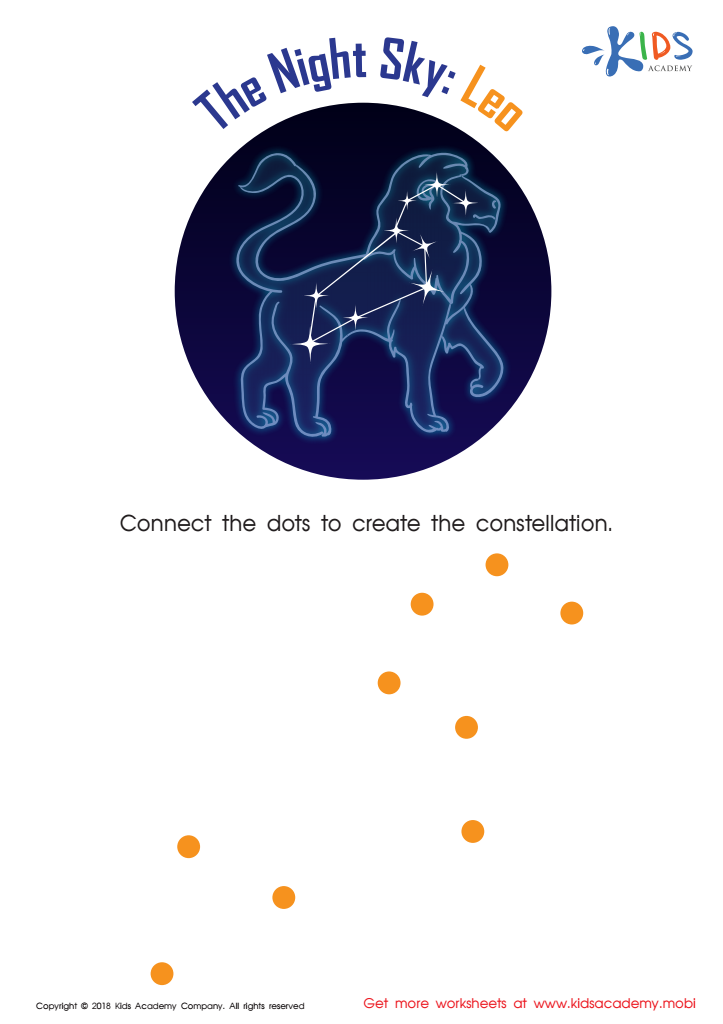
The Night Sky: Leo Worksheet
 Assign to My Students
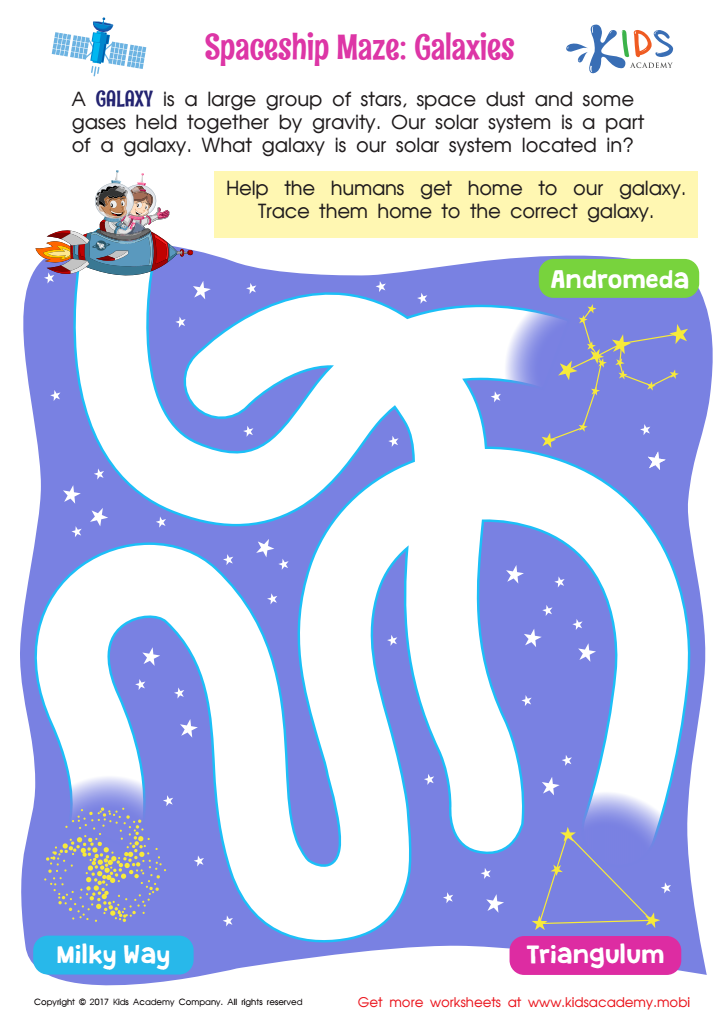
Spaceship Maze: Galaxies Worksheet
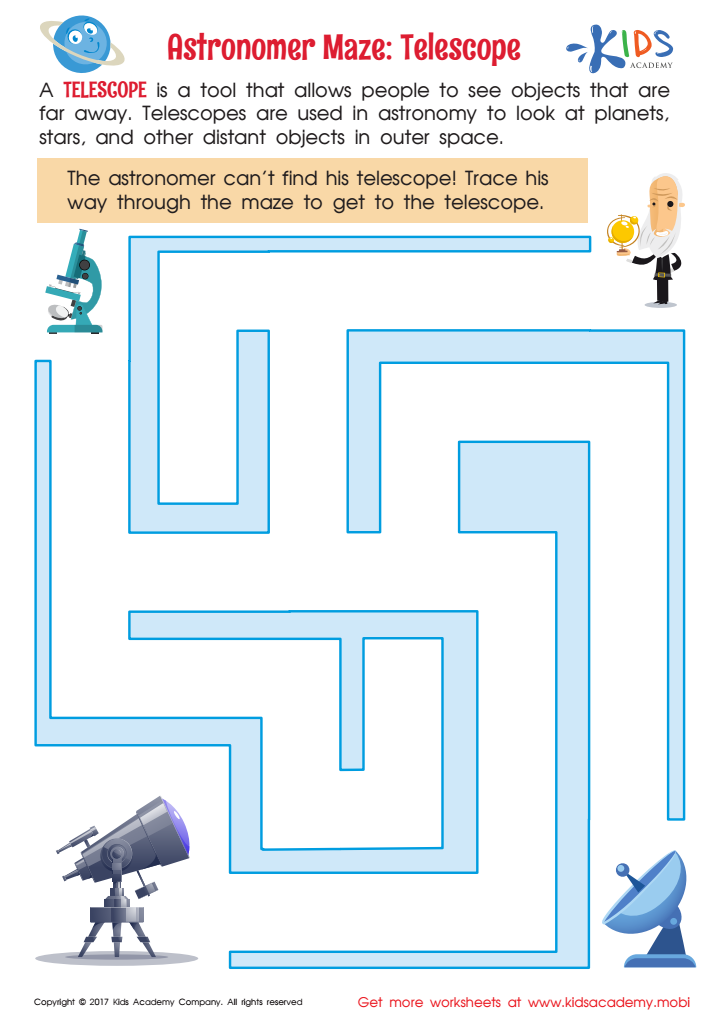
Astronomer Maze: Telescope Worksheet








Spatial awareness is a crucial cognitive skill for children aged 3-7 that involves the ability to understand and navigate their environment. Parents and teachers should care about fostering this skill, as it lays the foundation for various development aspects, including math, science, and motor skills.
At this age, children are naturally curious and exploring their surroundings. Engaging in activities that promote spatial awareness—like puzzles, building blocks, and outdoor play—encourages them to think critically about space and relationships between objects. This stimulates cognitive development, enhancing their problem-solving abilities and creativity.
Furthermore, strong spatial awareness can positively impact a child's confidence and independence. When children can assess where they are in space—whether it's organizing their toys or figuring out how to move through an obstacle course—they gain a sense of control and accomplishment.
Socially, spatial awareness contributes to cooperative play. It helps children navigate shared spaces or cooperate in group activities, thus enhancing their communication and teamwork skills. For these reasons, investing in spatial awareness through fun, engaging activities is essential for nurturing well-rounded development in young children, indirectly influencing their academic success and social interactions as they grow.







