Weather identification Weather Worksheets for Ages 3-7
5 filtered results
-
From - To
Discover our engaging Weather Identification Worksheets, designed specifically for ages 3-7! These interactive activities introduce young learners to the world of weather, helping them recognize different types of weather conditions such as sunny, rainy, cloudy, and snowy. Our colorful worksheets encourage children to explore and express their understanding through fun illustrations and simple exercises. Perfect for classroom or home use, these resources enhance early science education and foster critical thinking skills. Let your little ones step into the fascinating world of weather and boost their learning experience with our easy-to-use worksheets today!
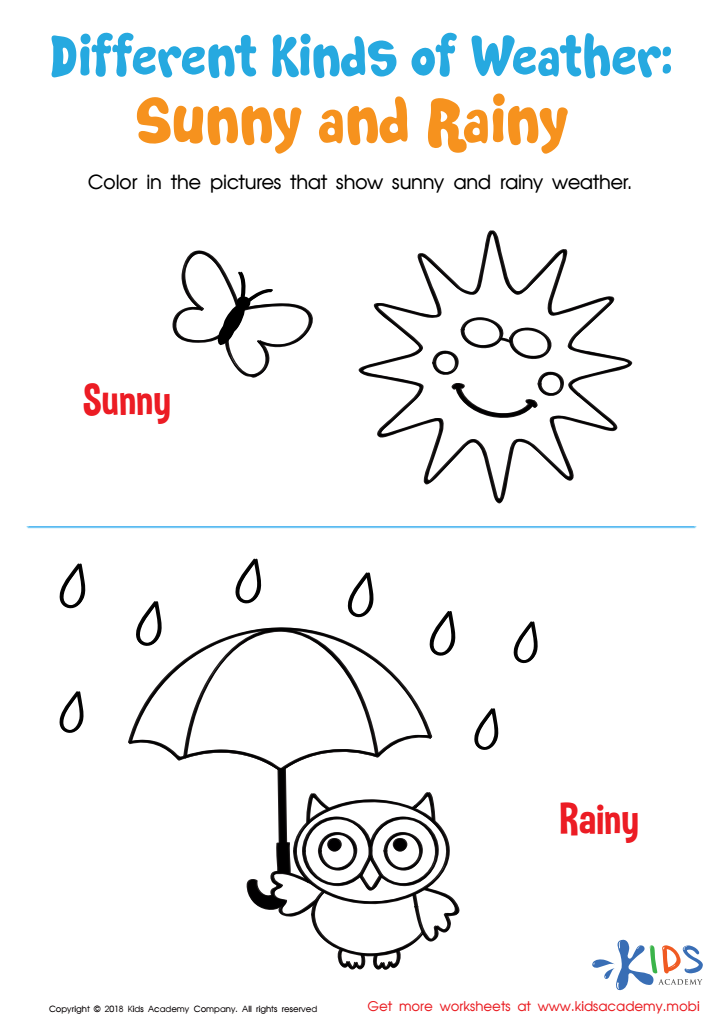
Different Kinds of Weather: Sunny and Rainy Worksheet
 Assign to My Students
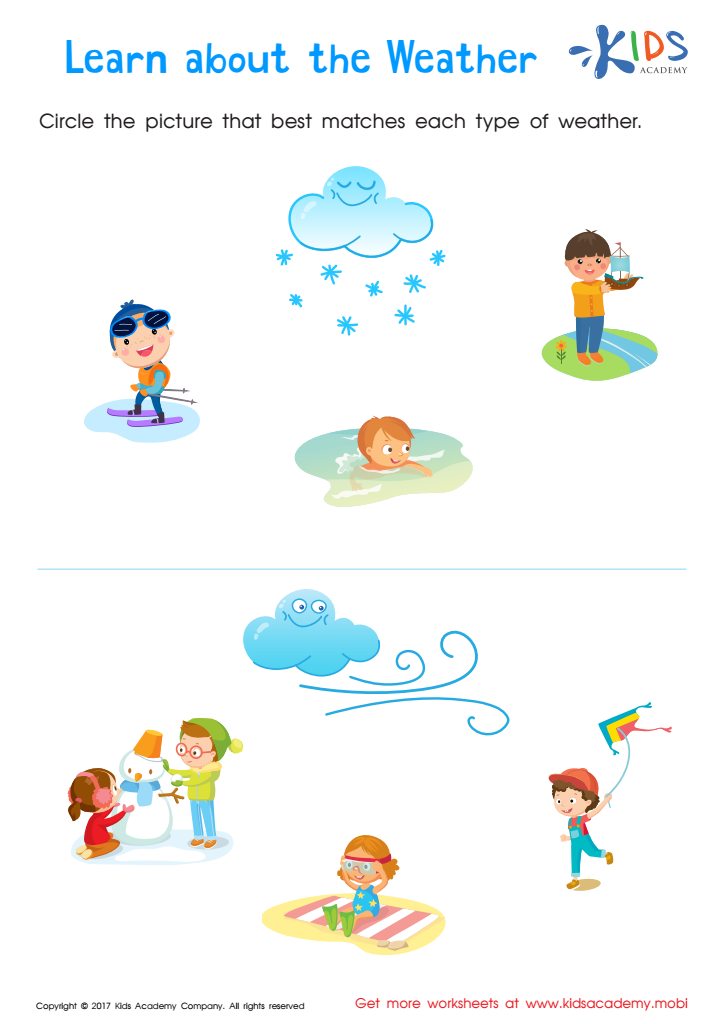
About the Weather Printable
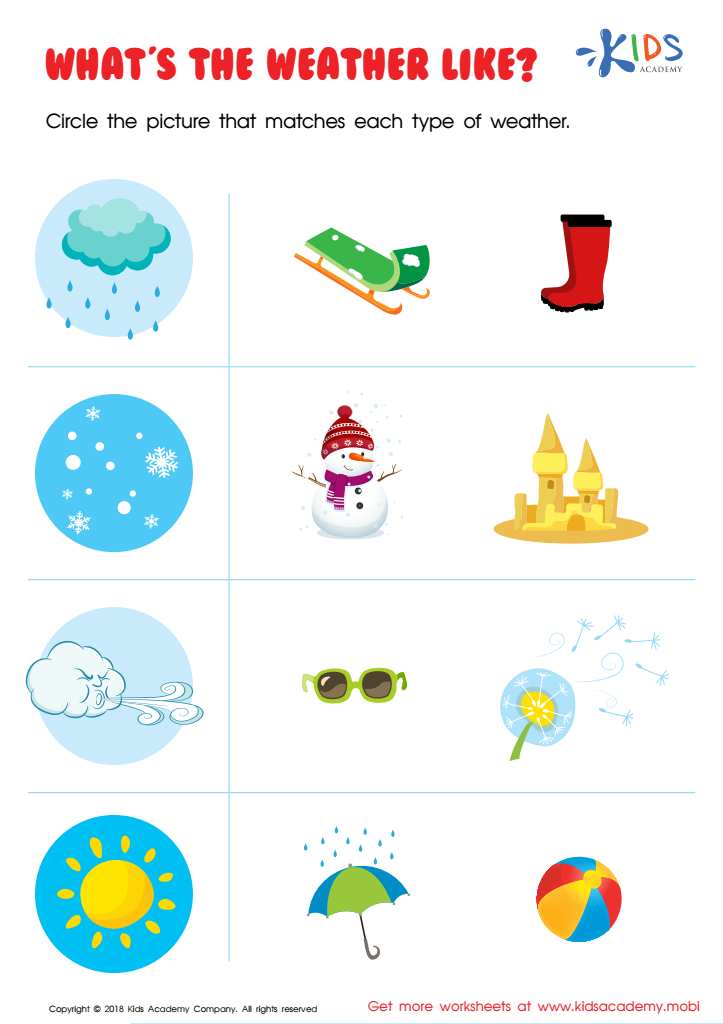
What's the Weather Like? Worksheet
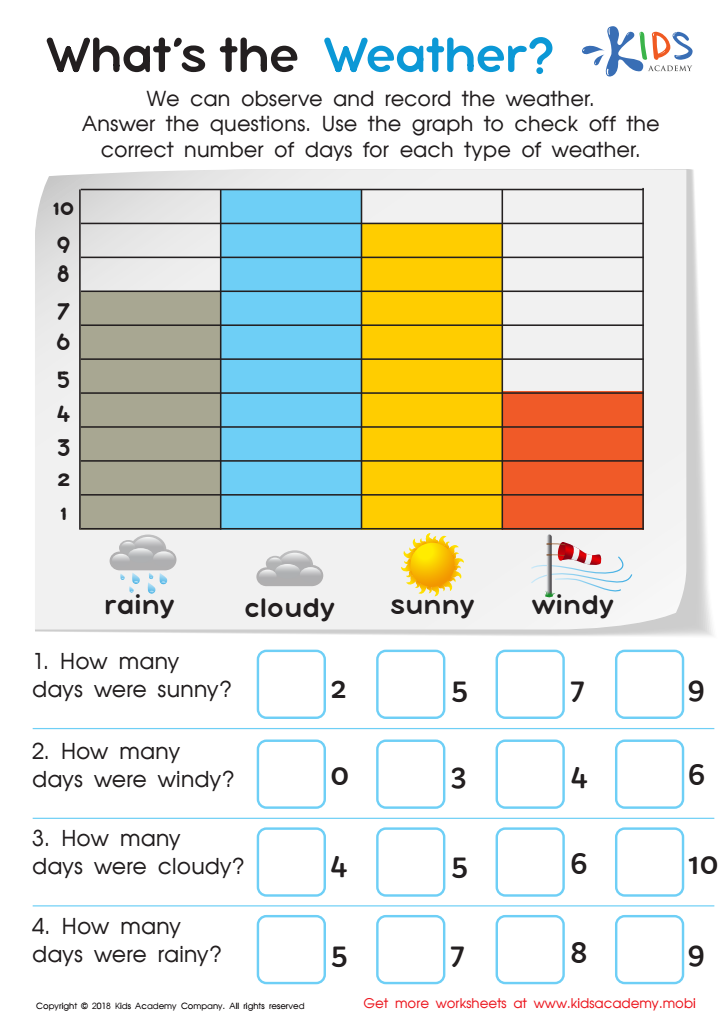
What's the Weather? Worksheet
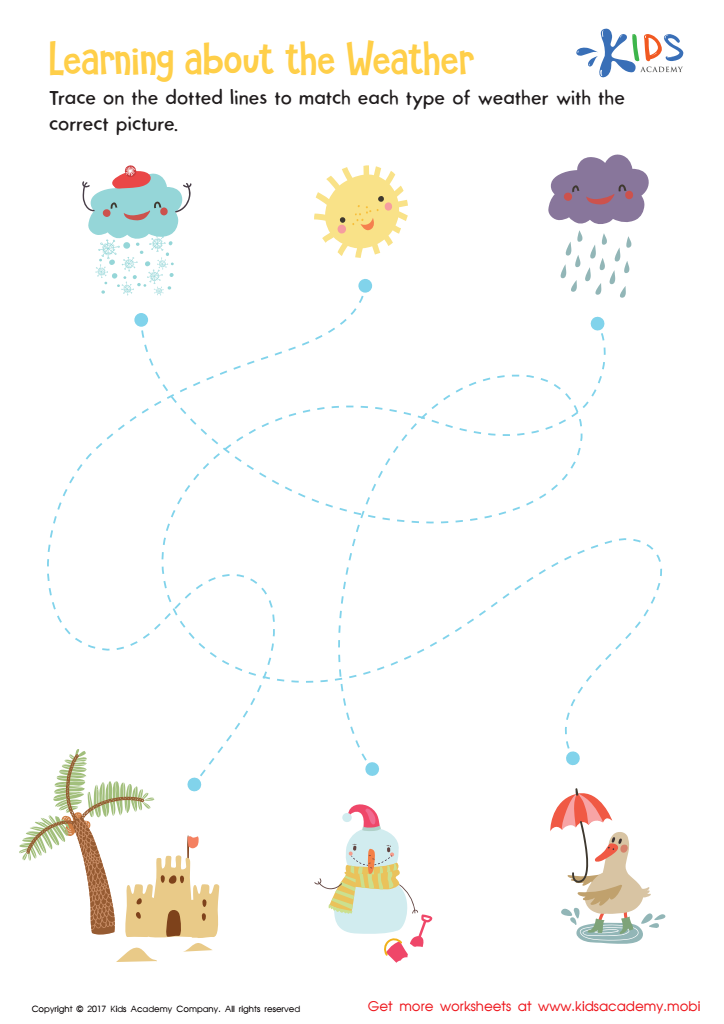








Weather identification is a crucial part of early childhood education for several reasons. First, understanding weather helps children connect with their natural environment, fostering curiosity and an appreciation for nature. When young learners can identify different types of weather—like sunny, rainy, cloudy, or snowy—they develop observational skills essential for scientific thinking.
Moreover, kinesthetic experiences can be integrated into lessons about weather, as children might relate certain activities to specific types of weather—like jumping in puddles during rain or staying cool in the shade on sunny days. This hands-on approach makes learning engaging and memorable.
Additionally, becoming aware of weather patterns can promote safety. Teaching children how to dress appropriately for different weather conditions empowers them to make better choices for their health. For instance, understanding that a jacket is necessary in cold weather encourages independence and responsibility.
Furthermore, weather discussions often lead to broader concepts, such as seasons, day and night, and environmental awareness. Such foundational knowledge supports literacy as children learn new vocabulary and storytelling related to weather events. Ultimately, parents and teachers should embrace weather identification as an essential educational tool for promoting growth, curiosity, and safety in young learners.







