Decision making skills Community Worksheets for Ages 3-7
3 filtered results
-
From - To
Enhance your child's decision-making skills with our engaging Community Worksheets for Ages 3-7. These carefully designed activities promote critical thinking, problem-solving, and confidence in young learners. With interactive scenarios and relatable community situations, your child will practice making choices and understanding the consequences. Our worksheets foster essential skills in a fun and approachable way, perfect for early education settings or homeschooling. Watch your child thrive as they navigate various decision-making scenarios while learning about their role in the community. Encourage thoughtful, independent choices with our comprehensive and enjoyable resources—ideal for nurturing young minds!
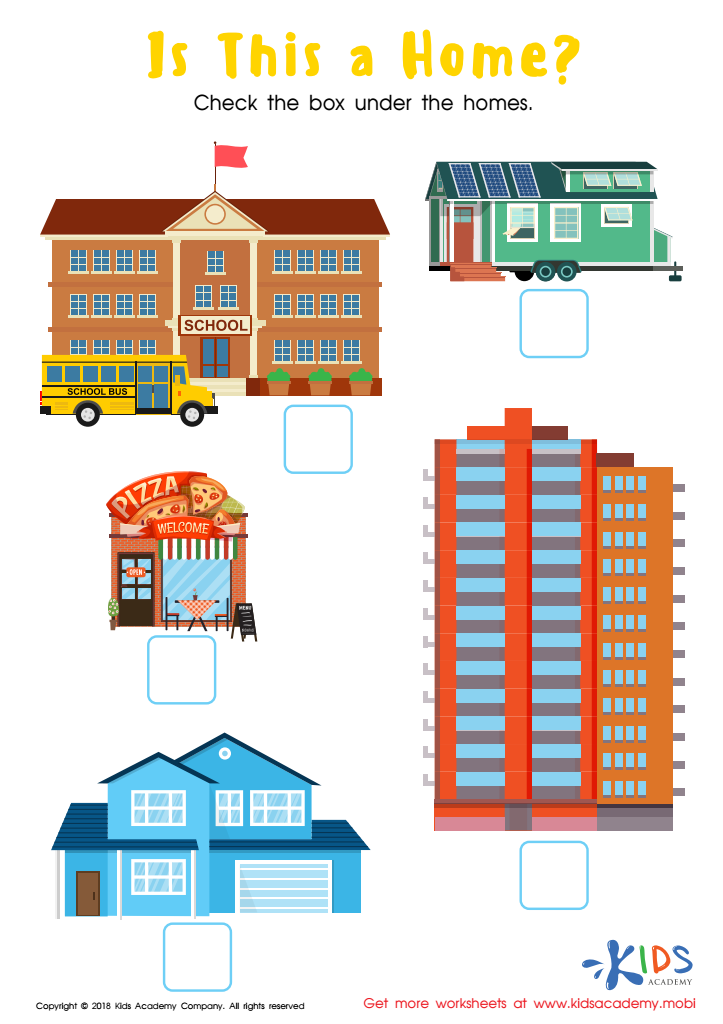
Is this a Home? Worksheet
 Assign to My Students
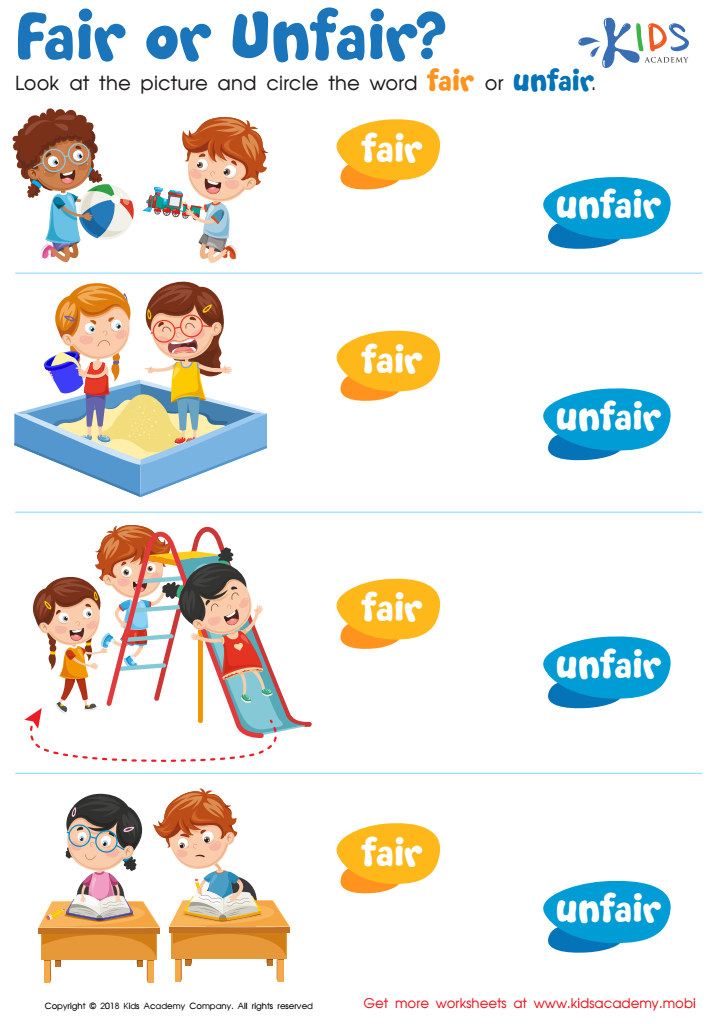
Fair or Unfair Worksheet

Towns Worksheet








Parents and teachers should prioritize decision-making skills in children aged 3-7 because these skills lay the foundation for future learning and personal development. At this early age, children are naturally curious and beginning to understand the world around them. Teaching decision-making fosters critical thinking, allowing them to weigh options, consider consequences, and make choices confidently.
Engaging children in decision-making activities encourages independence and self-esteem. For instance, letting a child choose between two snacks or what game to play enhances their sense of agency and responsibility. This practice supports emotional development, as children learn to express preferences and evaluate outcomes — skills vital for navigating social interactions and personal relationships.
Moreover, embedding decision-making in community activities strengthens social ties, teaching children the value of collaboration, negotiation, and empathy. When children learn to make choices within a group, they not only become more adept at problem-solving but also build essential communication skills.
Ultimately, decision-making skills contribute to a child’s overall ability to adapt, explore, and succeed academically and socially. By empowering children in this area, parents and teachers create a robust framework for lifelong learning and responsible citizenship.








