
Understanding citizenship Community Worksheets for Ages 3-7
4 filtered results
Difficulty Level
Grade
Age
-
From - To
Subject
Activity
Standards
Explore the "Understanding Citizenship Community Worksheets for Ages 3-7," designed to engage young learners in the fundamentals of citizenship and community awareness. These educational resources aim to cultivate social skills, responsibility, and a sense of belonging among children. Through fun and interactive activities, kids will learn about rights, responsibilities, and the importance of participating in their communities. With vivid illustrations and age-appropriate content, our worksheets encourage discussions on respect, cooperation, and empathy. Ideal for both home and classroom settings, these worksheets help lay a strong foundation for future citizenship understanding, ensuring kids become informed and engaged members of their community.
Favorites
With answer key
Interactive
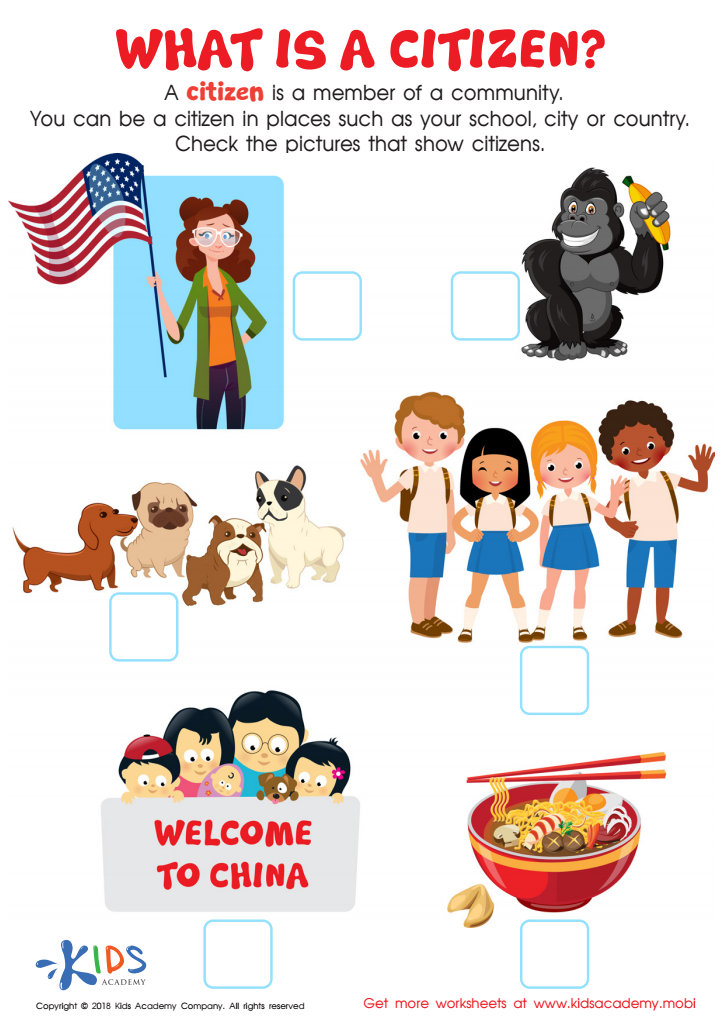
What is a Citizen? Worksheet
Do your students know who a citizen is? Use this worksheet to teach them: a citizen is a member of a community, such as your school, city or country. Look at the pictures in the pdf with your students. Ask them to identify who or what is in the pictures, and help them check which are citizens.
 Assign to My Students
What is a Citizen? Worksheet
Worksheet
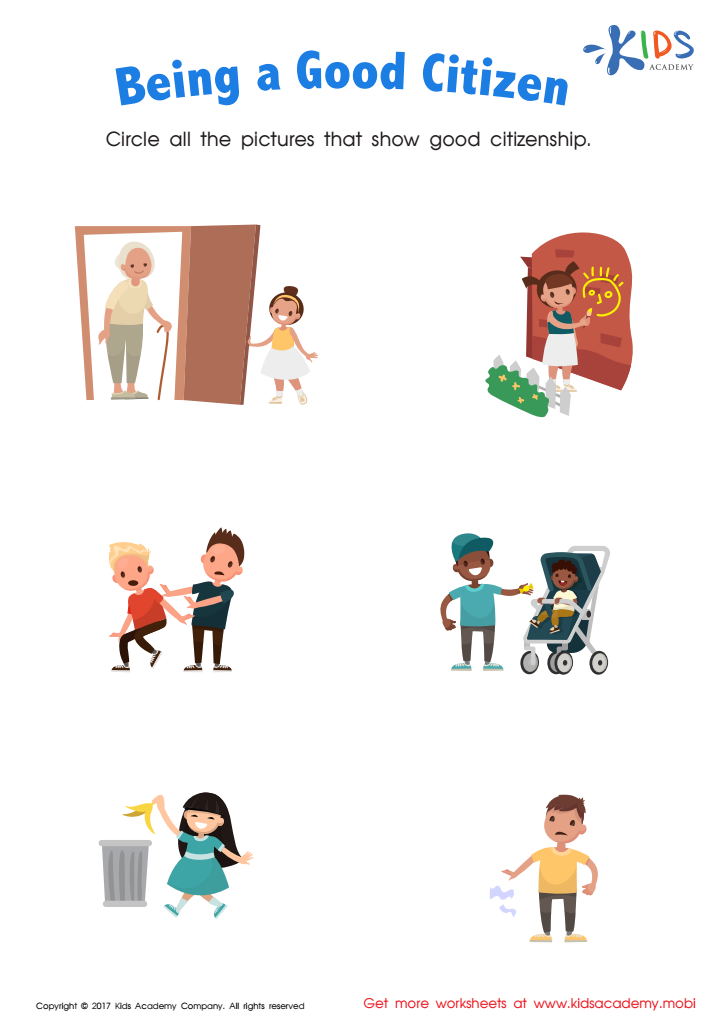
Being a Good Citizen Printable
Help your child learn the importance of being a good citizen with this fun worksheet! It reinforces positive behaviors in the community and teaches essential skills like character. Try it today!
Being a Good Citizen Printable
Worksheet
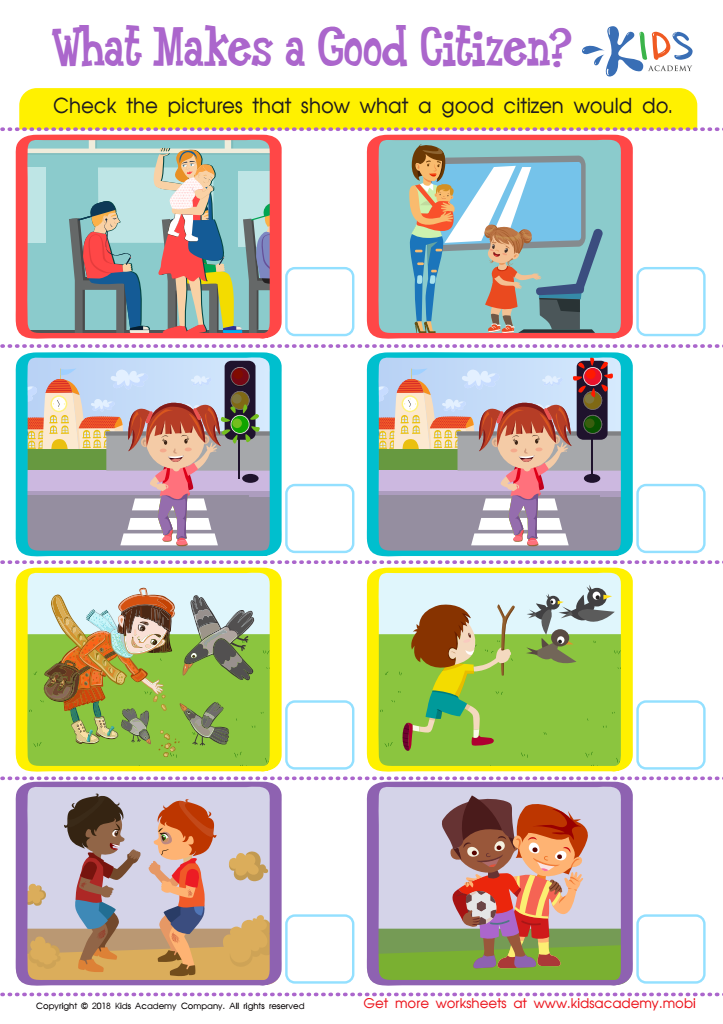
What Makes a Good Citizen? Worksheet
Ask your children to list some habits of a good citizen. Go through the worksheet and ask them if any of the pictures show good habits. Check the boxes of the actions that a good citizen would do to help your students understand what makes a good and bad citizen.
What Makes a Good Citizen? Worksheet
Worksheet
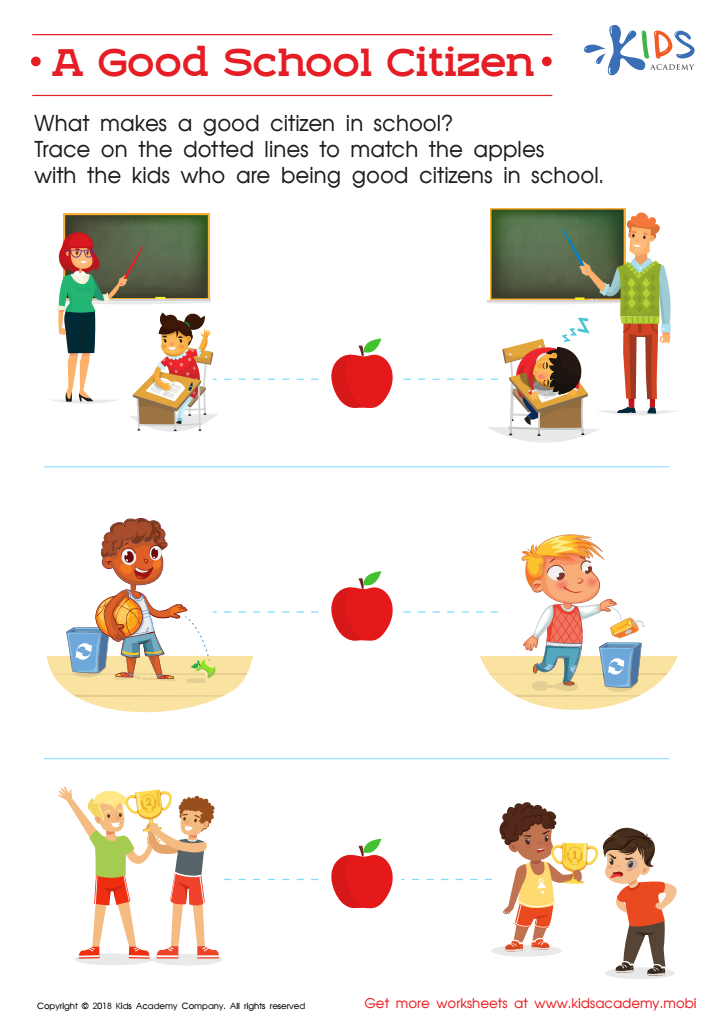
A Good School Citizen Worksheet
Ask your child to list qualities of a good citizen. Show them the pictures of good citizens in school and explain how they can display those behaviors. Help your kid trace the lines on the worksheet to match the pictures. Encouraging good citizenship in school helps children become upstanding members of their community.
A Good School Citizen Worksheet
Worksheet
Join Kids Academy for Free
Who is primarily going to use this learning content?








Understanding citizenship and community is crucial for young children aged 3-7 as it lays the foundational skills for responsible societal participation. At this developmental stage, children begin to form their identities and develop relationships with others. Engaging them in concepts of citizenship helps them recognize their roles within a community, fostering a sense of belonging and responsibility.
Teachers and parents should care about this because it cultivates essential social skills like empathy, cooperation, and respect for diversity. Children learn to appreciate different cultures, traditions, and perspectives, which enrich their understanding of the world. Discussion of community roles, such as helpers and leaders, empowers children to see how their actions can positively impact those around them.
Additionally, by introducing the ideas of rights and responsibilities, children develop self-awareness and an understanding of fairness, encouraging them to become active, engaged citizens as they grow. Ultimately, promoting a strong sense of citizenship at this early age molds compassionate individuals who value their community, fostering a more inclusive and supportive environment. This early groundwork supports not just individual development but the betterment of society as a whole, preparing children for the complexities of their roles in the future.








