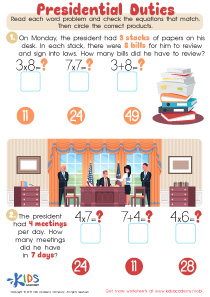
Attention to Detail Social Studies Worksheets for Ages 3-7
3 filtered results
-
From - To
Introduce young learners to the world of social studies with our Attention to Detail Worksheets designed for ages 3-7. These engaging worksheets help children develop critical observation and analytical skills by focusing on intricate details within various historical, geographical, and cultural contexts. Each activity is thoughtfully crafted to be fun and educational, ensuring that kids remain interested while learning essential social studies concepts. Perfect for enhancing cognitive development, our worksheets also support fine motor skills, reading comprehension, and logical thinking. Give your students a strong foundation in social studies with our dynamic, detail-oriented resources! Ideal for classroom or home use.
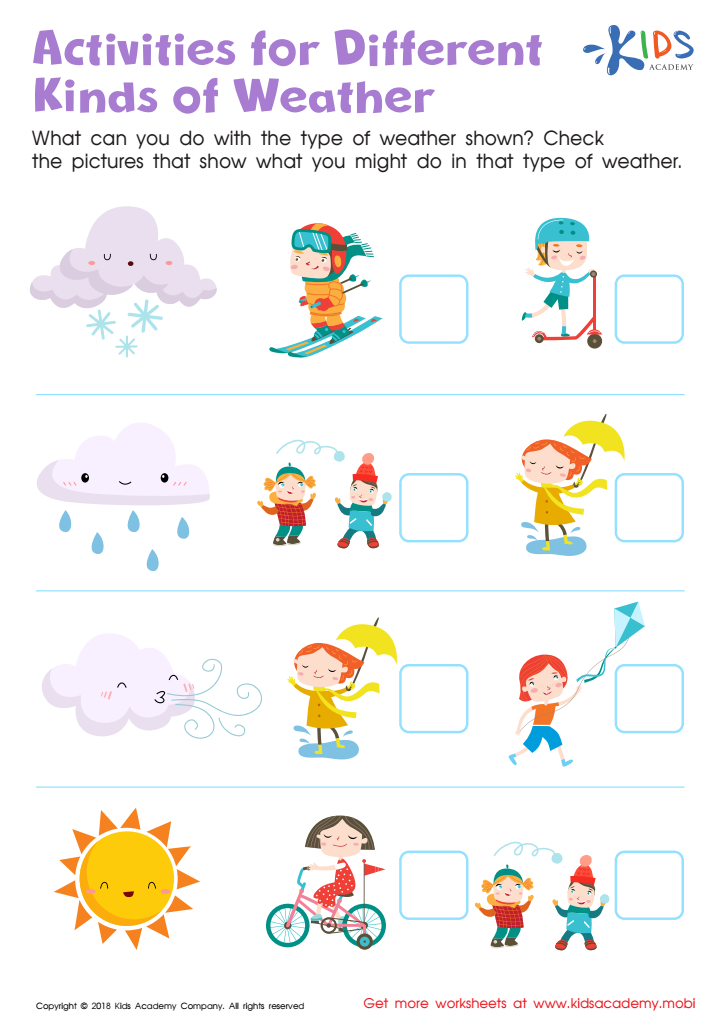
Activities for Different Kinds of Weather Worksheet
 Assign to My Students

Cities Worksheet
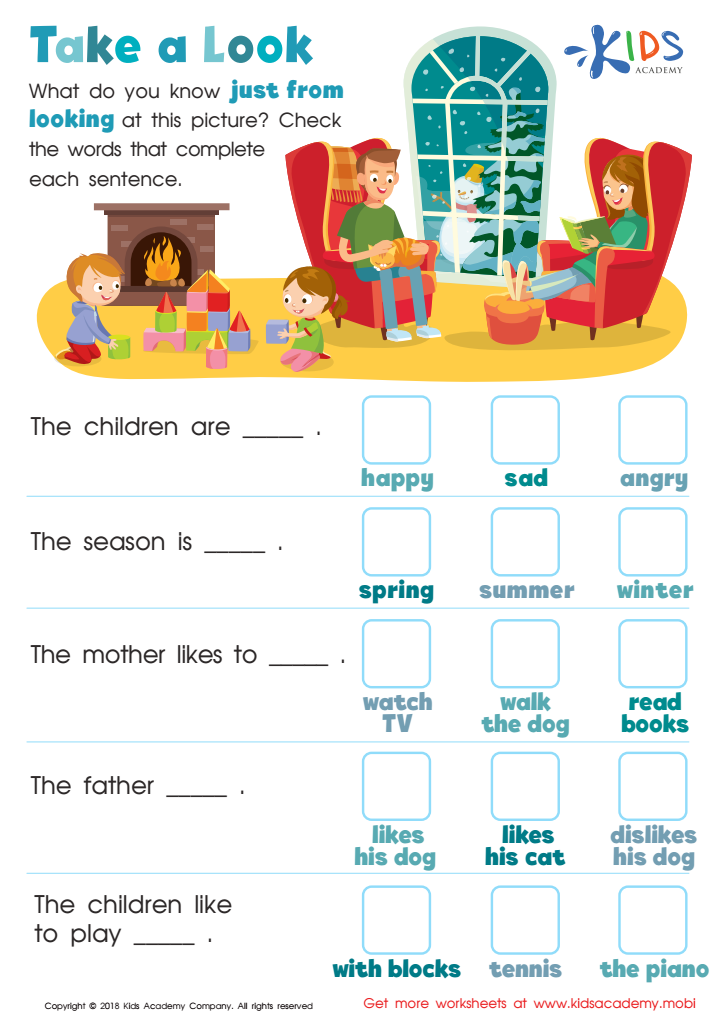
Take a Look - Part 1 Worksheet






Attention to detail in social studies for ages 3-7 is vital because it lays the foundation for critical skills that children will build upon throughout their educational journey and life. Social studies at this early age often involve understanding basic concepts of community, geography, history, and cultures. By fostering attention to detail, parents and teachers can help children develop observational skills that are crucial for analyzing information accurately.
When young children pay attention to detail, they learn to notice and understand the nuances and complexities of their surroundings. This skill enhances their ability to grasp social norms, build empathy, and appreciate diversity within their communities. Additionally, keen attention to detail aids in developing strong comprehension and communication skills. For instance, recognizing specific landmarks, currencies, or customs in different cultures enables better understanding and retention of such information.
Early development of these skills encourages curiosity and a lifelong love of learning. Furthermore, meticulousness fosters a sense of accountability and improves problem-solving abilities. Attention to detail also prepares children for future academic tasks that require a high level of precision, such as reading comprehension or scientific inquiries. Therefore, both parents and teachers should nurture this skill to support well-rounded cognitive and social development in young learners.