Decision making skills Social Studies Worksheets for Ages 3-7
3 filtered results
Difficulty Level
Grade
Age
-
From - To
Subject
Activity
Standards
Enhance your child's decision-making skills with our engaging Social Studies worksheets designed for ages 3-7. These printable resources combine fun activities with essential learning concepts, helping young learners develop critical thinking and problem-solving abilities. Through interactive exercises, children will explore real-life scenarios that encourage thoughtful choices and foster independence. Ideal for parents and educators, our worksheets not only promote cognitive skills but also introduce fundamental social studies themes, ensuring a well-rounded approach to early learning. Unlock your child's potential and inspire confidence in their decision-making skills with our carefully crafted worksheets tailored for young minds.
Favorites
With answer key
Interactive
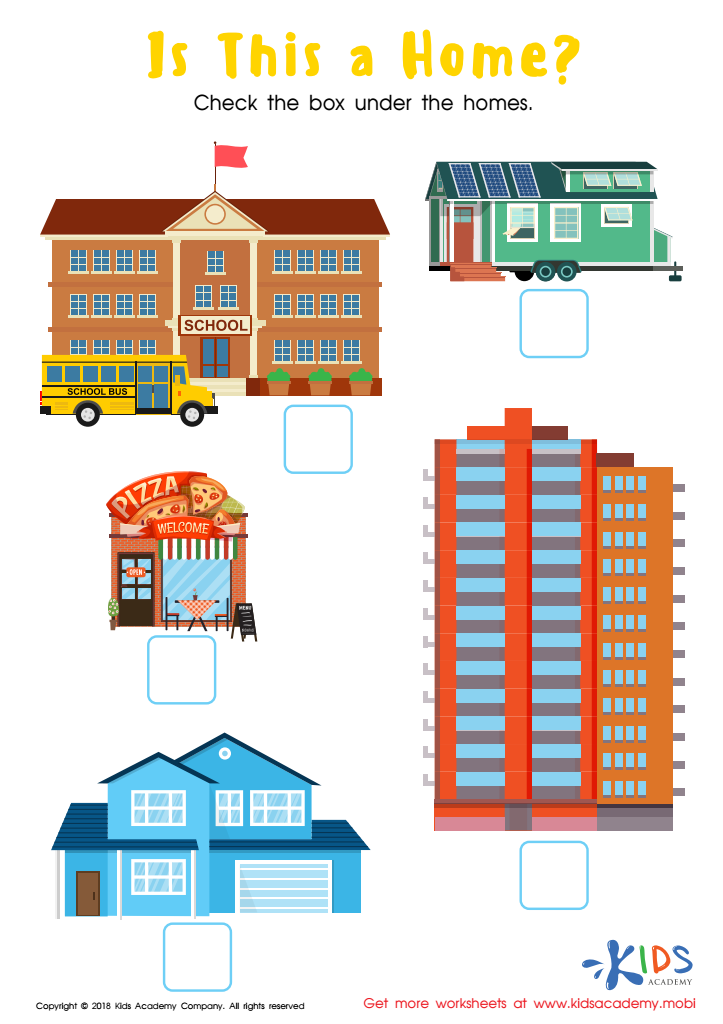
Is this a Home? Worksheet
Ask your child what the building you live in is called. Is it a home, restaurant or hospital? Then look at the pictures in the worksheet and ask them to identify which are homes - even if they don't look like yours. Check the box next to the homes in the pictures.
 Assign to My Students
Is this a Home? Worksheet
Worksheet
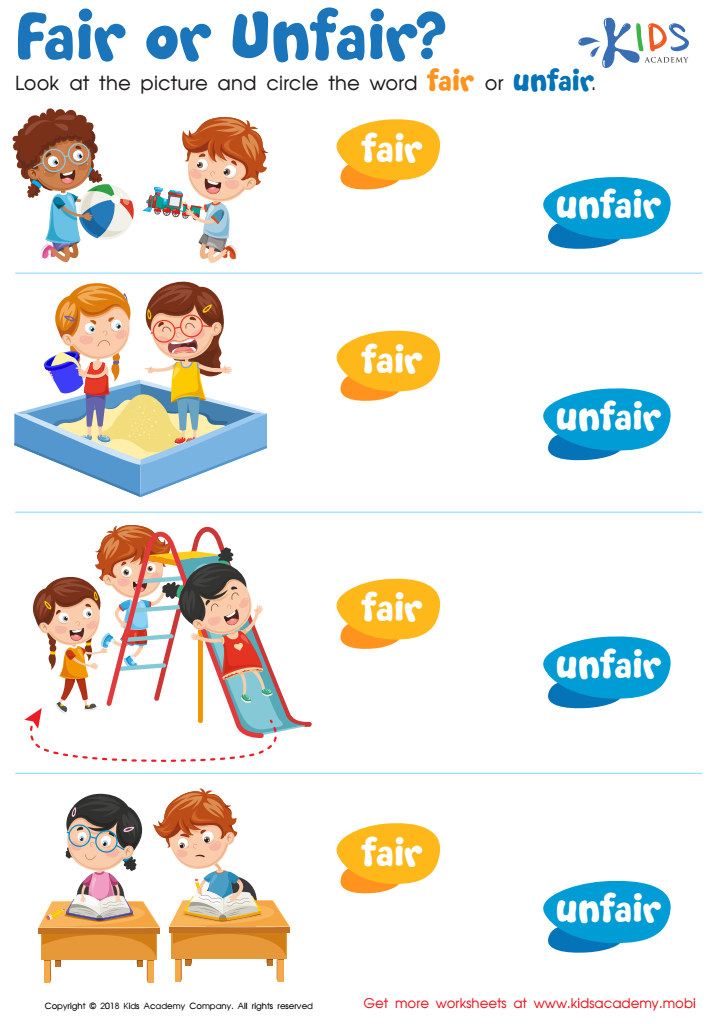
Fair or Unfair Worksheet
Look at the pictures in this worksheet with kids. Can they tell if the actions are fair or unfair? Help them decide and circle the appropriate option. When something causes harm to one person, it is unfair; when all parties benefit, it is fair.
Fair or Unfair Worksheet
Worksheet

Towns Worksheet
Towns are generally quiet and safe, making them attractive for young families. Cities have more people, businesses and tall buildings. Roads are busy, and there is often plenty to do and see. Help your kids check which pictures in this worksheet show towns.
Towns Worksheet
Worksheet
Join Kids Academy for Free
Who is primarily going to use this learning content?








Decision-making skills are crucial for children aged 3-7 as they lay the foundation for their future social interactions and personal growth. In Social Studies, these skills help children learn to navigate the complexities of their world, from understanding relationships with peers to recognizing the impact of their choices on others and the environment.
Parents and teachers should care about cultivating decision-making skills in young learners because it empowers them to think critically and evaluate different situations. For example, when children engage in discussions about community rules, they learn to weigh options and consequences, fostering a sense of responsibility and morality.
Moreover, early decision-making experiences can contribute to a child's confidence and independence. If children practice making choices in structured settings—like deciding how to resolve a conflict or which project to pursue—they develop problem-solving skills that transfer to their everyday lives.
Additionally, supporting children in making choices fosters creativity and encourages them to express their preferences and opinions. This not only enhances their learning experience but also promotes engagement and enthusiasm for education. Therefore, nurturing decision-making skills in Social Studies is a vital responsibility for parents and teachers to help children become thoughtful, engaged members of their communities.