Developing critical thinking Social Studies Worksheets for Ages 3-7
3 filtered results
-
From - To
Explore our engaging Social Studies worksheets designed specifically for children ages 3-7, aimed at fostering critical thinking skills. These colorful, interactive activities encourage young learners to analyze, question, and evaluate concepts related to their world. Each worksheet promotes essential competencies such as reasoning, problem-solving, and decision-making through age-appropriate themes and scenarios. Kids will enjoy hands-on tasks that spark curiosity and inspire a deeper understanding of social environments. Perfect for home schooling or classroom settings, our worksheets make learning fun and effective while preparing children to think critically about the society they live in. Discover the potential with our invaluable resources today!
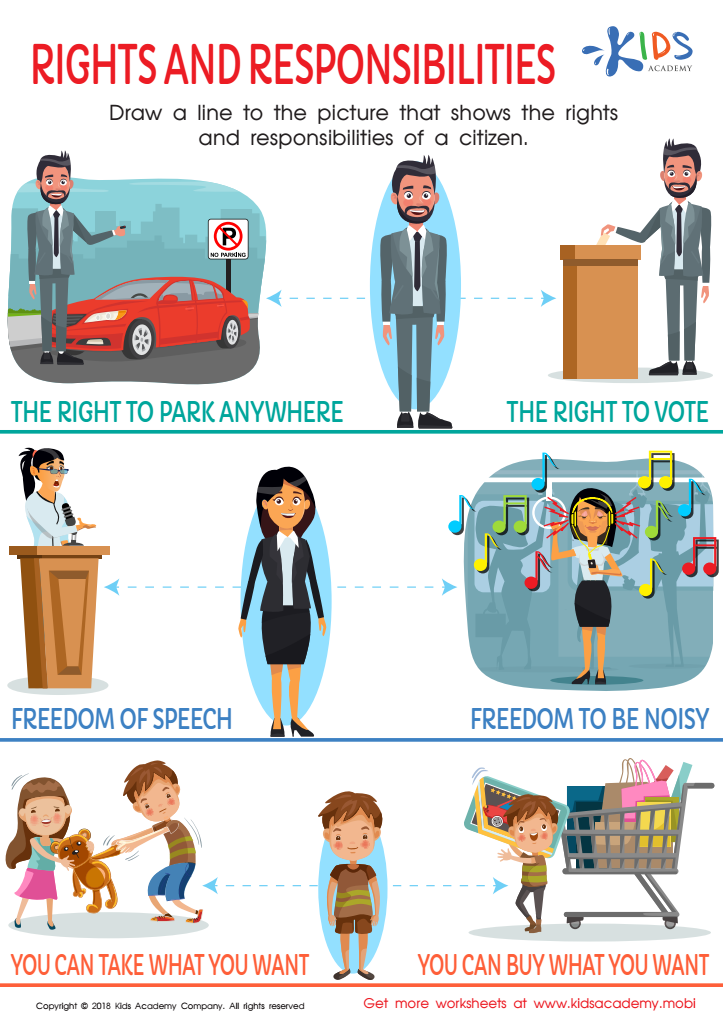
Rights and Responsibilities Worksheet
 Assign to My Students
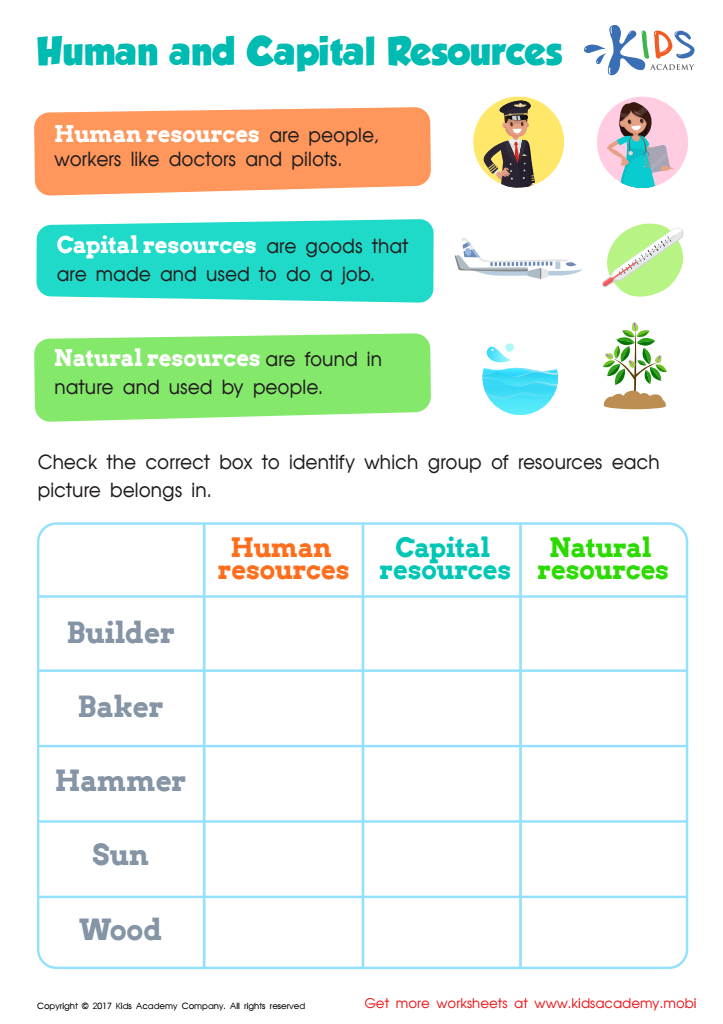
Human and Capital Resources Worksheet
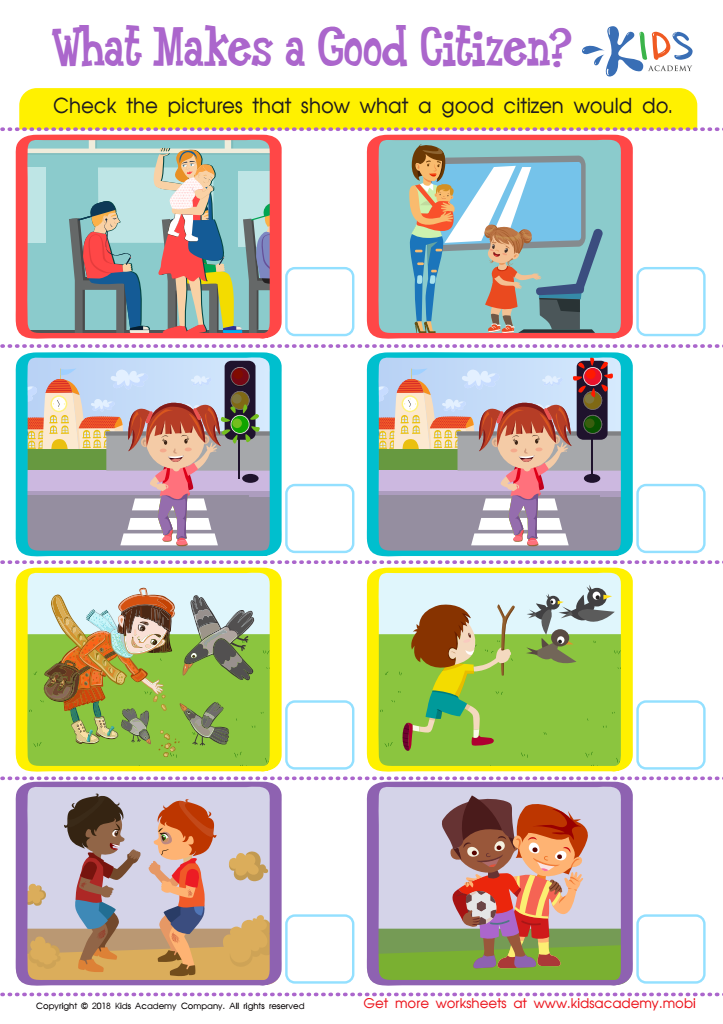
What Makes a Good Citizen? Worksheet








Developing critical thinking skills through Social Studies for children ages 3-7 is crucial for several reasons. First, this age group is at a vital stage of cognitive development, where they begin to question the world around them. Introducing Social Studies concepts nurtures their natural curiosity, enabling them to make connections between personal experiences and broader societal themes.
Secondly, critical thinking fosters empathy and understanding. By engaging with diverse cultures, histories, and social systems, young learners can develop a sense of awareness and respect for differences. This not only lays the groundwork for a more inclusive community but also prepares them to be active, informed citizens in a globalized society.
Furthermore, integrating critical thinking in Social Studies enhances problem-solving abilities. As children learn to analyze situations, consider different perspectives, and evaluate information, they develop the tools they need to tackle challenges independently.
Finally, these skills contribute to academic success across the curriculum. By honing critical thinking in Social Studies, children become better equipped to engage with other subjects, leading to a well-rounded education. Therefore, parents and teachers should prioritize fostering critical thinking through Social Studies to help shape thoughtful, compassionate, and capable individuals.








