Understanding communities Social Studies Worksheets for Ages 3-7
4 filtered results
-
From - To
Our "Understanding Communities" Social Studies Worksheets for Ages 3-7 offer engaging activities that help young learners explore the concept of communities. Designed to develop essential social and learning skills, these worksheets enable children to understand different community roles, services, and the importance of cooperation. Through colorful illustrations and interactive tasks, kids will identify various community helpers and their roles, learn how neighborhoods function, and gain a sense of belonging. Perfect for preschool and early elementary students, these worksheets provide a fun and educational way to introduce young minds to the world around them. Download to enrich your child's learning journey today!
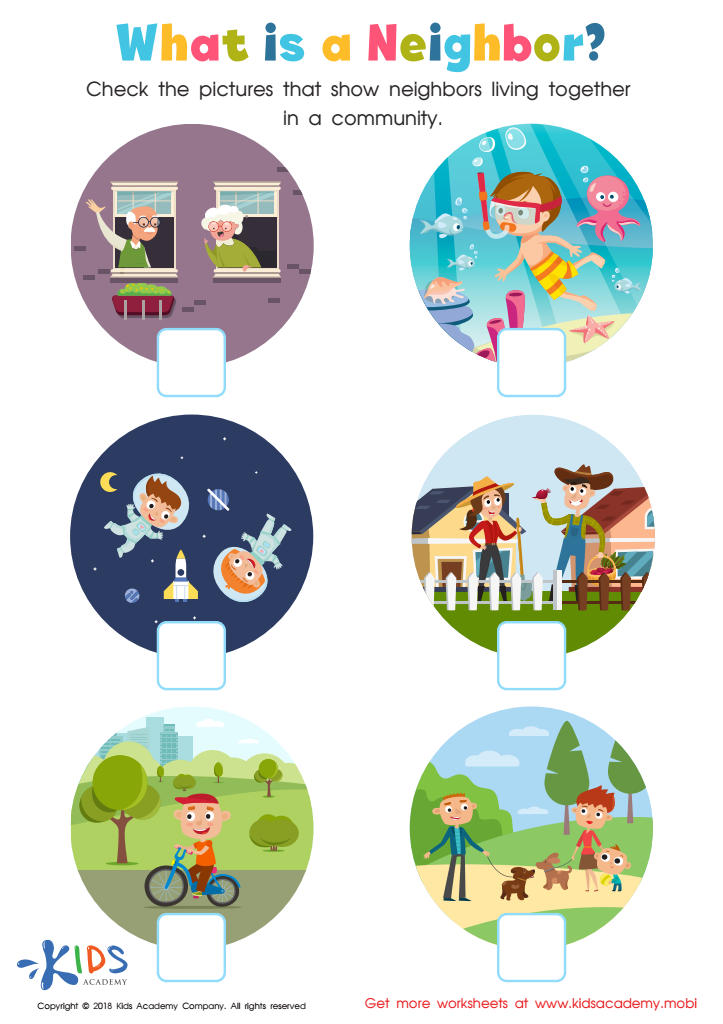
What is a neighbor Worksheet
 Assign to My Students
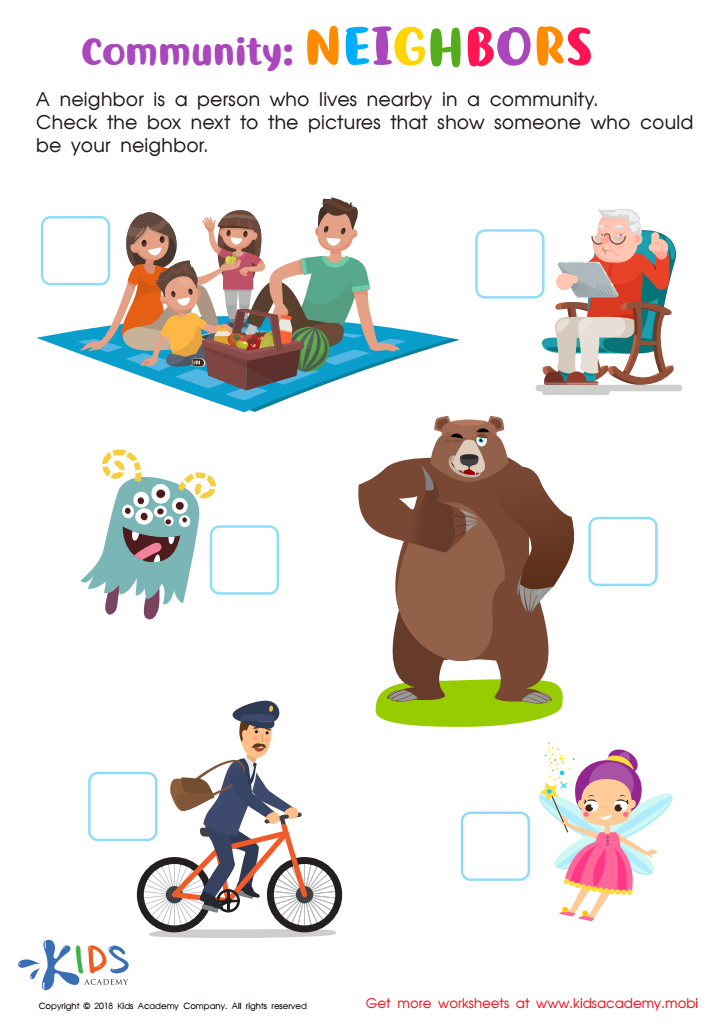
Community: Neighbors Worksheet
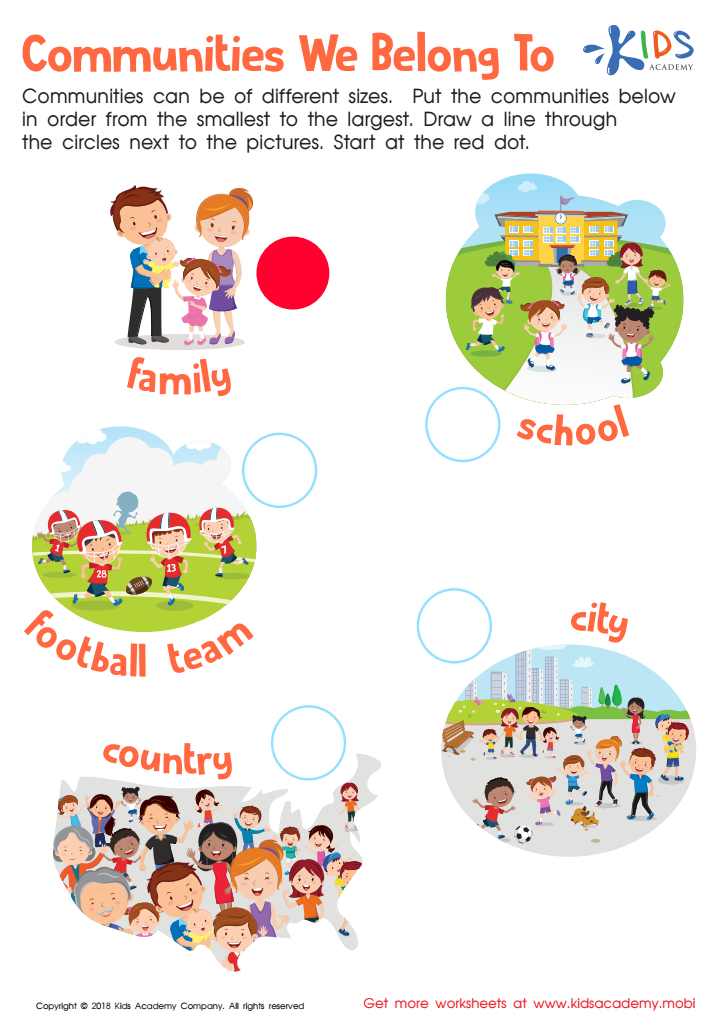
Communities We Belong to Worksheet
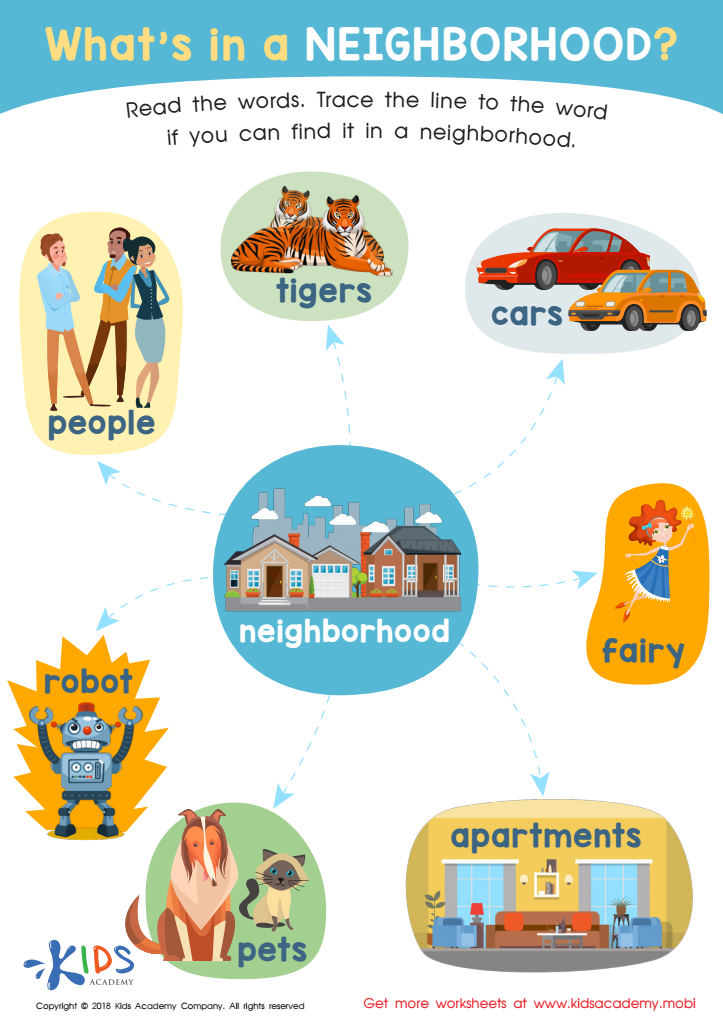
What's in a Neighborhood? Worksheet







Understanding communities in Social Studies for children ages 3-7 is essential because it lays the foundation for their social and emotional development. At such a young age, children are just beginning to understand the world outside their immediate family. Learning about communities helps them grasp the concepts of diversity, cooperation, and shared responsibility.
First, it helps impart values like respect, empathy, and kindness, as children learn that communities are made up of individuals with diverse backgrounds, abilities, and perspectives. By understanding these differences, children can become more accepting and inclusive, fostering a cohesive society where diversity is celebrated.
Second, learning about different community roles and jobs instills a sense of civic responsibility. Children begin to understand how various community helpers—teachers, doctors, firefighters—contribute to the well-being and safety of their environment. This knowledge can inspire a sense of service and encourage children to become active, responsible members of their communities.
Finally, discussing communities helps children understand the importance of environment and sustainability. Simple activities like recycling and taking care of public spaces teach them the long-term impacts of their actions.
Addressing these topics early equips children with the essential skills and attitudes they need to navigate social interactions effectively, laying the groundwork for their future engagement and participation in wider society.








