Critical Thinking Writing Worksheets for Ages 3-7
3 filtered results
-
From - To
Enhance your child’s cognitive abilities with our engaging Critical Thinking Writing Worksheets designed specifically for ages 3-7. These printable resources foster creativity and problem-solving skills while encouraging clear and organized expression through writing. Our worksheets are age-appropriate and cover a variety of fun topics that stimulate young minds, helping them to analyze, evaluate, and articulate their thoughts effectively. By incorporating playful activities, your little ones will enjoy developing essential critical thinking skills that lay a strong foundation for future learning. Explore our collection and empower your kids to think outside the box while enhancing their writing prowess!
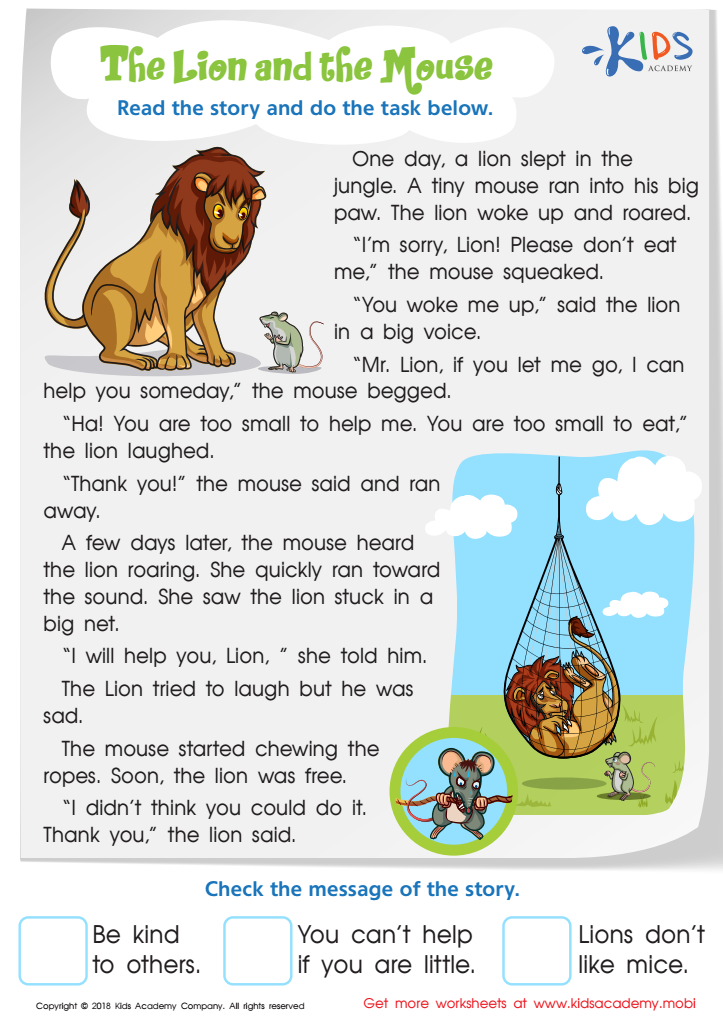
The Lion and the Mouse Worksheet
 Assign to My Students
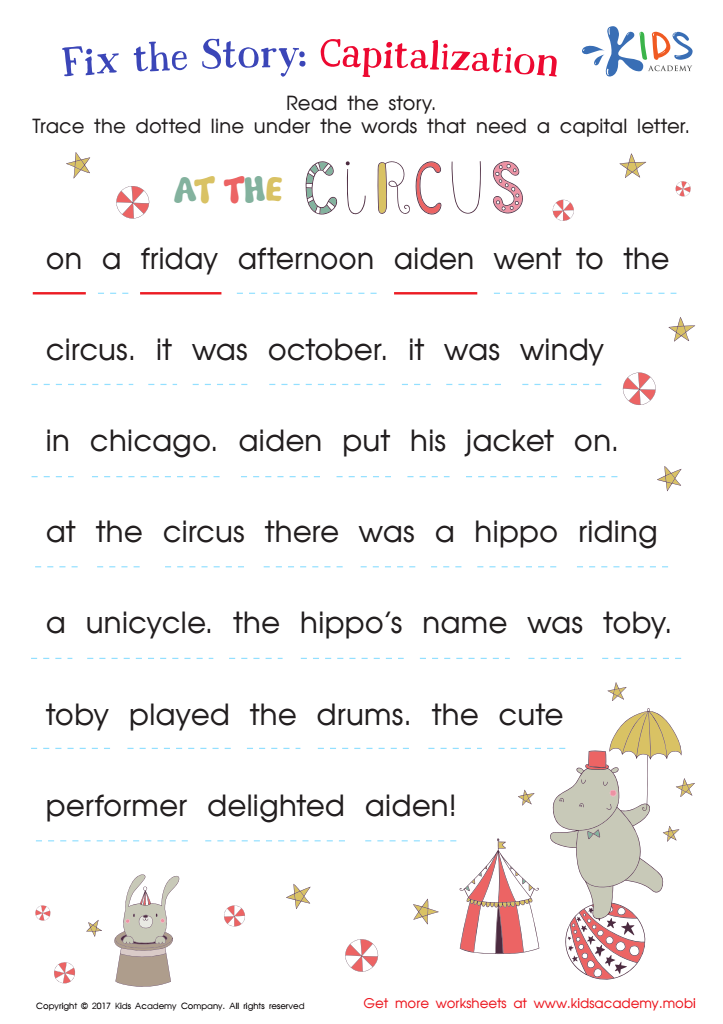
Capitalization: Fix the Story Worksheet
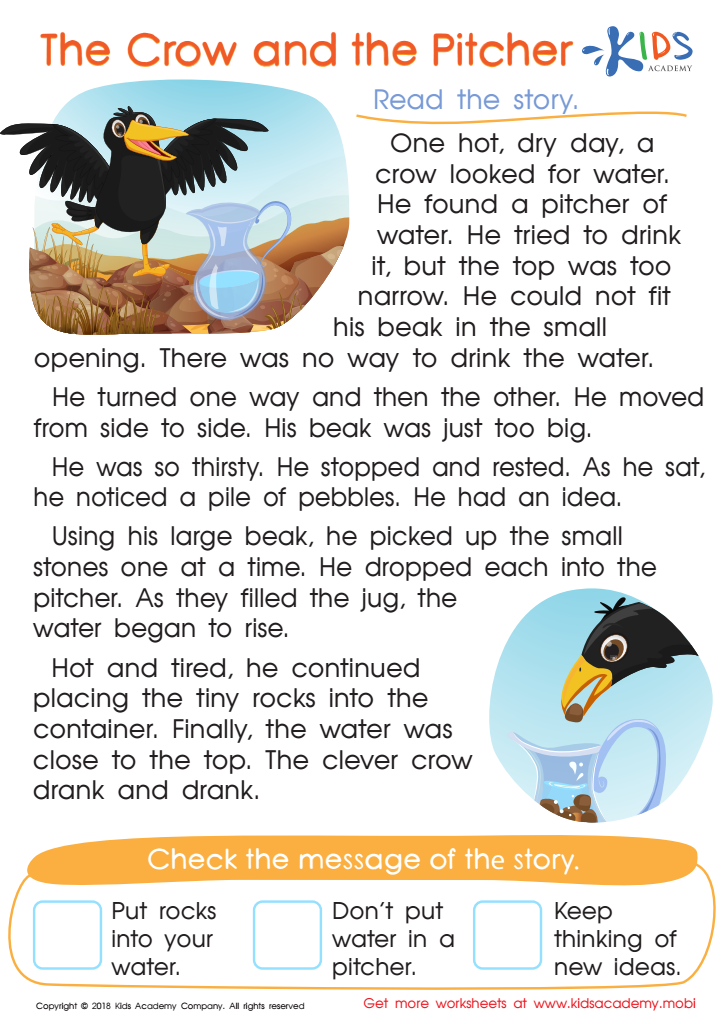
The Crow and the Pitcher Worksheet





.jpg)


Critical thinking writing for children aged 3-7 is essential for several reasons. Firstly, promoting critical thinking at an early age lays the foundation for deeper cognitive skills as they grow. Writing allows children to articulate their thoughts, encouraging them to analyze, evaluate, and synthesize information. By engaging in critical thinking writing, children learn to form coherent arguments, make connections, and solve problems creatively.
Additionally, writing fosters language development. As children create stories or express their opinions, they expand their vocabulary and grammatical skills. This active use of language boosts comprehension and communication abilities, which are vital for future academic success.
Moreover, critical thinking writing nurtures emotional intelligence. By expressing their feelings and perspectives in writing, children engage in self-reflection, building empathy for others. This can enhance social interactions, as they better understand different viewpoints.
Finally, in an increasingly complex world, teaching young learners to think critically empowers them to navigate challenges. By valuing critical thinking writing, parents and teachers are equipping children with essential life skills, fostering independent thinking and resilience. Such skills are crucial not just for academic achievement but for personal and social development throughout their lives.








