Logical thinking Writing Worksheets for Ages 3-7
4 filtered results
Difficulty Level
Grade
Age
-
From - To
Subject
Activity
Standards
Unlock your child's potential with our "Logical Thinking Writing Worksheets for Ages 3-7"! Tailored specifically for young minds, these engaging worksheets help develop critical inferencing, sequencing, and problem-solving skills through fun, age-appropriate activities. Our expertly designed materials captivate children, making learning both enjoyable and productive. Perfect for parents and educators, these worksheets foster a strong foundation in logical thinking, preparing children for future academic success. Ensure your little learners thrive with exercises that promote reasoning and analytical capabilities early on! Download and start nurturing inquisitive minds today with our premium, carefully crafted logical thinking worksheets.
Favorites
With answer key
Interactive
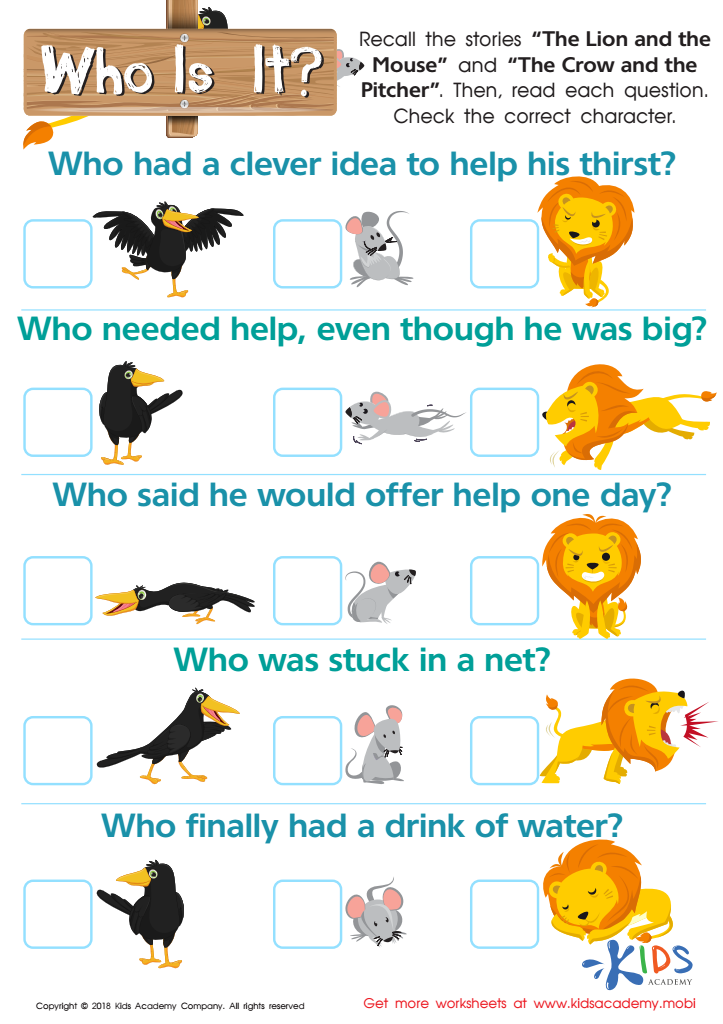
Who Is It? Worksheet
This worksheet helps students recall details from The Crow and the Pitcher and The Lion and the Mouse stories. Students will answer questions about the characters' actions. Use it to assess their understanding of both stories, as this is a key comprehension skill.
 Assign to My Students
Who Is It? Worksheet
Worksheet
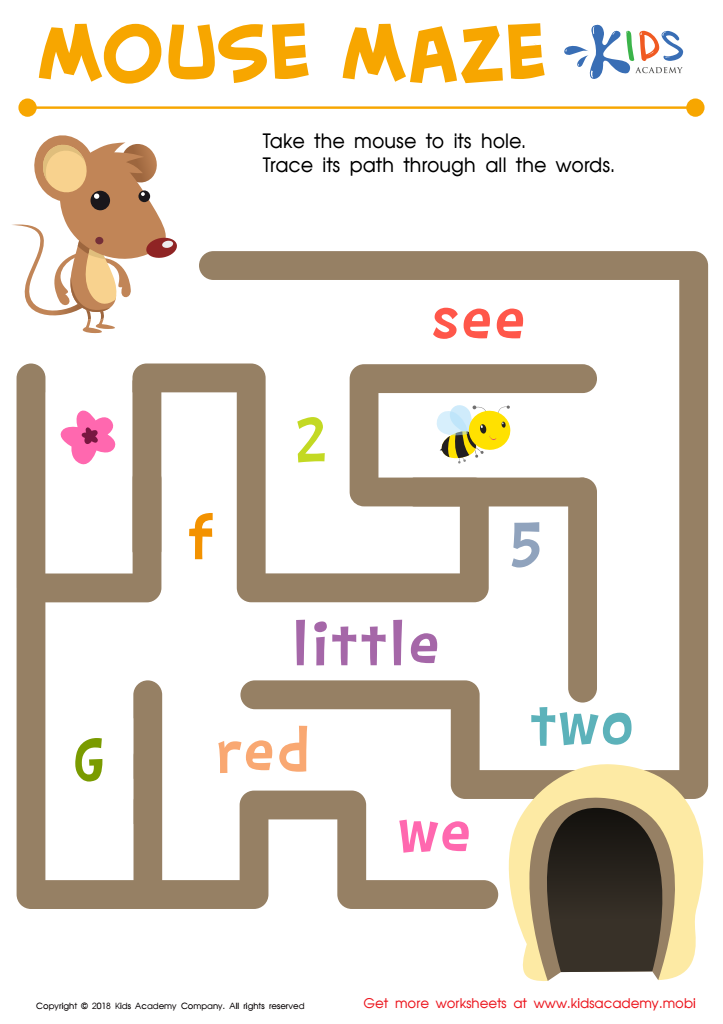
Find Words Mouse Maze Worksheet
Help your child identify words and guide the mouse home! Ask them to point out the colorful animal on the worksheet, then take their hand and show them how to trace the path, going through all the words in the maze to get the mouse back to its hole.
Find Words Mouse Maze Worksheet
Worksheet
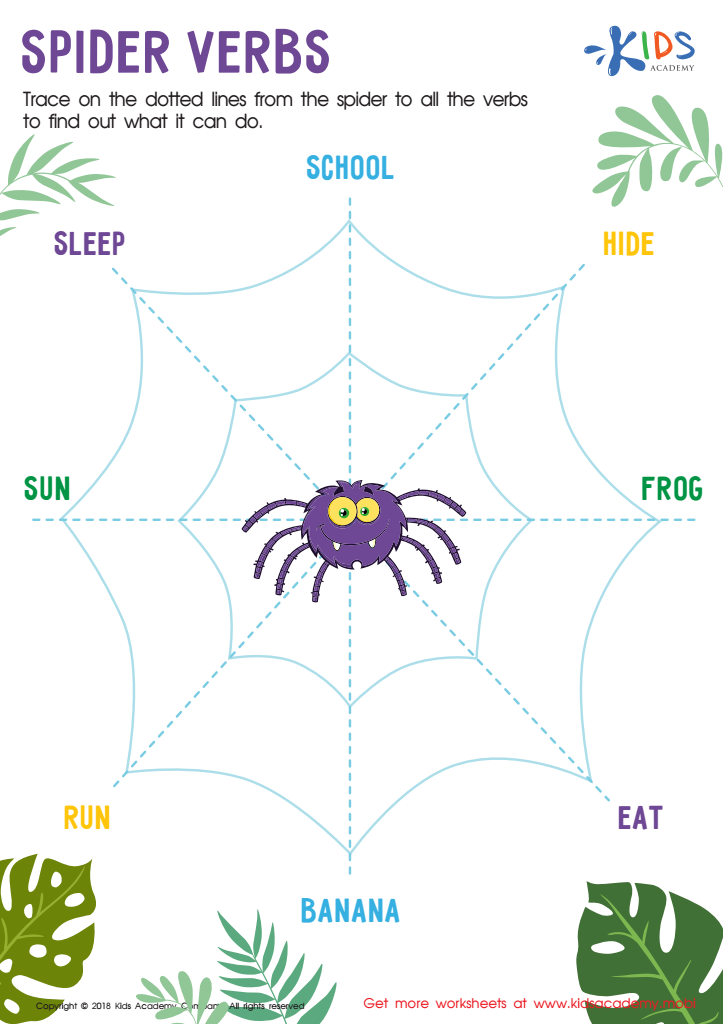
Spider Verbs Worksheet
Verbs are action words. Examples: run, play, talk. Show your child this tracing sheet for them to learn about verbs. Ask them to trace the dotted lines from the spider to the words that are verbs. These words are what the spider can do.
Spider Verbs Worksheet
Worksheet
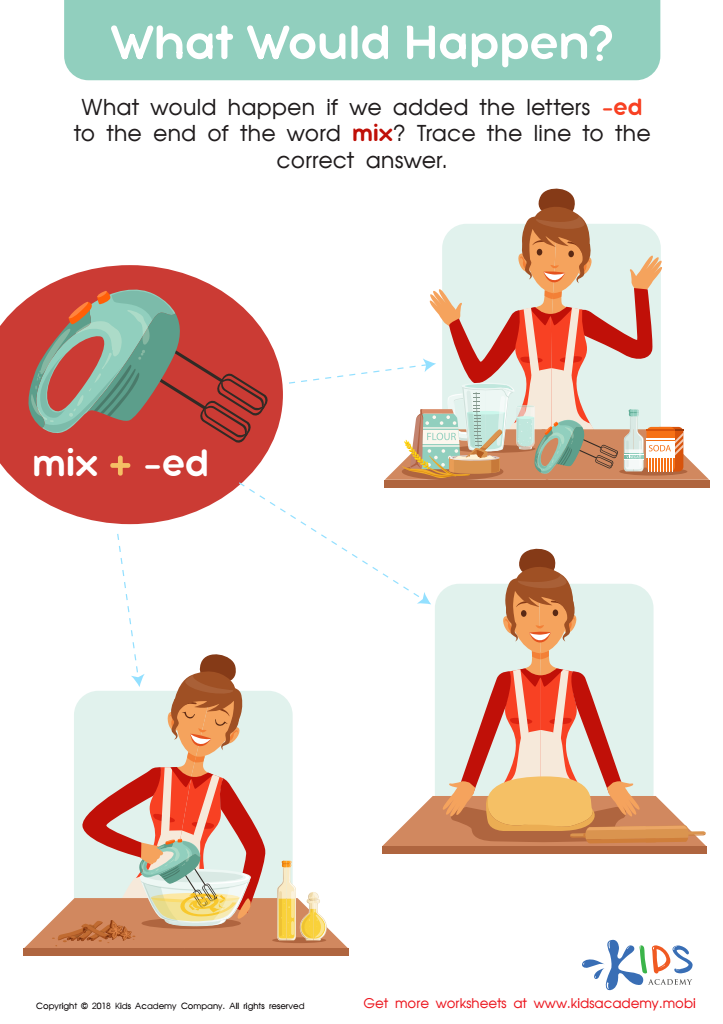
What Would Happen? Worksheet
Are your kids struggling with tenses? Use this worksheet to help them. See what they know by asking them to add '-ed' to the end of 'mix'. Guide them through the tracing sheet as they look for the correct answer.
What Would Happen? Worksheet
Worksheet
Join Kids Academy for Free
Who is primarily going to use this learning content?







Logical thinking is a foundational skill that significantly impacts a child's cognitive development, and integrating it into writing exercises for ages 3-7 can yield lasting benefits. At this developmental stage, children are highly impressionable and absorb information quickly, making it an opportune time to nurture logical thinking.
First, logical thinking enhances problem-solving skills. When children engage in logical thinking tasks, they learn to identify patterns, make connections, and approach problems systematically. These skills are not only academic but aid in everyday life decision-making.
Second, fostering logical thinking improves other academic domains like mathematics and science where structured thinking is crucial. Abstractions in these subjects become more manageable for young learners who are accustomed to reasoning and pattern recognition.
Furthermore, writing serves as a medium where logical thinking translates into coherent expression. Children learn to organize their thoughts, present arguments clearly, and support their points with evidence. These writing activities contribute to effective communication skills.
Lastly, introducing logical thinking through writing also instills patience and attention to detail. Young learners begin to appreciate the process of planning, revising, and refining their work.
Overall, prioritizing logical thinking in early writing exercises equips children with critical cognitive skills and establishes a strong foundation for future academic and personal success.