Comparing shapes Worksheets for Ages 3-8
6 filtered results
-
From - To
Unlock your child's potential with our Comparing Shapes Worksheets, designed for ages 3-8! These engaging printables help young learners identify, compare, and contrast basic shapes through fun activities. Perfect for early math skill development, our worksheets stimulate critical thinking while improving shape recognition. Whether in the classroom or at home, these resources encourage exploration and creativity as children discover the differences and similarities between shapes. With vibrant illustrations and interactive tasks, parents and educators can easily incorporate them into lesson plans. Nurture your child's love for learning and make shape comparison exciting today! Explore our collection and watch them thrive!
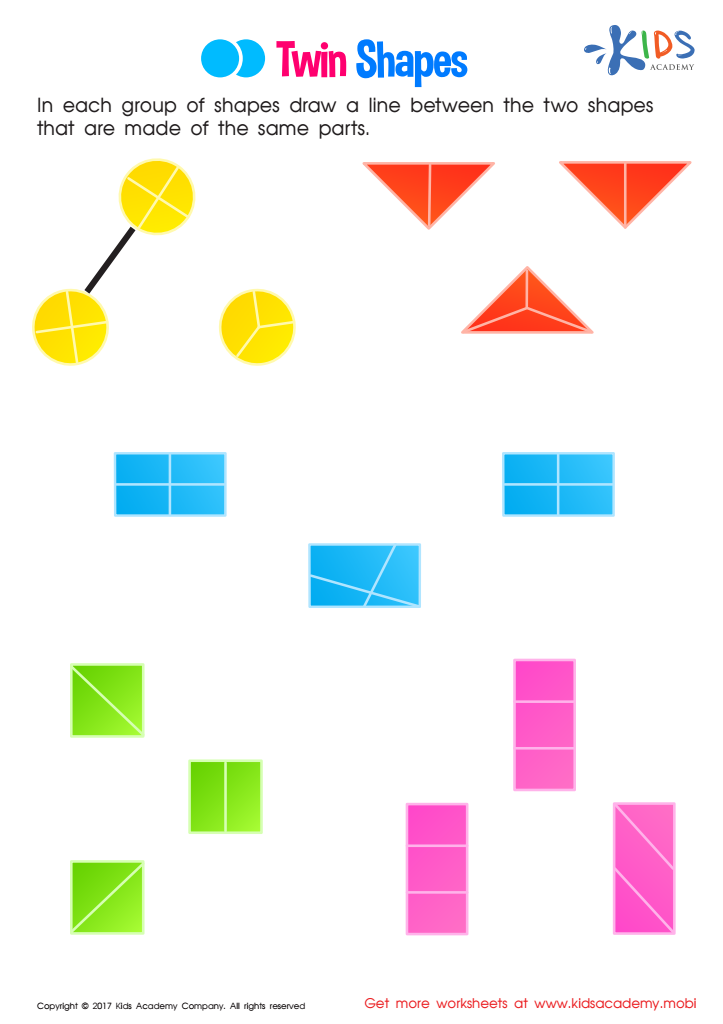
Twin Shapes Worksheet
 Assign to My Students
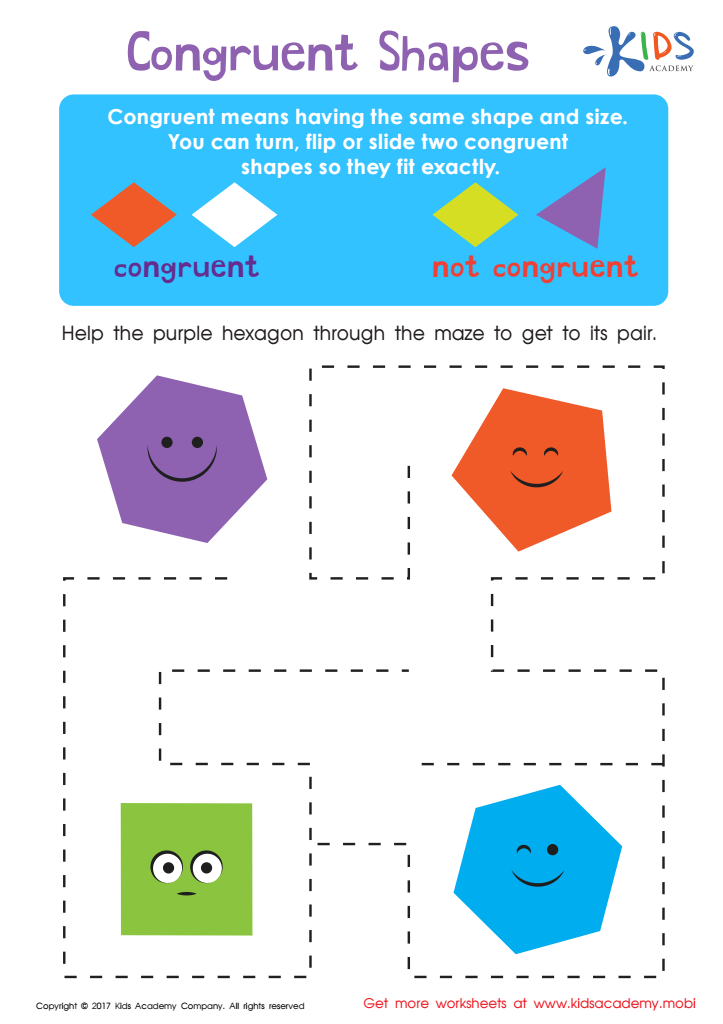
Congruent Shapes Worksheet
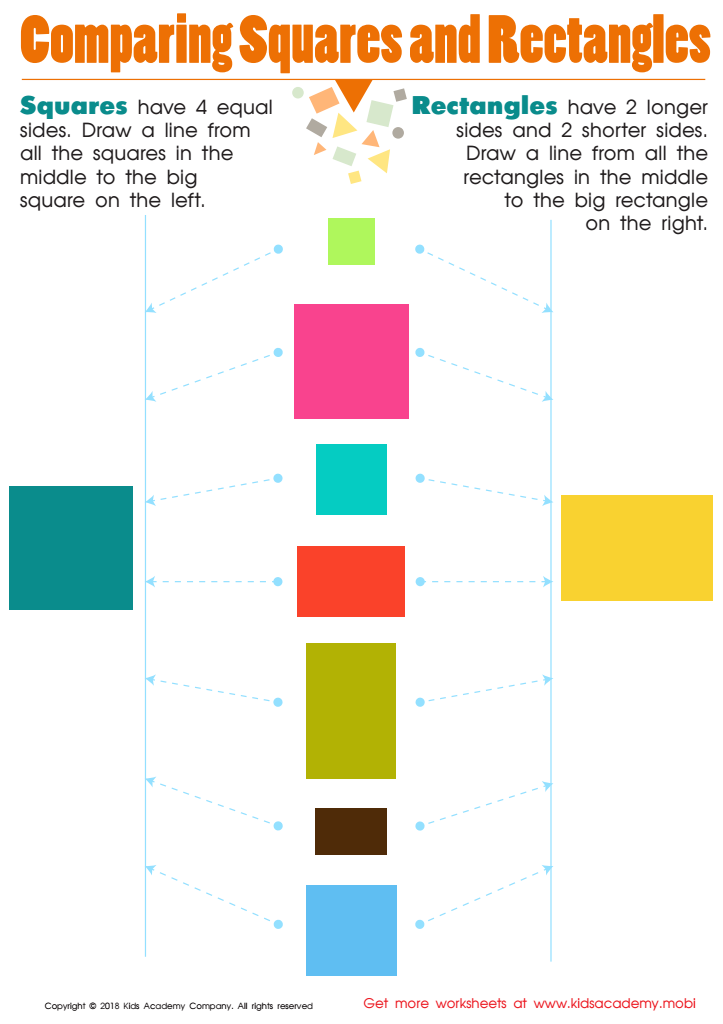
Comparing Squares Rectangles Worksheet
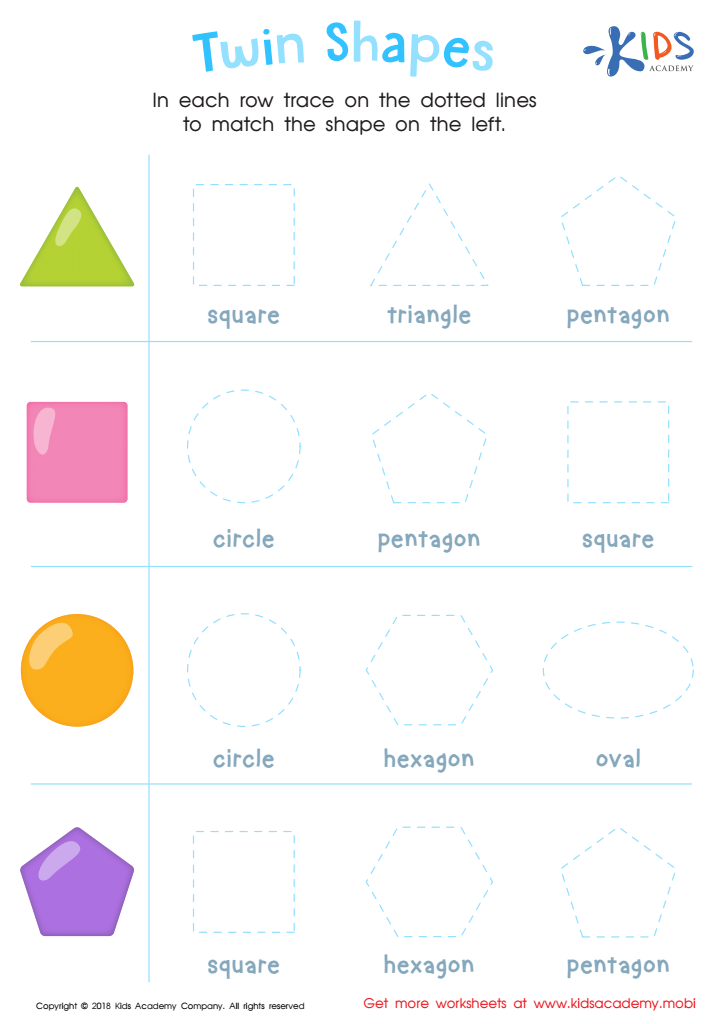
Twin Shapes Dot-to-Dot Worksheet





Comparing shapes is an essential cognitive skill for children ages 3-8 and plays a significant role in their early development. Understanding shapes lays the foundation for critical thinking and enhances spatial awareness, which are crucial skills for subjects such as mathematics, science, and engineering later in life. When children engage in comparing shapes, they develop their observational skills, refine their vocabulary, and learn to recognize patterns and relationships.
For parents and teachers, fostering this skill is incredibly valuable. It encourages children to think analytically as they identify similarities and differences in geometry. Engaging in shape comparison activities can also support early problem-solving skills, enabling children to make predictions and draw conclusions based on their observations.
Moreover, learning about shapes can be a fun and interactive experience, helping to capture children’s attention and foster a love for learning. Activities such as sorting shapes, creating art projects, or playing games make this learning process enjoyable, which enhances retention and understanding. As children compare shapes, they also build confidence and independence in their learning journey, equipping them with tools they will use for years to come. Thus, parents and teachers should prioritize shape comparison in early education to nurture these foundational skills.








