Filters

28 filtered results

Clear all filters
Favorites
With answer key
Interactive

28 filtered results

Difficulty Level

Grade


Introduce young learners to basic math while exploring the animal kingdom with our engaging "Animal identification Addition & Subtraction Worksheets for Ages 3-8." Designed to captivate and educate, these worksheets combine simple addition and subtraction exercises with fun animal identification activities to foster a love for math and nature. Perfect for children ages 3-8, these printables help develop essential math skills, critical thinking, and the ability to recognize various animal species. Ideal for both classroom and home use, our worksheets make learning math both enjoyable and effective through playful interactions with adorable animals. Boost your child’s skills today!
Check out this FREE Trial Lesson on Addition & Subtraction for age 3-8!

H

Favorites
With answer key
Interactive
  • 3-8
  • Animal identification
  • Addition & Subtraction
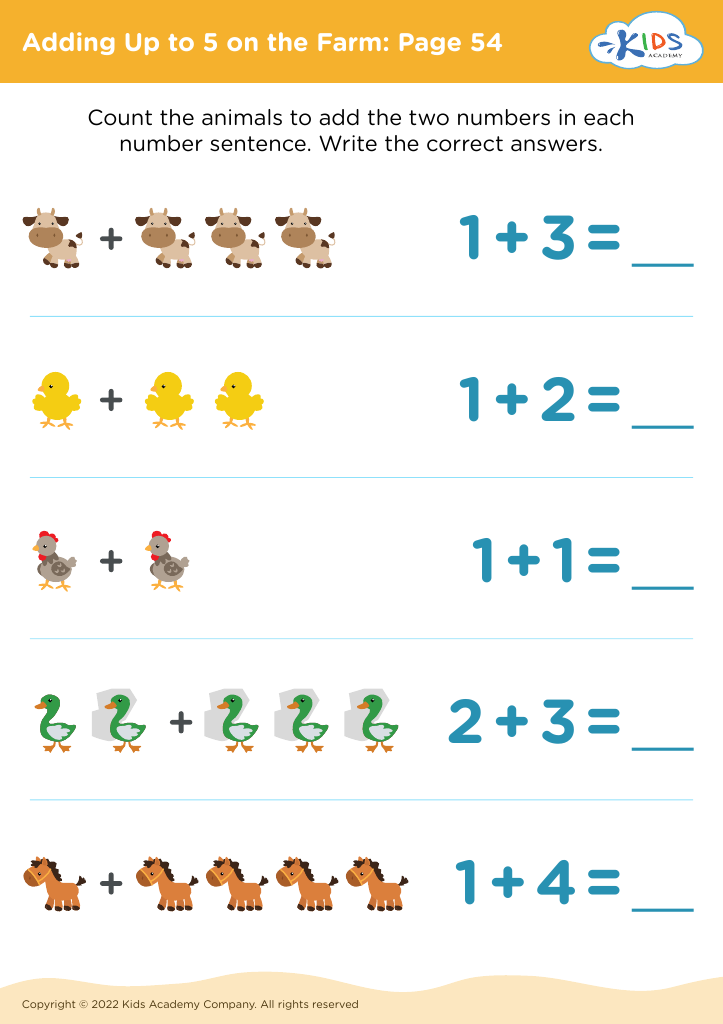
Adding Up to 5 on the Farm: Page 54
Worksheet
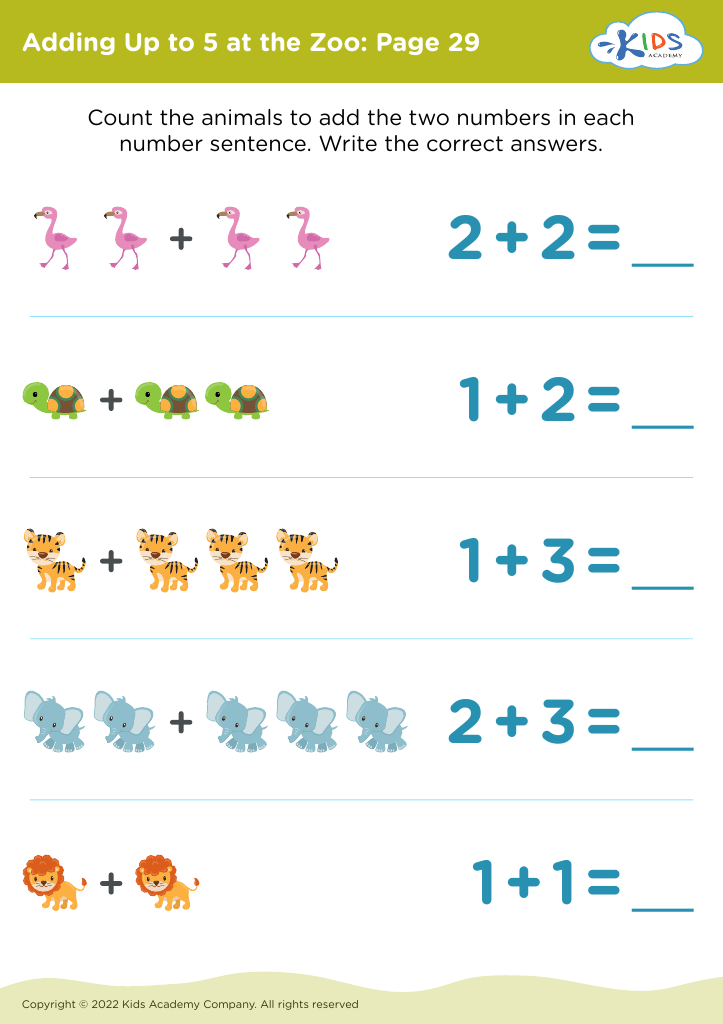
Adding Up to 5 at the Zoo: Page 29
Worksheet
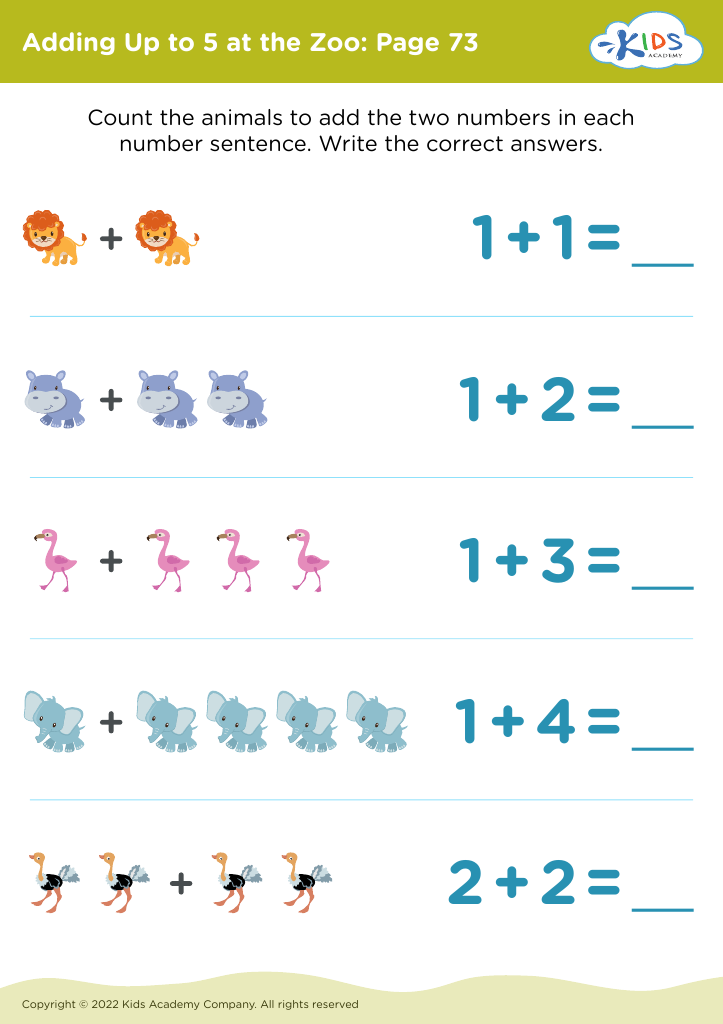
Adding Up to 5 at the Zoo: Page 73
Worksheet
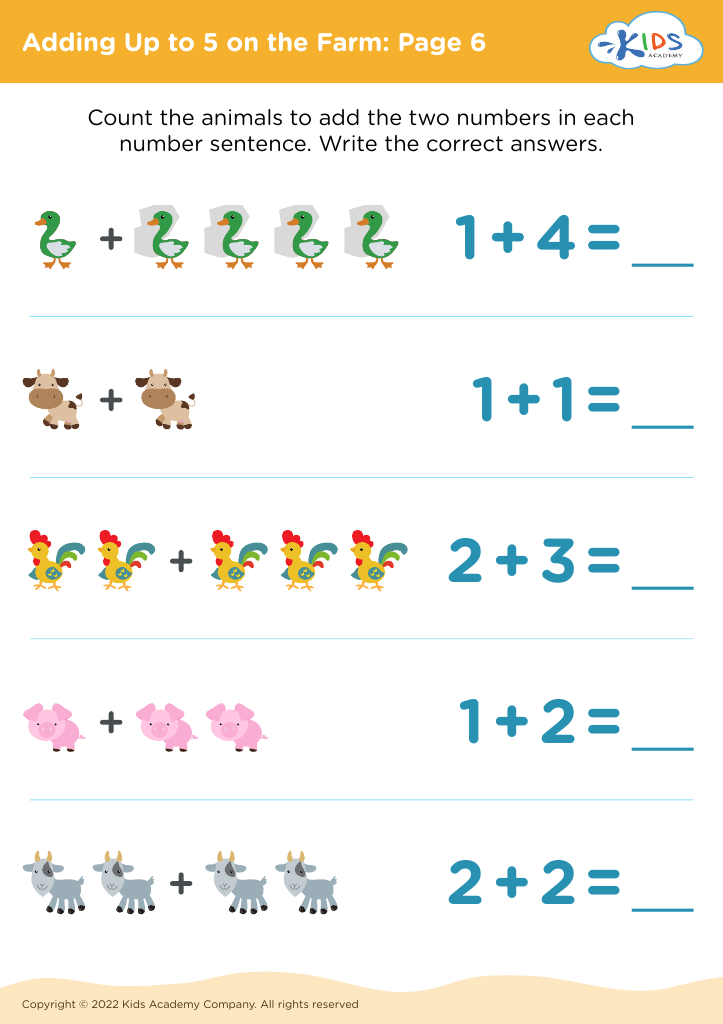
Adding Up to 5 on the Farm: Page 6
Worksheet
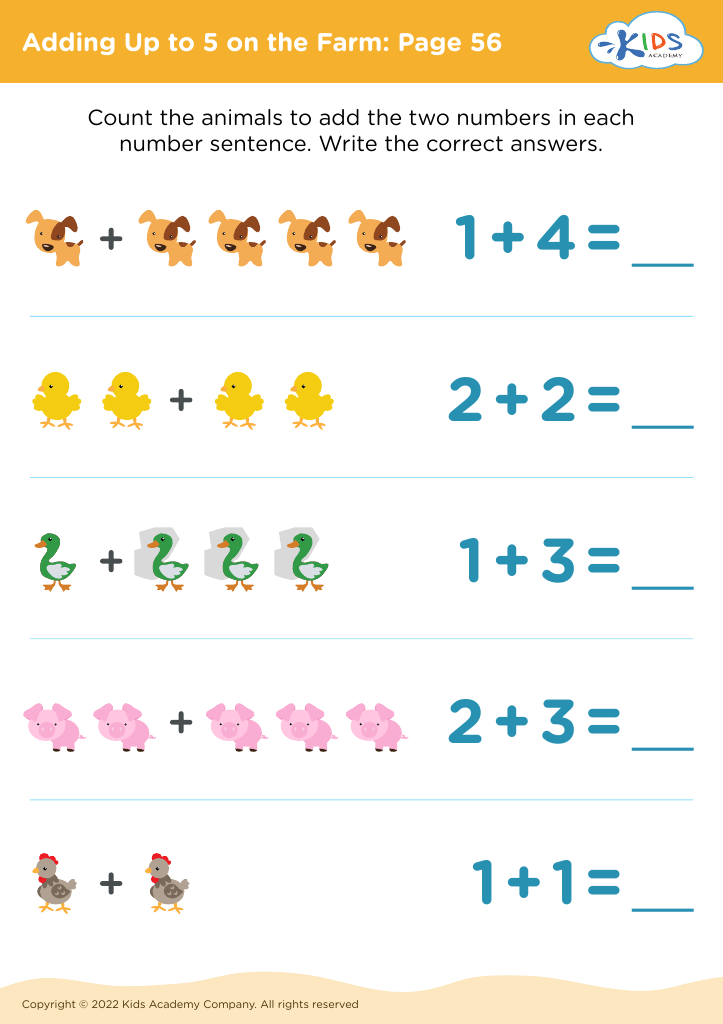
Adding Up to 5 on the Farm: Page 56
Worksheet
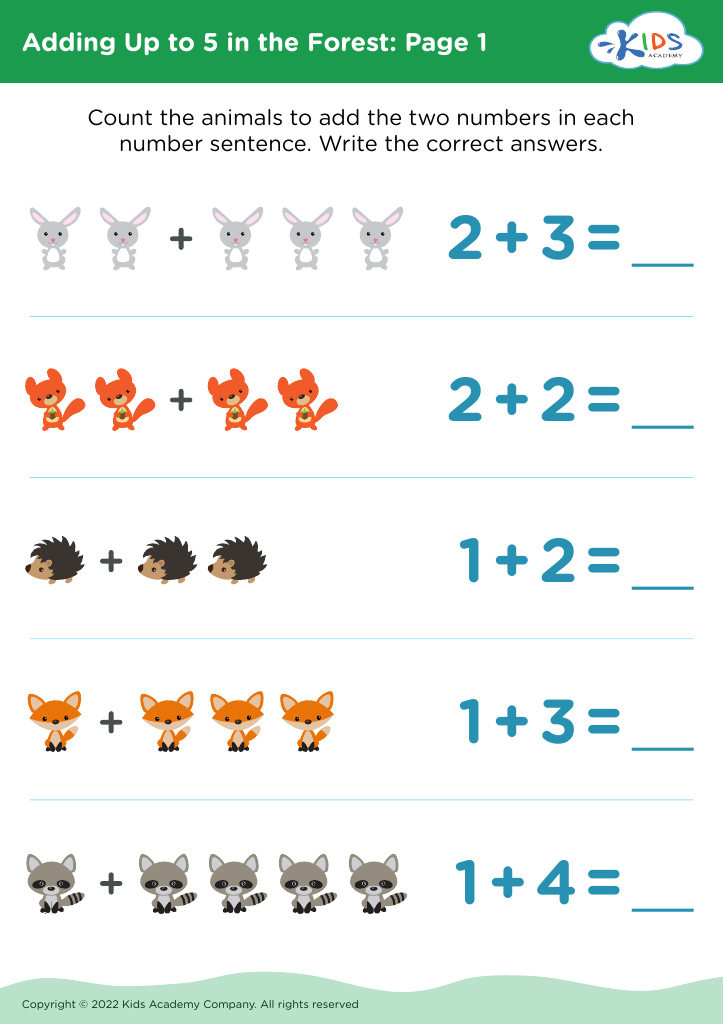
Adding Up to 5 in the Forest: Page 1
Worksheet
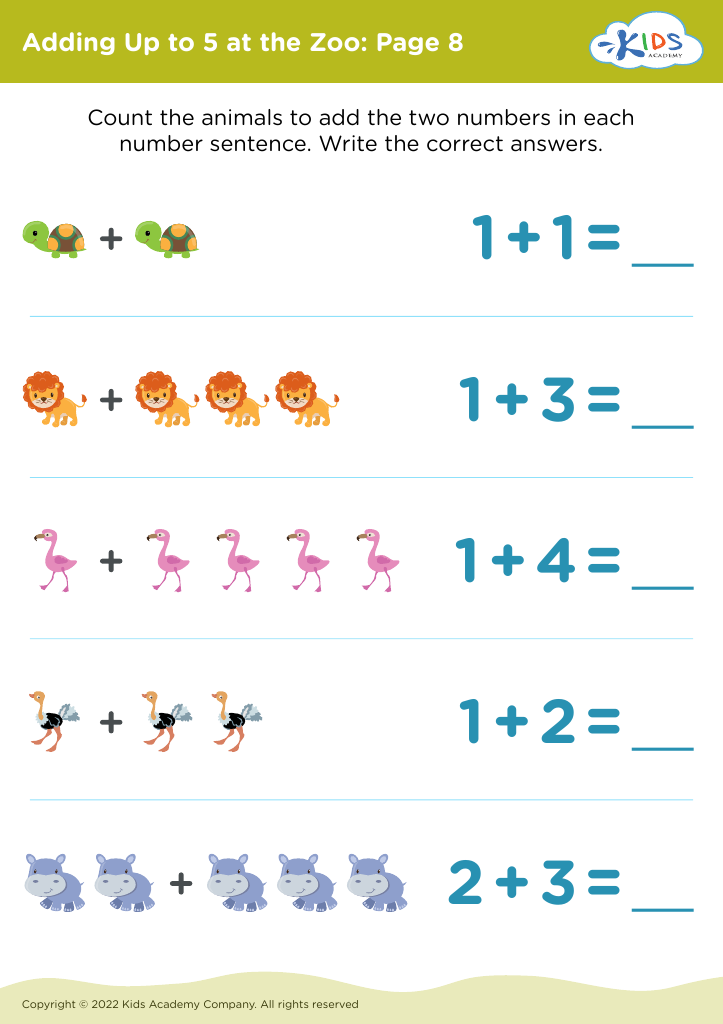
Adding Up to 5 at the Zoo: Page 8

Adding Up to 5 at the Zoo: Page 8

Adding Up to 5 at the Zoo: Page 8
Worksheet
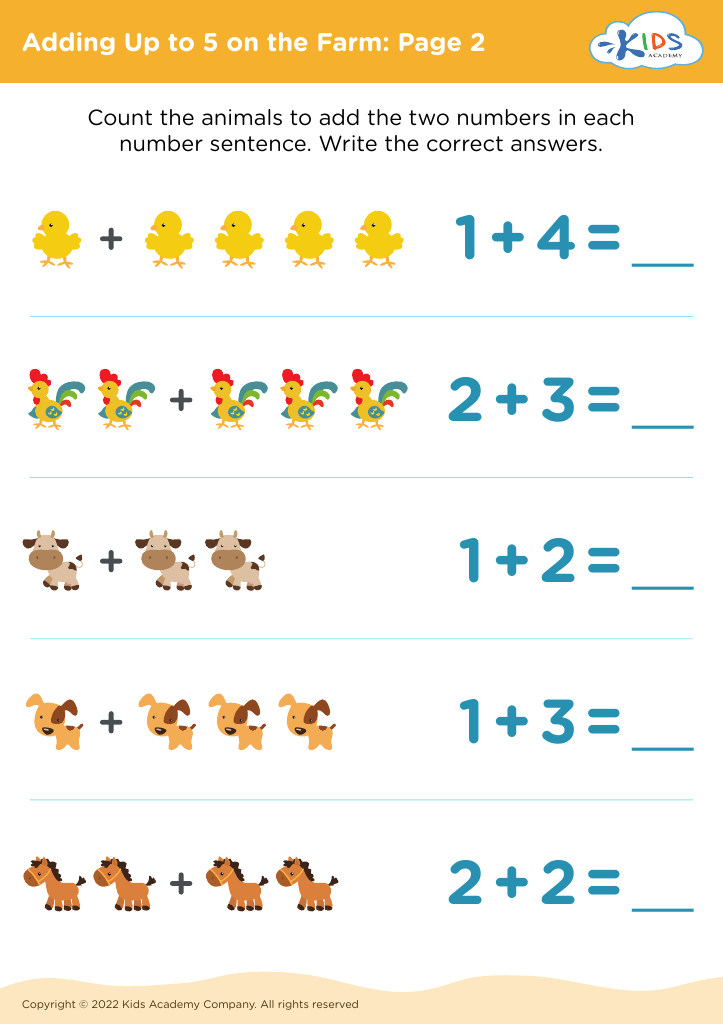
Adding Up to 5 on the Farm: Page 2
Worksheet
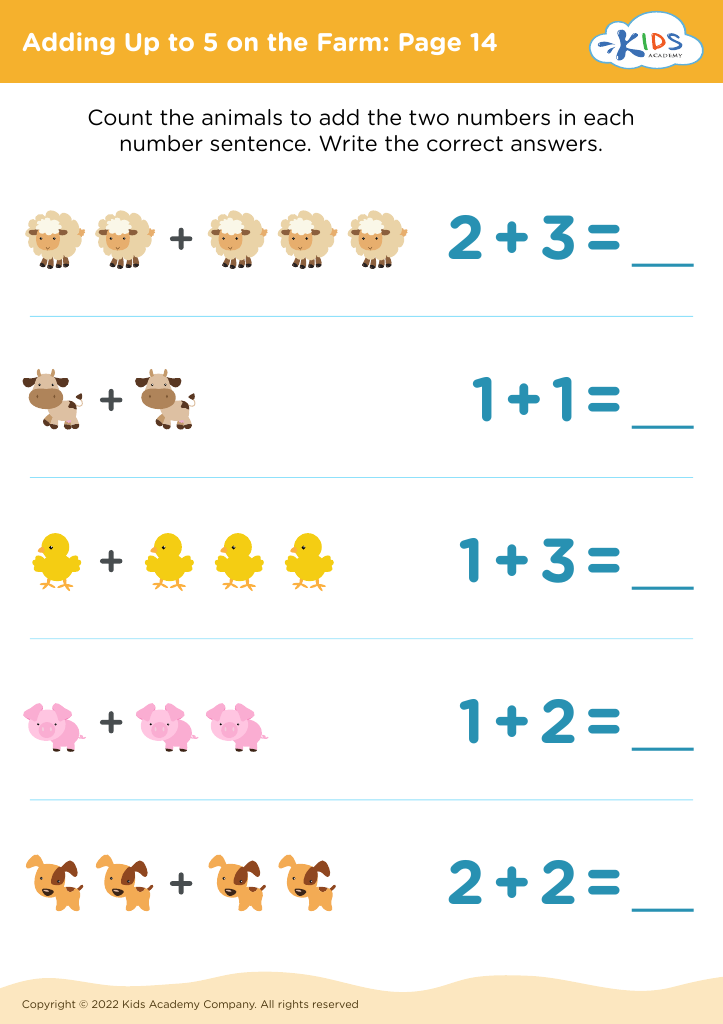
Adding Up to 5 on the Farm: Page 14
Worksheet
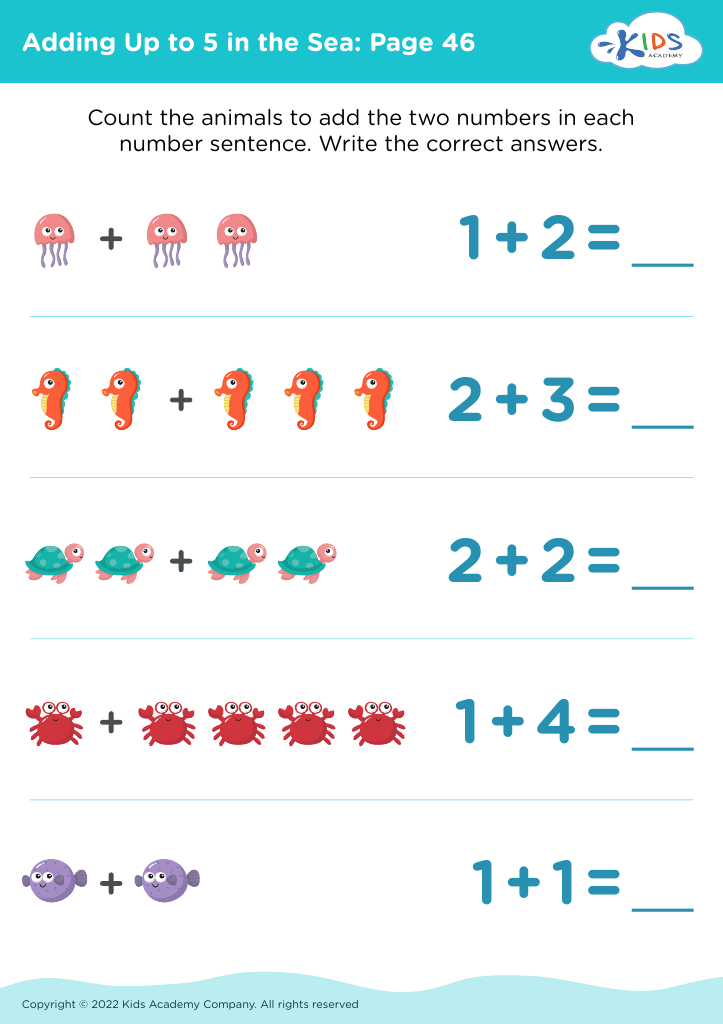
Adding Up to 5 in the Sea: Page 46
Worksheet
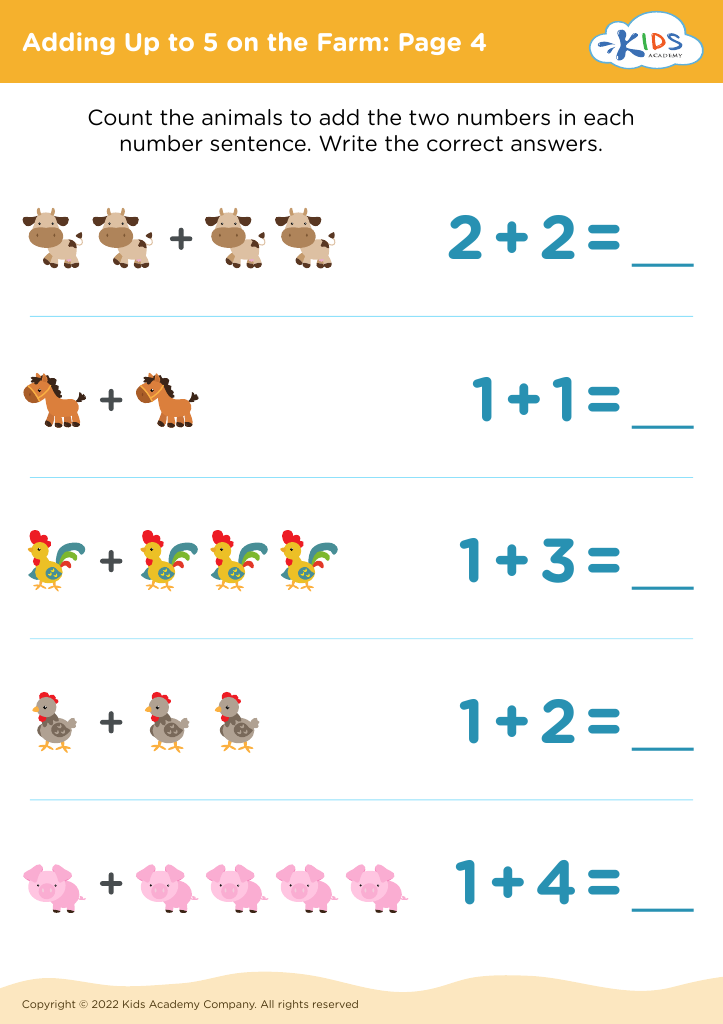
Adding Up to 5 on the Farm: Page 4
Worksheet
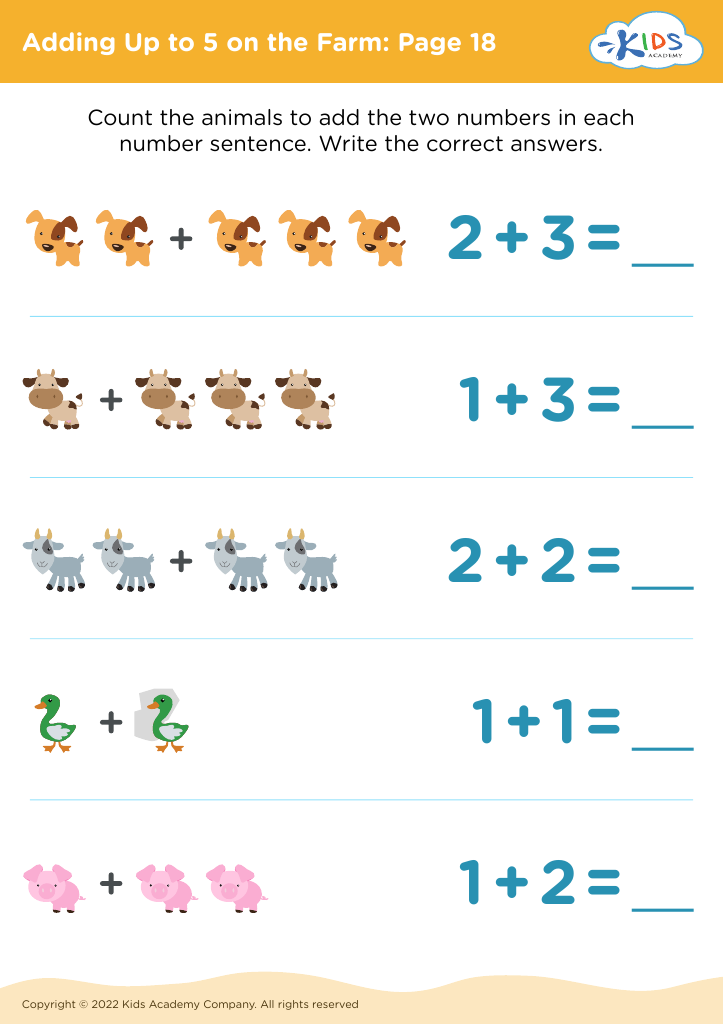
Adding Up to 5 on the Farm: Page 18
Worksheet
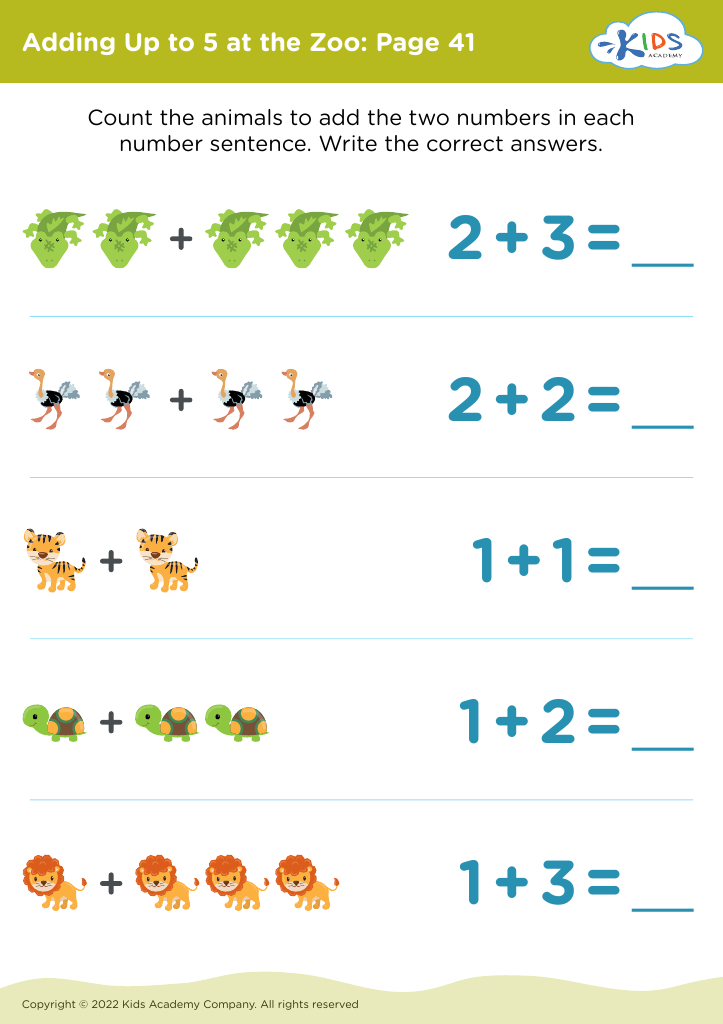
Adding Up to 5 at the Zoo: Page 41
Worksheet
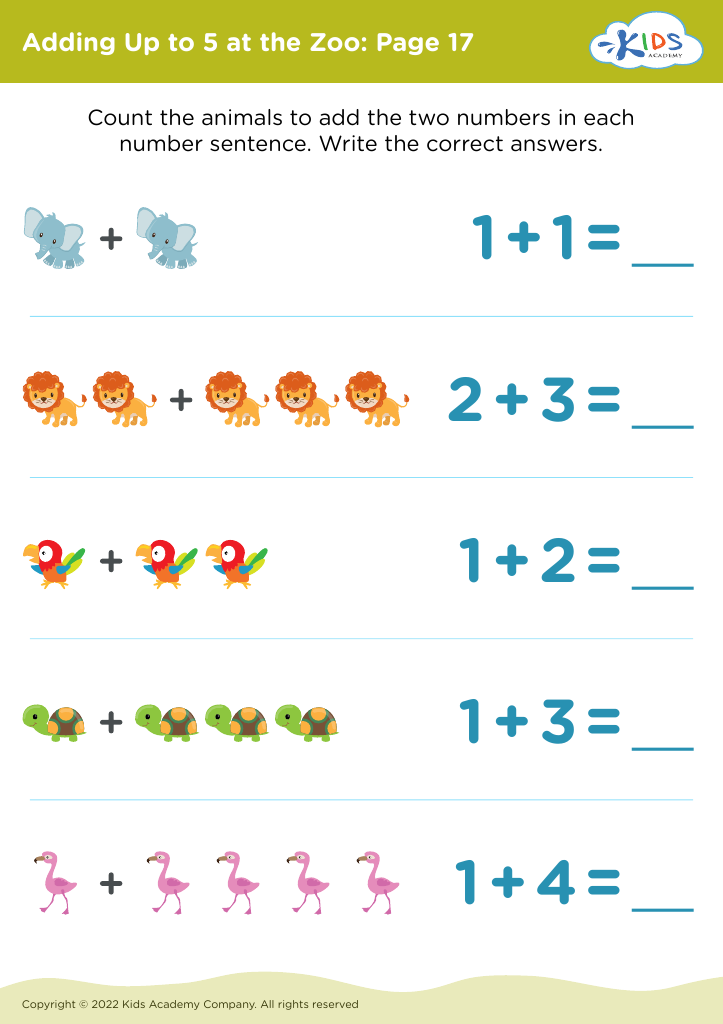
Adding Up to 5 at the Zoo: Page 17
Worksheet
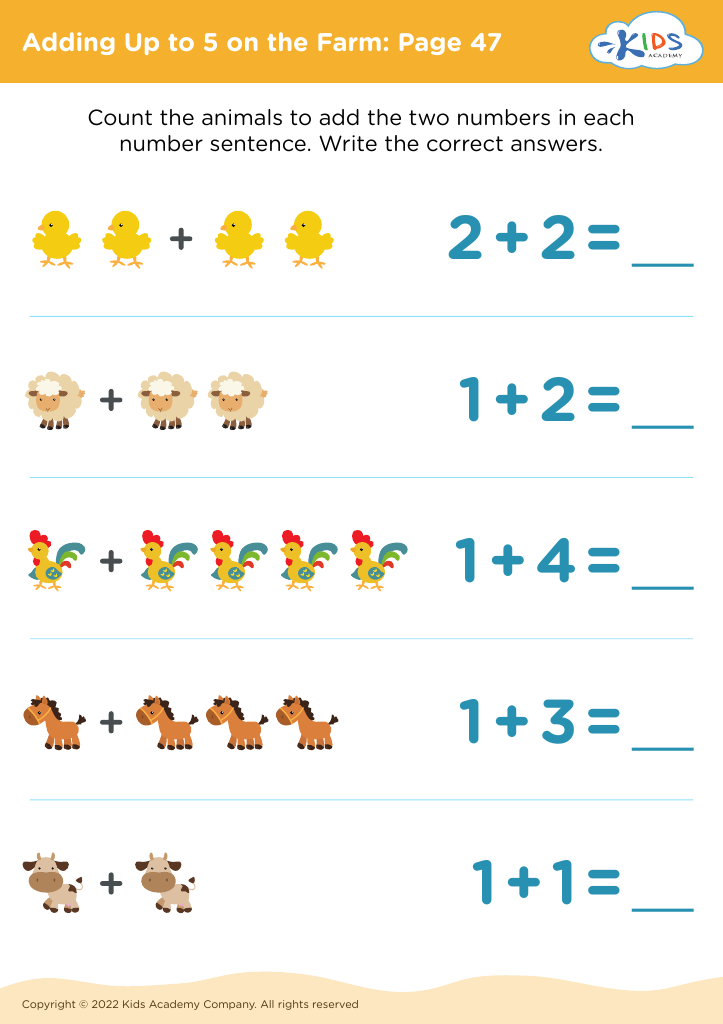
Adding Up to 5 on the Farm: Page 47
Worksheet
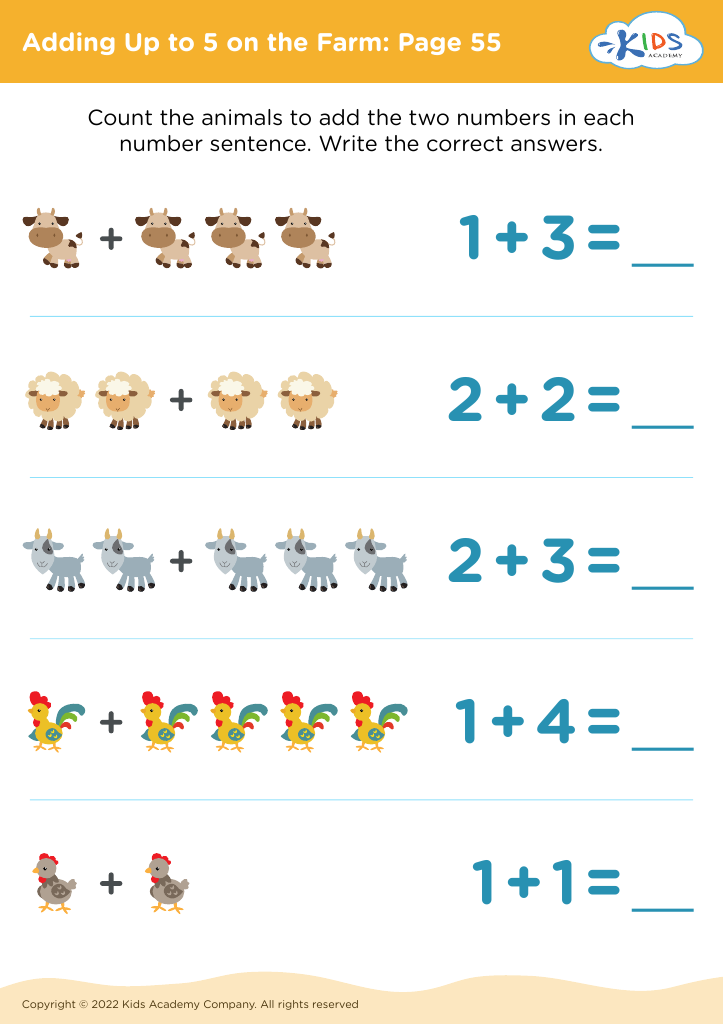
Adding Up to 5 on the Farm: Page 55
Worksheet
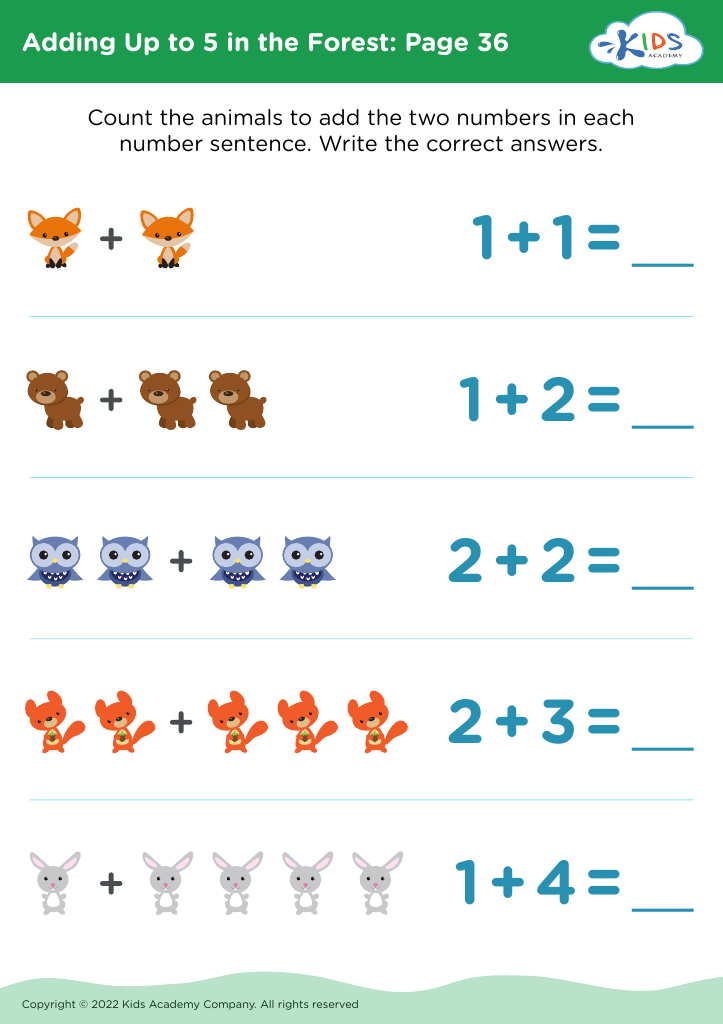
Adding Up to 5 in the Forest: Page 36
Worksheet
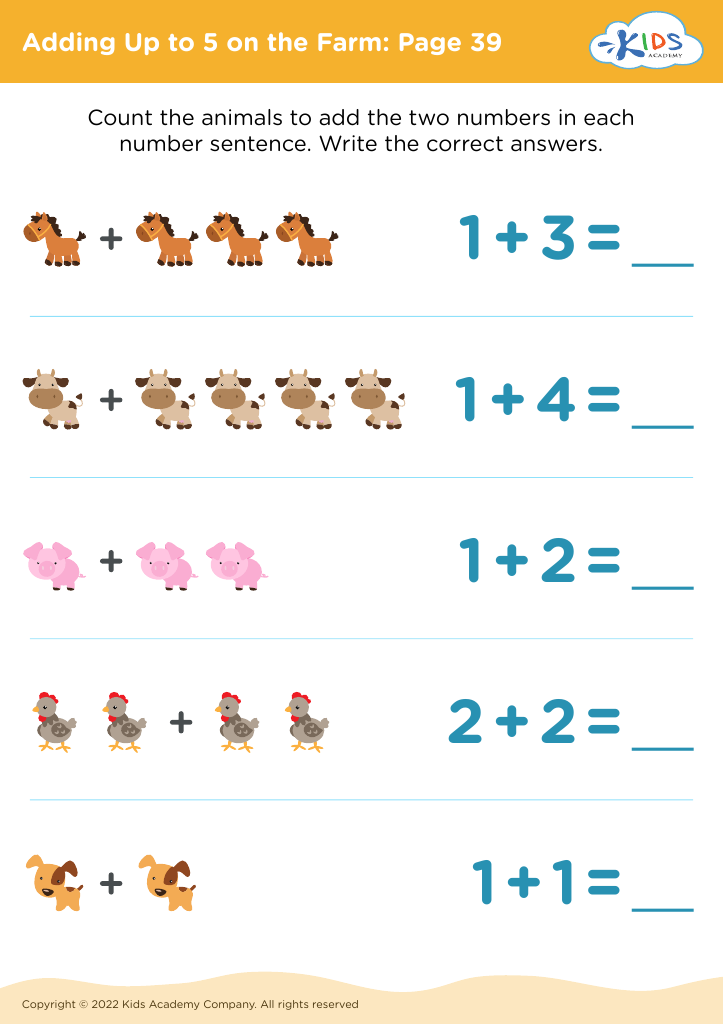
Adding Up to 5 on the Farm: Page 39
Worksheet
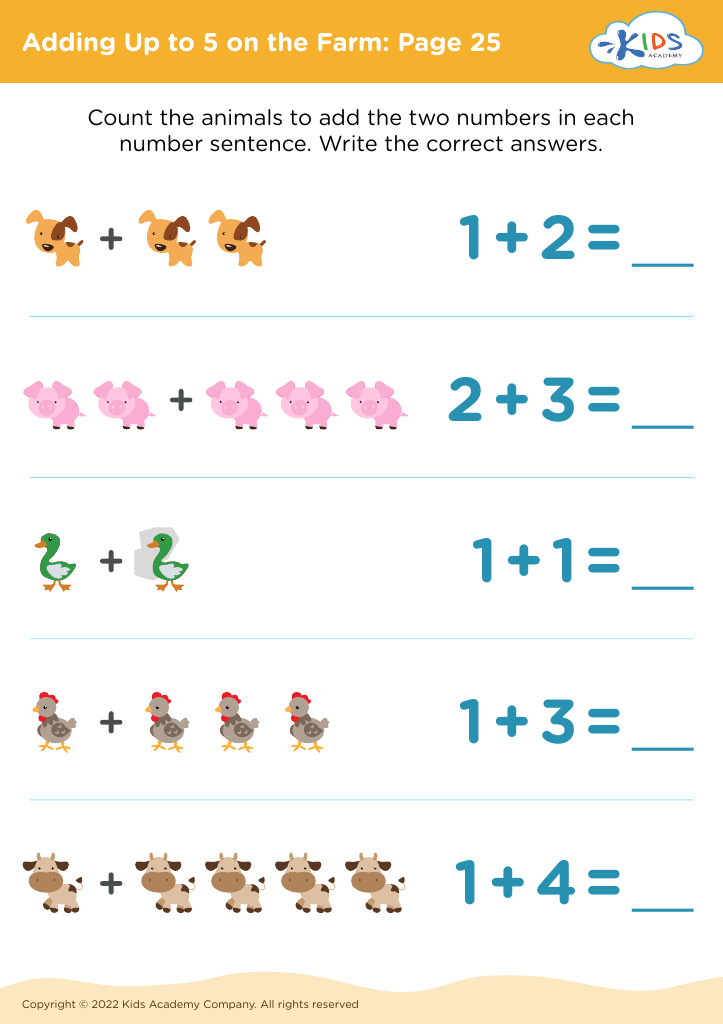
Adding Up to 5 on the Farm: Page 25
Worksheet
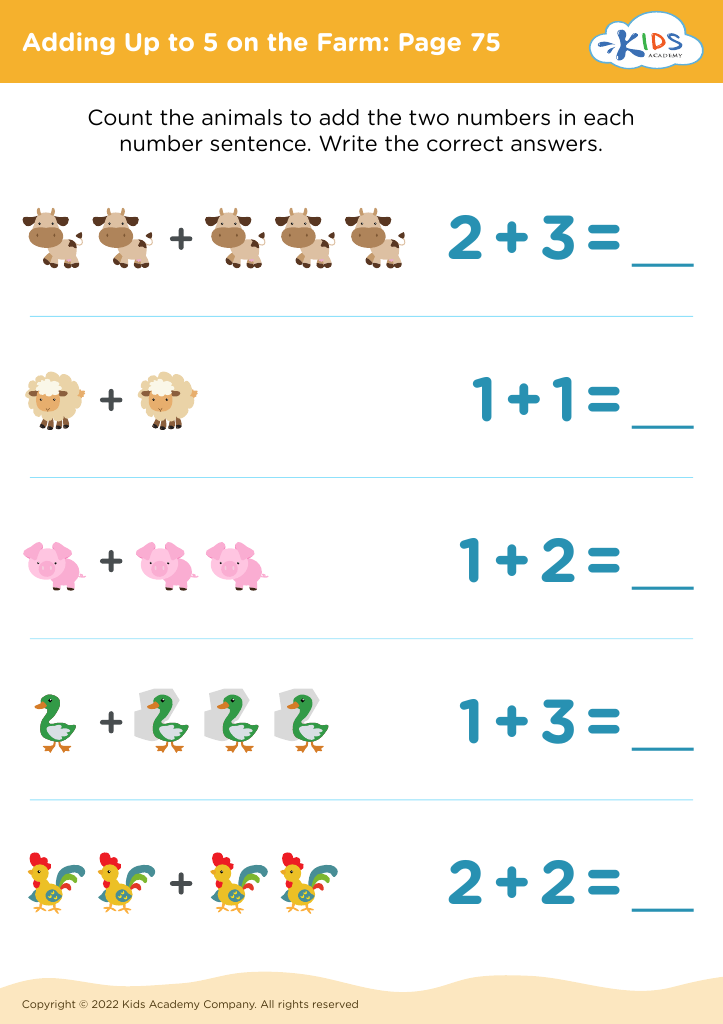
Adding Up to 5 on the Farm: Page 75
Worksheet
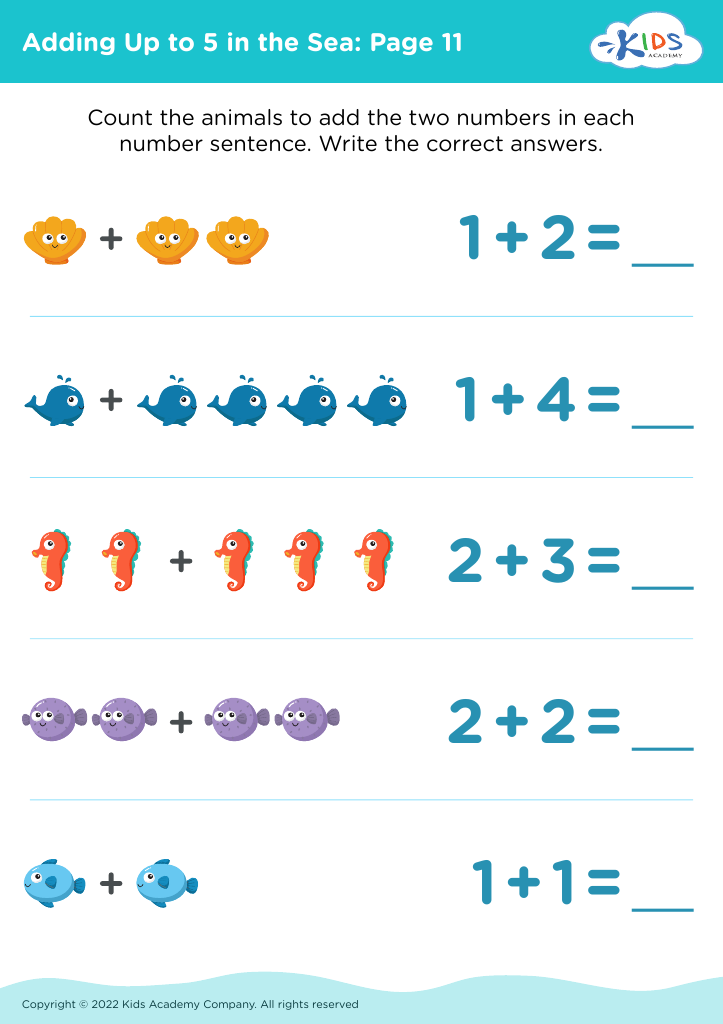
Adding Up to 5 in the Sea: Page 11
Worksheet
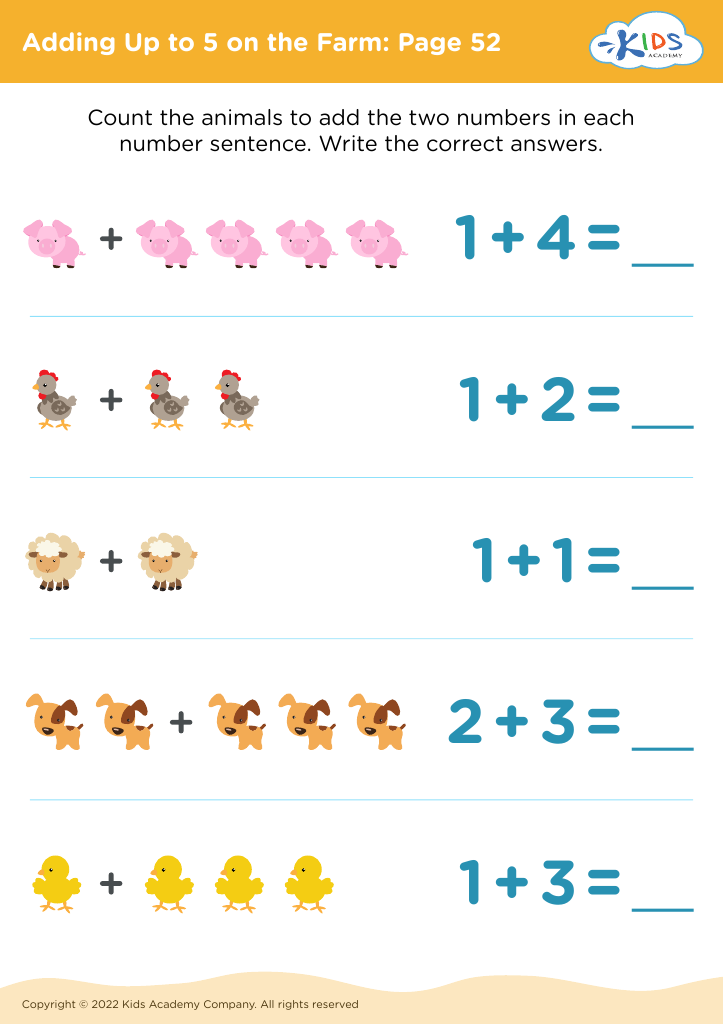
Adding Up to 5 on the Farm: Page 52
Worksheet
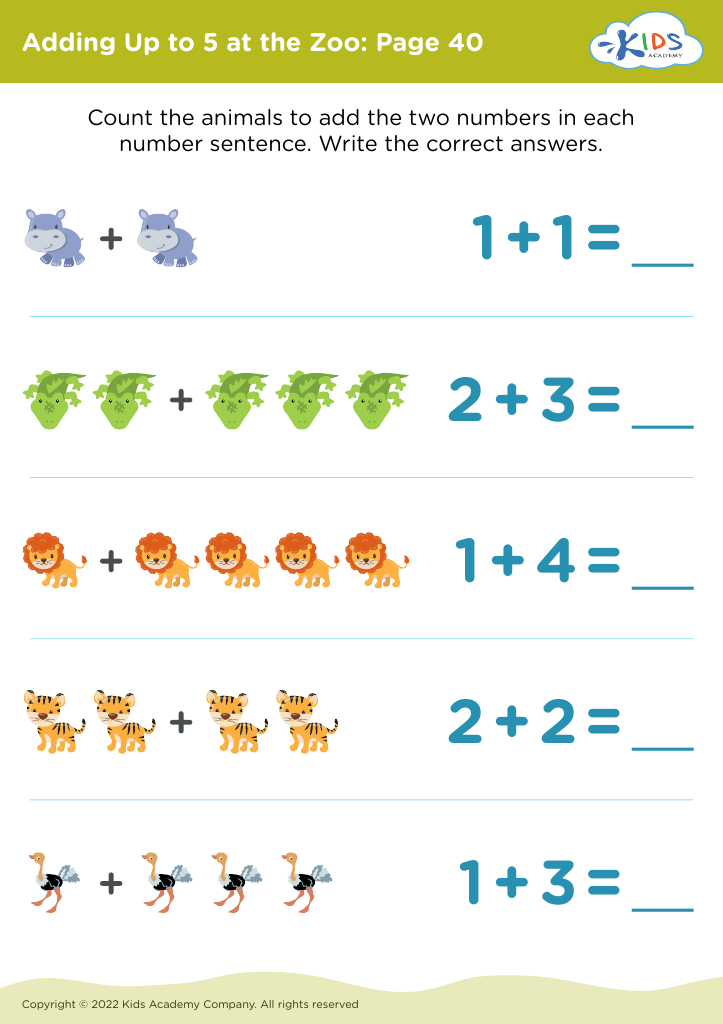
Adding Up to 5 at the Zoo: Page 40
Worksheet
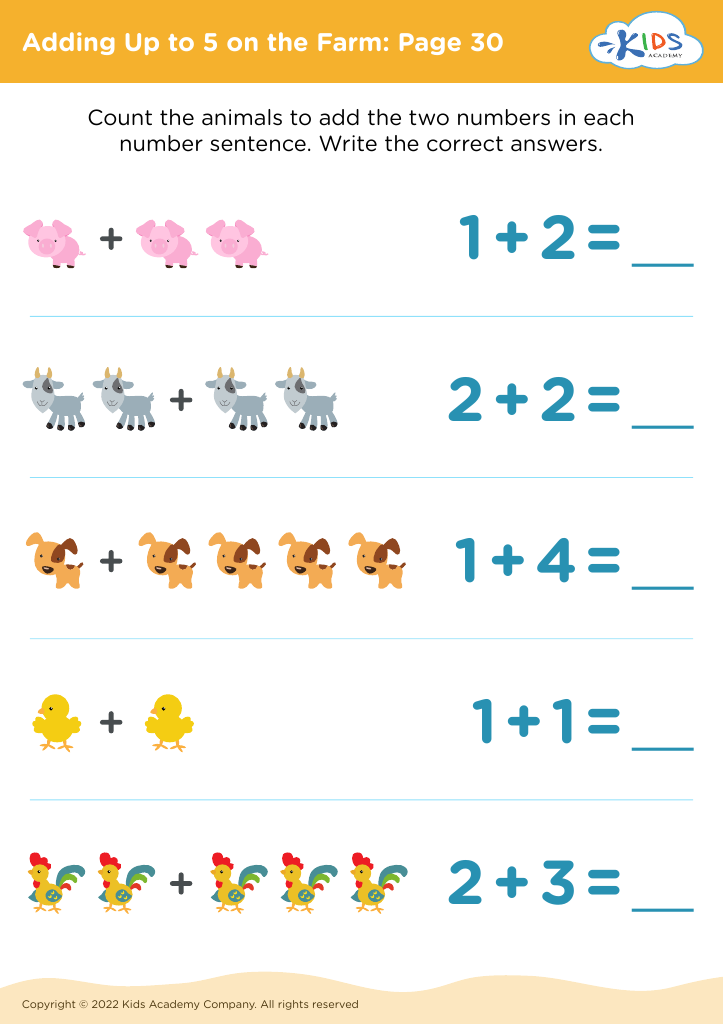
Adding Up to 5 on the Farm: Page 30
Worksheet


Animal identification paired with addition and subtraction exercises provides a multifaceted developmental boost for children aged 3-8. Firstly, introducing young learners to diverse animal species expands their understanding of the natural world. This foundation in biology fosters curiosity and a sense of stewardship for the environment.

Combining this with basic arithmetic transforms learning into an engaging, hands-on experience. For instance, a child might count the number of lions and giraffes in a picture, then solve a simple addition problem to determine the total number of animals. Such activities concretize abstract mathematical concepts, as tangible objects (animals) make them more relatable and easier to grasp.

Furthermore, these exercises encourage the development of crucial cognitive skills. The requirements to identify, count, add, and subtract stimulate memory, attention, and problem-solving abilities. Socially, this learning method can foster collaboration and communication among peers as they discuss and solve problems together.

Parents and teachers play pivotal roles by embedding these activities into playtime and classroom routines. They create a supportive environment where learning feels like a natural, enjoyable part of the day. Overall, this educational strategy enriches foundational academic and life skills, setting young learners on a path to success.