Critical thinking skills Addition & Subtraction Worksheets for Ages 3-8
9 filtered results
-
From - To
Discover our engaging "Critical Thinking Skills Addition & Subtraction Worksheets" designed for children aged 3-8. These carefully crafted worksheets not only enhance basic math skills but also promote critical thinking and problem-solving abilities. Young learners will explore fun activities that challenge their reasoning and logic while mastering addition and subtraction concepts. Each worksheet encourages children to think creatively and apply their knowledge in various contexts, making learning mathematics enjoyable and impactful. Perfect for home or classroom use, these resources will prepare your child for future academic success. Start fostering critical thinking skills today with our vibrant and interactive math worksheets!
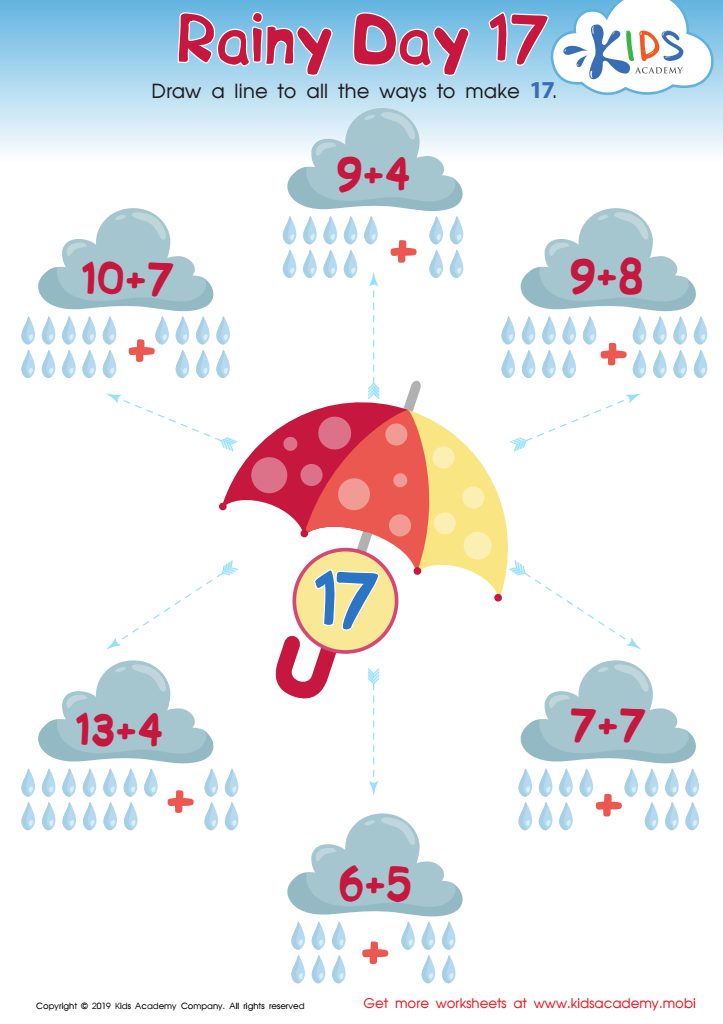
Rainy Day 17 Worksheet
 Assign to My Students
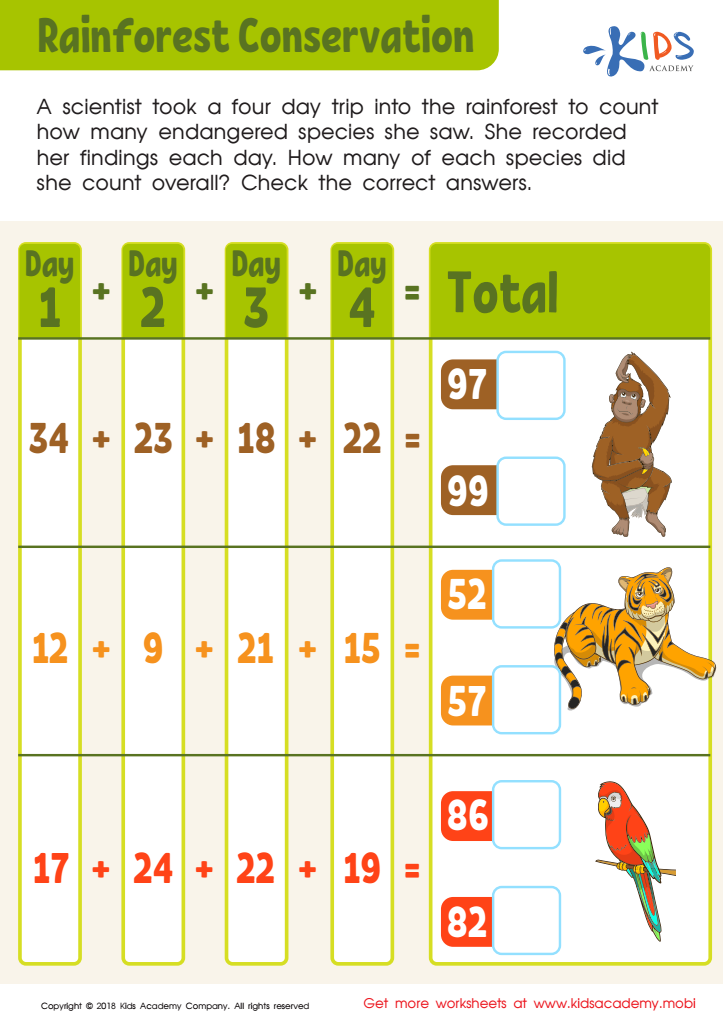
Rainforest Conservation Worksheet
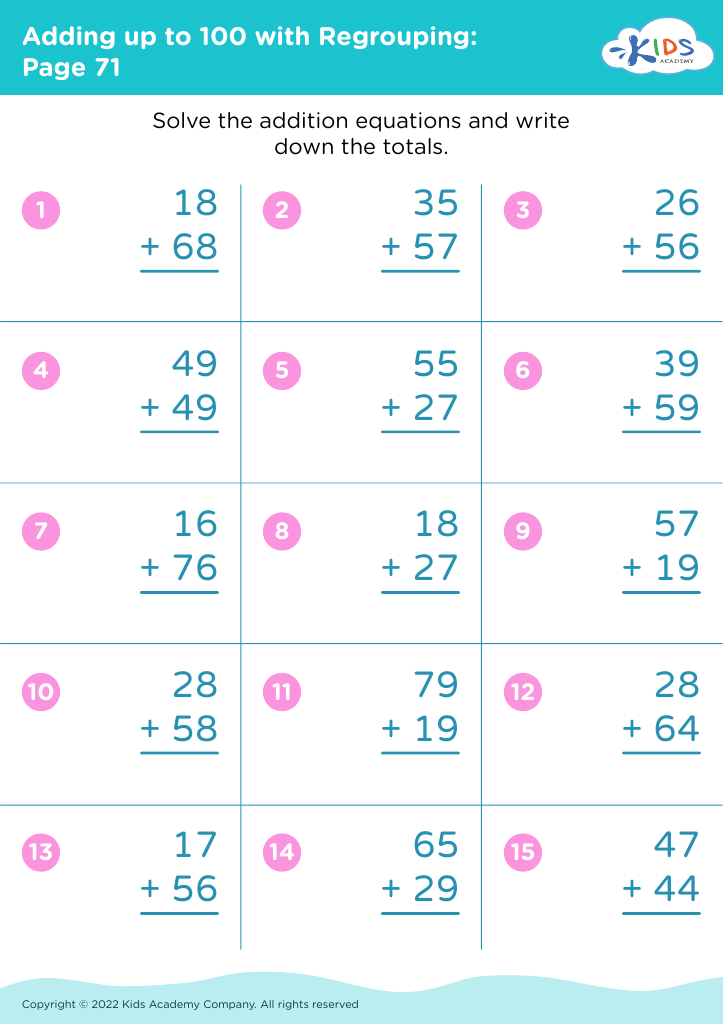
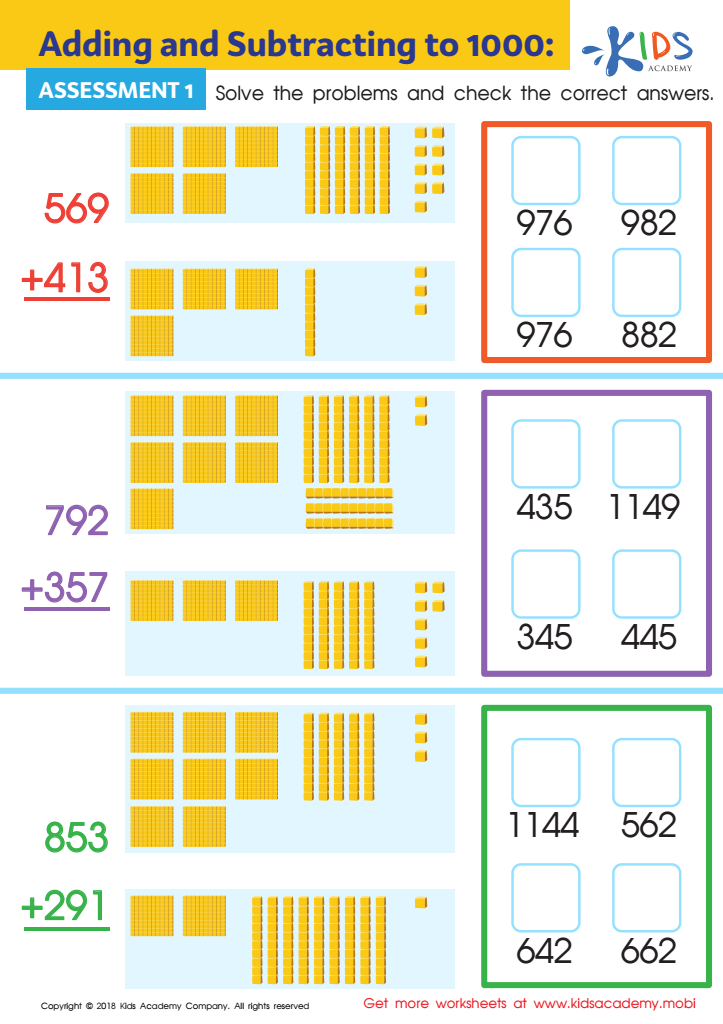
Adding and Subtracting to 1 Worksheet: Assessment 1
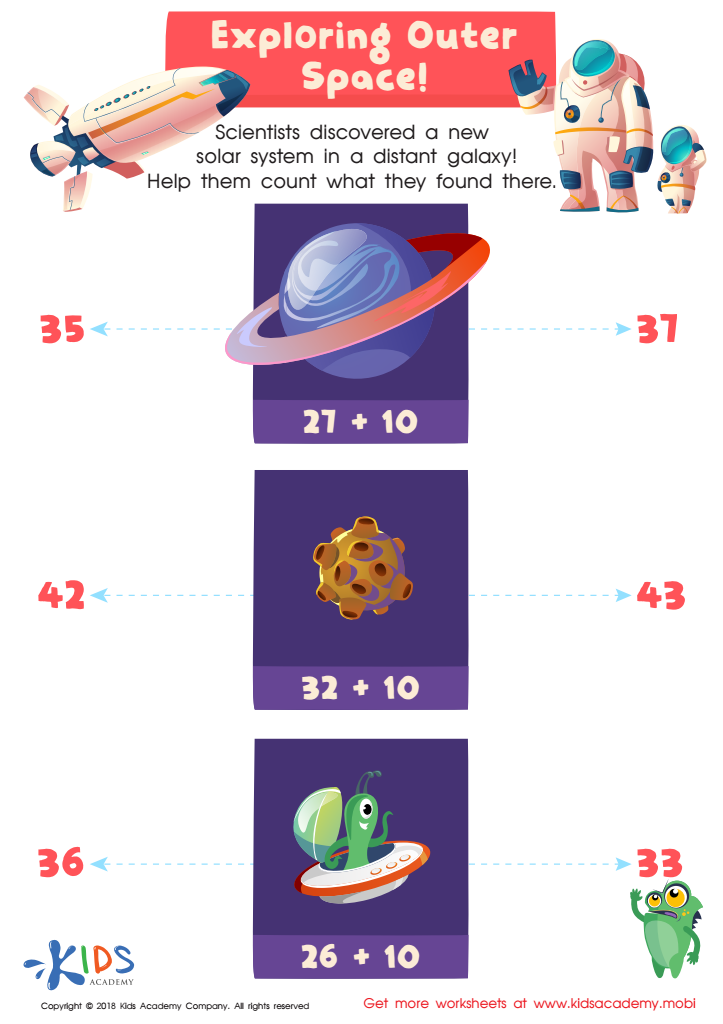
Exploring Outer Space Worksheet








Parents and teachers play a pivotal role in nurturing critical thinking skills in young children, particularly in foundational areas like addition and subtraction for ages 3-8. These skills are not merely about performing calculations; they form the bedrock for logical reasoning, problem-solving, and analytical thinking that children will use throughout their lives.
When children engage in addition and subtraction, they learn to approach problems methodically, experiment with solutions, and understand the logical relationships between numbers. This exploration fosters inquiry, encouraging children to ask "why" and "how," thus enhancing their cognitive abilities.
Moreover, critical thinking in math integrates creativity with logic. For instance, when solving simple problems, children often come up with various strategies, developing their flexibility in thinking. This doesn’t just prepare them academically; it equips them with the confidence to tackle challenges in various contexts.
Additionally, these skills are essential for everyday life decisions, from budgeting money to understanding time. By investing time and encouragement into developing these skills during early childhood, parents and teachers enable children to become thoughtful, independent thinkers who approach challenges with curiosity and perseverance. The implications of a strong foundation in critical thinking extend well beyond mathematics, shaping well-rounded individuals equipped for future challenges.








