Filters

1258 filtered results

Clear all filters
Favorites
With answer key
Interactive

1258 filtered results

Difficulty Level

Grade


Subject

    Check out this FREE Trial Lesson on Addition for age 3-8!

    Add Within 1,000 Understanding What It Means to Regroup 2 Addends

    Favorites
    With answer key
    Interactive
    • 3-8
    • Addition
    Adding Numbers: Conservation Worksheet
    Adding Numbers: Conservation Worksheet

    Adding Numbers: Conservation Worksheet

    We all live on the Earth, which provides us with the vital necessities for survival. Unfortunately, we too often take advantage of this, causing pollution, water wastage and global warming. Help teach your kids how we can protect our planet - ask them to come up with good ideas and work together to find solutions. Challenge them to solve the subtraction problems to see what they can do to help keep the Earth healthy.
    Adding Numbers: Conservation Worksheet
    Worksheet
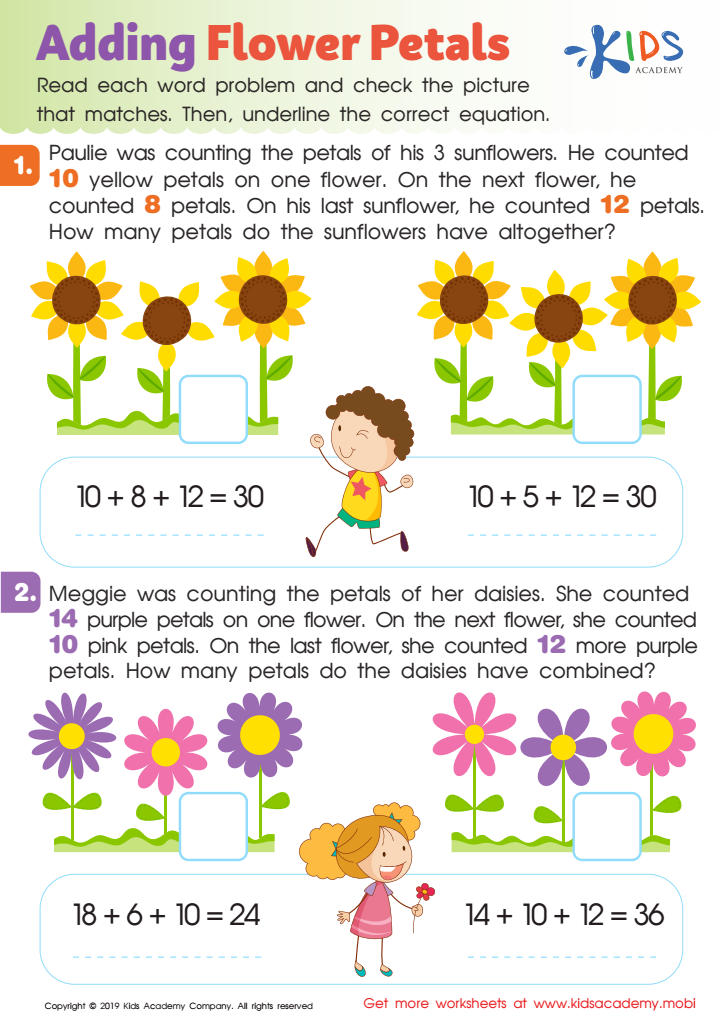
    Adding Flower Petals Worksheet
    Adding Flower Petals Worksheet

    Adding Flower Petals Worksheet

    This free worksheet helps little mathematicians learn to understand word problems. They'll read each one and match it to the corresponding picture. Important info is highlighted, teaching kids to look for key info when solving problems. Then they'll underline the correct number equation that matches the picture. A great way to practice problem-solving skills!
    Adding Flower Petals Worksheet
    Worksheet
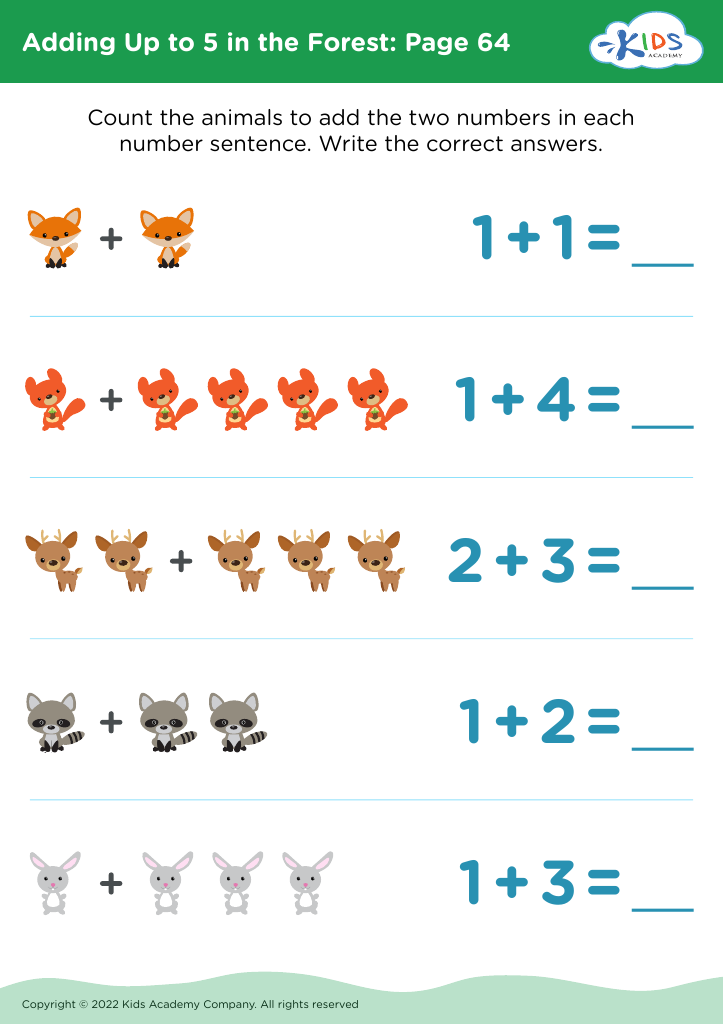
    Adding Up to 5 in the Forest: Page 64
    Adding Up to 5 in the Forest: Page 64
    Adding Up to 5 in the Forest: Page 64
    Worksheet
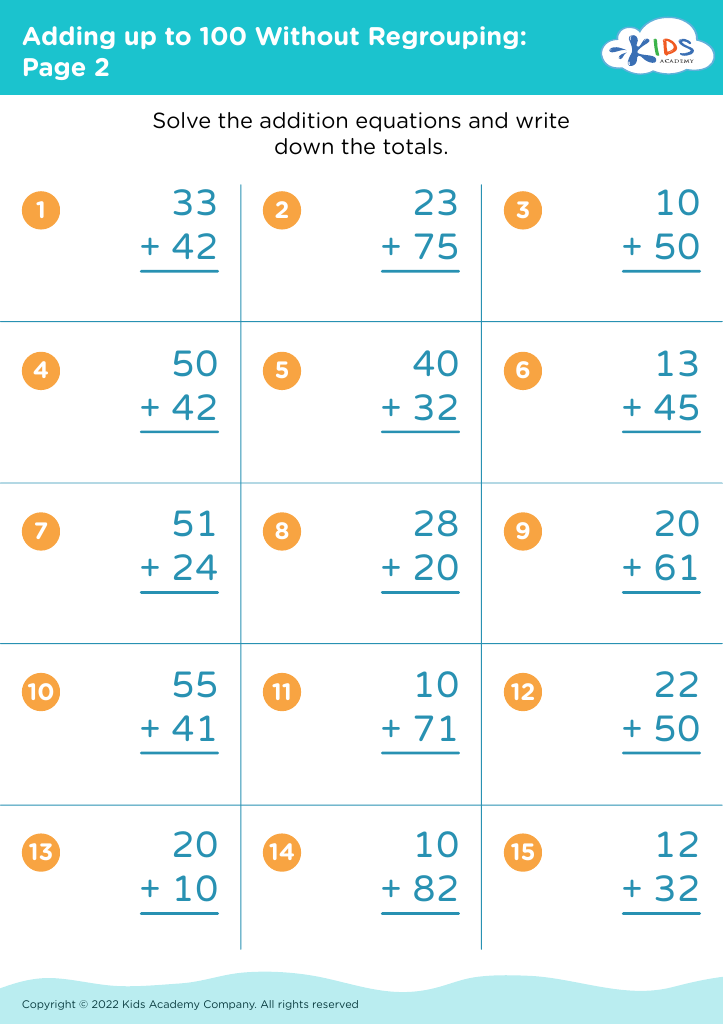
    Adding up to 100 Without Regrouping: Page 2
    Adding up to 100 Without Regrouping: Page 2
    Adding up to 100 Without Regrouping: Page 2
    Worksheet
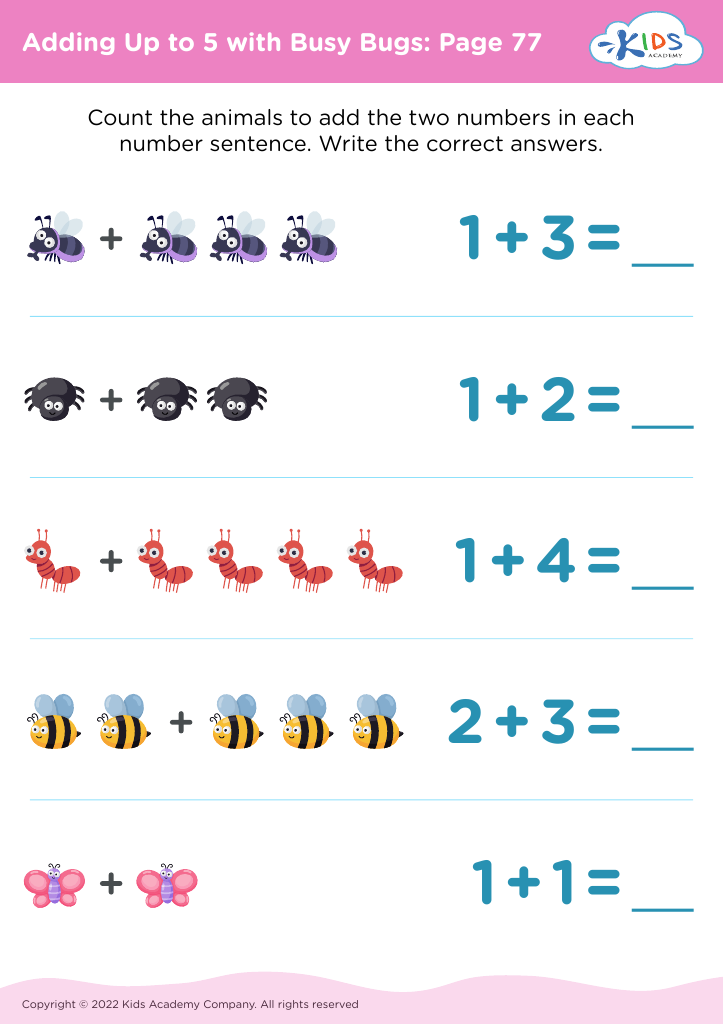
    Adding Up to 5 with Busy Bugs: Page 77
    Adding Up to 5 with Busy Bugs: Page 77
    Adding Up to 5 with Busy Bugs: Page 77
    Worksheet
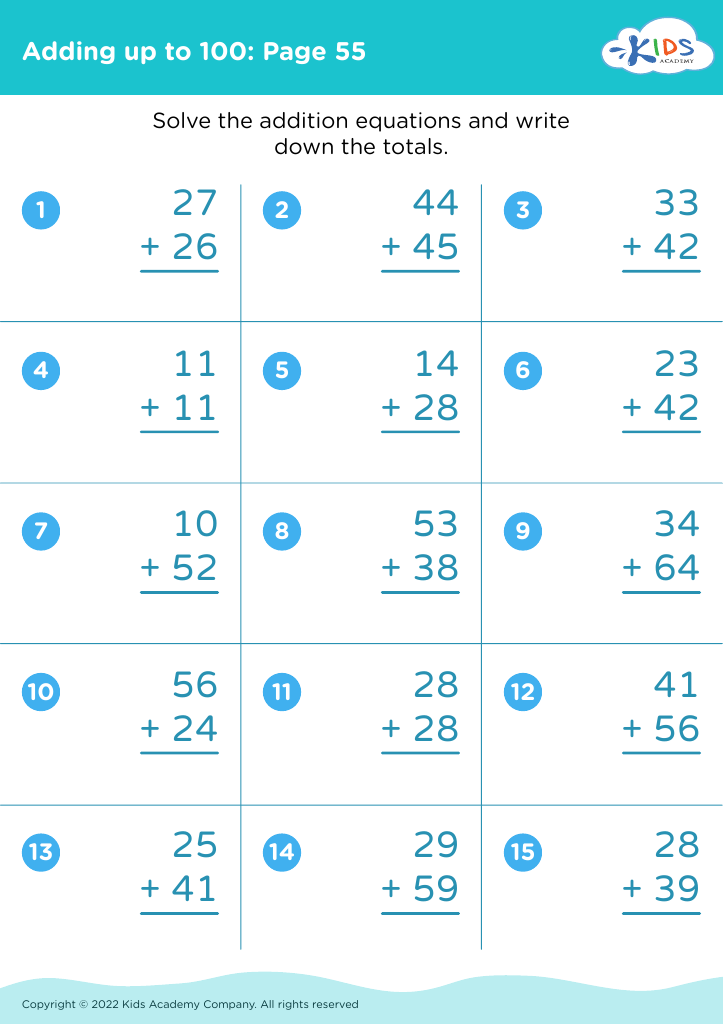
    Adding up to 100: Page 55
    Adding up to 100: Page 55

    Adding up to 100: Page 55

    Adding up to 100: Page 55
    Worksheet
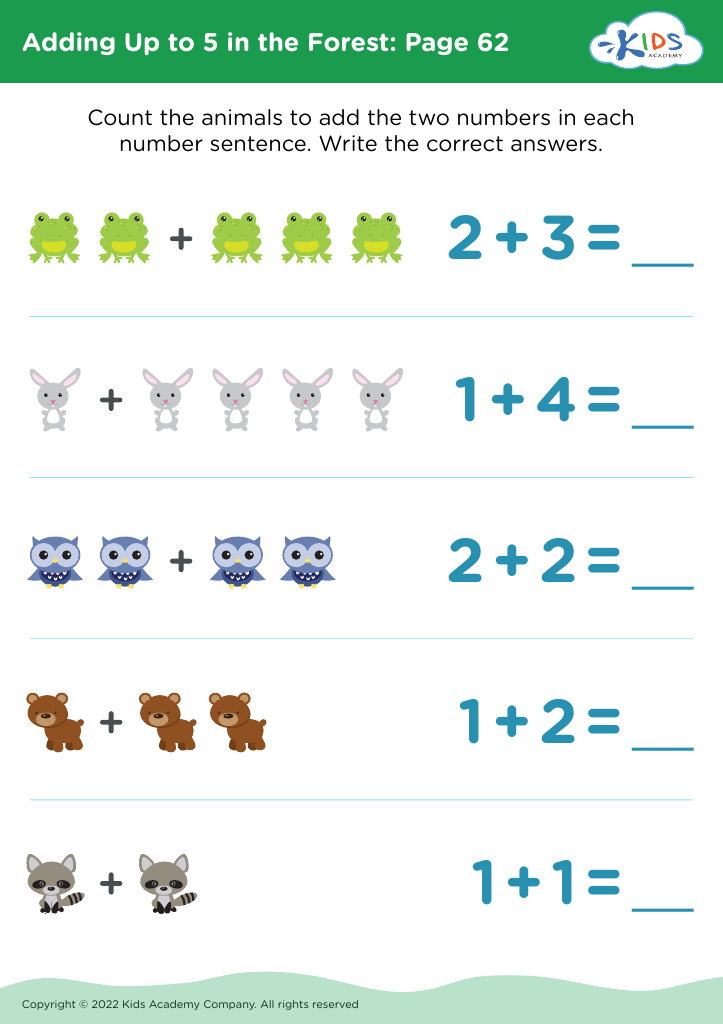
    Adding Up to 5 in the Forest: Page 62
    Adding Up to 5 in the Forest: Page 62
    Adding Up to 5 in the Forest: Page 62
    Worksheet
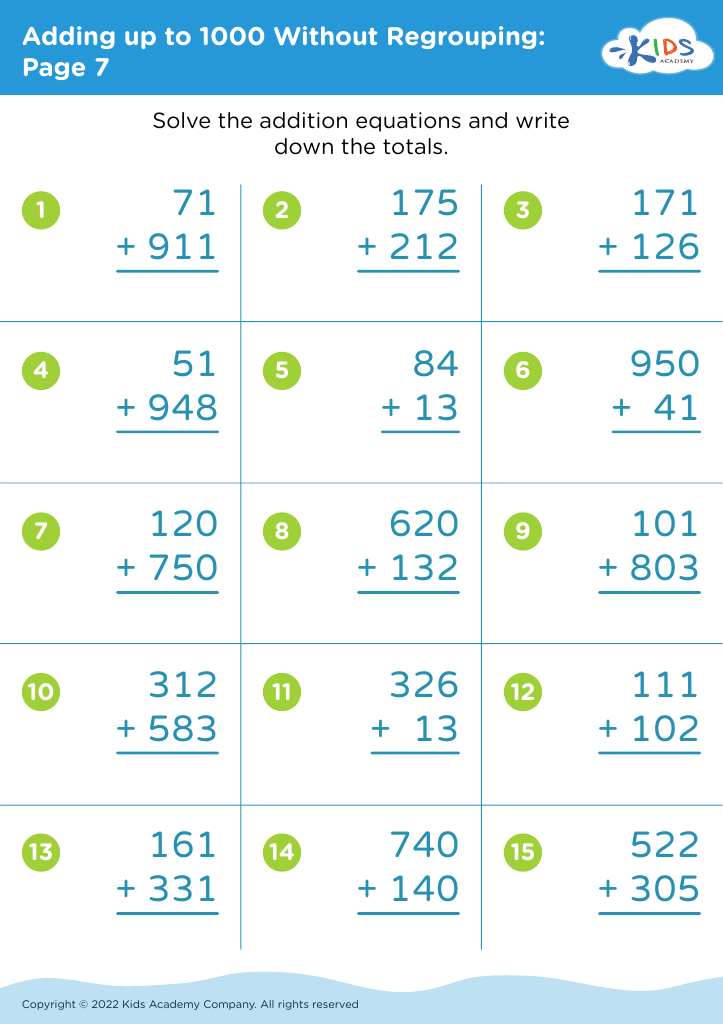
    Adding up to 1000 Without Regrouping: Page 7
    Adding up to 1000 Without Regrouping: Page 7
    Adding up to 1000 Without Regrouping: Page 7
    Worksheet
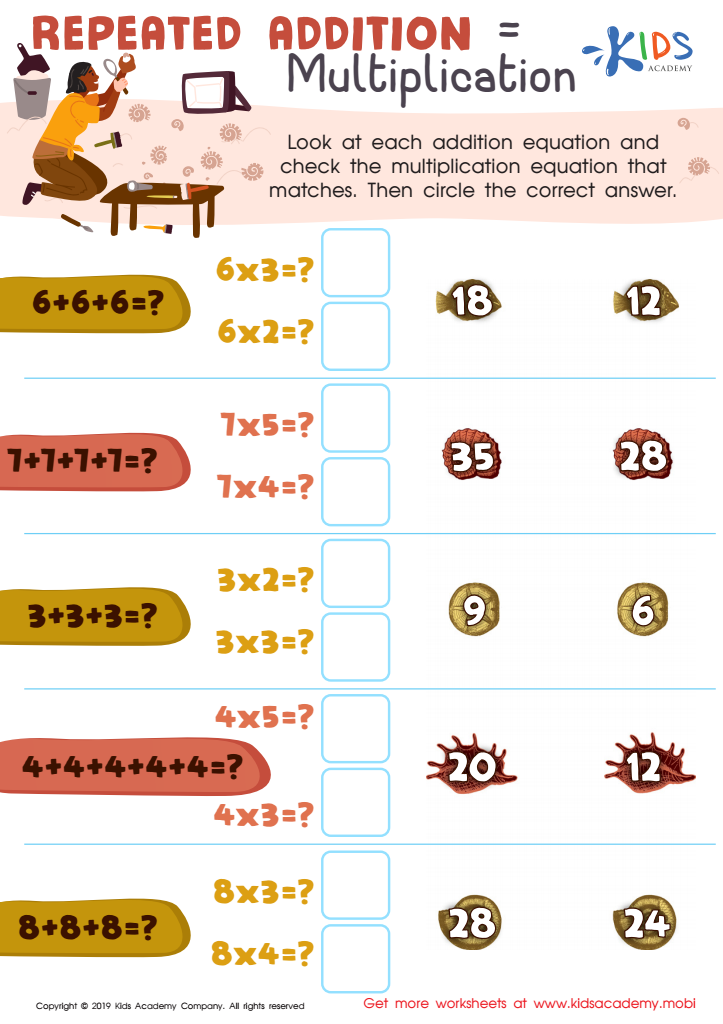
    Repeated Addition = Multiplication Worksheet
    Repeated Addition = Multiplication Worksheet
    Repeated Addition = Multiplication Worksheet
    If your child is having trouble with math, worksheets like this can help them get more practice. Addition, subtraction, and multiplication go together. Look over each addition equation and pick the matching multiplication equation, then circle the correct answer. This can give your child the necessary practice to understand mathematics better.
    Repeated Addition = Multiplication Worksheet
    Worksheet
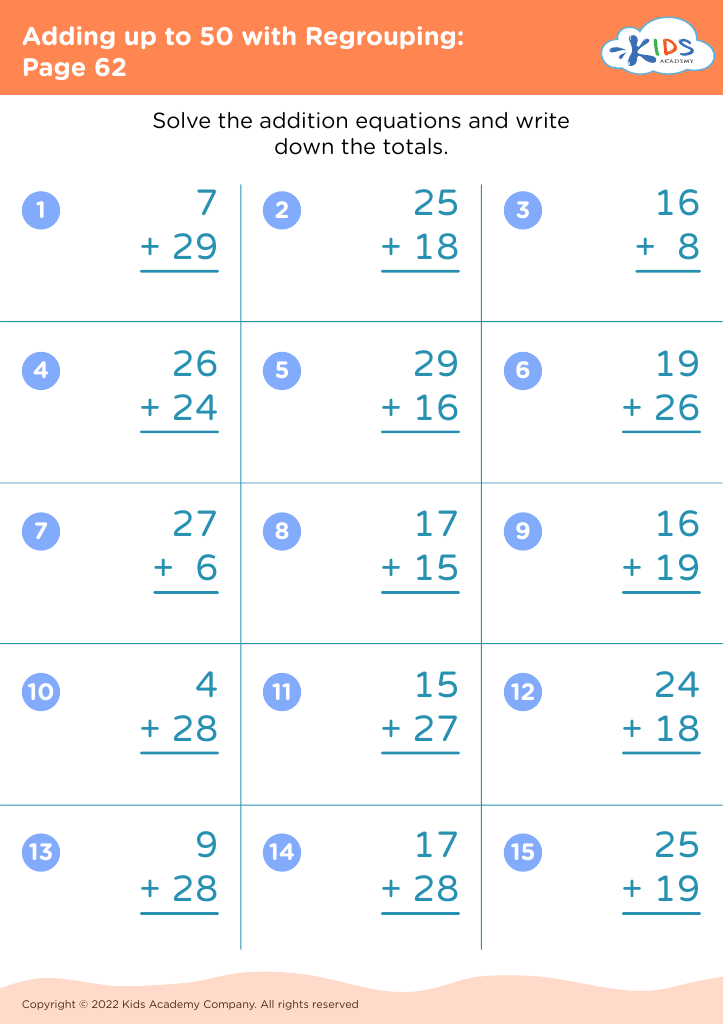
    Adding up to 50 with Regrouping: Page 62
    Adding up to 50 with Regrouping: Page 62
    Adding up to 50 with Regrouping: Page 62
    Worksheet
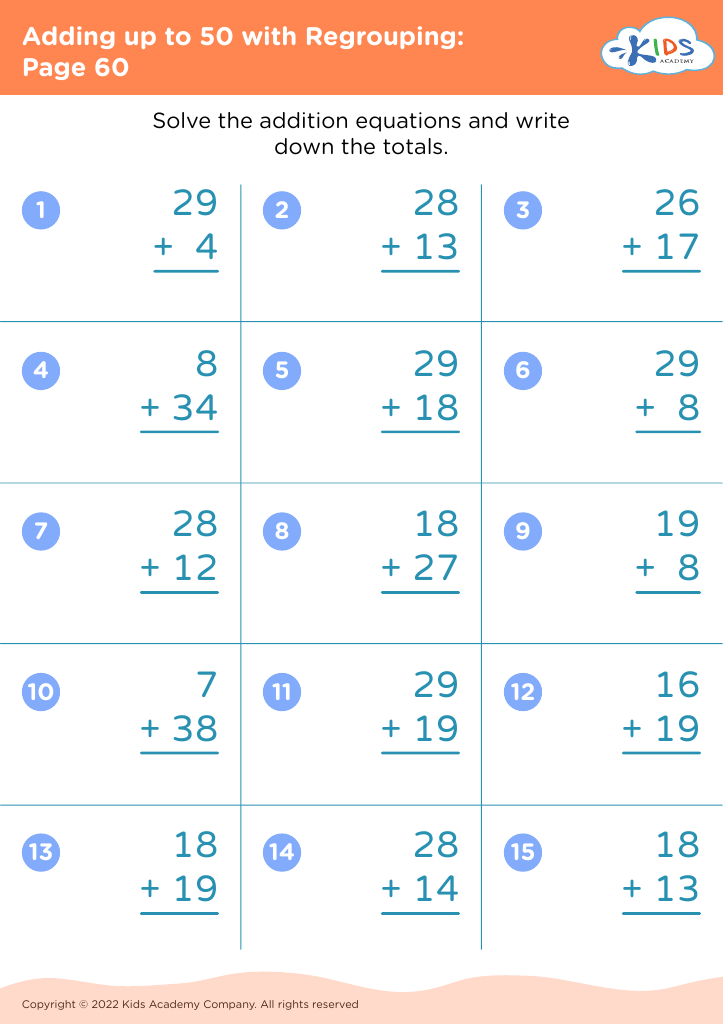
    Adding up to 50 with Regrouping: Page 60
    Adding up to 50 with Regrouping: Page 60
    Adding up to 50 with Regrouping: Page 60
    Worksheet
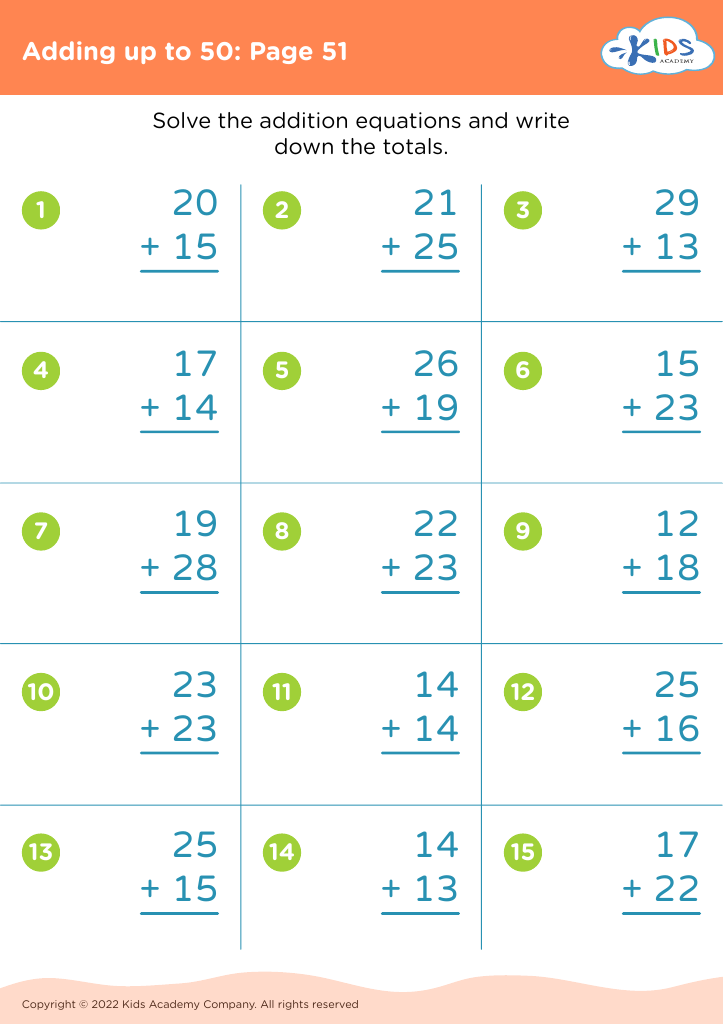
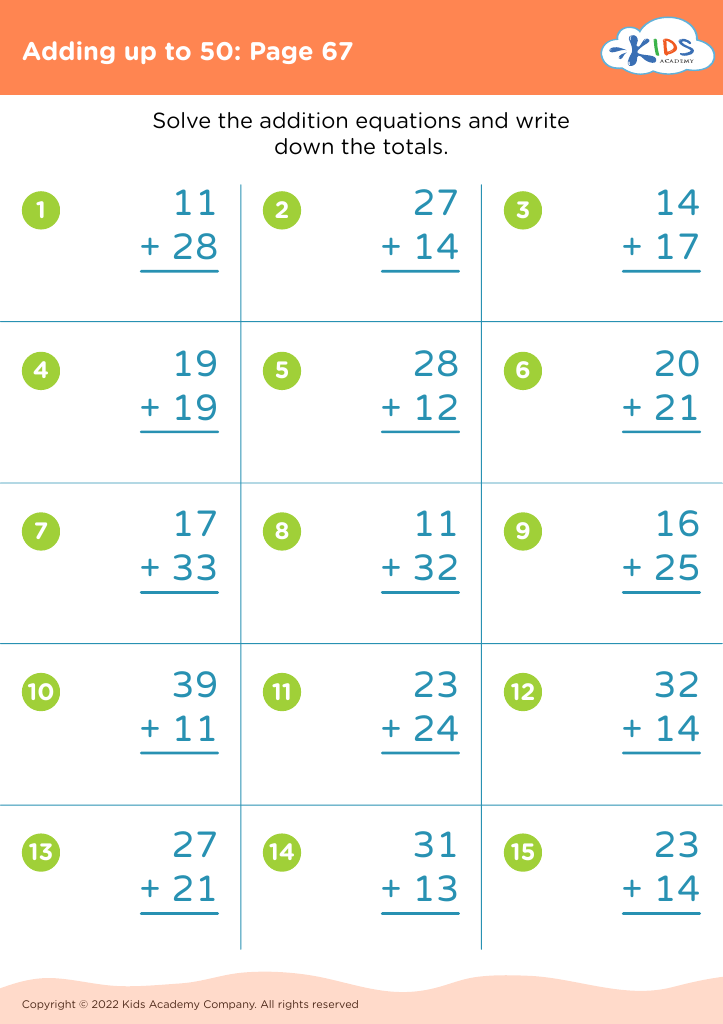
    Adding up to 50: Page 51
    Adding up to 50: Page 51

    Adding up to 50: Page 51

    Adding up to 50: Page 51
    Worksheet
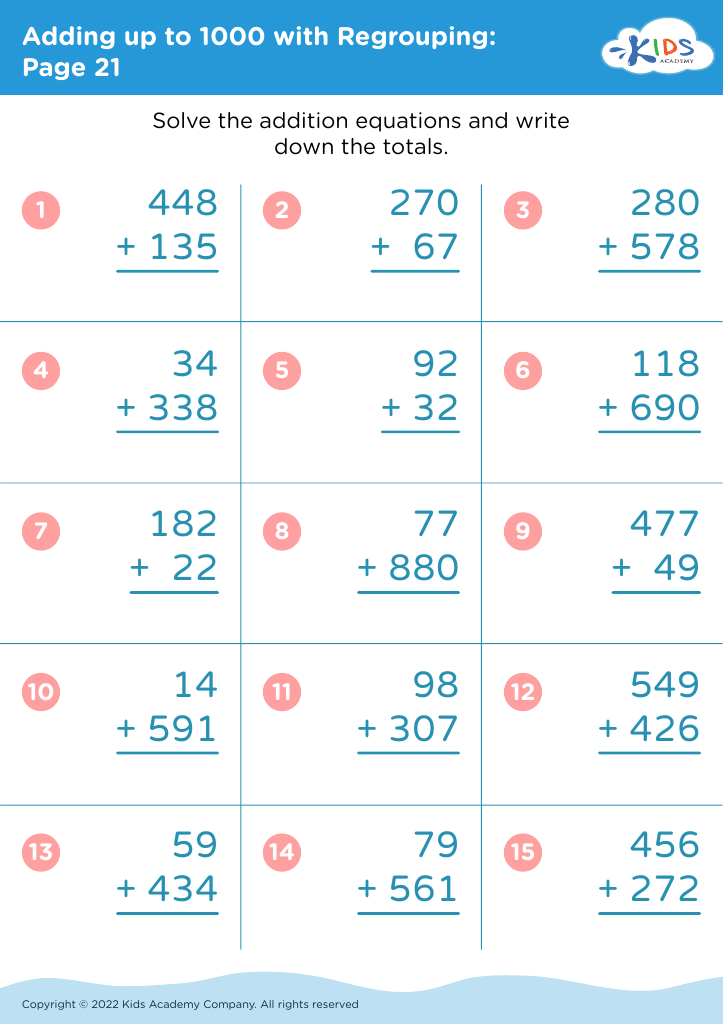
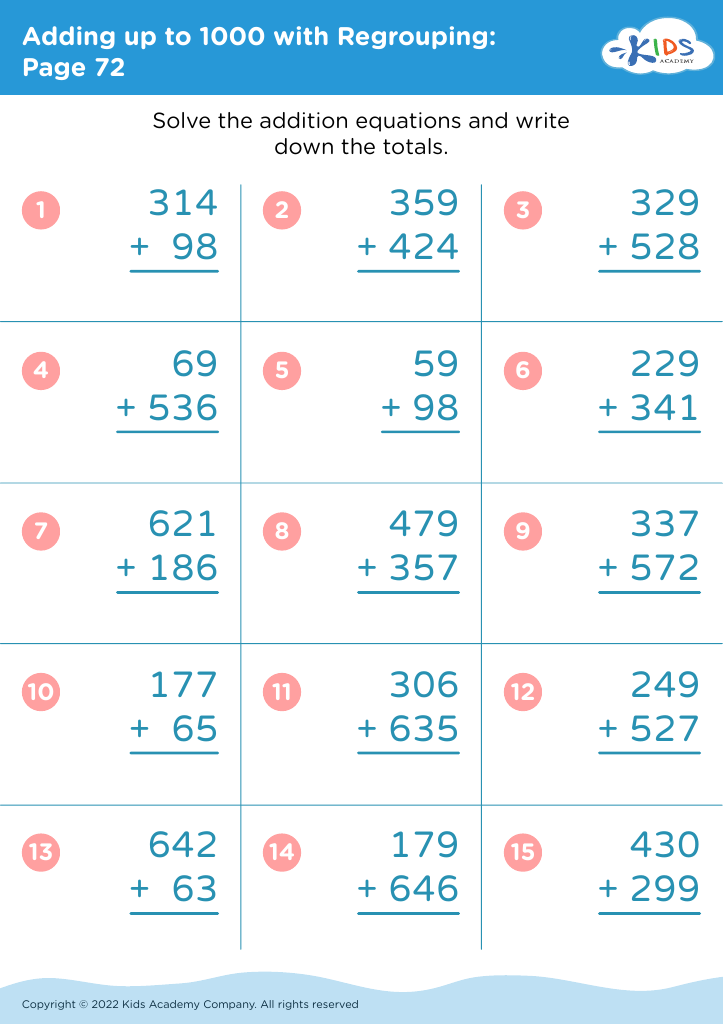
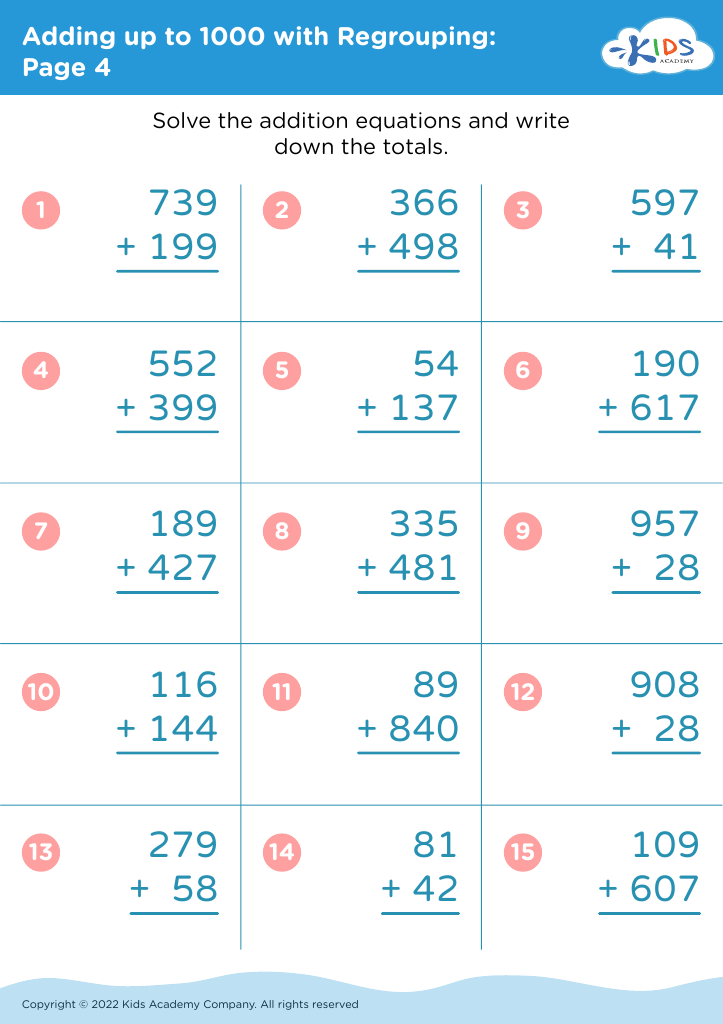
    Adding up to 1000 with Regrouping: Page 4
    Adding up to 1000 with Regrouping: Page 4
    Adding up to 1000 with Regrouping: Page 4
    Worksheet
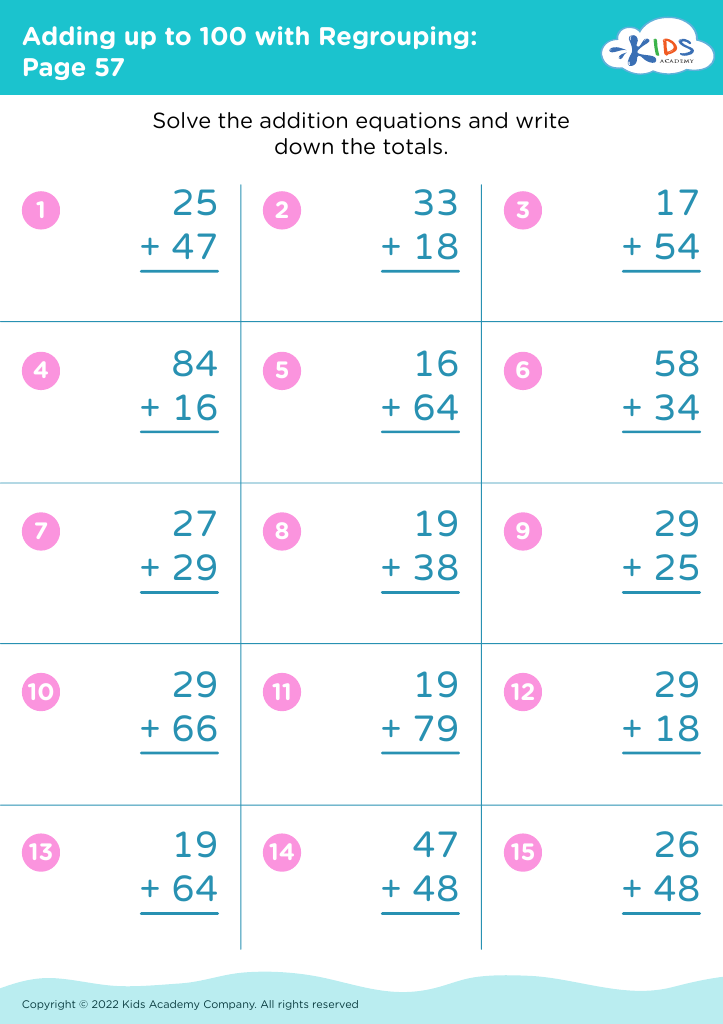
    Adding up to 100 with Regrouping: Page 57
    Adding up to 100 with Regrouping: Page 57
    Adding up to 100 with Regrouping: Page 57
    Worksheet
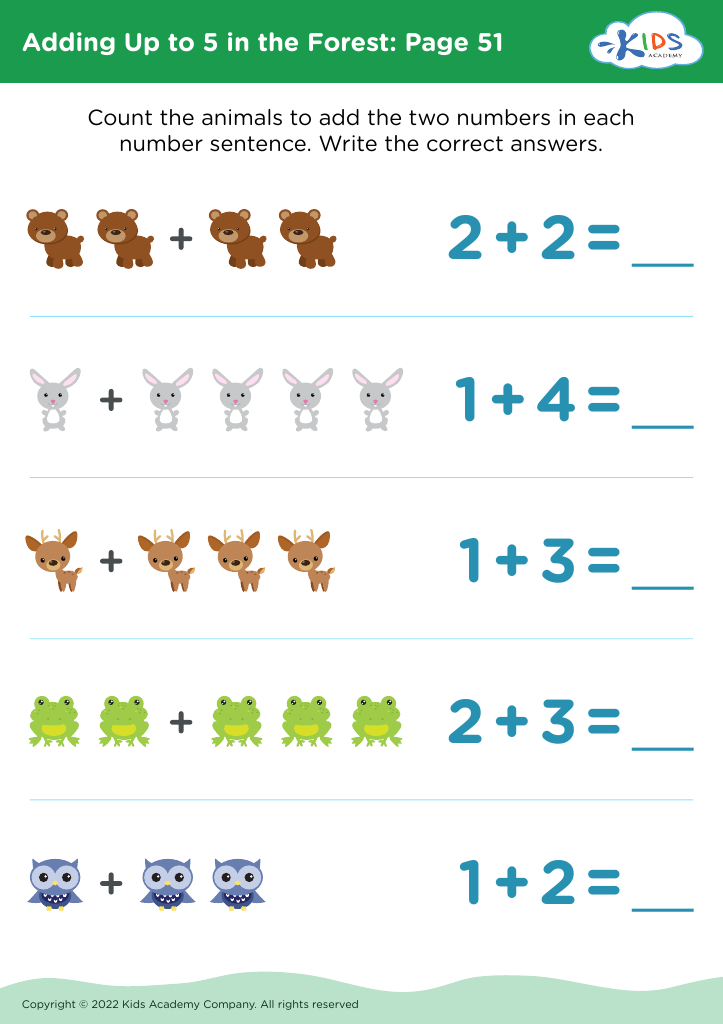
    Adding Up to 5 in the Forest: Page 51
    Adding Up to 5 in the Forest: Page 51
    Adding Up to 5 in the Forest: Page 51
    Worksheet
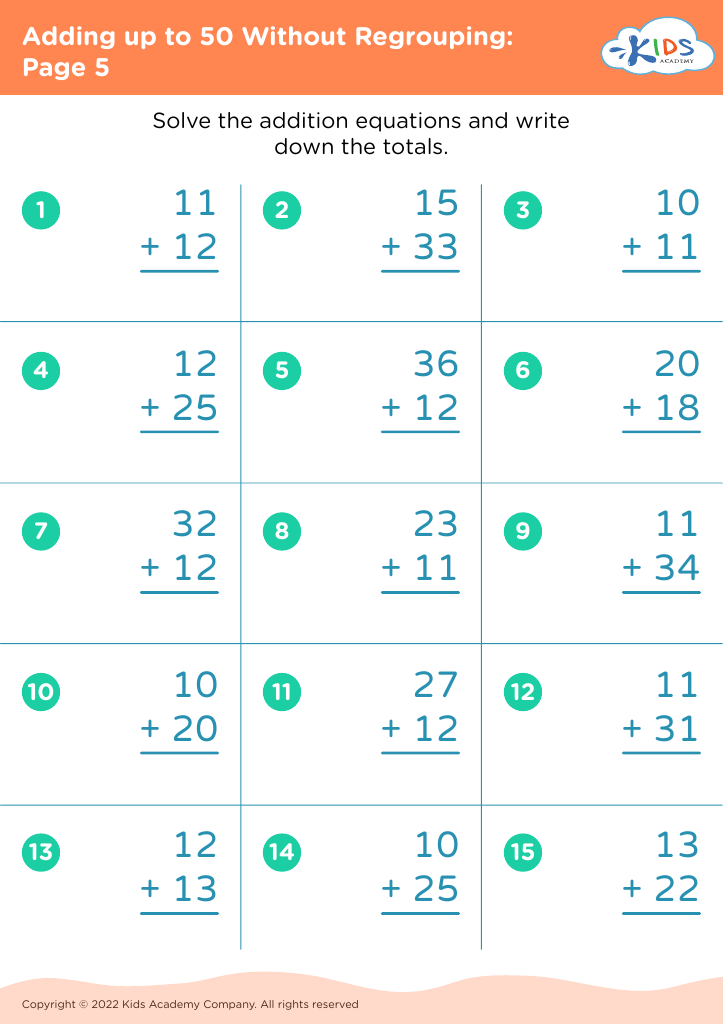
    Adding up to 50 Without Regrouping: Page 5
    Adding up to 50 Without Regrouping: Page 5
    Adding up to 50 Without Regrouping: Page 5
    Worksheet
    Identity Property of Addition Worksheet
    Identity Property of Addition Worksheet
    Identity Property of Addition Worksheet
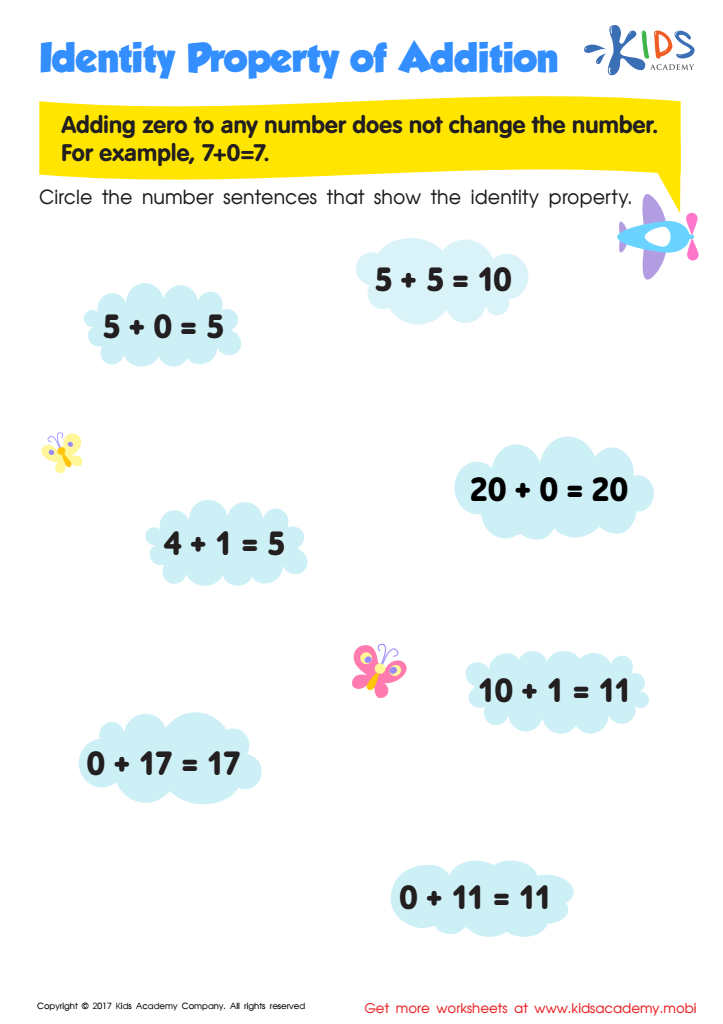
    Kids must learn the identity property of addition in math. It states that adding zero to an equation does not change the number. A great way to help kids understand this concept is with a Kids Academy worksheet. It encourages kids to identify which number sentences demonstrate the identity property of addition. Doing so builds vital mental math skills for fast addition.
    Identity Property of Addition Worksheet
    Worksheet
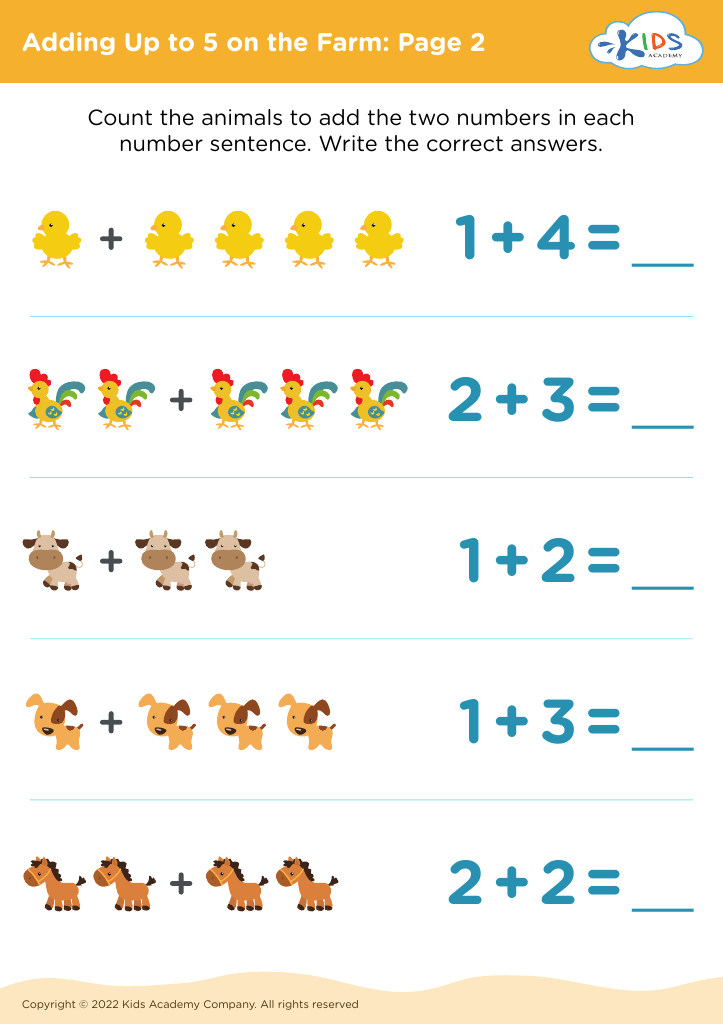
    Adding Up to 5 on the Farm: Page 2
    Adding Up to 5 on the Farm: Page 2
    Adding Up to 5 on the Farm: Page 2
    Worksheet
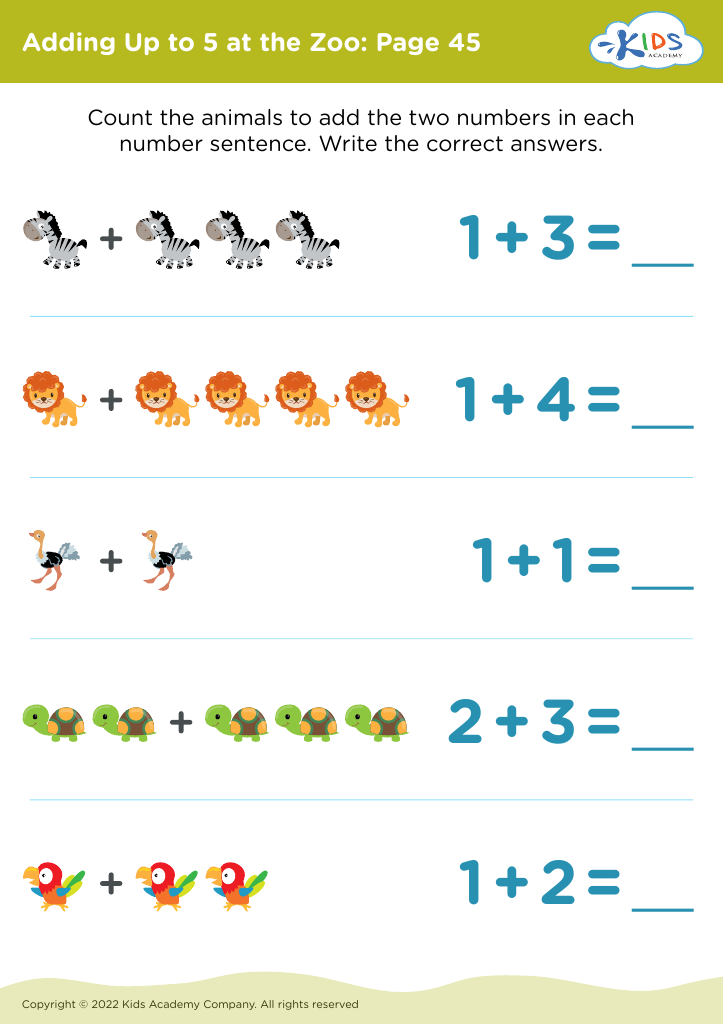
    Adding Up to 5 at the Zoo: Page 45
    Adding Up to 5 at the Zoo: Page 45
    Adding Up to 5 at the Zoo: Page 45
    Worksheet
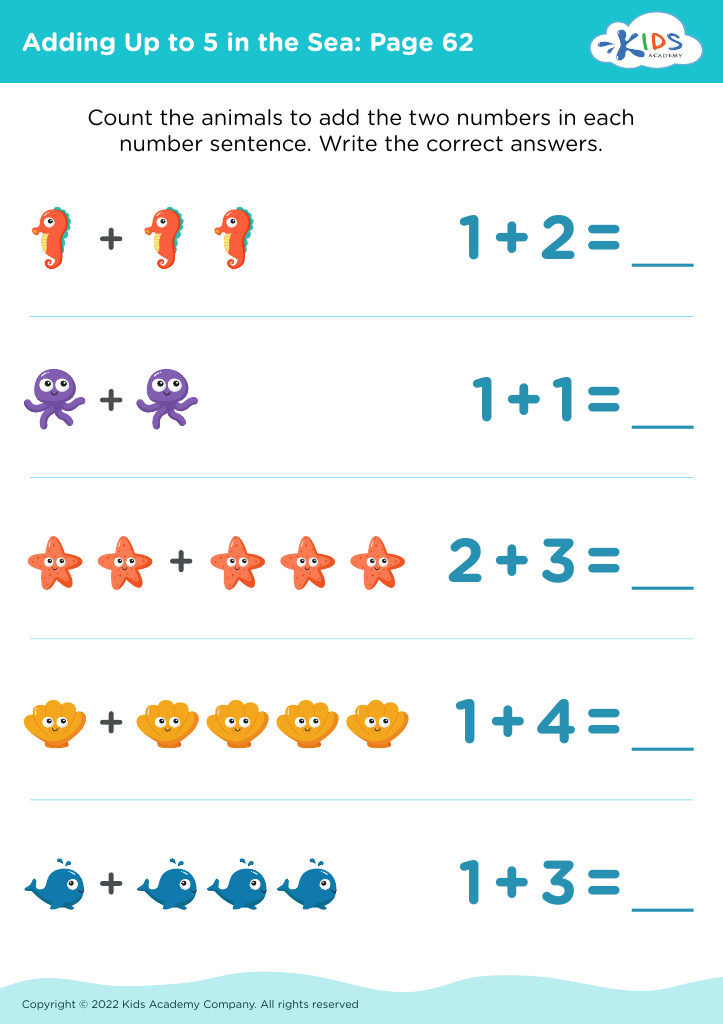
    Adding Up to 5 in the Sea: Page 62
    Adding Up to 5 in the Sea: Page 62
    Adding Up to 5 in the Sea: Page 62
    Worksheet
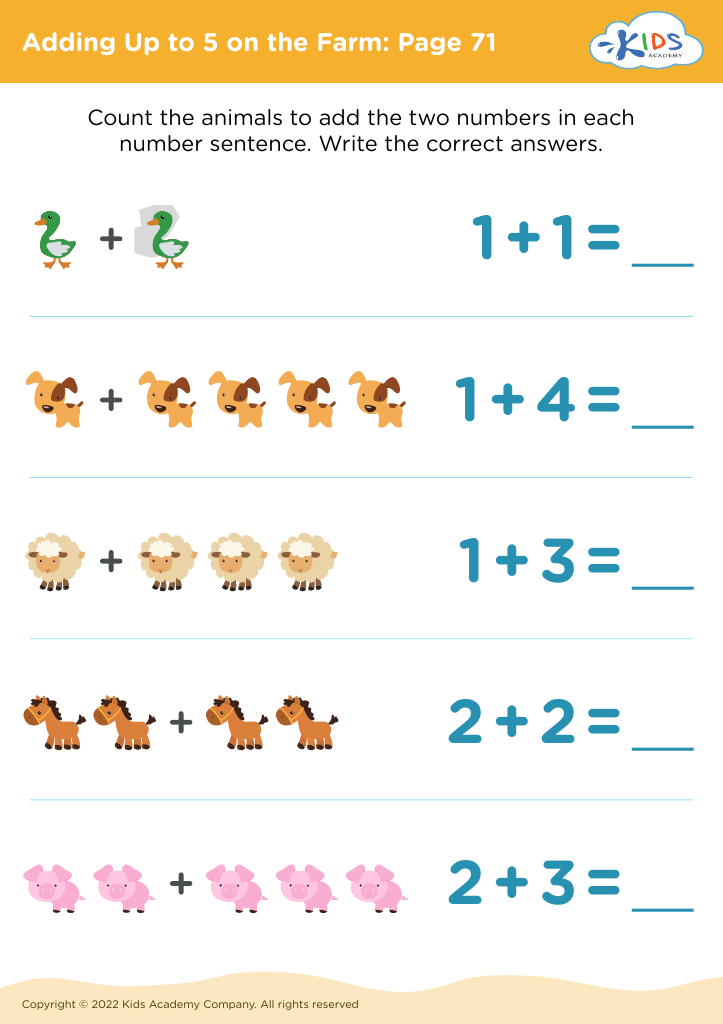
    Adding Up to 5 on the Farm: Page 71
    Adding Up to 5 on the Farm: Page 71
    Adding Up to 5 on the Farm: Page 71
    Worksheet
    Adding up to 100: Page 11
    Adding up to 100: Page 11

    Adding up to 100: Page 11

    Adding up to 100: Page 11
    Worksheet
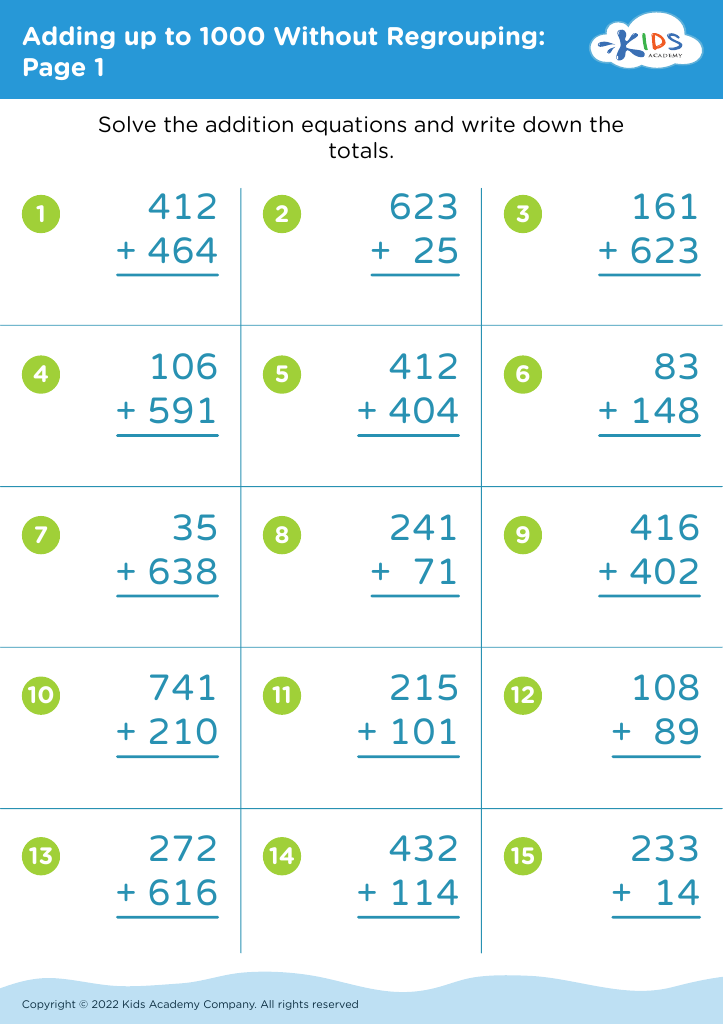
    Adding up to 1000 Without Regrouping: Page 1
    Adding up to 1000 Without Regrouping: Page 1
    Adding up to 1000 Without Regrouping: Page 1
    Worksheet
    Adding up to 100 with Regrouping: Page 16
    Adding up to 100 with Regrouping: Page 16
    Adding up to 100 with Regrouping: Page 16
    Worksheet


    Teaching addition to children ages 3-8 is vital as it forms the foundation for their future math skills and overall cognitive development. At this age, young minds are especially receptive to learning new concepts. Introducing them to addition helps develop their number sense, enabling them to understand the quantity and relationships between numbers. This foundational skill is critical not just for further math concepts but also for everyday tasks like counting, sharing, and problem-solving.

    Addition promotes logical thinking and improves memory, focus, and attention to detail. Incorporating playful activities like counting games or using everyday objects makes learning more engaging, thereby fostering a positive attitude toward mathematics from an early age. Mastery of basic addition boosts confidence and prepares children for more complex math operations, like subtraction, multiplication, and division, which they will encounter as they progress in their education.

    Moreover, early exposure to addition supports academic success beyond just math. It enhances children’s abilities to make connections, justify their reasoning, and follow multi-step procedures—skills that are valuable in all subjects. By ensuring a solid understanding of addition, parents and teachers are setting the stage for lifelong learning and critical thinking, empowering children with the tools they need to navigate both academic challenges and real-world situations effectively.