Fractions of Shapes Worksheets for Ages 3-8 - Page 2
38 filtered results
-
From - To
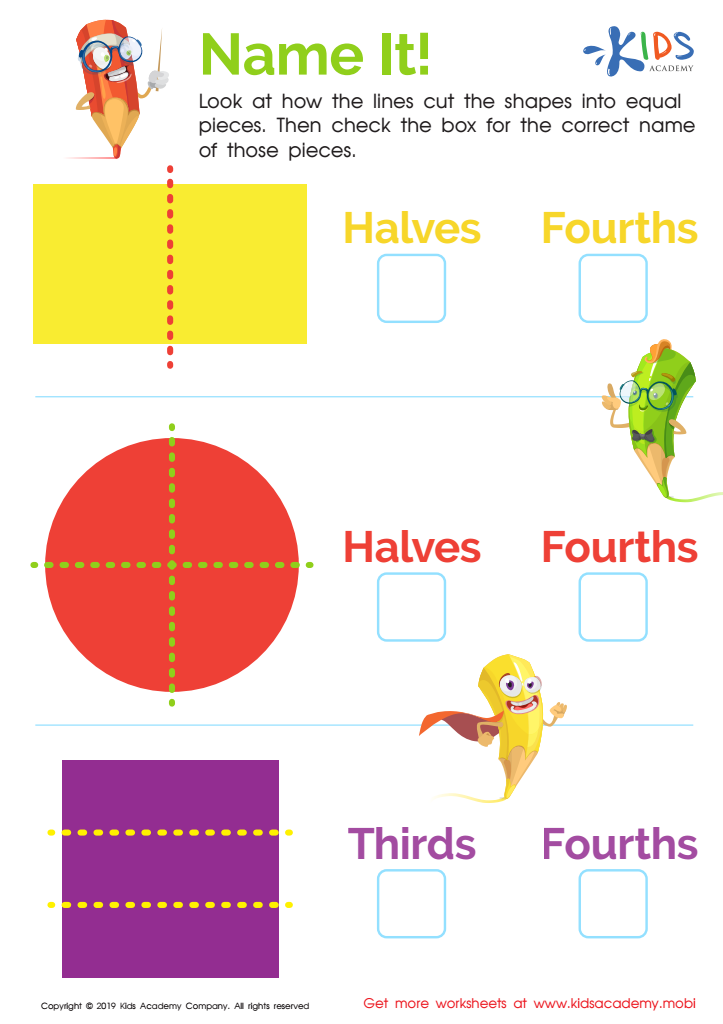
Name It! Worksheet
 Assign to My Students
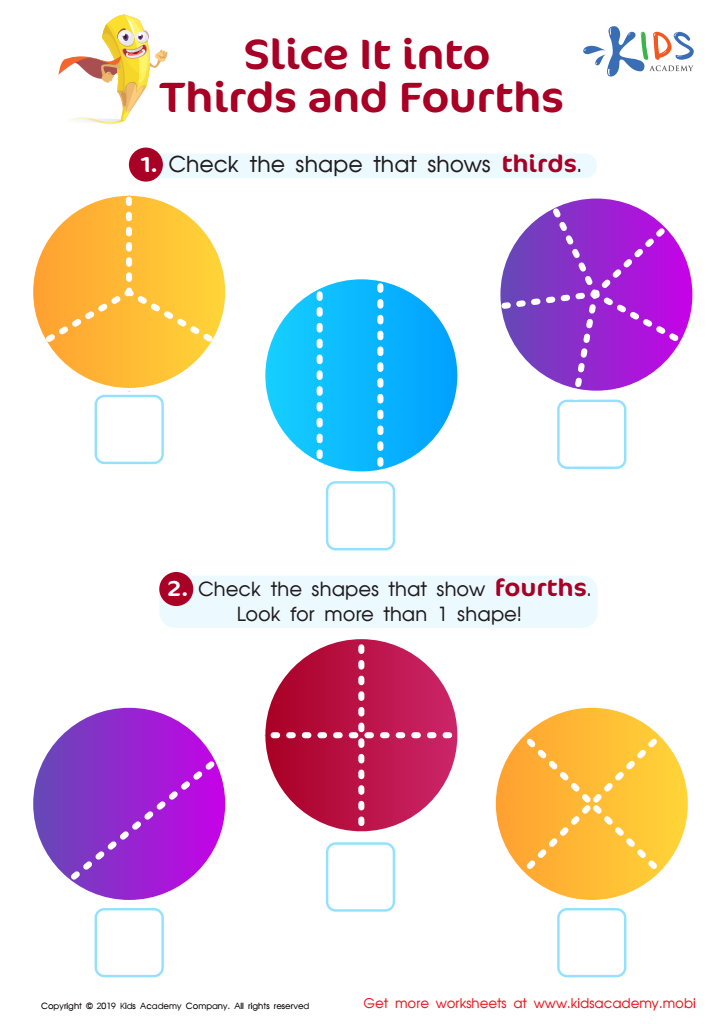
Slice in Thirds Fourths Worksheet
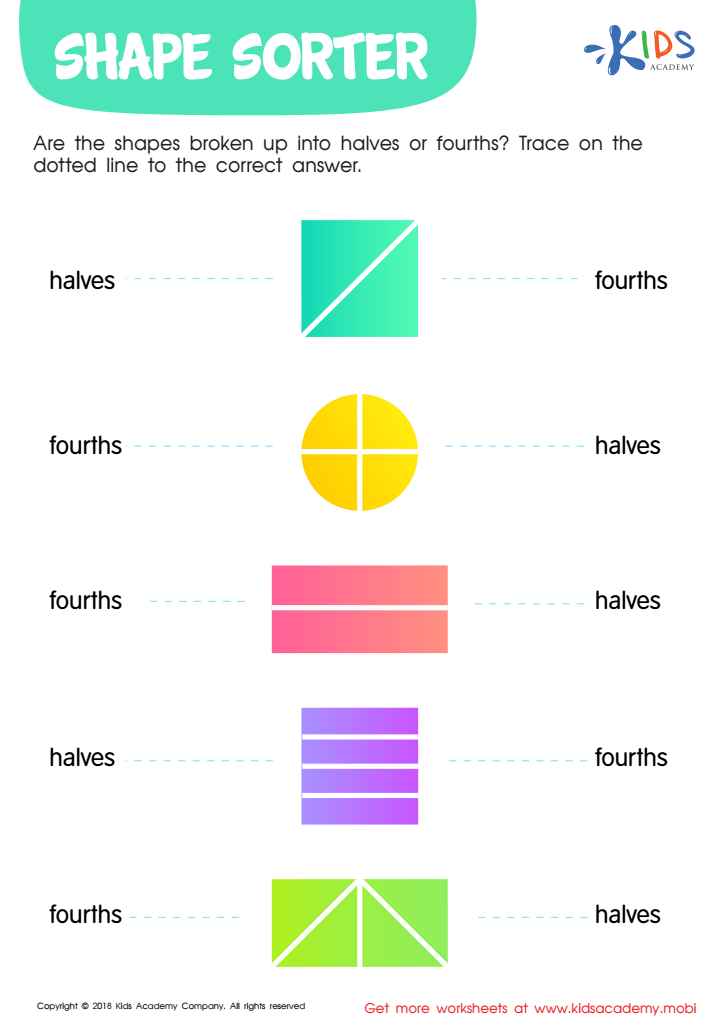
Shape Sorter Worksheet
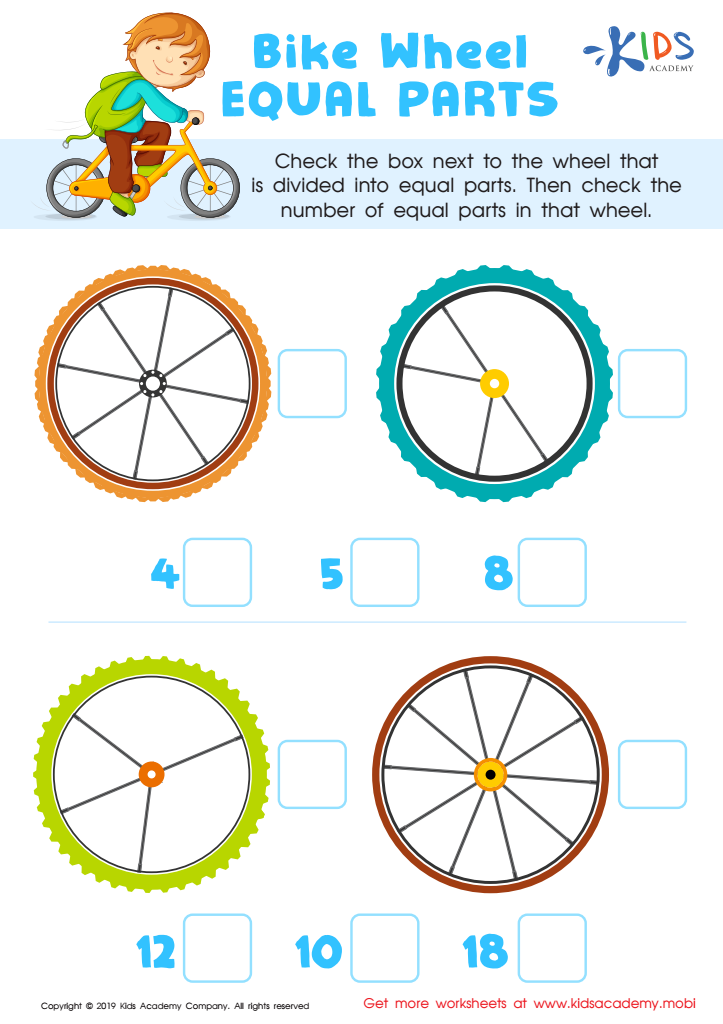
Bike Wheel Equal Parts Worksheet
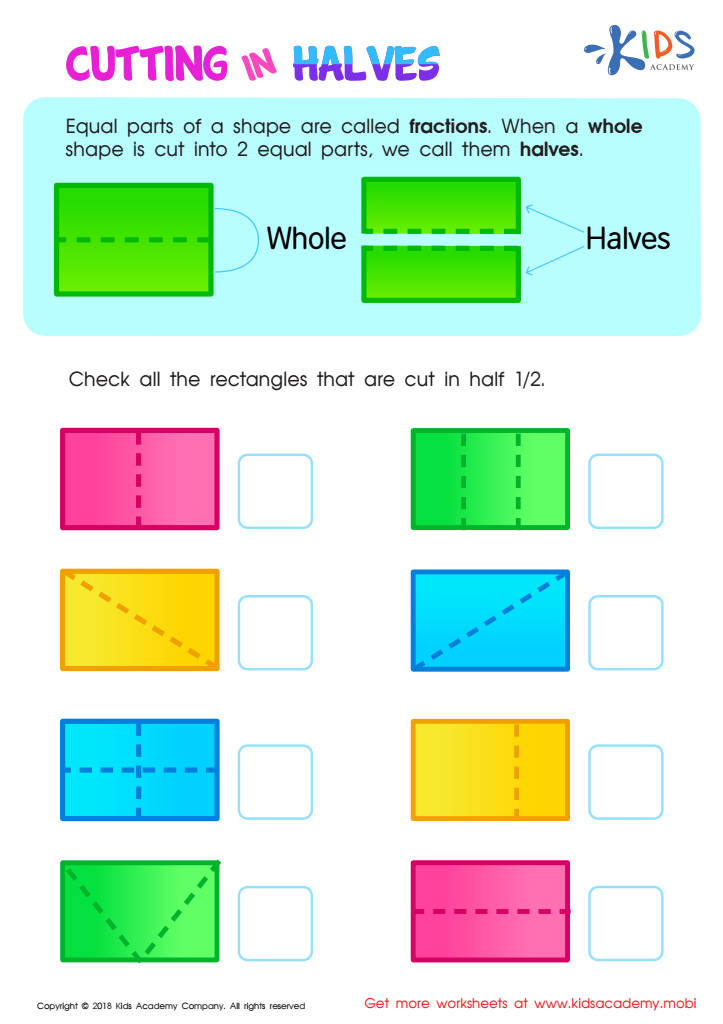
Cutting in Halves Worksheet
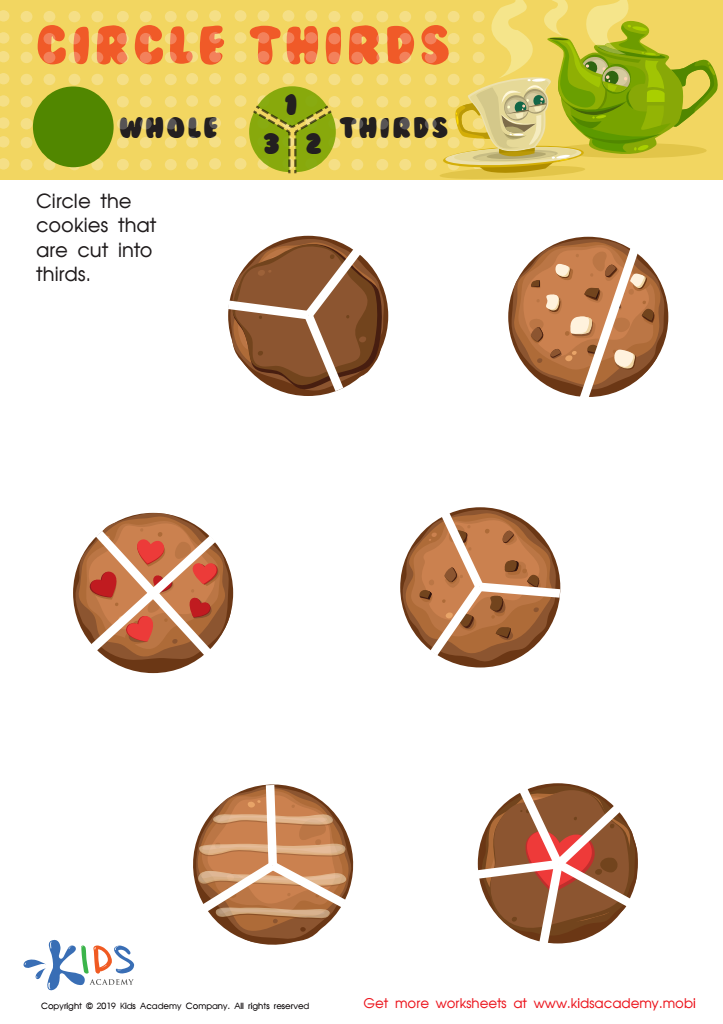
Circle Thirds Worksheet
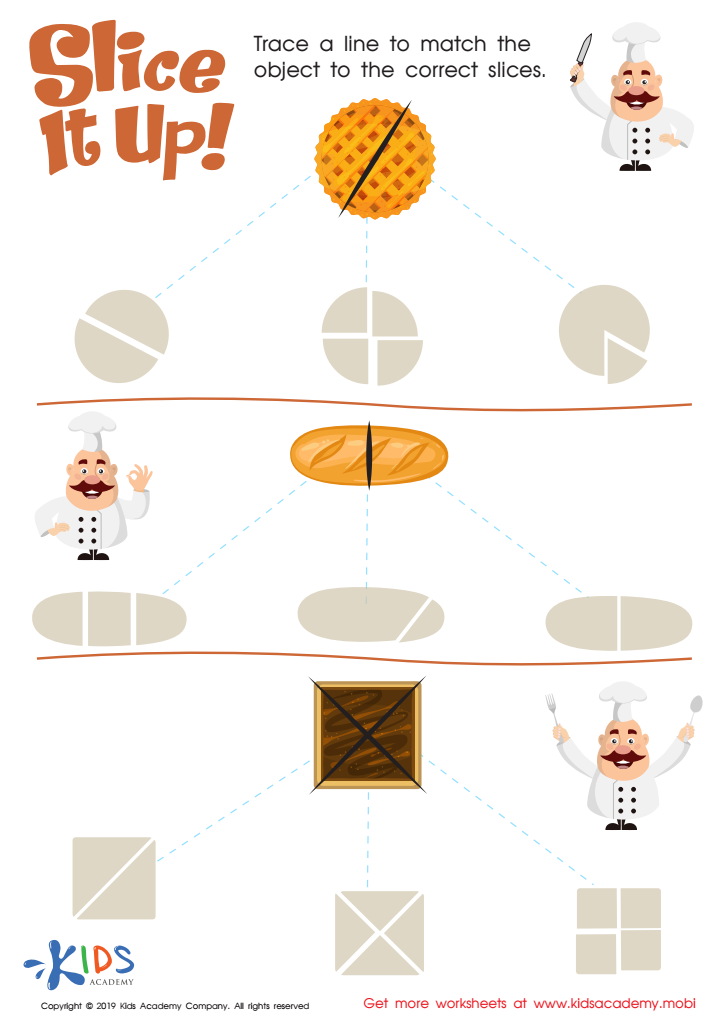
Slice It Up Worksheet
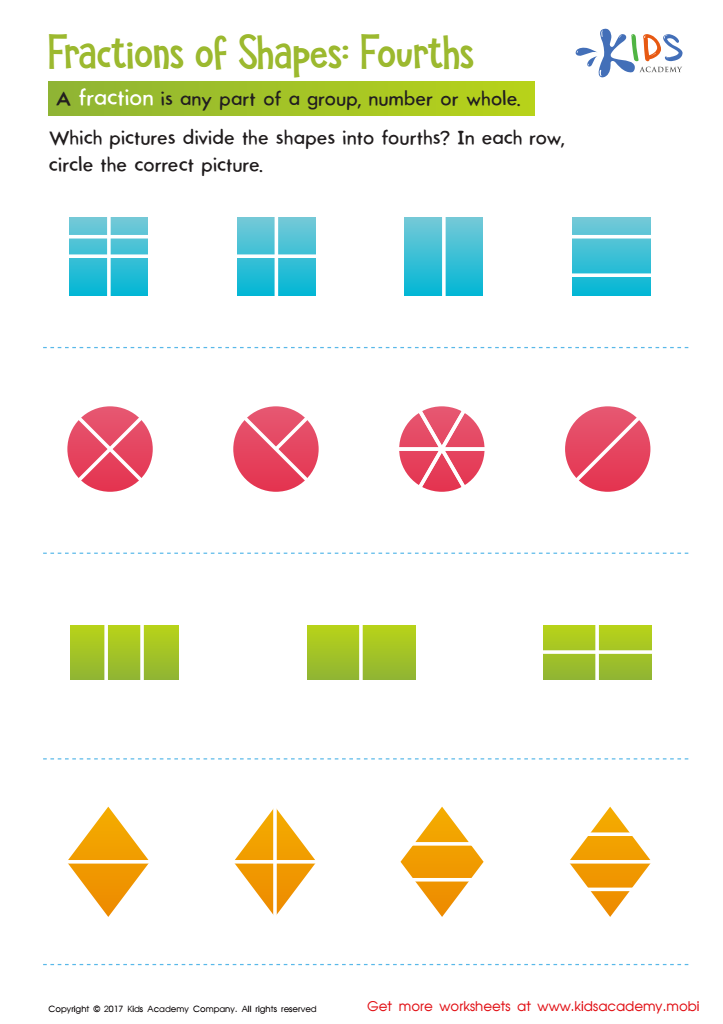
Fractions of Shapes Worksheet
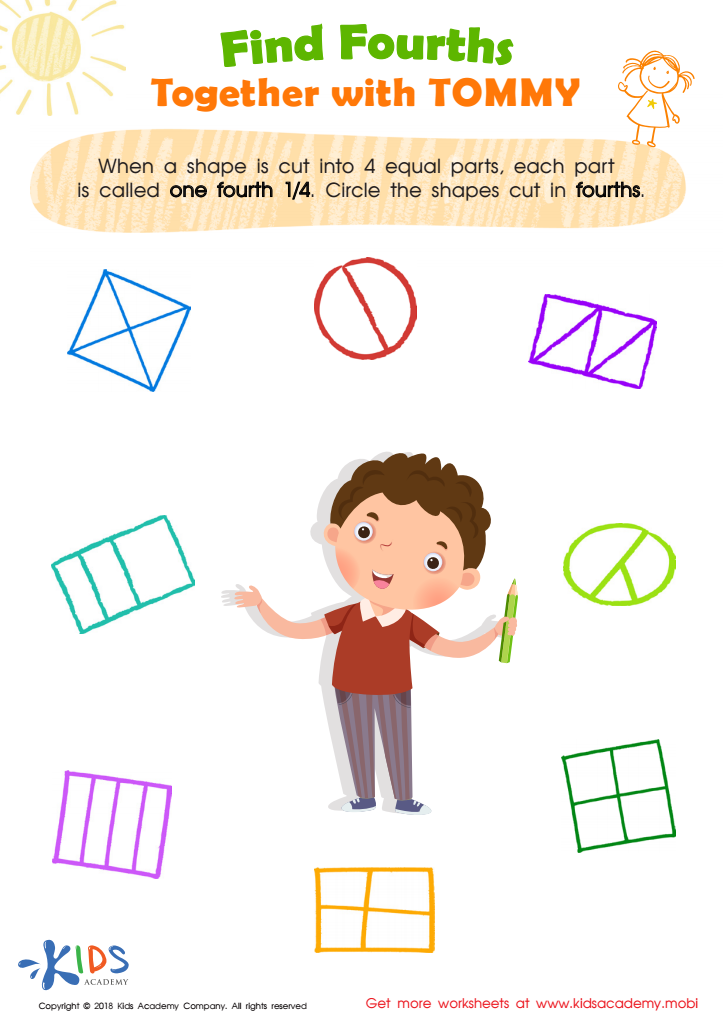
Find Fourths Together with Tommy Worksheet
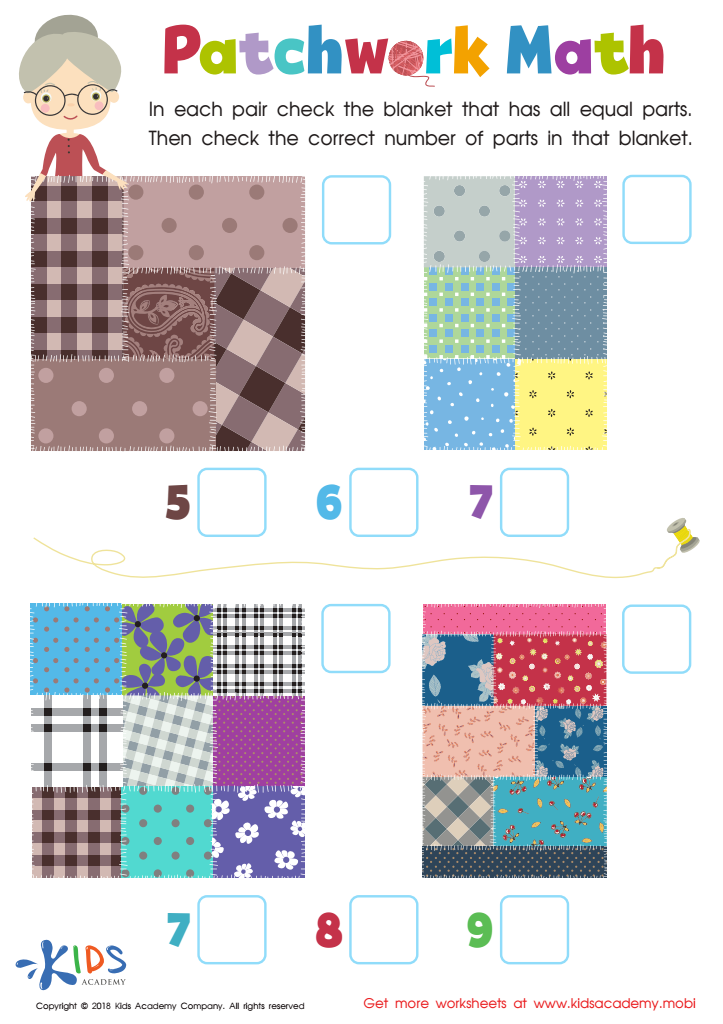
Patchwork Math Worksheet
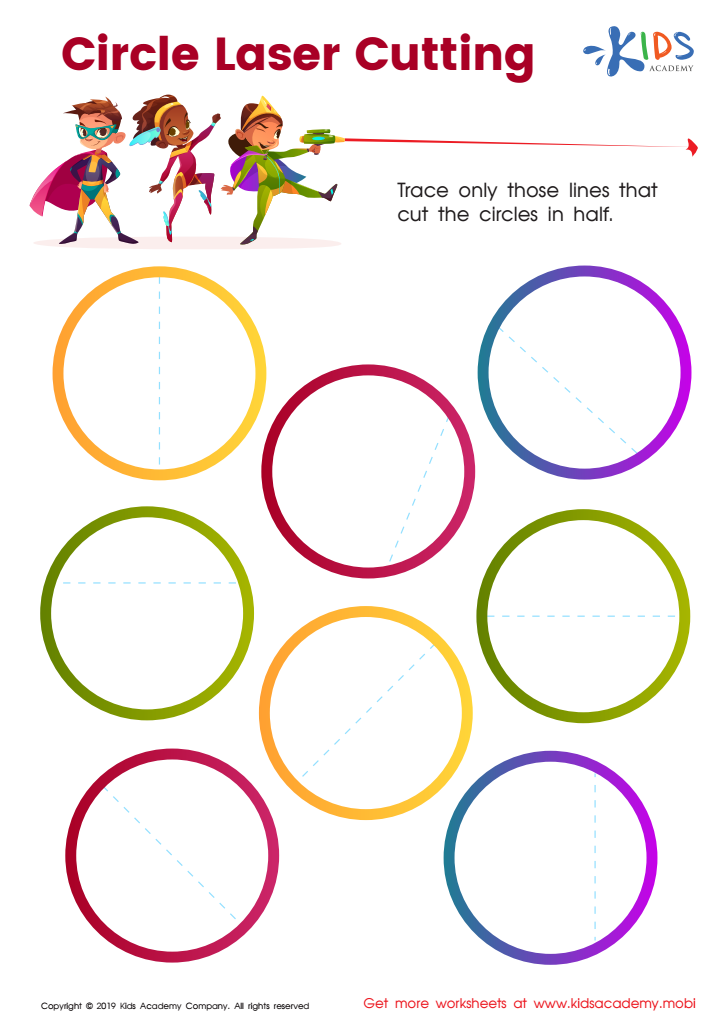
Circle Laser Cutting Worksheet
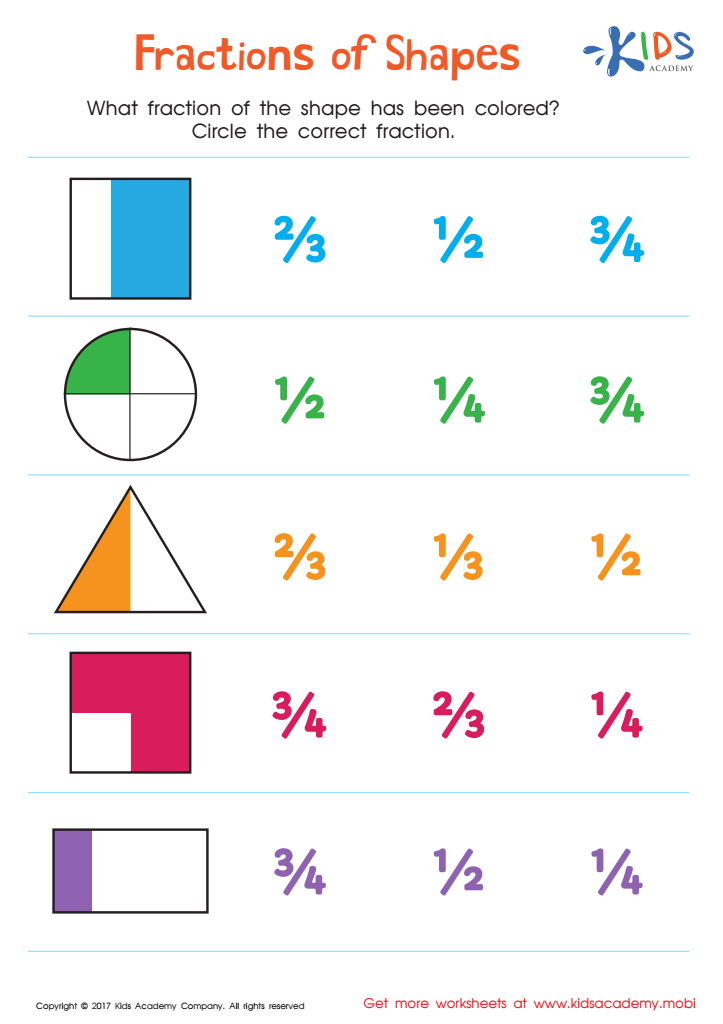
Fractions of Shapes: Math Concept Worksheet
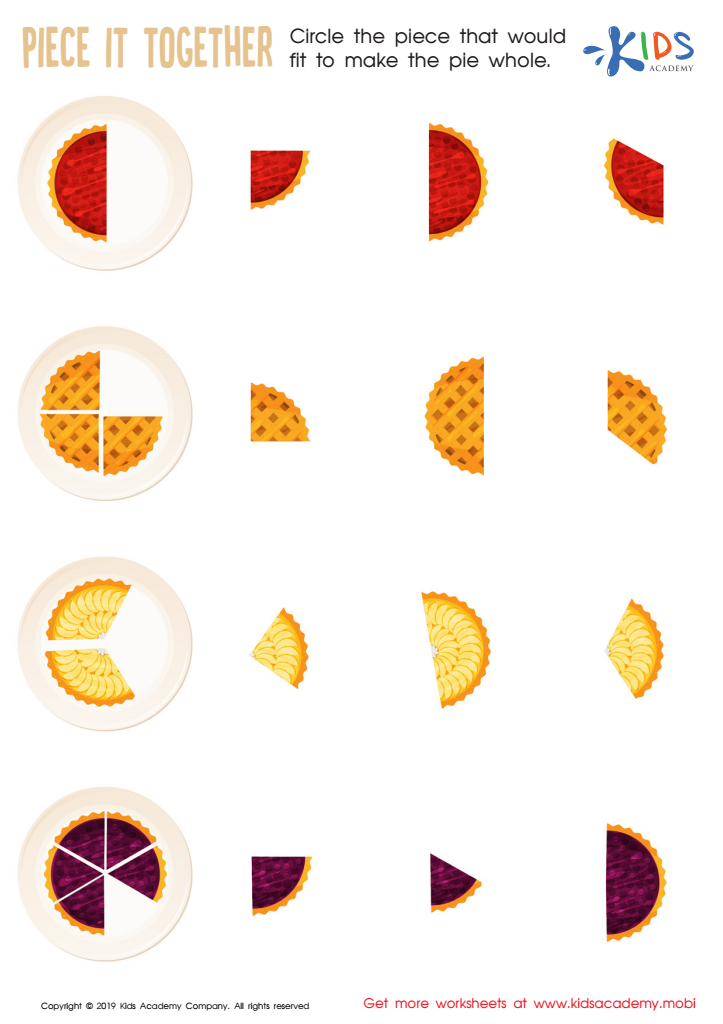
Piece it together Worksheet
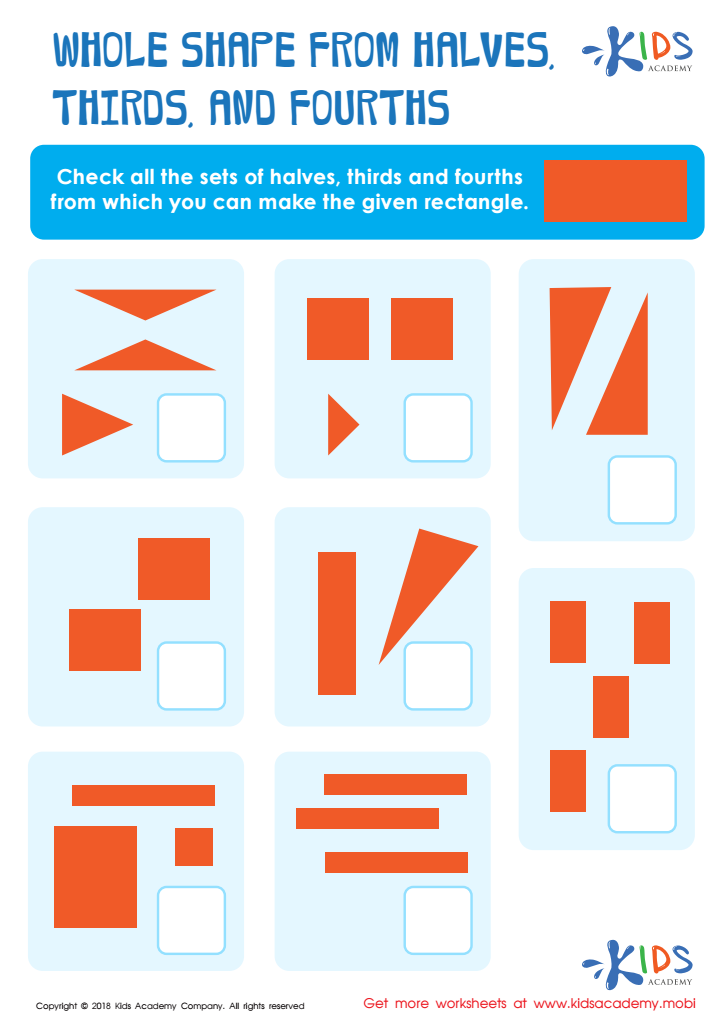
Whole Shape from Halves, Thirds and Fourths Worksheet








Understanding fractions of shapes is a foundational math skill that plays a crucial role in early childhood education for children aged 3-8. Parents and teachers should prioritize this skill for several reasons. Firstly, fractions help children develop spatial awareness. When children learn to divide shapes into equal parts, they enhance their cognitive skills, creating a strong base for more complex mathematical concepts later on, such as division and ratios.
Furthermore, fractions can be introduced through engaging, hands-on activities such as cutting paper, using blocks, or drawing. This experiential learning captivates young learners, fostering creativity and critical thinking. It also provides opportunities for collaborative play and communication, nurturing social skills.
Additionally, understanding fractions promotes problem-solving abilities. Kids learn to recognize proportions, which is applicable in real-life situations like sharing food or dividing resources, promoting fair decision-making.
Ultimately, teaching fractions of shapes provides a practical, fun way to prepare children for future academic success while building a positive attitude toward math. Parents and teachers can cultivate these foundational skills, helping young learners become confident and capable problem solvers.