Critical Thinking Geometry Worksheets for Ages 3-8
5 filtered results
-
From - To
Unlock your child's potential with our engaging Critical Thinking Geometry Worksheets designed for ages 3-8! These interactive worksheets blend fun with learning, promoting essential skills such as problem-solving, spatial awareness, and logical reasoning. Tailored to stimulate young minds, our materials cover various geometric concepts through exciting activities that make learning enjoyable. Perfect for at-home practice or in a classroom setting, these resources encourage creativity and critical thinking while building a strong foundation in geometry. With vibrant visuals and age-appropriate challenges, your child will develop confidence and a love for math. Explore our collection and watch their skills soar!
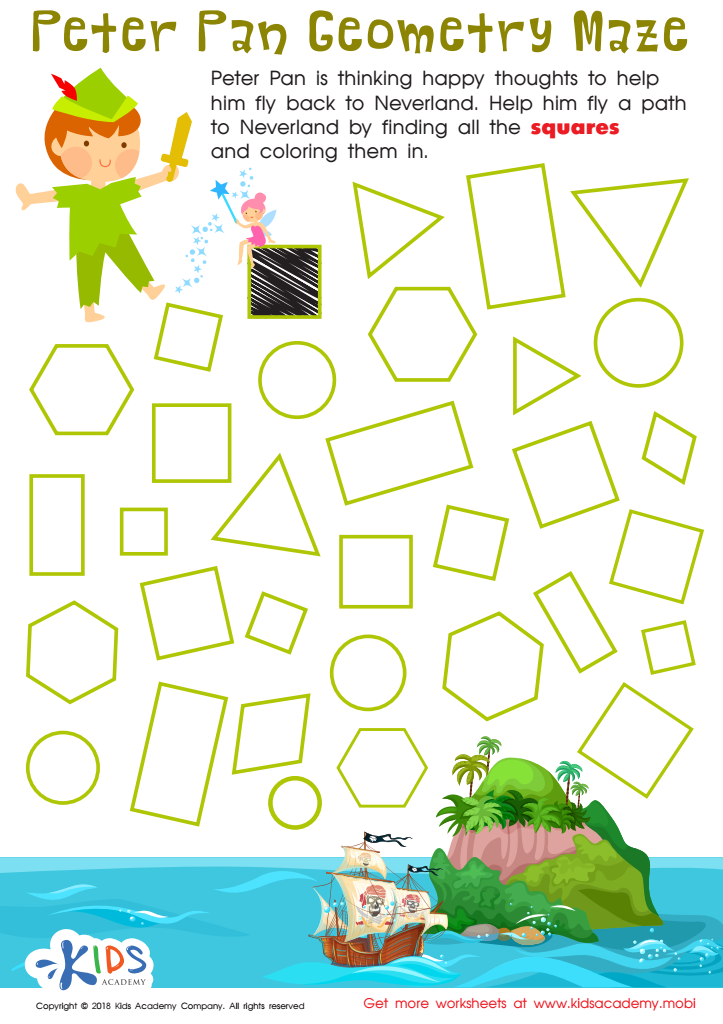
Peter Pan Worksheet
 Assign to My Students











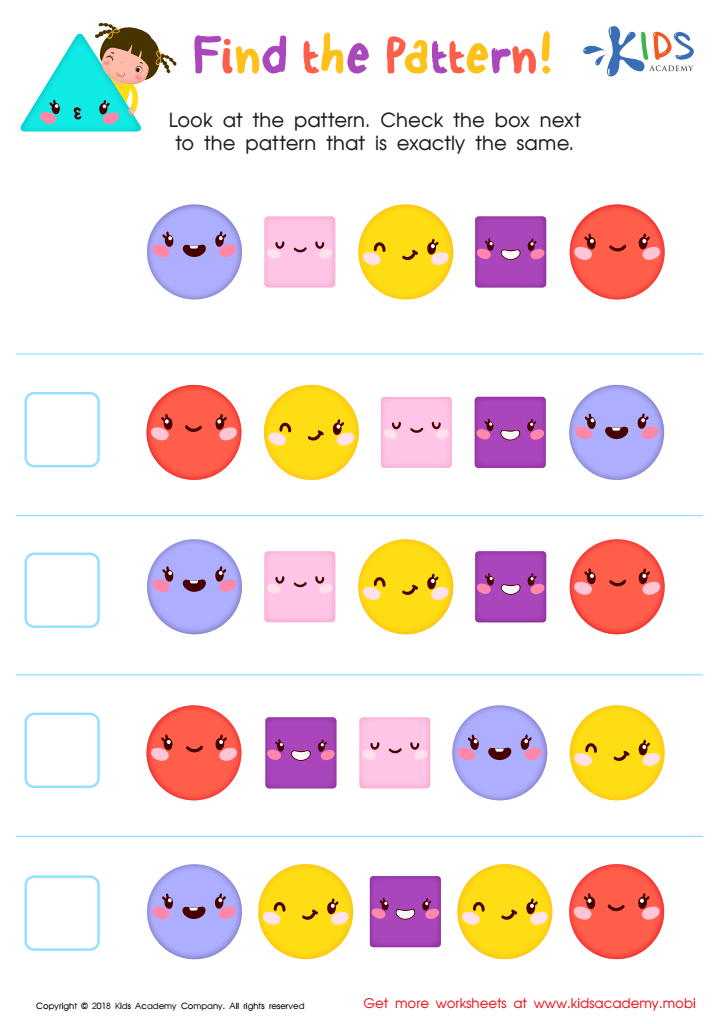
Find the Pattern Worksheet
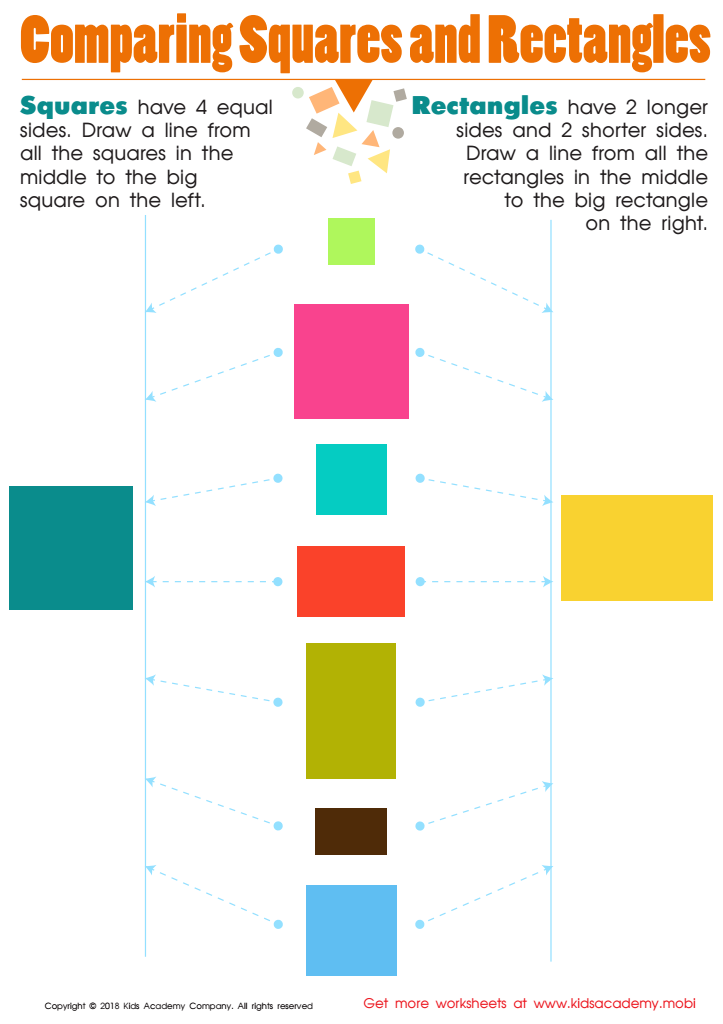
Comparing Squares Rectangles Worksheet
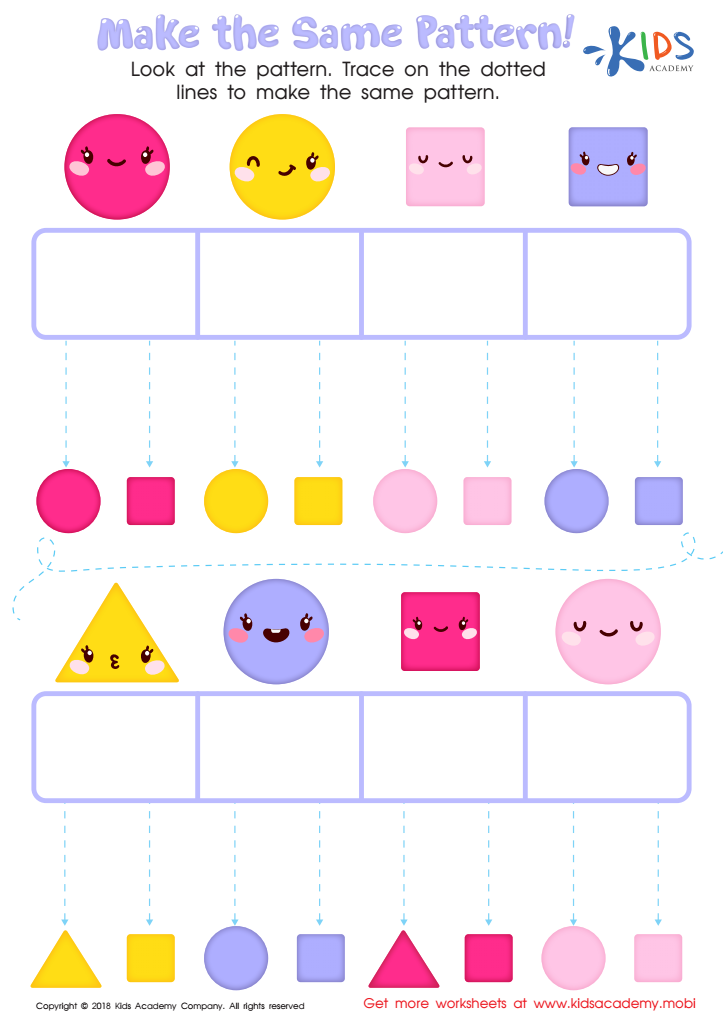
Make the Same Pattern Worksheet
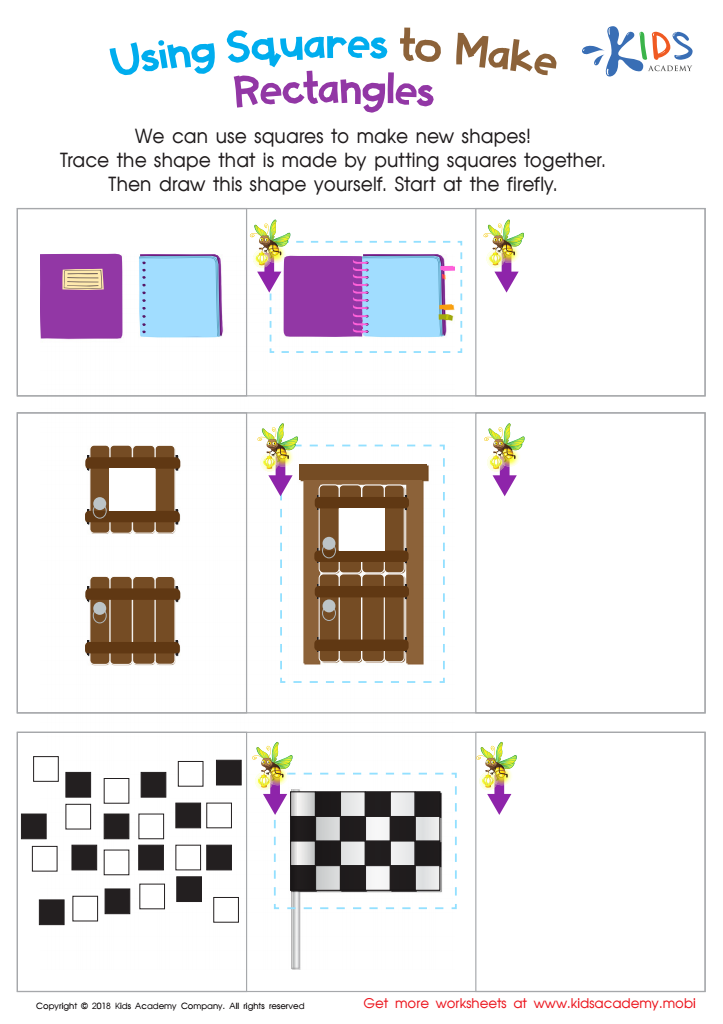
Using Squares to Make Rectangles Worksheet








Critical Thinking Geometry for Ages 3-8 plays a pivotal role in early childhood education. During these formative years, children develop foundational cognitive skills that set the tone for their future learning. Geometry, as a branch of mathematics, encourages young learners to explore shapes, spatial relationships, and sizes, enhancing their visual and analytical skills.
Engaging in critical thinking around geometric concepts helps children learn to categorize, compare, and manipulate shapes, fostering an understanding of their properties. This exploration of geometry not only aids in mathematical development but also nurtures problem-solving abilities and creativity. Parents and teachers should care about this subject because it creates a framework for logical reasoning that transcends mathematics, affecting other areas such as science, art, and everyday life.
Additionally, the capacity to think critically lays the groundwork for academic perseverance and adaptability in the face of challenges. Incorporating critical thinking geometry into learning encourages collaborative play and discussion among peers, promoting social skills. By prioritizing this subject, parents and teachers are equipping children with essential skills that nurture their confidence and ability to interpret the world around them, ultimately preparing them for lifelong learning.








