Develop problem-solving abilities Numbers Worksheets for Ages 3-8
3 filtered results
-
From - To
Unlock your child's potential with our engaging "Develop Problem-Solving Abilities" numbers worksheets, designed for ages 3-8. These printable activities foster critical thinking skills through fun and interactive math exercises. Your young learners will explore various problem-solving techniques while developing a strong foundation in numeracy. Each worksheet includes vibrant illustrations and age-appropriate challenges that encourage creative thinking and independent learning. Tailored for home or classroom use, these resources are perfect for enhancing math skills while keeping kids entertained. Help your child embark on a rewarding journey of discovery and confidence with our unique problem-solving worksheets today!
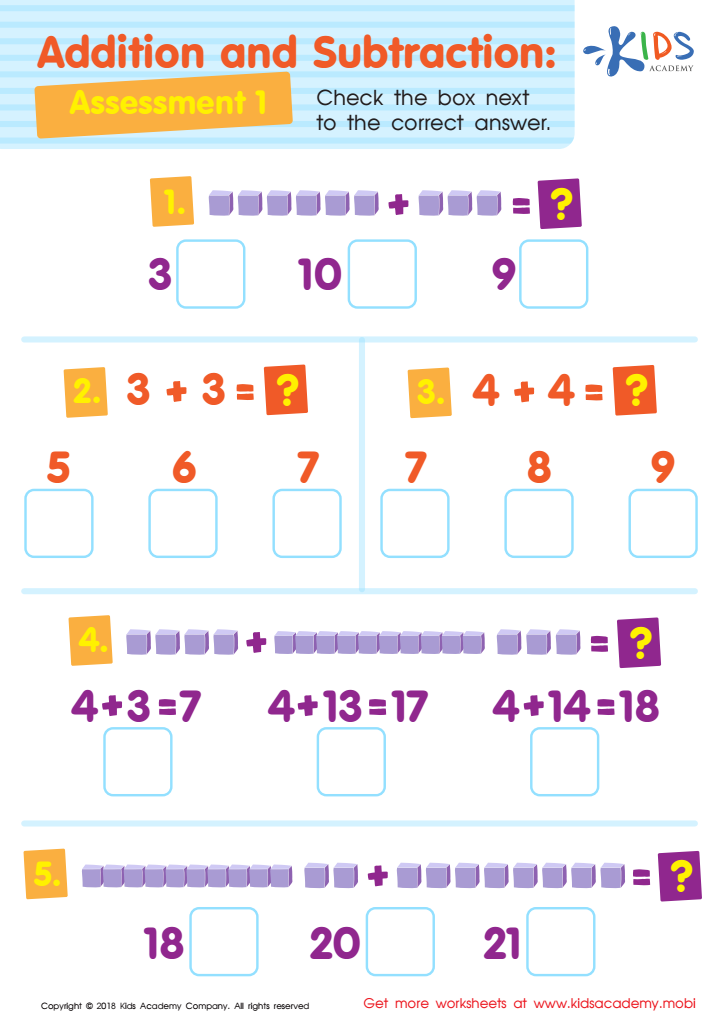
Addition and Subtraction Assessment 1 Worksheet
 Assign to My Students
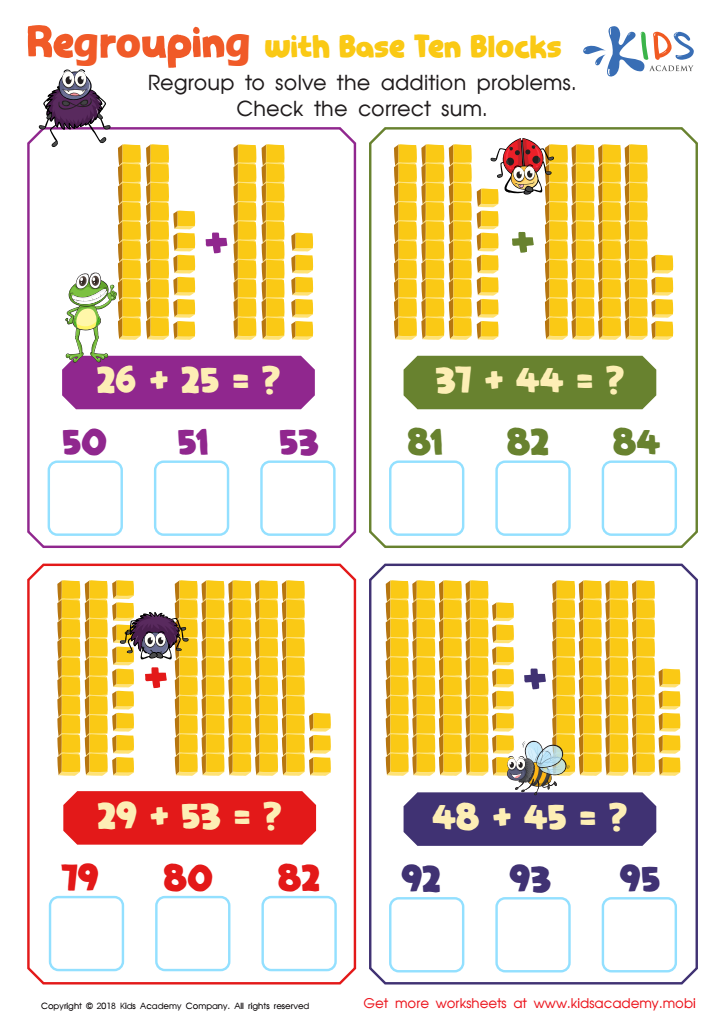
Regrouping With Base Ten Blocks Worksheet
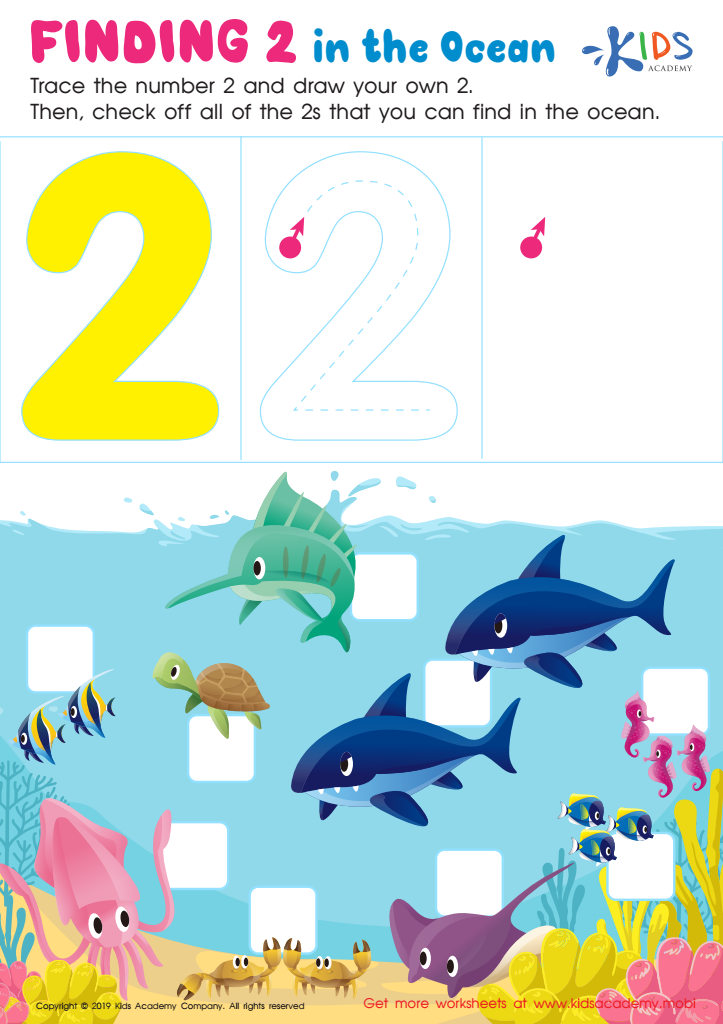
Finding 2: In the Ocean Worksheet








Developing problem-solving abilities in children ages 3-8 is crucial for their cognitive and social development. During these formative years, children are highly receptive to learning and are naturally curious. By fostering problem-solving skills, parents and teachers can help children develop critical thinking, resilience, and independence.
Engaging children in age-appropriate problem-solving activities helps enhance their mathematical understanding, which is foundational for future learning. For example, using puzzles, games, and real-life scenarios encourages children to think logically and evaluate various solutions. This not only promotes numeracy skills but also helps them understand the relevance of math in everyday life.
Additionally, problem-solving promotes collaboration and communication among peers, teaching children how to work together and appreciate different perspectives. These soft skills are essential in all aspects of life as they prepare children for social interactions and teamwork in school and beyond.
When parents and teachers prioritize developing these abilities, they set the stage for lifelong learning habits. Children who are confident in problem-solving are more likely to tackle challenges head-on and persevere in the face of difficulties. Consequently, nurturing problem-solving skills is fundamental to laying a robust foundation for academic and personal success.








