Developing critical thinking Math Worksheets for Ages 3-8
4 filtered results
-
From - To
Welcome to our collection of engaging math worksheets designed to foster critical thinking skills for children aged 3-8! Our resources aim to enhance young learners’ problem-solving abilities through strategically crafted tasks that promote analysis, reasoning, and creativity. Each worksheet is tailored to provide age-appropriate challenges that encourage children to explore mathematical concepts in a fun, hands-on way. From sorting and patterns to basic operations, our critical thinking math activities will stimulate curiosity and help build a solid foundation in mathematics. Dive in today and watch your child's confidence and critical thinking skills flourish!
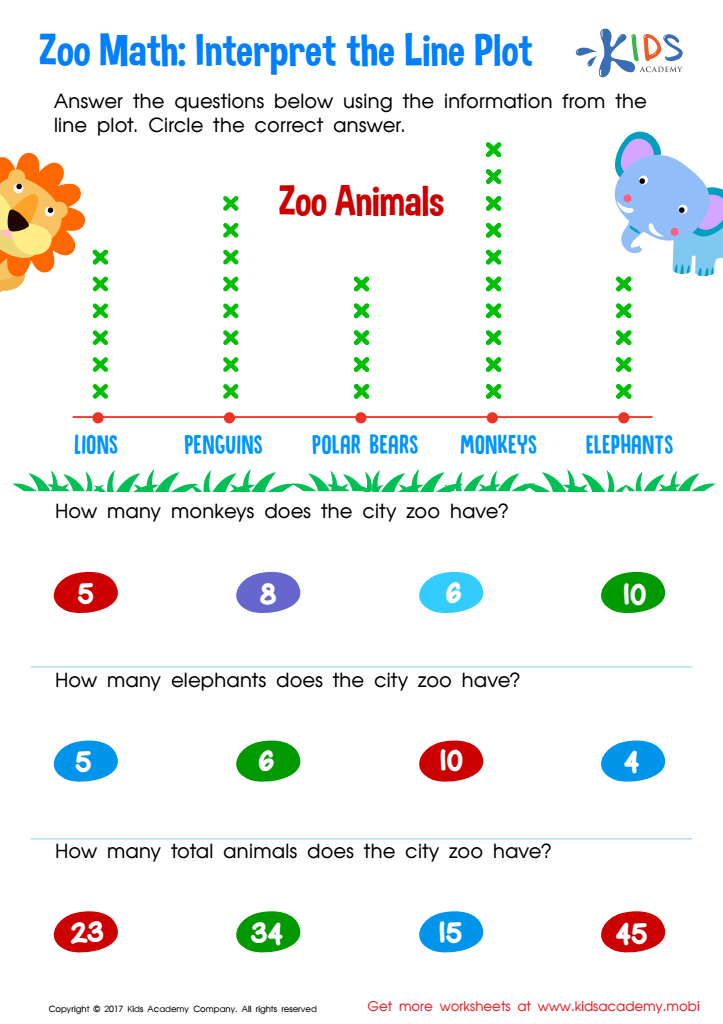
Interpret Line Plot Worksheet
 Assign to My Students
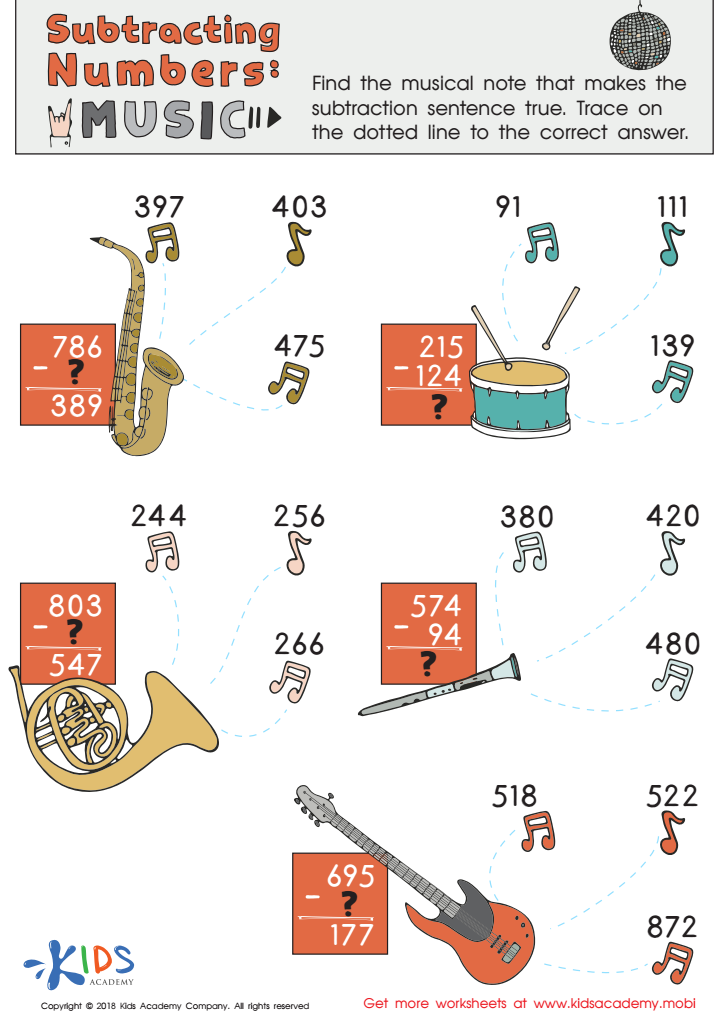
Subtracting Numbers: Music Worksheet








Developing critical thinking skills in mathematics for children aged 3 to 8 is crucial for their overall cognitive development and future academic success. During these formative years, children are naturally curious and eager to explore, making it an ideal time to nurture their analytical abilities. Engaging them in critical thinking activities, such as problem-solving, pattern recognition, and logical reasoning, helps them understand mathematical concepts on a deeper level.
Parents and teachers should care about this development because strong critical thinking skills enhance children’s ability to make connections and apply mathematical knowledge to real-life situations. This lays a solid foundation for future learning, enabling children to tackle complex problems with confidence. Additionally, fostering critical thinking promotes resilience, as children learn to approach challenges creatively and adaptively.
Moreover, in a rapidly evolving world where technology and problem-solving are essential skills, early engagement in critical mathematics not only cultivates a love for learning but also prepares children for academic and professional success. Encouraging discussions, exploring different strategies, and allowing for mistakes will empower children, building their self-esteem and ensuring they are prepared to thrive in an increasingly demanding environment. Ultimately, nurturing critical thinking in mathematics benefits both individual growth and the broader community.








