
Hand-eye Coordination Math Worksheets for Ages 3-8
66 filtered results
Difficulty Level
Grade
Age
-
From - To
Subject
Activity
Standards
Enhance your child's mathematical abilities and fine motor skills with our Hand-eye Coordination Math Worksheets for Ages 3-8. Tailored to young learners, these engaging worksheets combine fun activities with essential math concepts. Children will enjoy tracing, drawing, and connecting fun shapes and numbers while developing their hand-eye coordination. Ideal for preschool and early elementary students, our printable worksheets create a solid foundation for future learning. Each activity is designed to foster concentration, fine motor skills, and cognitive development, ensuring children master key skills while having a great time. Explore our collection to make math practice enjoyable and effective!
Favorites
With answer key
Interactive
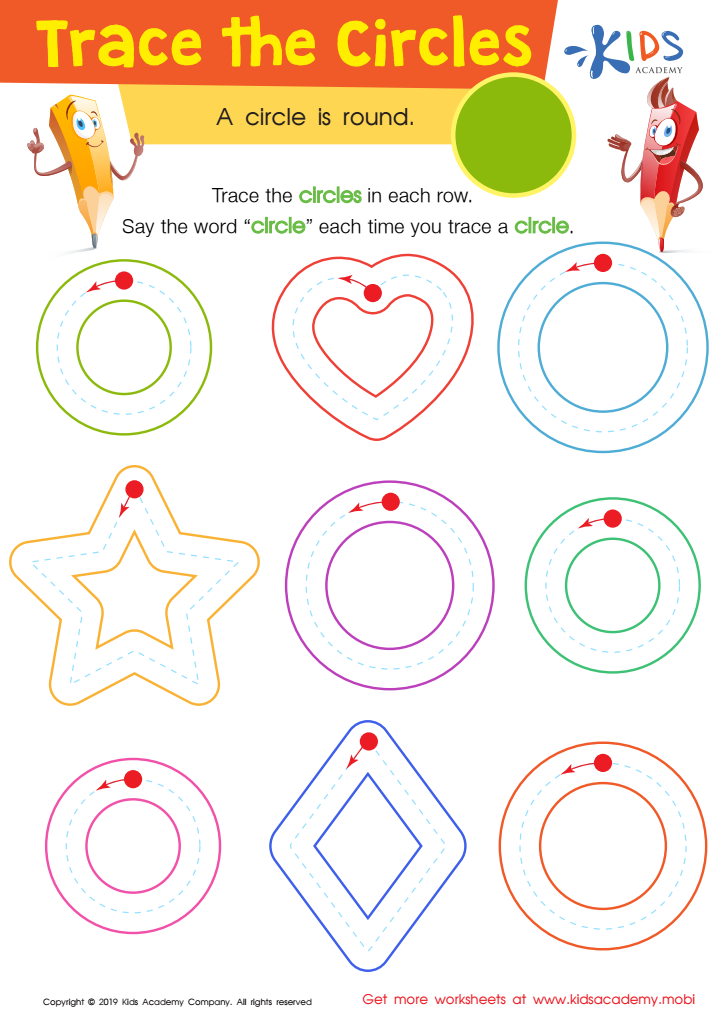
Trace The Circles Worksheet
Preschoolers and kindergarteners love learning shapes! This worksheet provides practice in naming and tracing circles. Students say "circle" each time they trace one. It's a fun way to help kids learn math vocabulary and develop fine motor skills. Enjoy this printable and get ready to master circles!
Trace The Circles Worksheet
Worksheet
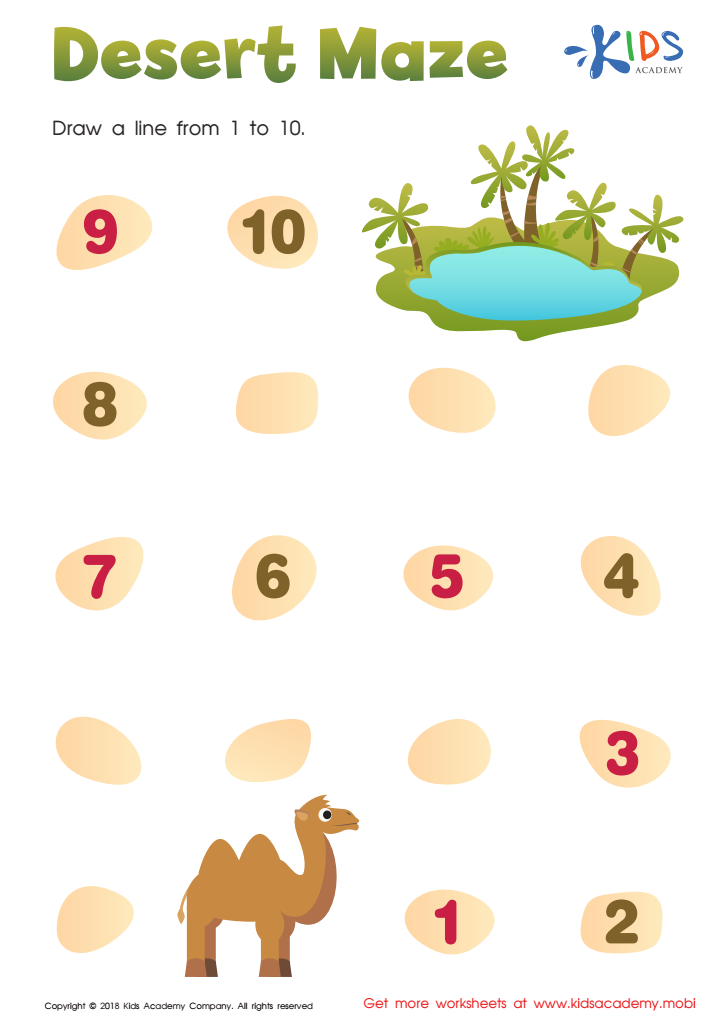
Desert Maze Worksheet
Introduce kids to deserts with videos or photos. Describe how, in deserts, camels are used for transportation due to their ability to go long distances without water. This worksheet gives kids the chance to help a camel cross the desert by drawing a line from 1 to 10.
Desert Maze Worksheet
Worksheet
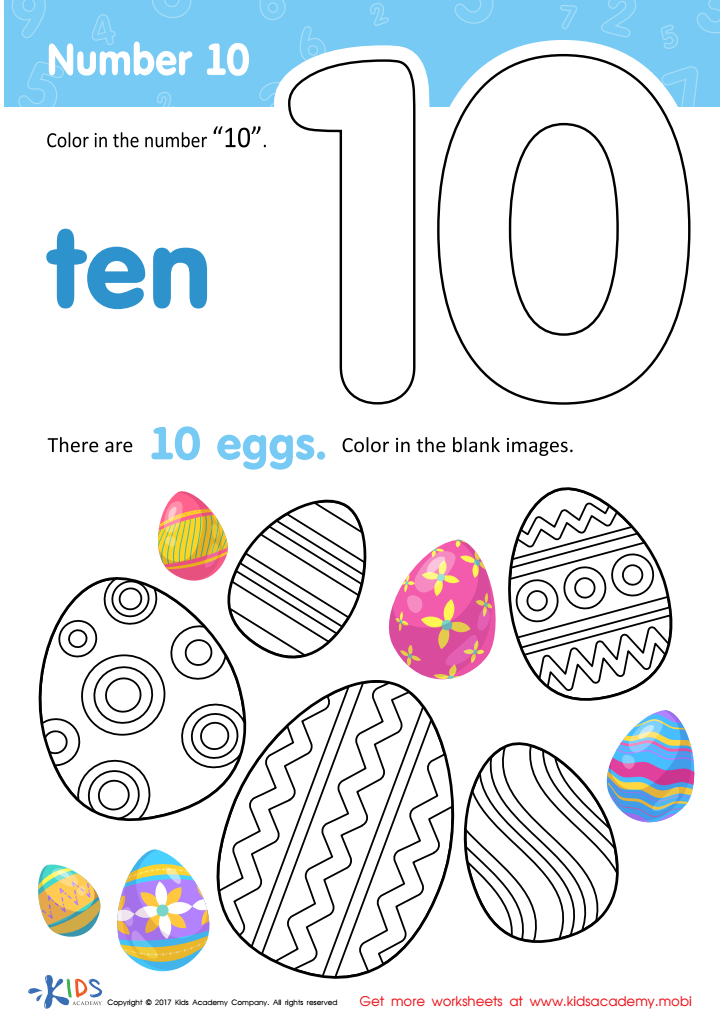
Number 10 Printable
Easter eggs are a great way to combine creativity and learning! Help your child explore the number 10 with our fun coloring page. The intricate designs will spark their imagination and fuel their artistic side, while they practice important numeracy basics. Get creative with eggs and enjoy the fun, no matter the time of year!
Download (PDF)
 Assign to My Students
Assign to My Students
Number 10 Printable
Worksheet
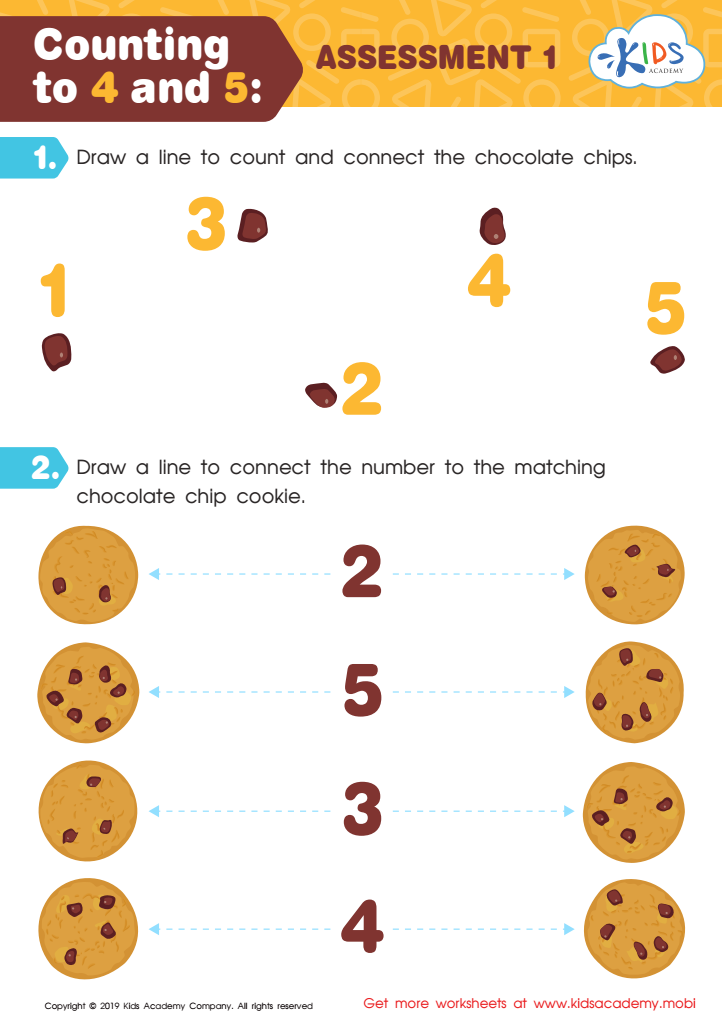
Counting to 4 and 5: Assessment 1 Worksheet
Counting correctly is essential for your little one. Make it fun by counting common objects or items they love. This worksheet includes chocolate chips - help them count then draw a line to connect them. Then draw a line between the number and the matching chip. They'll love it!
Counting to 4 and 5: Assessment 1 Worksheet
Worksheet
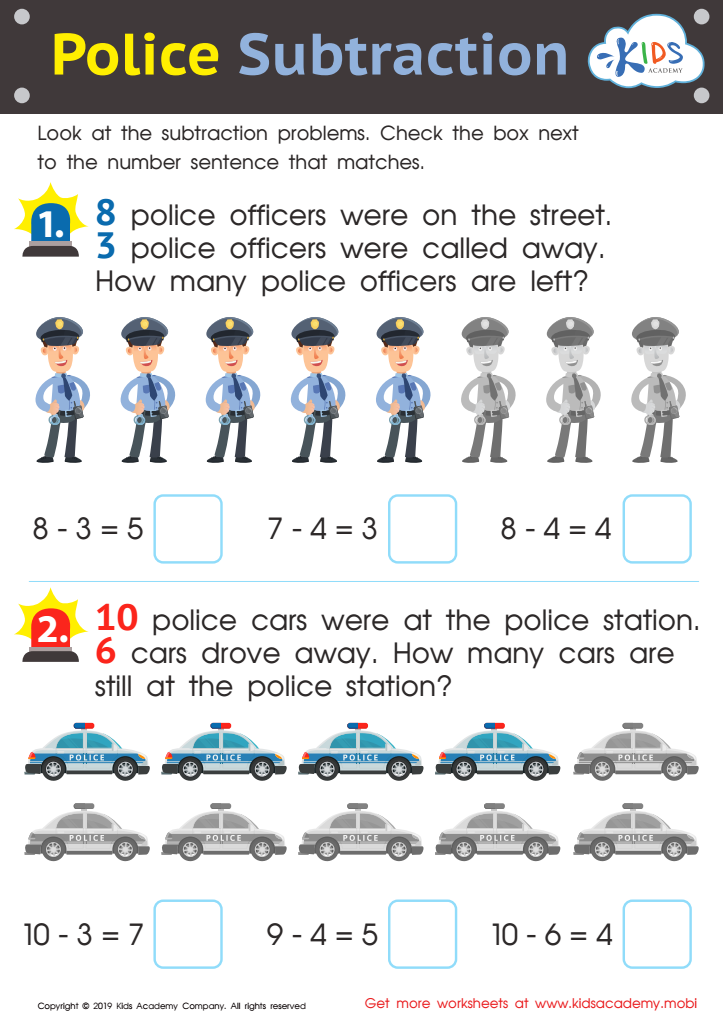
Police Subtraction Worksheet
Police protect citizens and do more in the community. Kids can learn numbers with this math worksheet: two subtraction problems in the downloadable PDF. Read the problems with your kids, then check the box next to the number sentences that are correct.
Police Subtraction Worksheet
Worksheet
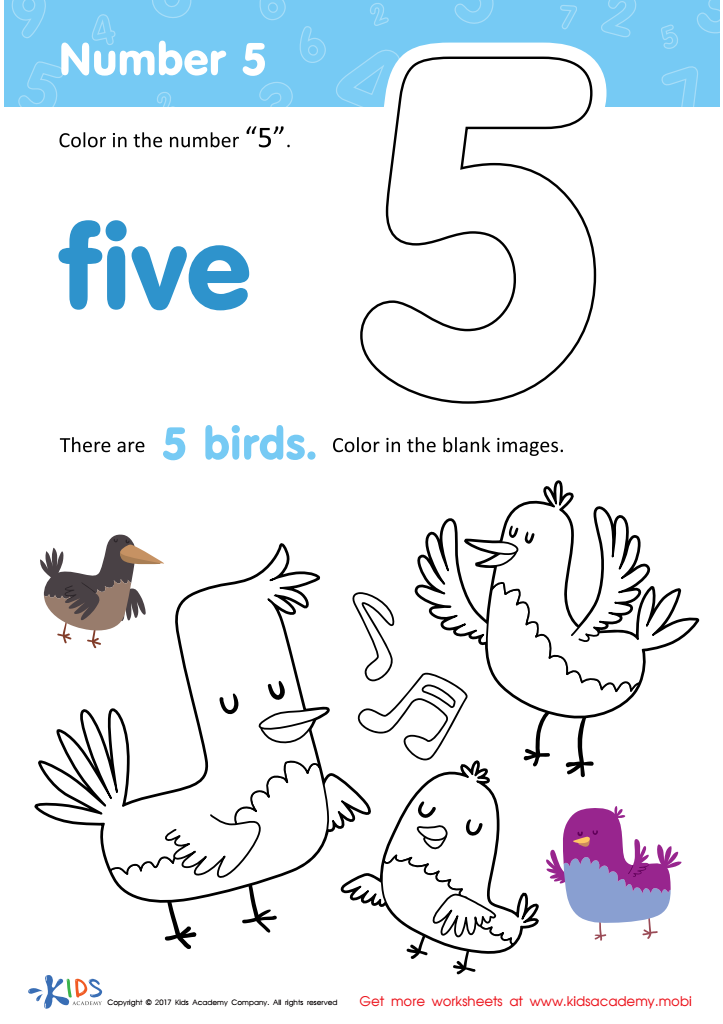
Number 5 Printable
Let your child have fun with this number 5 coloring page! They'll adore coloring the birds and music notes, while learning to recognize the number 5. Enjoy listening to the birds sing their beautiful songs!
Download (PDF)
Assign to My Students
Assign to My Students
Number 5 Printable
Worksheet
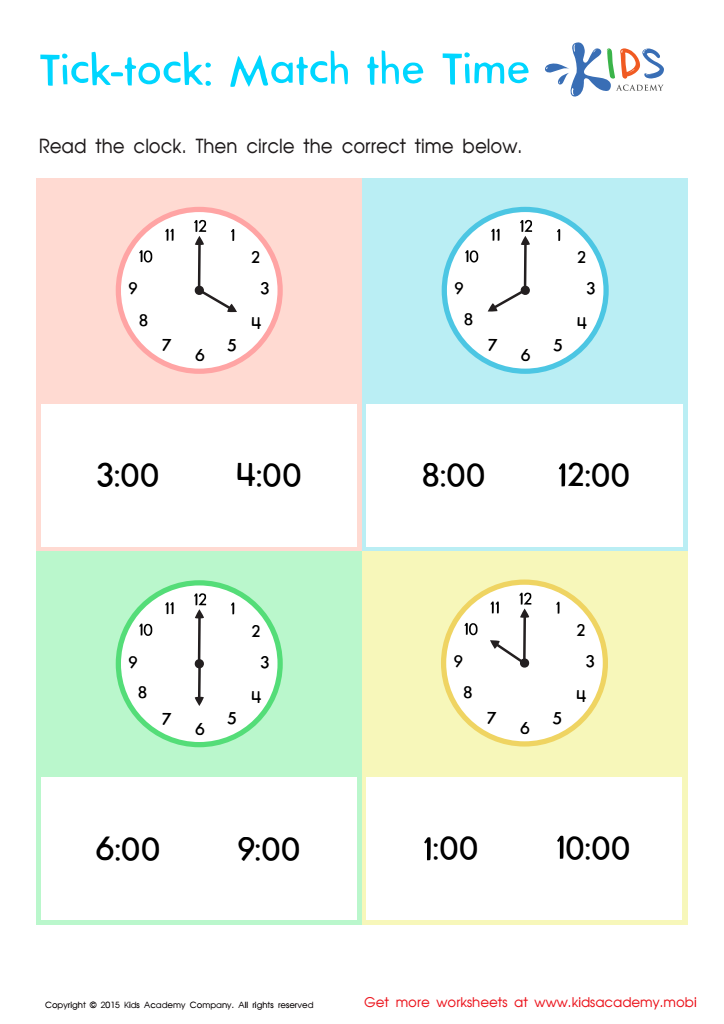
Telling The Time Worksheet: Part 4
Test your skills in telling the time! Circle the right time on 4 analog clock faces.
Telling The Time Worksheet: Part 4
Worksheet
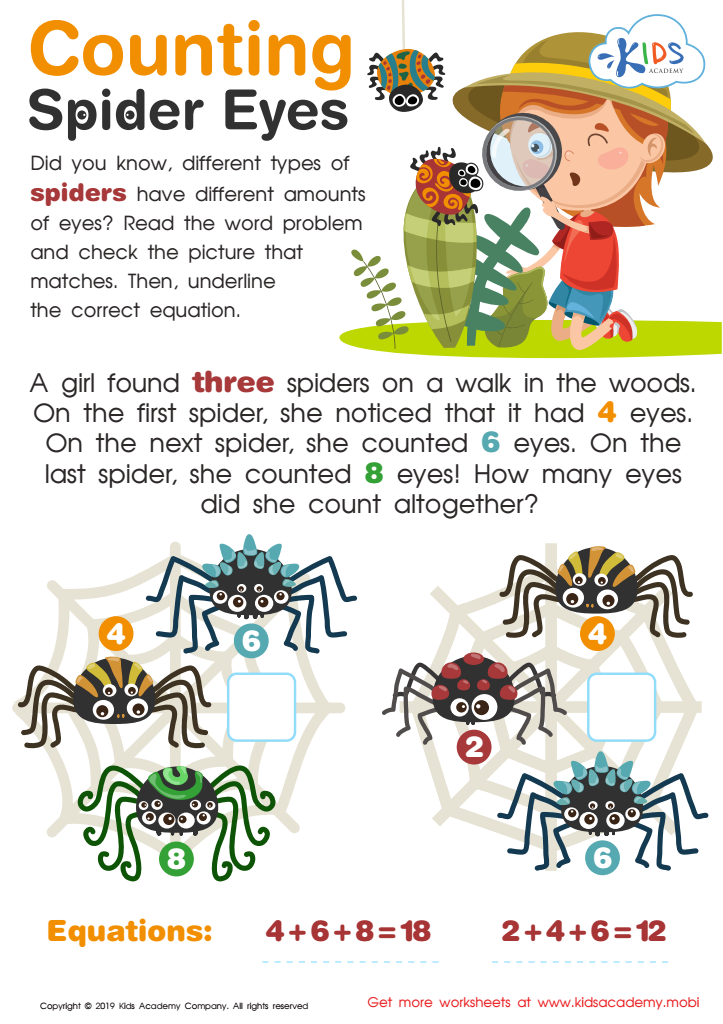
Counting Spider Eyes Worksheet
Did you know different spiders have different eye numbers? Kids will love learning this fact and solving the spider word problems on this free worksheet! Word problems promote a deeper understanding of the concept, plus they get to add up the spiders’ eyes while solving addition problems with more than one addend. Fun and math all in one!
Counting Spider Eyes Worksheet
Worksheet
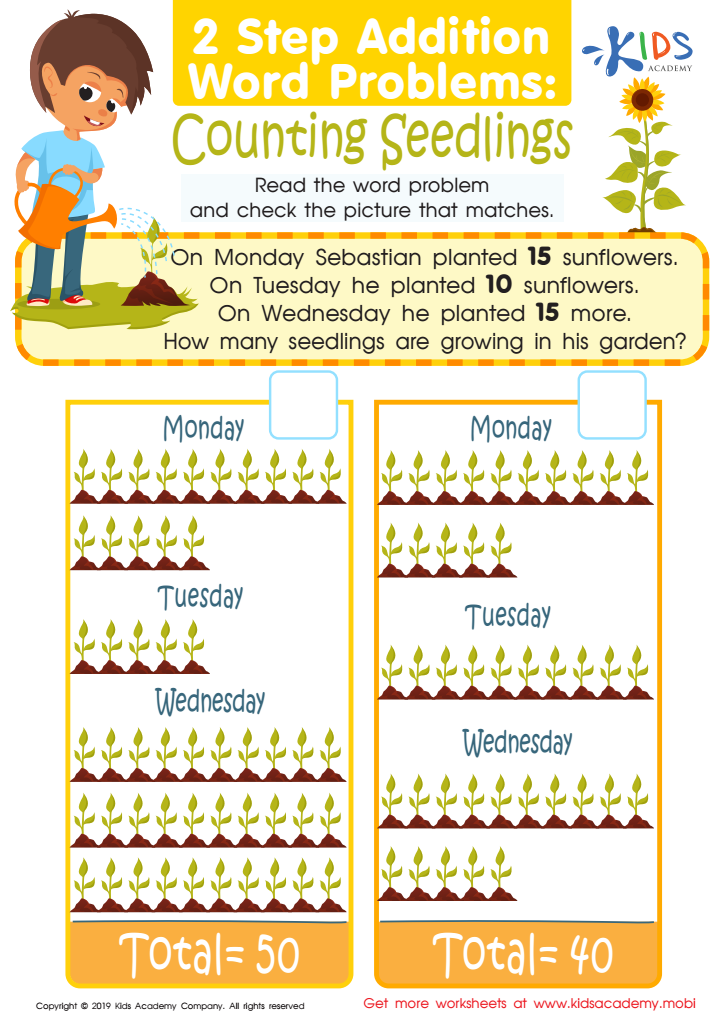
Counting Seedlings Worksheet
Understanding math word problems is key. Multiple steps can prove challenging - this free worksheet provides one-to-one picture representation to help kids solve multi-step addition word problems. Strengthen addition skills by choosing the matching picture to the answer.
Counting Seedlings Worksheet
Worksheet
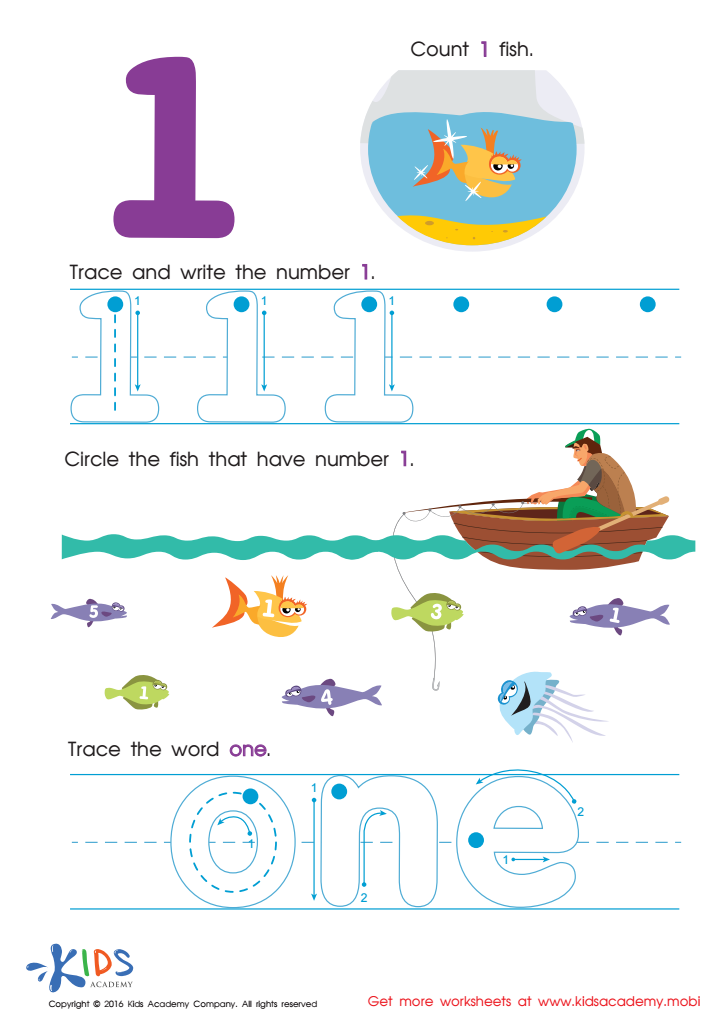
Learning to Write 1 Worksheet
Learning to write numbers can be easy and fun! Get this new number worksheet to help your child excel. Practice counting, tracing and writing the number “one”, then circle the fish with “1” on them. Revise spelling and have fun! Get more tracing numbers worksheets at Kids Academy and enjoy the learning process.
Learning to Write 1 Worksheet
Worksheet
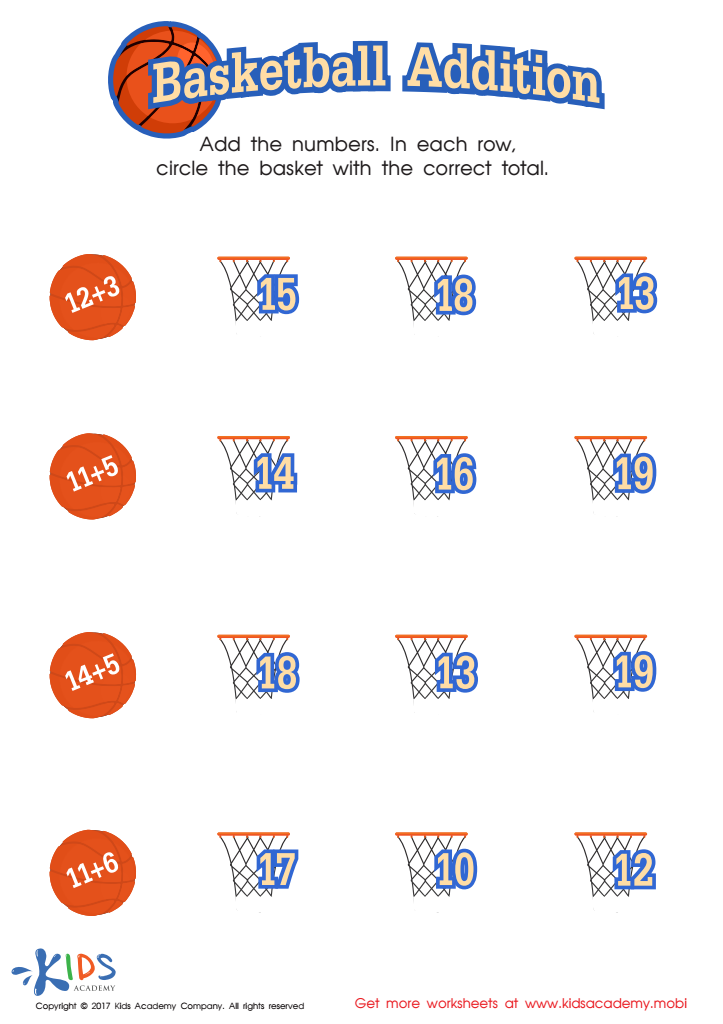
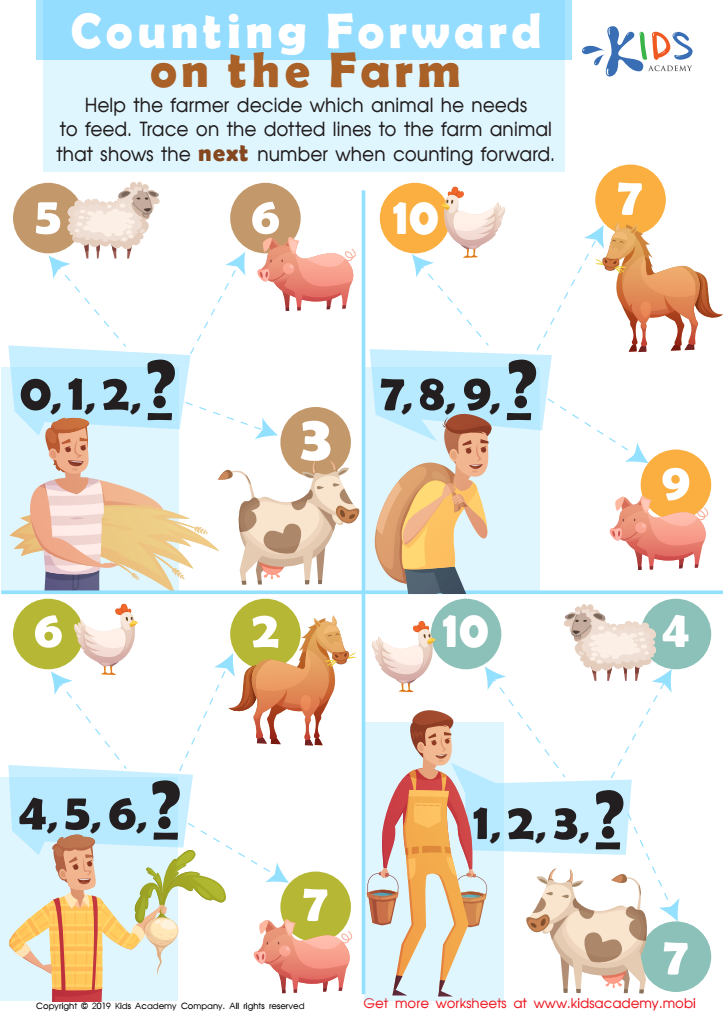
Counting Forward On the Farm Worksheet
Help your child practice counting with this fun worksheet. Have them help a farmer feed the right animal by counting on from a starting point. This activity will help them build number line thinking and refine fine motor skills.
Counting Forward On the Farm Worksheet
Worksheet
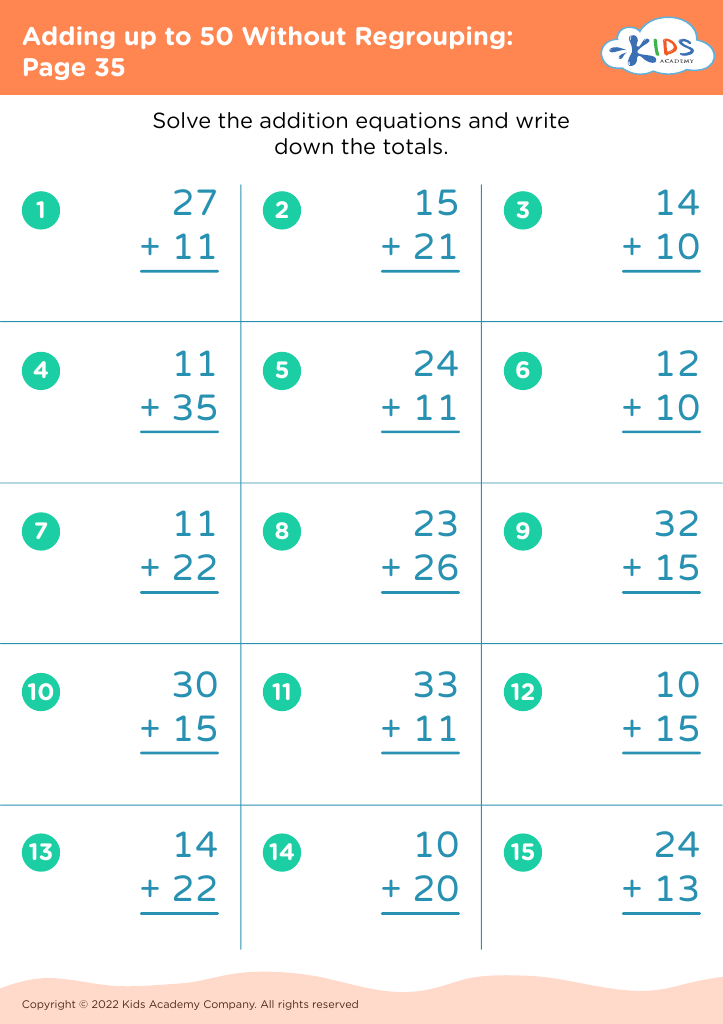
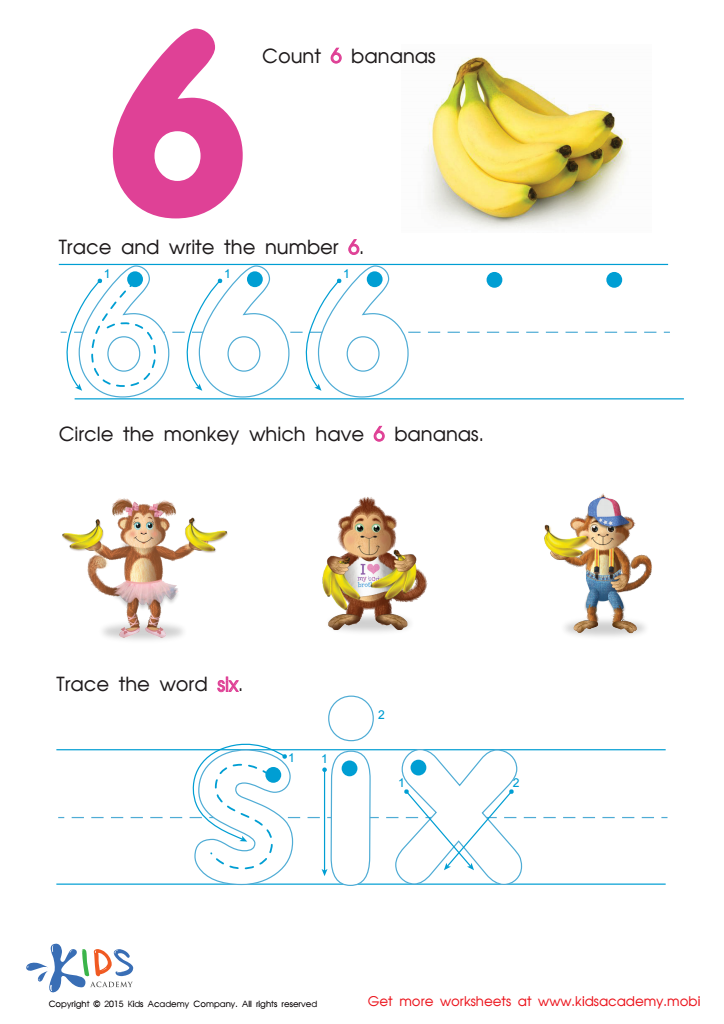
Tracing And Writing Number 6 Worksheet
Learn numbers in a fun way with our preschool number worksheets. Count six bananas, trace and write the number, find the monkey with six bananas, and trace the word "six." Explore more activities at Kids Academy.
Tracing And Writing Number 6 Worksheet
Worksheet
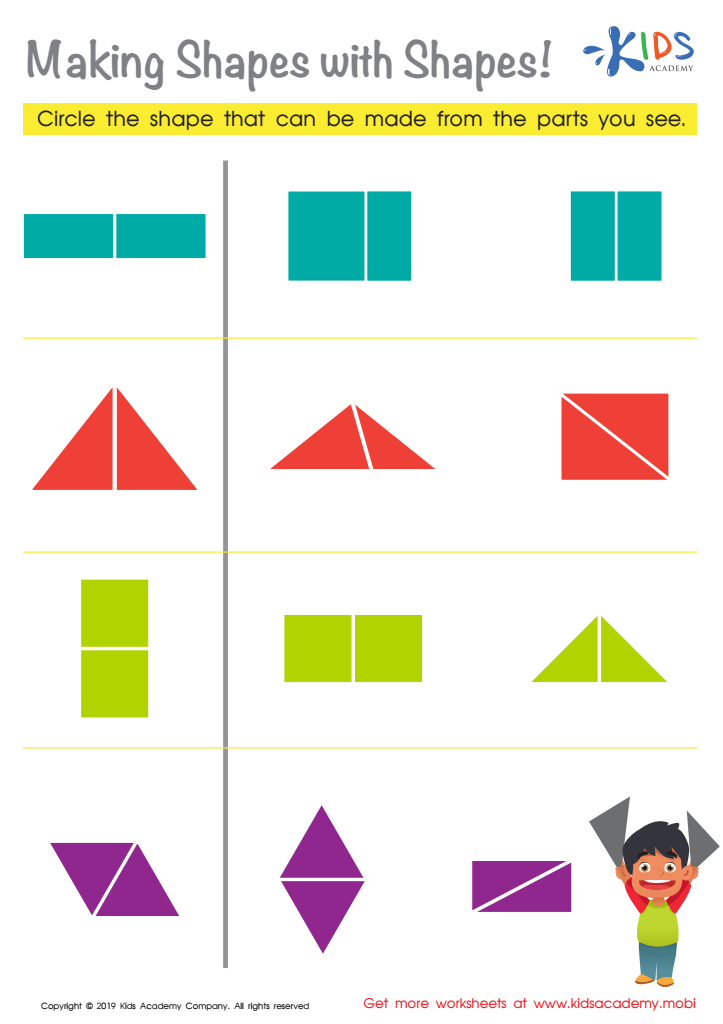
Making Shapes with Shapes Worksheet
Help your kindergartners identify shapes with this simple worksheet. Examine the shapes on the left and have them circle the one they can make from the parts in the picture. Shapes can be tricky, but this exercise will help clear up any confusion.
Making Shapes with Shapes Worksheet
Worksheet
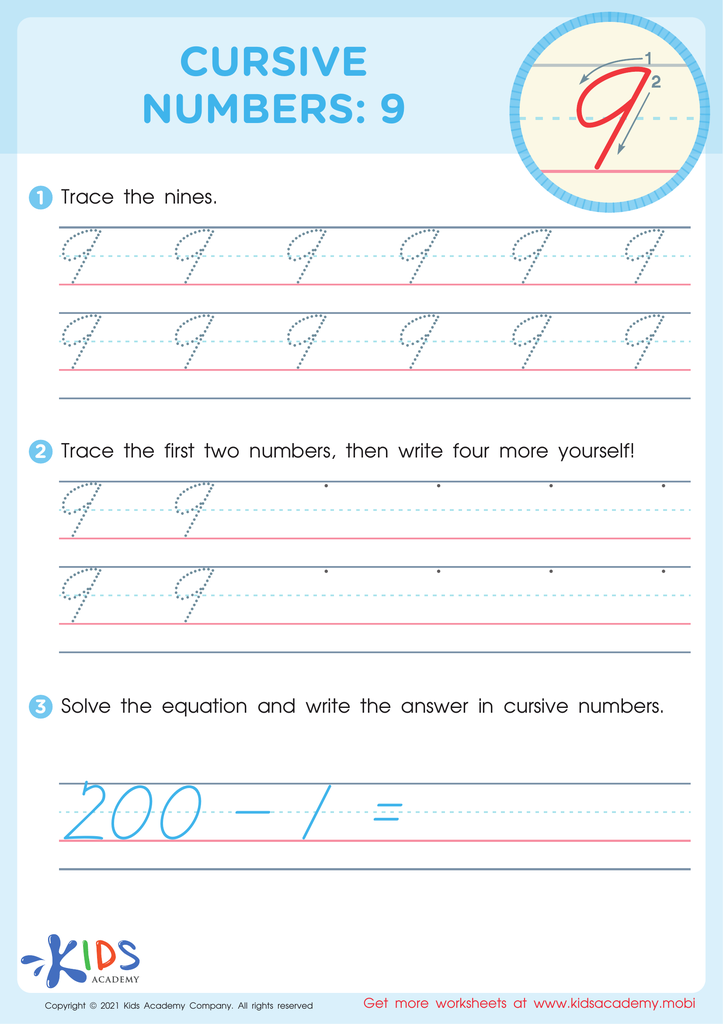
Cursive Numbers: 9 Worksheet
Identifying and writing numbers is key to math success. These worksheets help kids learn to trace the number 9 and build confidence. As they practice, they'll soon be able to write it on their own. Plus, they get to apply their learning and solve a simple equation at the bottom of the page. Writing the answer in cursive is a great way to help them remember!
Cursive Numbers: 9 Worksheet
Worksheet
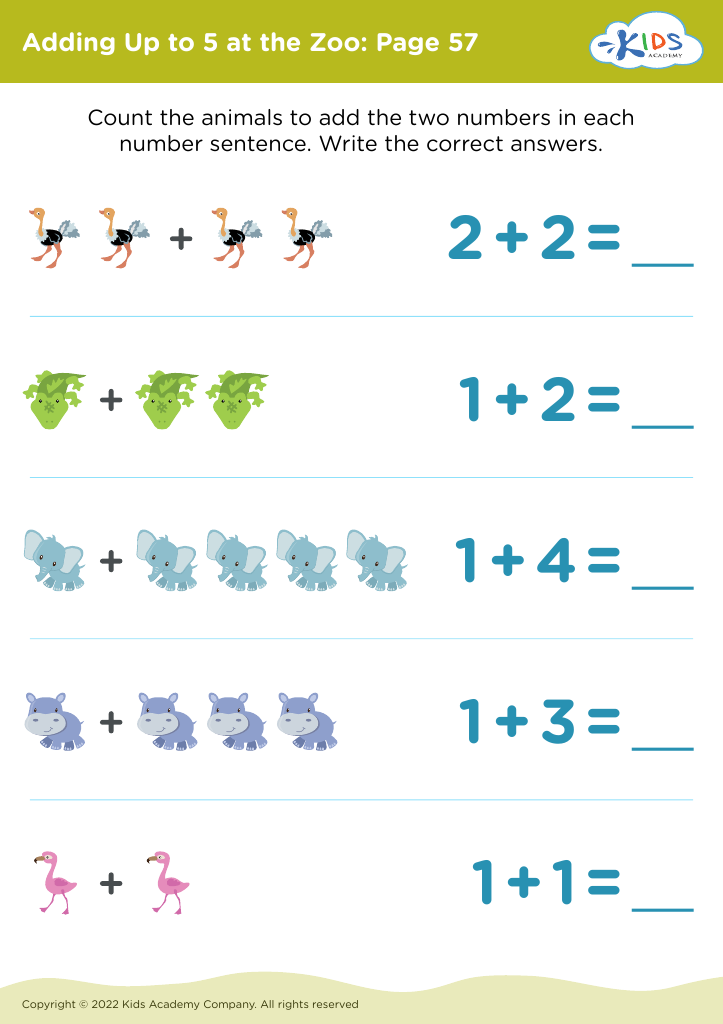
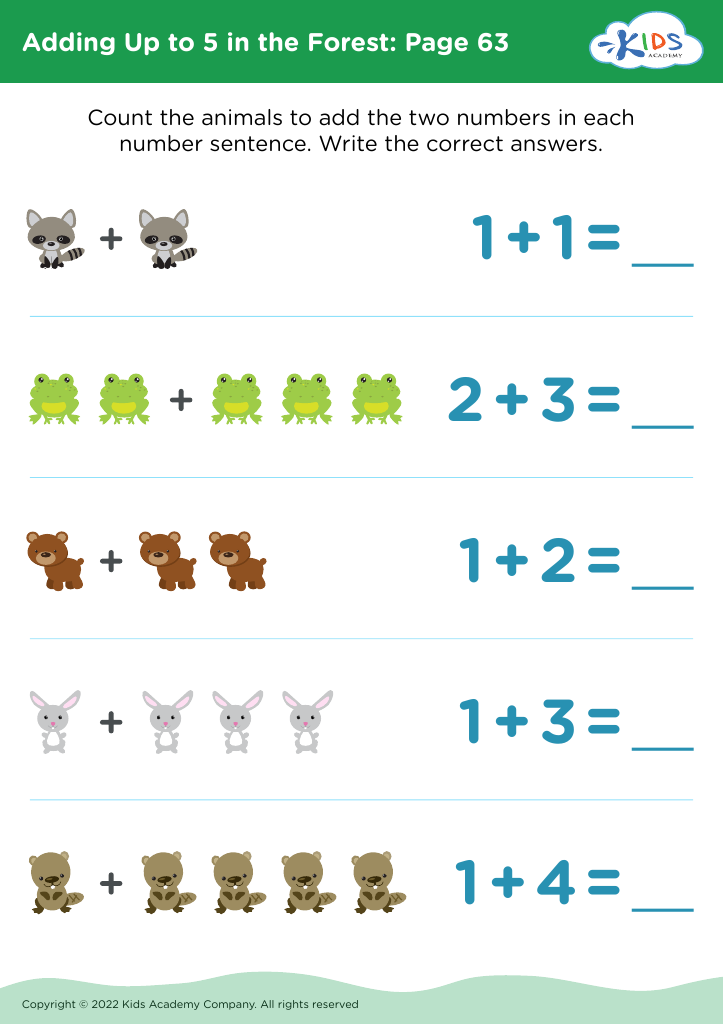
Join Kids Academy for Free
Who is primarily going to use this learning content?







Hand-eye coordination is crucial for young children as it lays the foundation for essential life skills. Fostering this ability through math activities for ages 3-8 accomplishes multiple developmental goals simultaneously. Firstly, hand-eye coordination strengthens motor skills and dexterity, enabling children to perform everyday tasks such as writing, cutting with scissors, tying shoelaces, and even playing sports. Maintaining a focus on integrating hand and eye movements ensures these tasks become almost automatic with practice, boosting confidence and independence.
Integrating hand-eye coordination with math offers additional cognitive benefits. Activities like sorting shapes, counting objects, or tracing numbers help solidify mathematical concepts. By leveraging manipulatives—physical items like blocks or counters—children actively engage both their visual and motor systems, making abstract concepts more concrete and understandable. This dual engagement nurtures cognitive development, enhancing memory, problem-solving skills, and spatial awareness.
Moreover, combining these skills fosters a child's ability to pay attention and follow instructions, setting a precedent for structured learning and academic success. Early intervention in developing hand-eye coordination with math not only supports physical and cognitive growth but also cultivates a comprehensive, multi-faceted learning environment. Parents and teachers, therefore, play a pivotal role in shaping an engaging, effective educational experience that will benefit children beyond the classroom.








