Time-telling skills Math Worksheets for Ages 3-8
5 filtered results
-
From - To
Enhance your child's understanding of time with our engaging Time-Telling Skills Math Worksheets designed specifically for ages 3-8. These printable worksheets offer fun activities that help young learners grasp the concepts of time, from identifying clocks to understanding the difference between morning, afternoon, and night. Each worksheet is tailored to foster confidence and mastery in telling time, featuring colorful visuals and simple exercises that capture children's attention. Perfect for home or classroom use, our resources encourage early math skills development while making learning enjoyable. Download today to start your child’s journey towards becoming a time-telling expert!
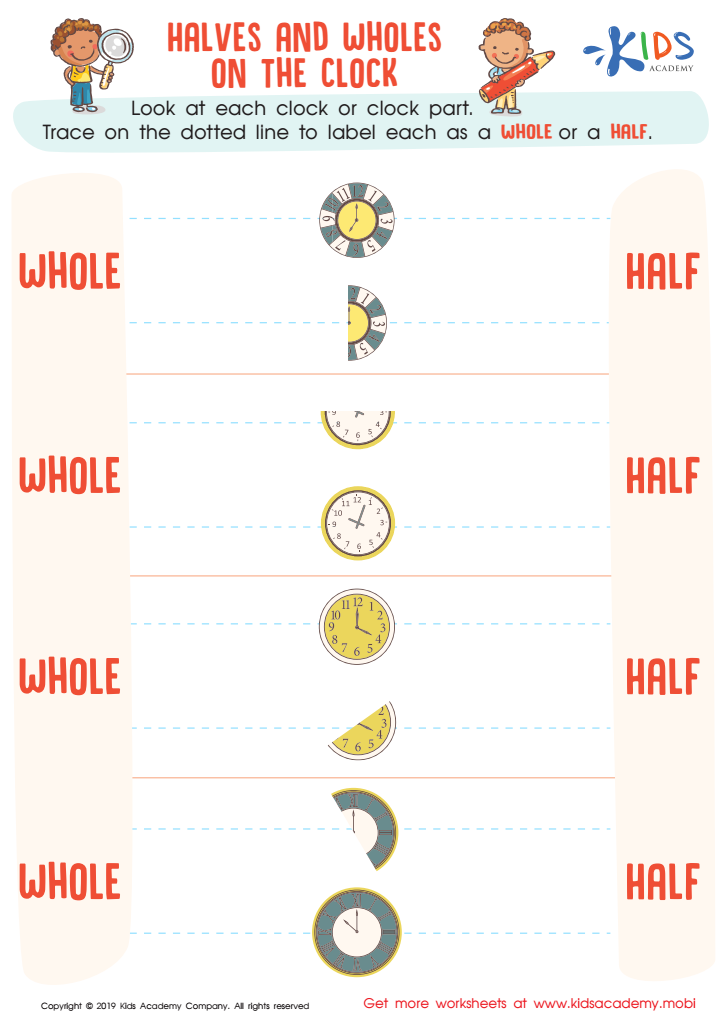
Halves and Wholes on the Clock Worksheet
 Assign to My Students
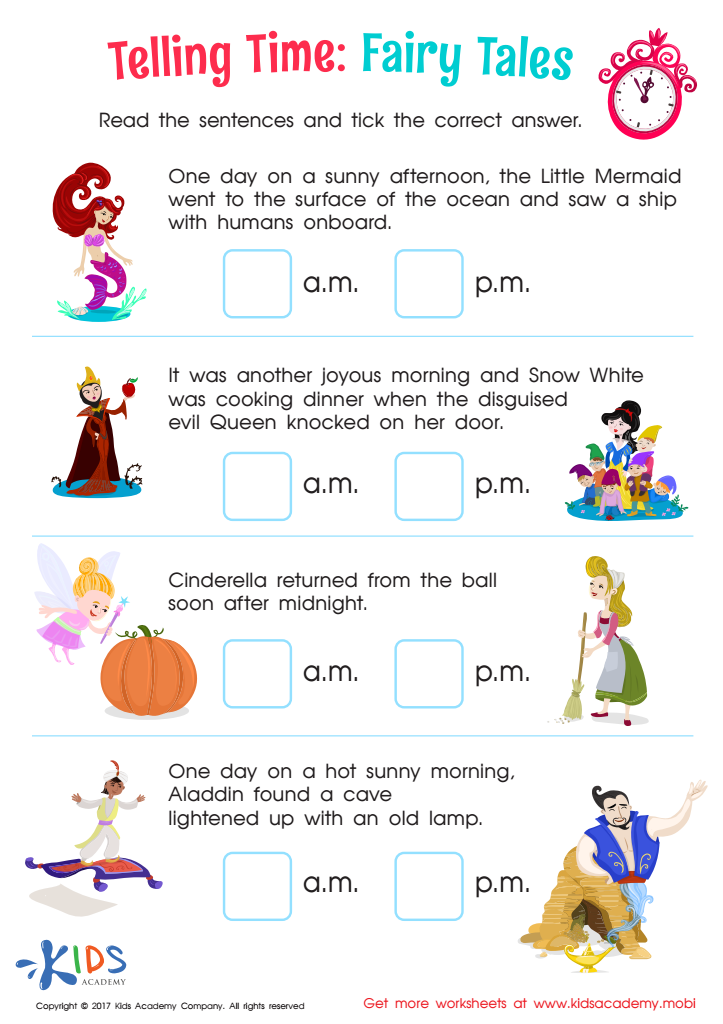
Telling Time: Fairy Tales Worksheet
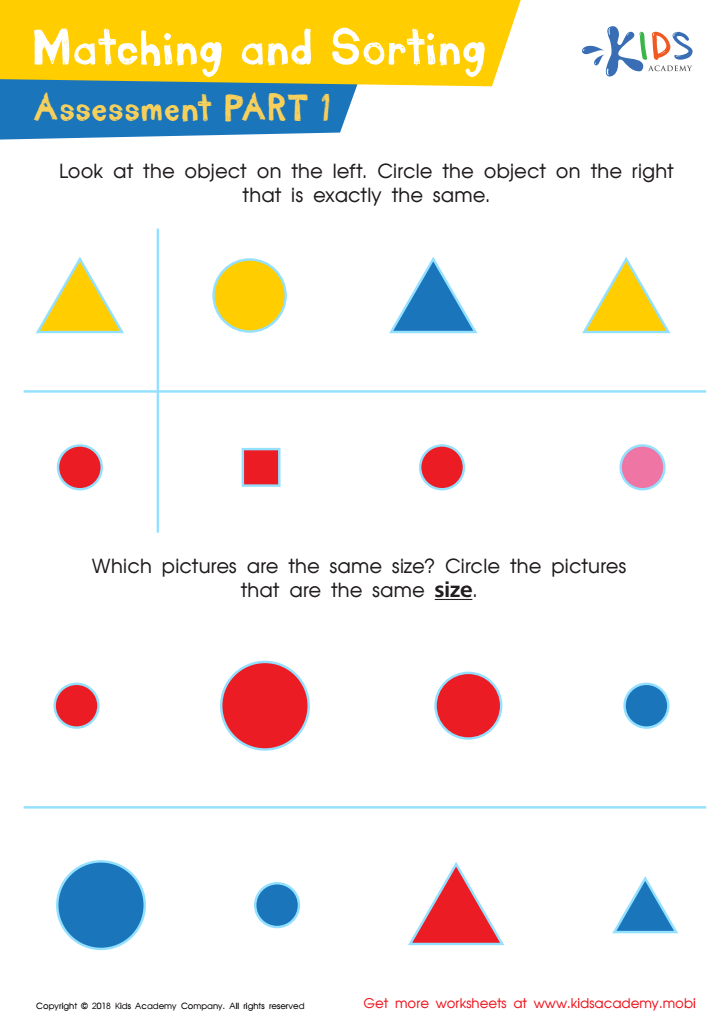
Matching and Sorting for Kindergarten: Assessment 1 Worksheet
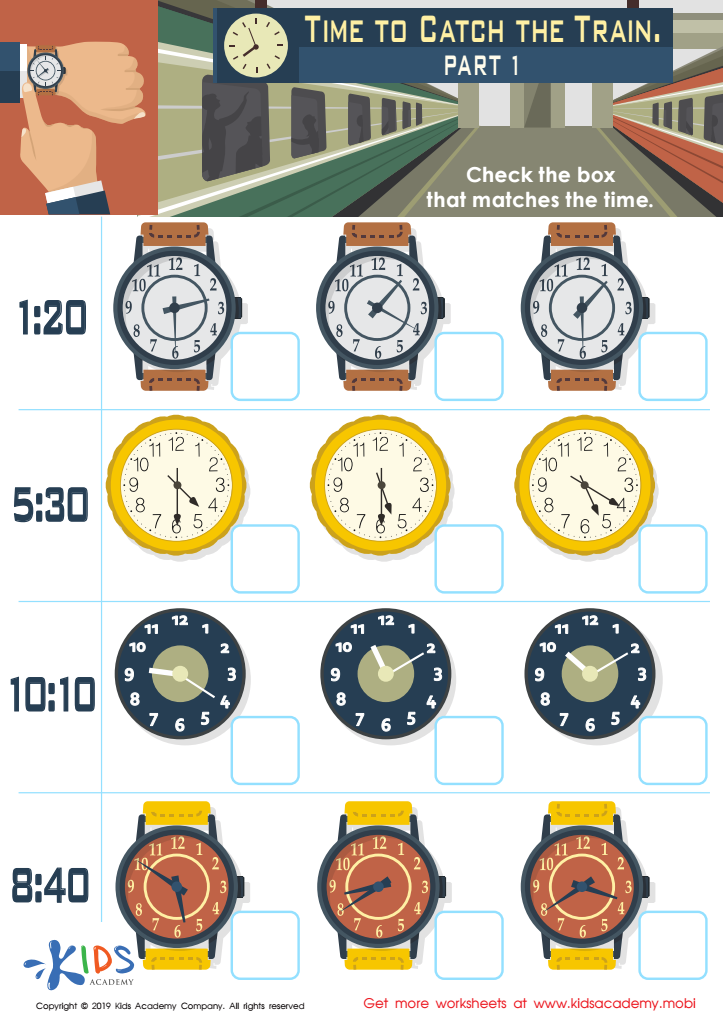
Time to Catch the Train Part 1 Worksheet


.jpg)


.jpg)

Time-telling skills are crucial for children aged 3 to 8, as they lay the foundation for essential mathematical and life skills. First, understanding time helps children develop a sense of routine and structure, which is vital for their daily activities, such as getting ready for school, meals, and bedtime. This predictability assists in managing their time and fosters self-discipline.
Moreover, learning to tell time introduces children to basic mathematical concepts, such as counting, geometry (with the clock's shape), and the idea of fractions (understanding hours and minutes as parts of a whole). These early experiences build confidence in their math abilities and facilitate a smoother transition to more complex numeracy skills later on.
Additionally, time-telling is a practical life skill. Knowing how to read digital and analog clocks empowers children to become more independent and responsible, as they can understand when to transition between activities, manage playtime, or prepare for events.
Finally, the ability to tell time often correlates with academic performance, as time management is an integral part of learning. By nurturing these skills early on, parents and teachers can foster greater academic engagement and ensure children are better equipped for future challenges.








