Understanding biodiversity Math Worksheets for Ages 3-8
3 filtered results
-
From - To
Dive into the fascinating world of biodiversity with our engaging Math Worksheets for ages 3-8! Kids Academy offers a unique blend of math skills development and nature exploration to capture young minds. These colorful and interactive printables help children grasp early math concepts through the lens of biodiversity. You'll find activities ranging from counting and patterns to addition and subtraction, all themed around earth's incredible range of plants and animals. Perfect for classrooms and home learning, our worksheets aim to foster a love for nature while building essential math skills. Explore now and inspire your young mathematicians with nature's wonders!
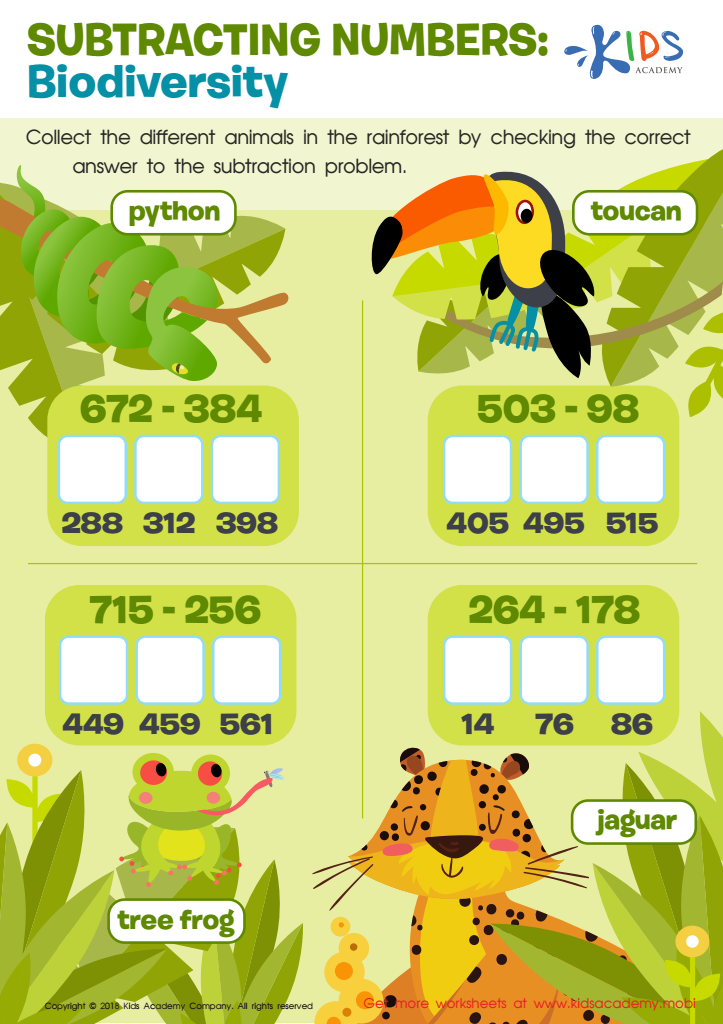
Subtracting Numbers: Biodiversity Worksheet
 Assign to My Students
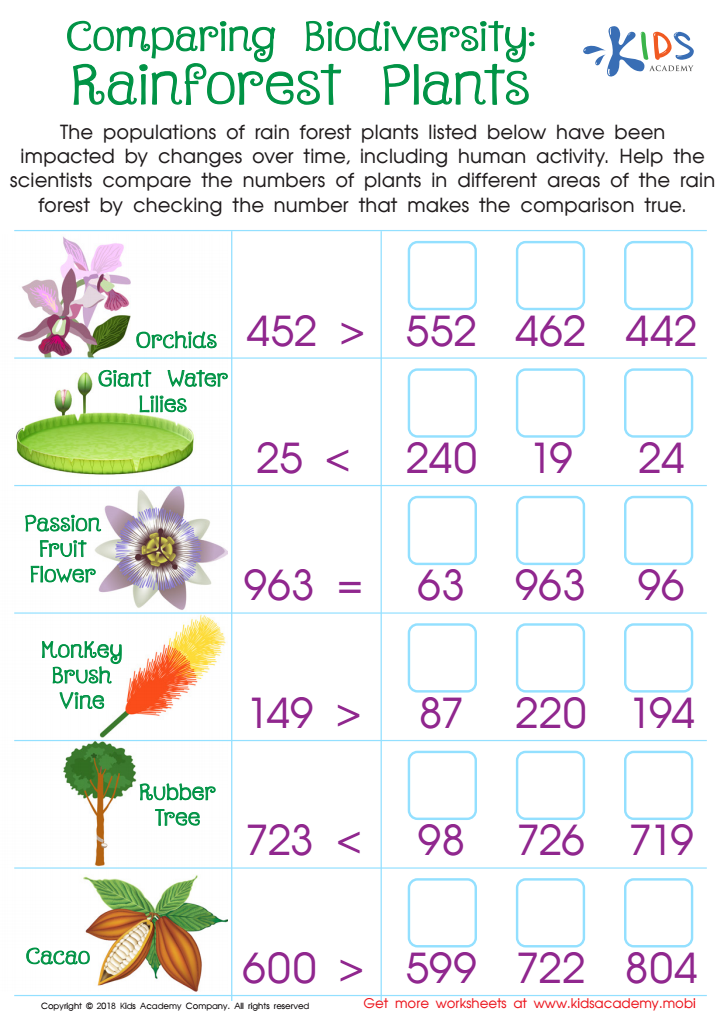
Comparing Biodiversity: Rainforest Plants Worksheet
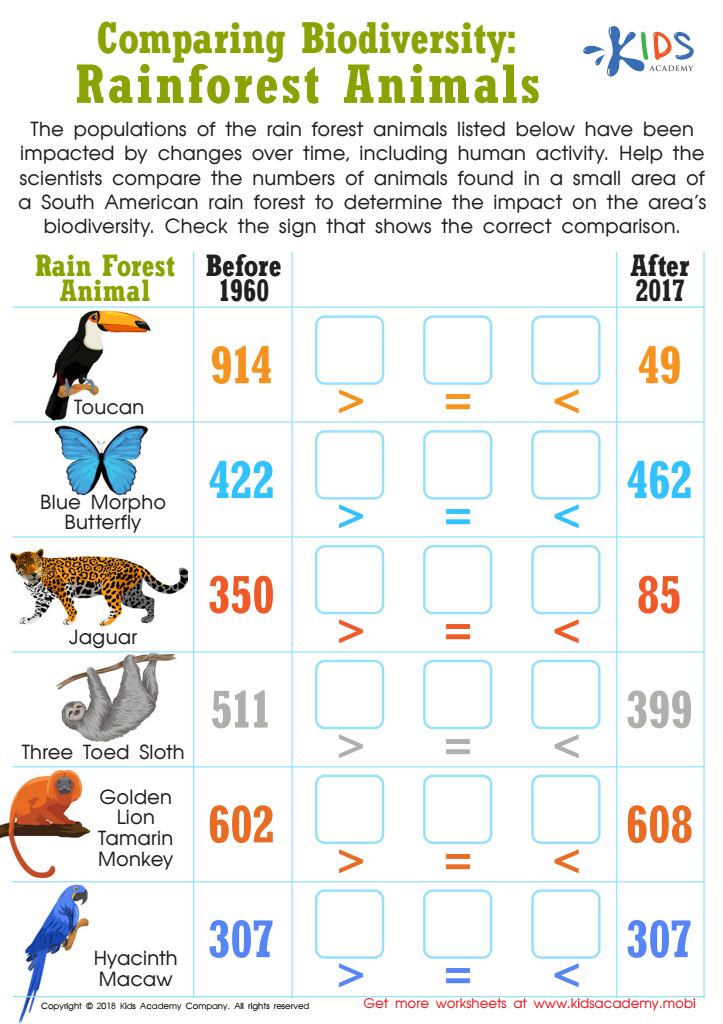
Comparing Biodiversity: Rainforest Animals Worksheet






Introducing children to the concept of biodiversity through mathematics at an early age (3-8 years) is crucial for several reasons. First, it fosters a foundation of awareness and appreciation for nature, ensuring that young learners grow into environmentally conscious adults. By using math to categorize, count, and explore various species, children develop their analytical skills while gaining a holistic understanding of the natural world. Moreover, integrating biodiversity in math lessons makes learning more engaging and relevant; children are more likely to develop a curiosity and love for both subjects.
Mathematical activities related to biodiversity, such as sorting different animals or plants by size, shape, or color—or even simple counting exercises using pictures of diverse species—enhance observational skills and critical thinking. This dual learning experience reinforces both math competencies and ecological literacy seamlessly. Understanding biodiversity through math also instills the concept of interconnectedness; children will learn that the variety of life forms is an intricate system where each part has a role in maintaining ecological balance.
In summary, blending biodiversity with math nurtures a generation that is not only proficient in mathematical skills but also empathetic and informed about their natural surroundings, ultimately cultivating responsible future custodians of our planet.








