Times Tables Worksheets for Ages 3-8 - Page 2
34 filtered results
-
From - To
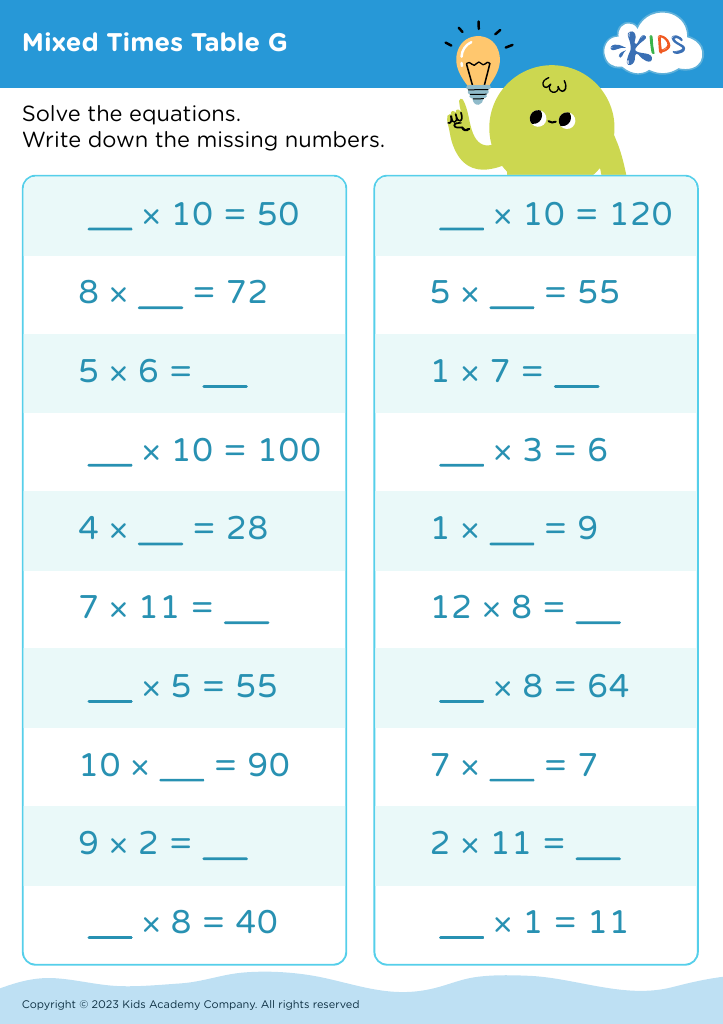
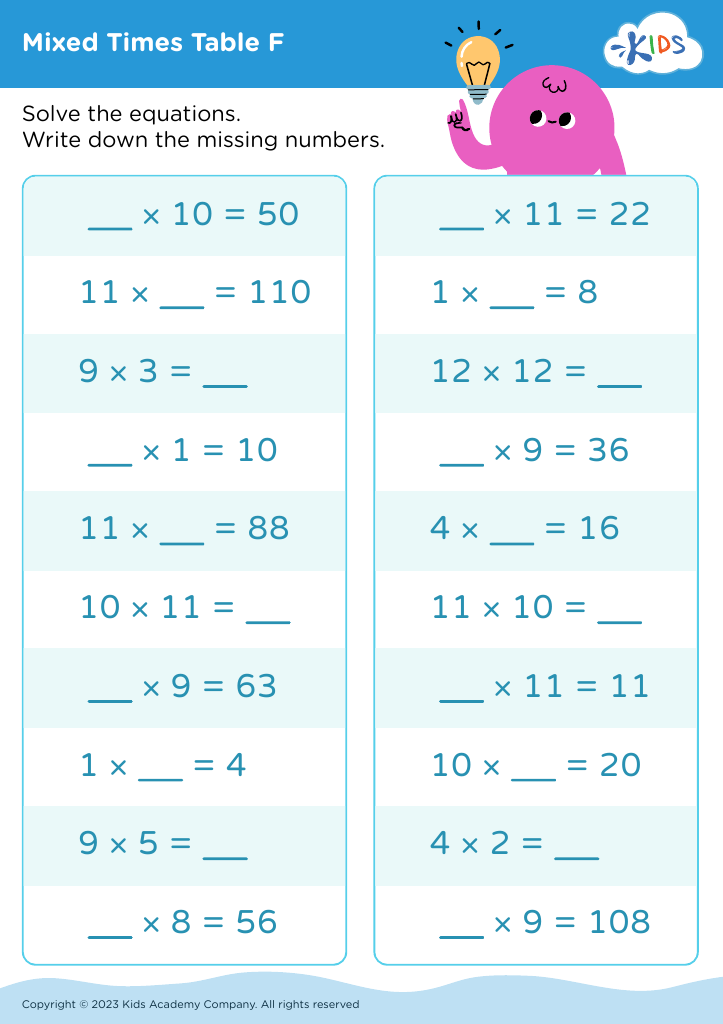
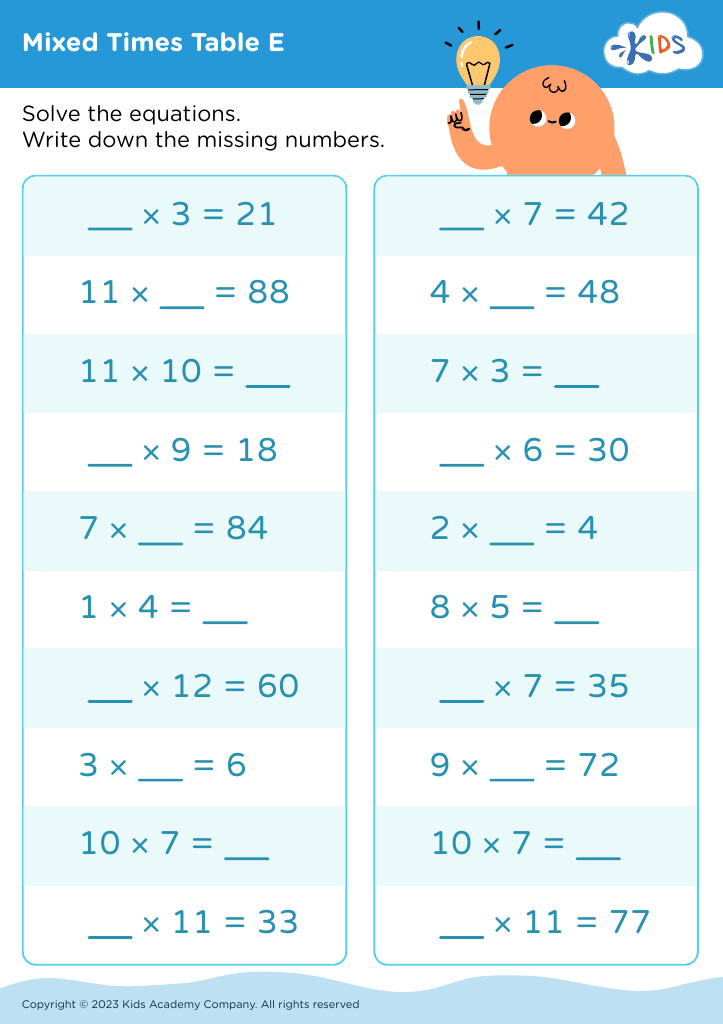
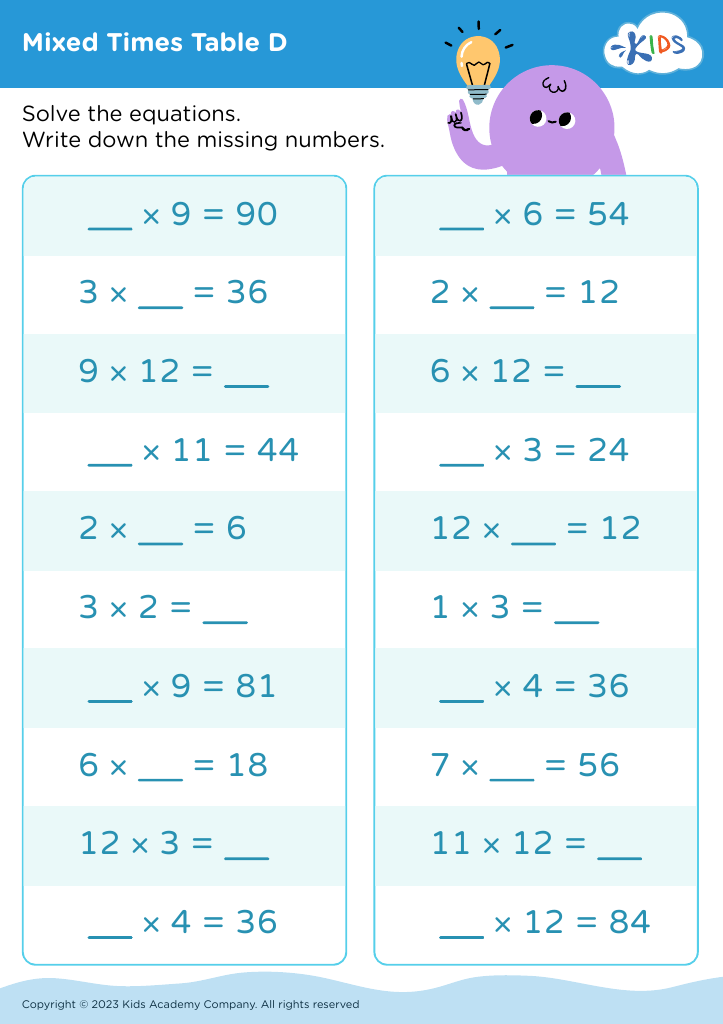
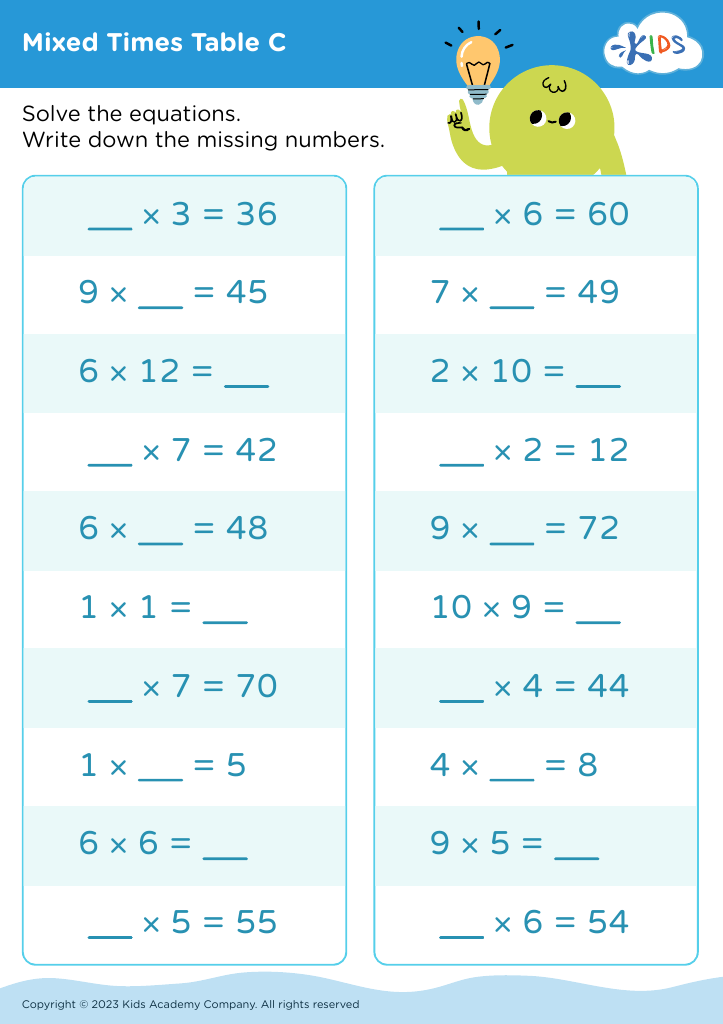
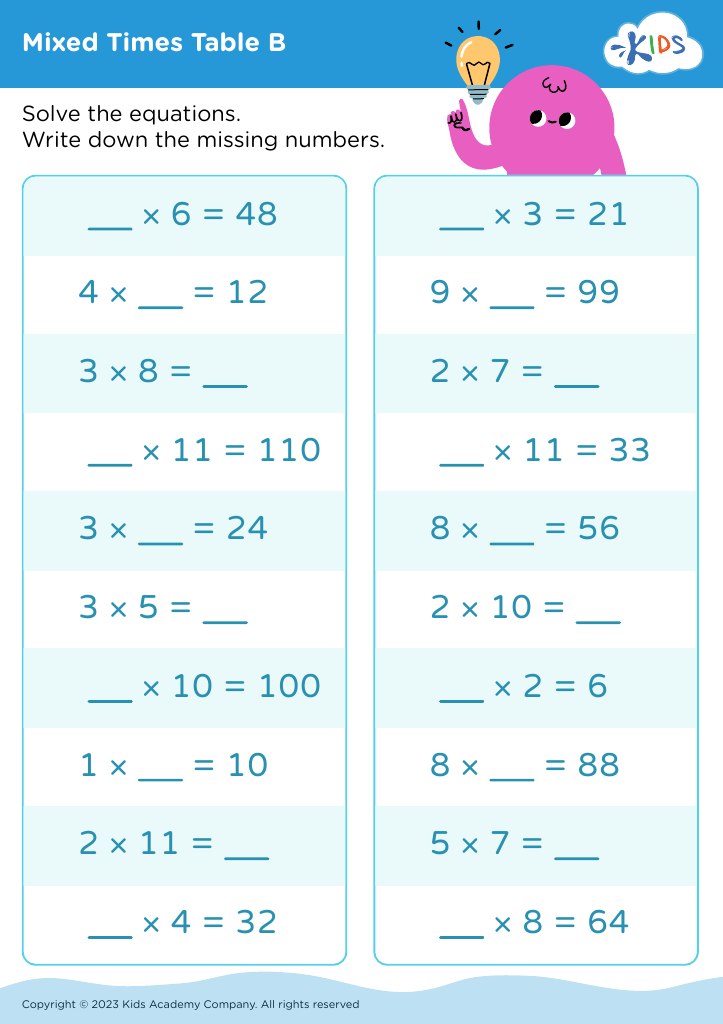
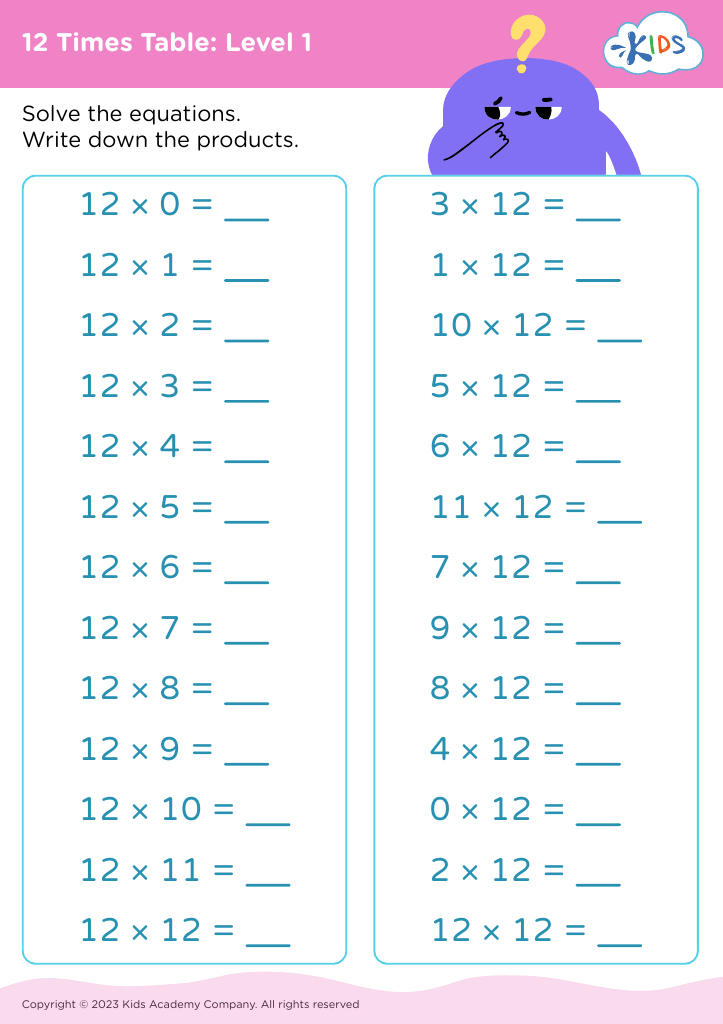
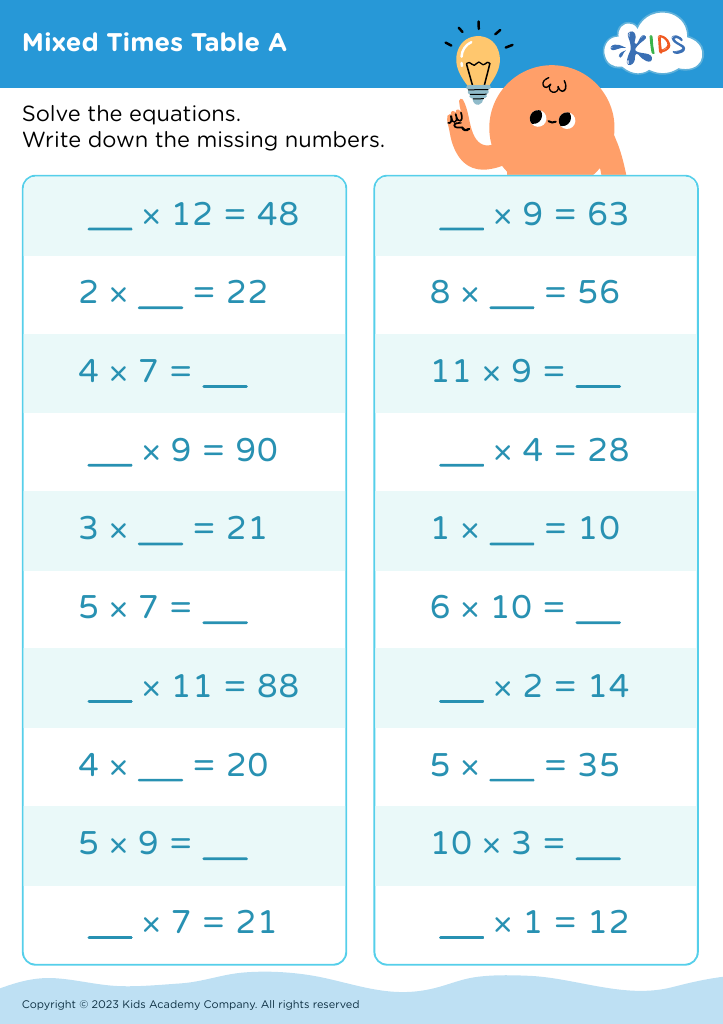
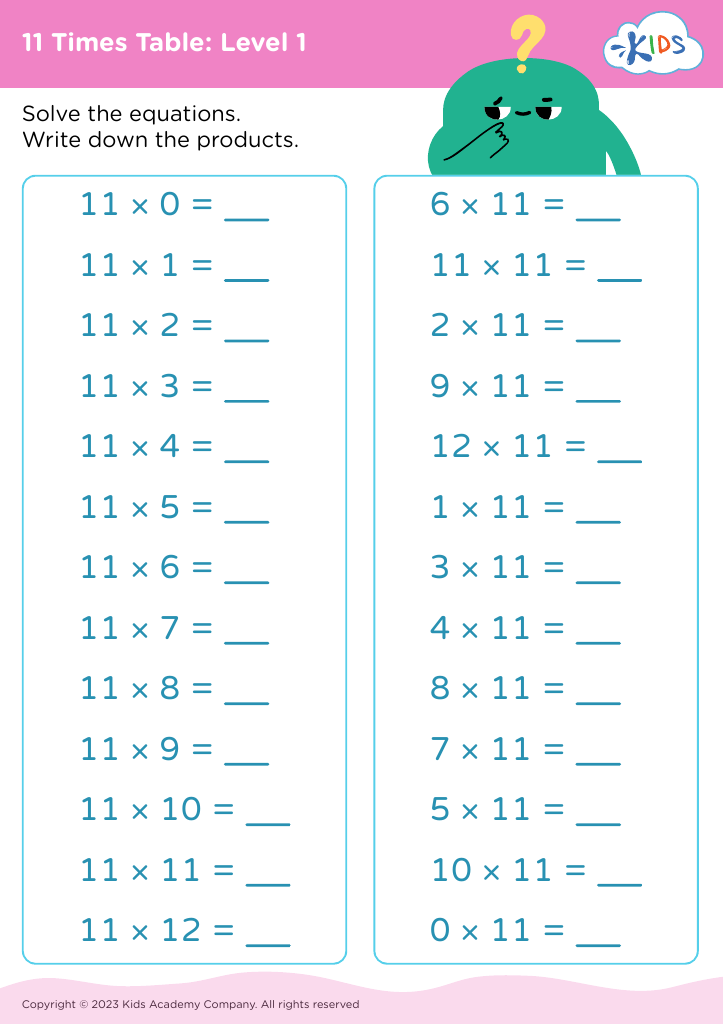
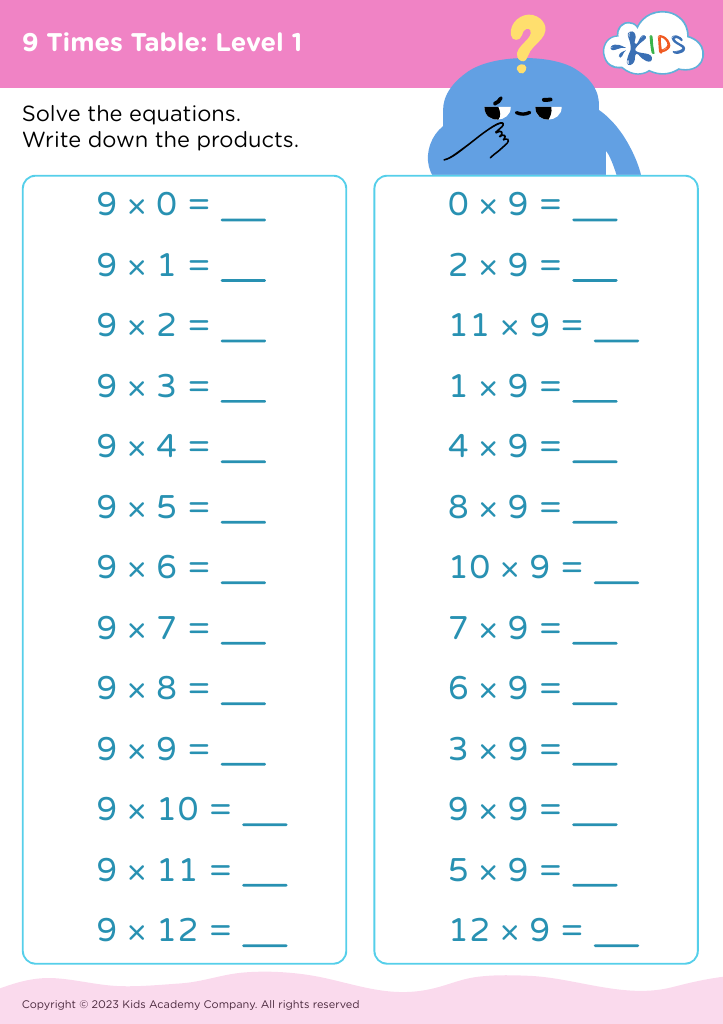





Parents and teachers should prioritize times tables for children aged 3-8 for several compelling reasons. First, understanding times tables lays a strong foundation for basic arithmetic skills. Early exposure to multiplication concepts enhances not only numerical fluency but also problem-solving abilities, which are crucial for higher-level math.
Furthermore, mastering times tables at a young age promotes confidence in mathematics. When children feel comfortable with foundational math skills, they are more likely to engage deeply in classroom activities, leading to improved academic performance overall.
The practice of learning times tables also cultivates memorization skills that can benefit children in other subjects, strengthening their cognitive abilities. Additionally, engaging with times tables can be a fun and interactive experience for parents and teachers alike. Using games, songs, or visual aids makes learning enjoyable, fostering a positive attitude towards math.
Lastly, establishing a strong math base during these formative years can continuously benefit students as they progress through school. Students who feel secure in their multiplication skills are likely to tackle more complex mathematical concepts with ease, equipping them with the tools for lifelong learning. Thus, investment in times tables is an investment in a child’s future academic success.








