Times Tables Worksheets for Ages 5-8
34 filtered results
-
From - To
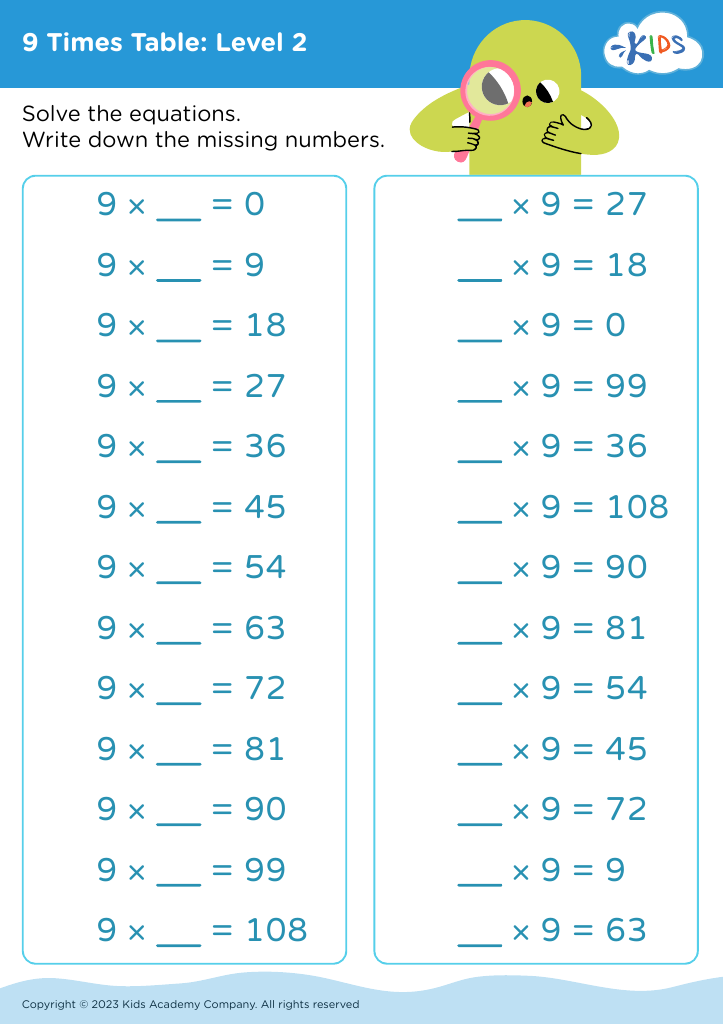
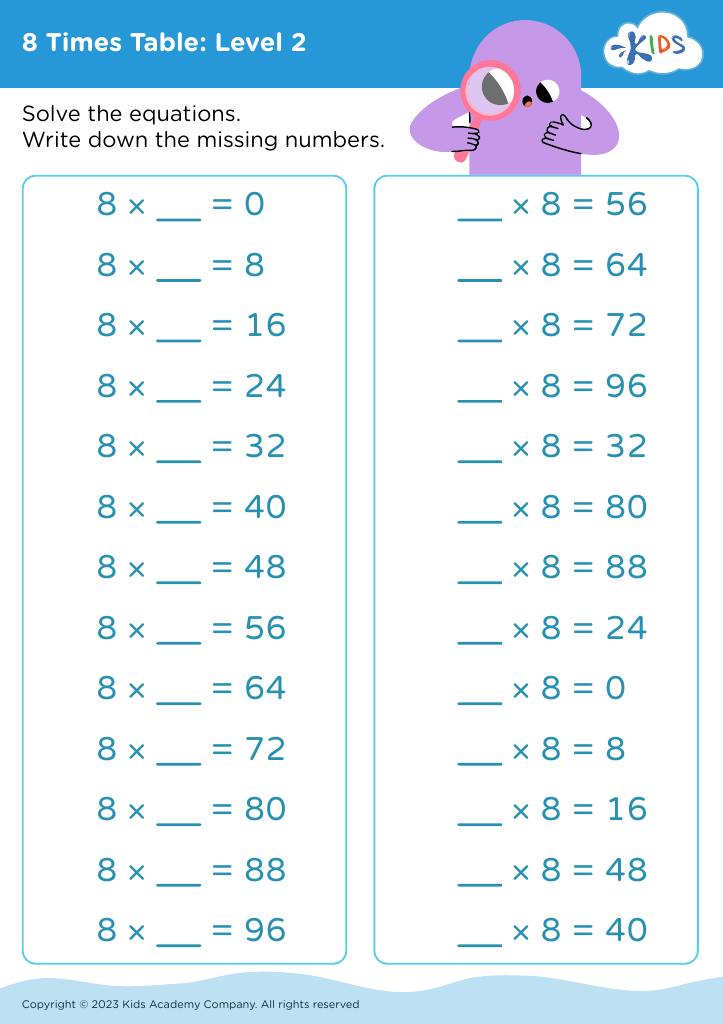
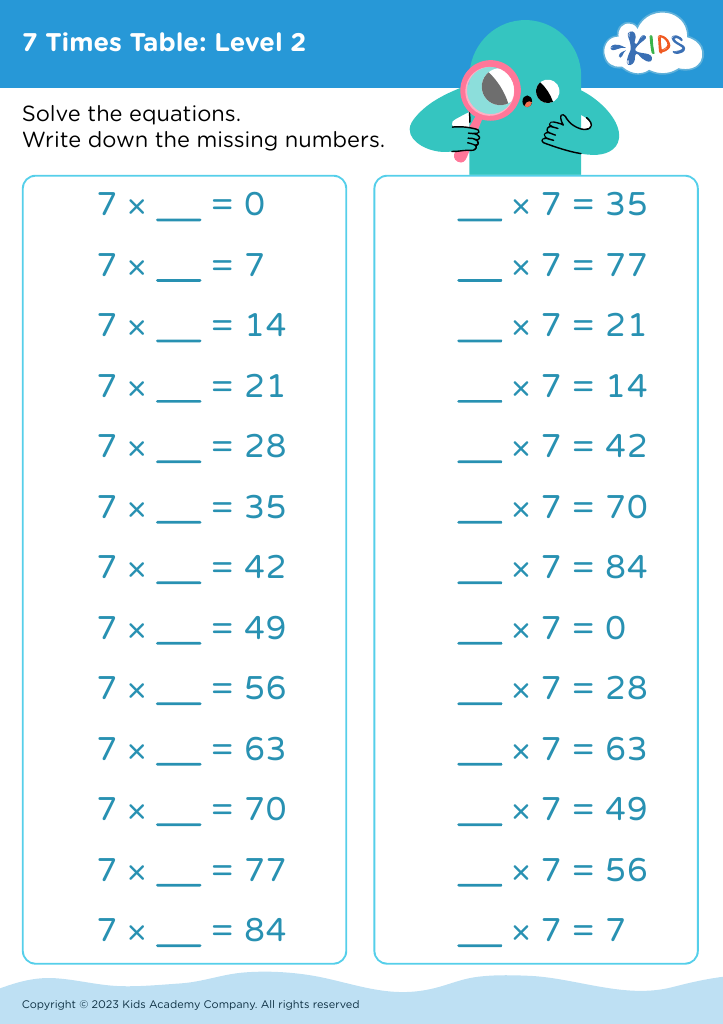
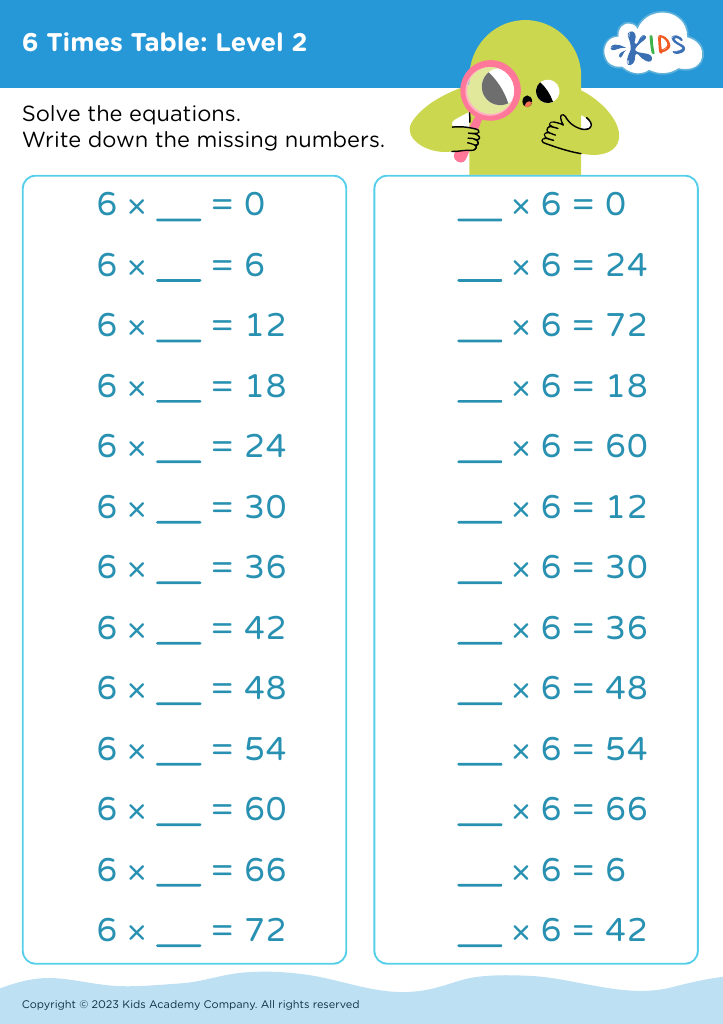
Boost your child’s confidence in math with our engaging Times Tables Worksheets for Ages 5-8! Designed by educators, these fun and interactive worksheets make learning multiplication exciting and effective. Perfect for young learners, the exercises help kids practice and master their times tables with colorful visuals and compelling activities. Our printable worksheets cater to varying skill levels, ensuring each child progresses at their own pace while building a solid arithmetic foundation. Empower your child’s math journey with resources tailored to inspire, educate, and motivate. Visit Kids Academy to download these worksheets and set your child on the path to math success today!
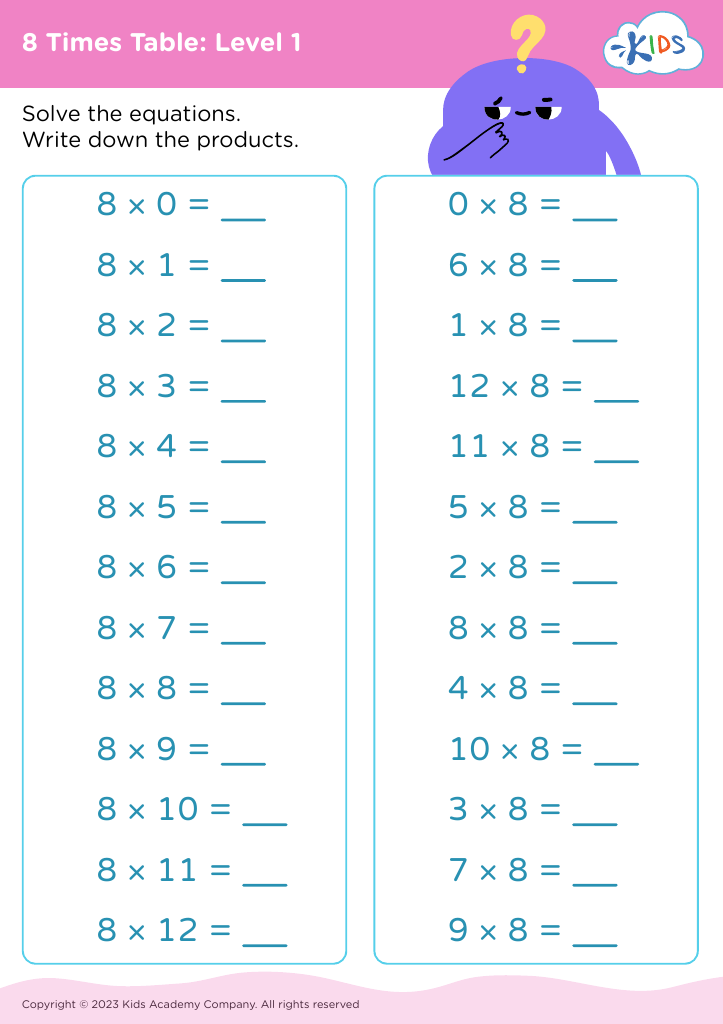
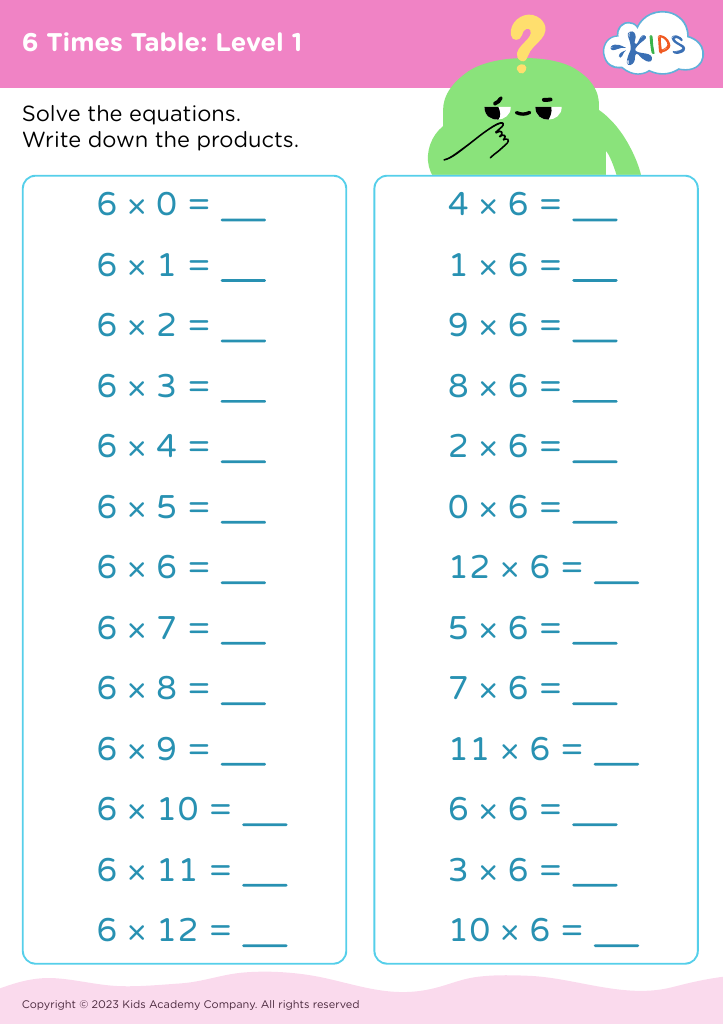
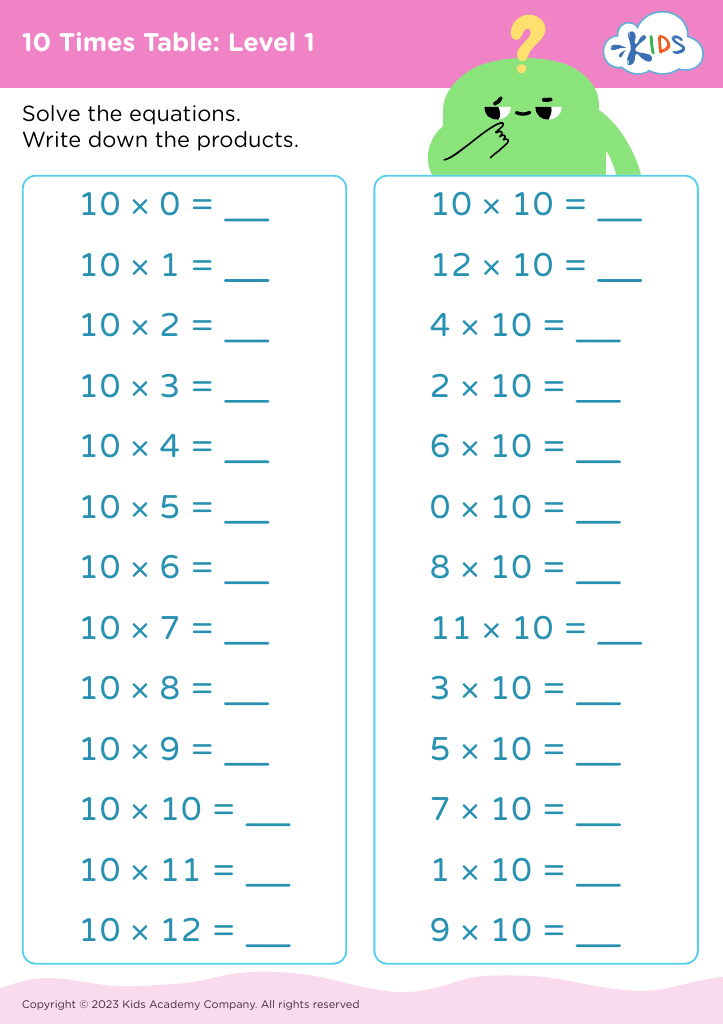
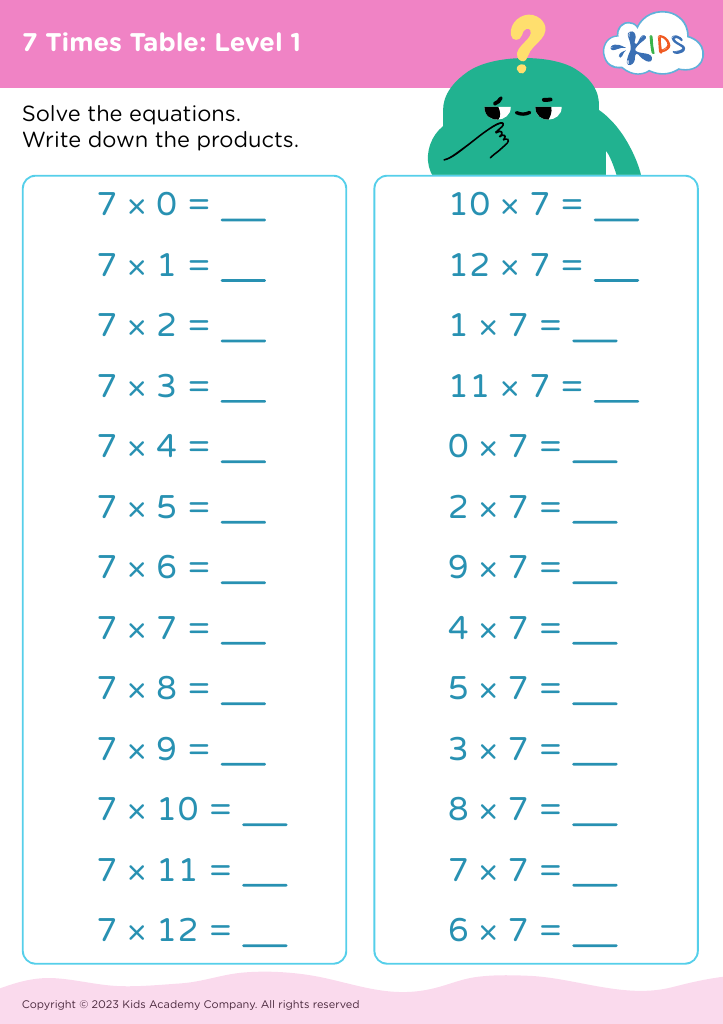
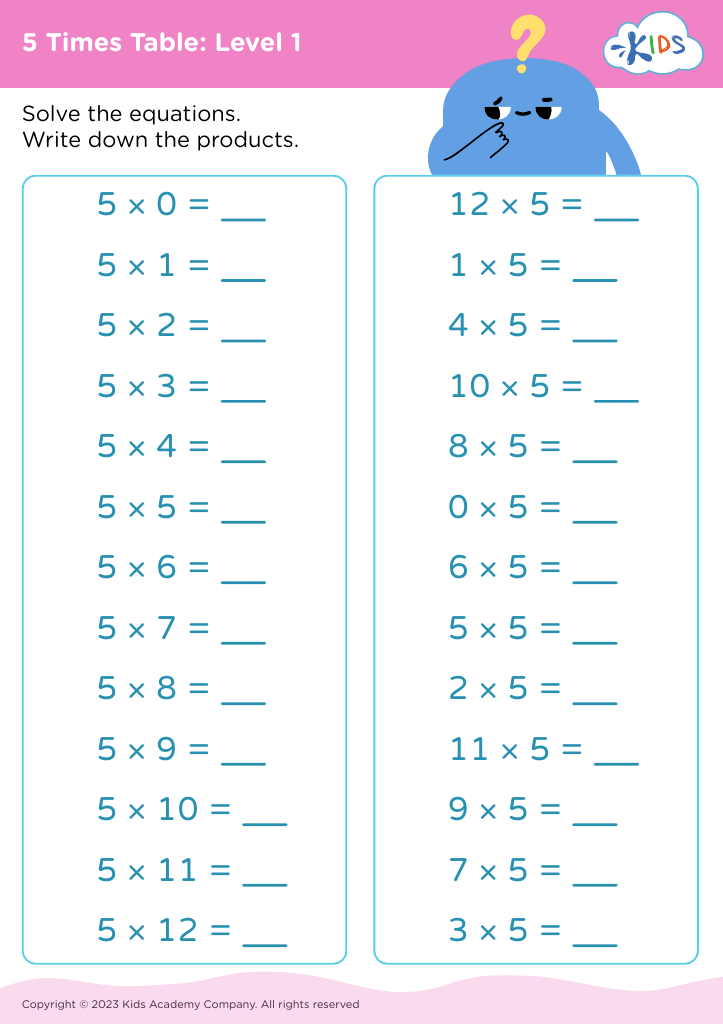
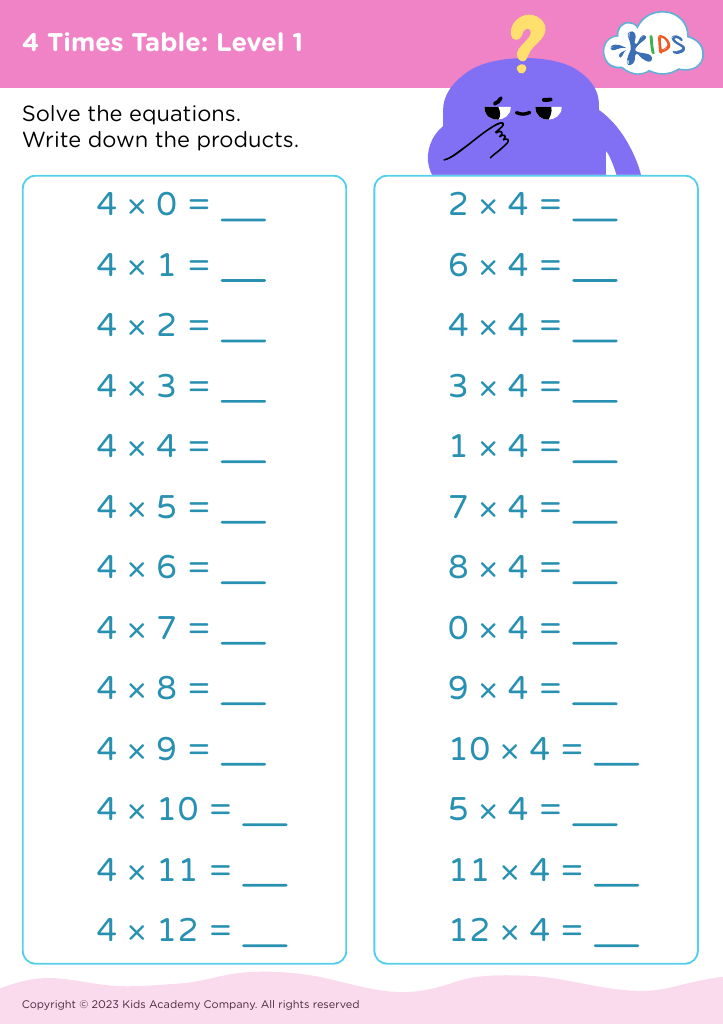
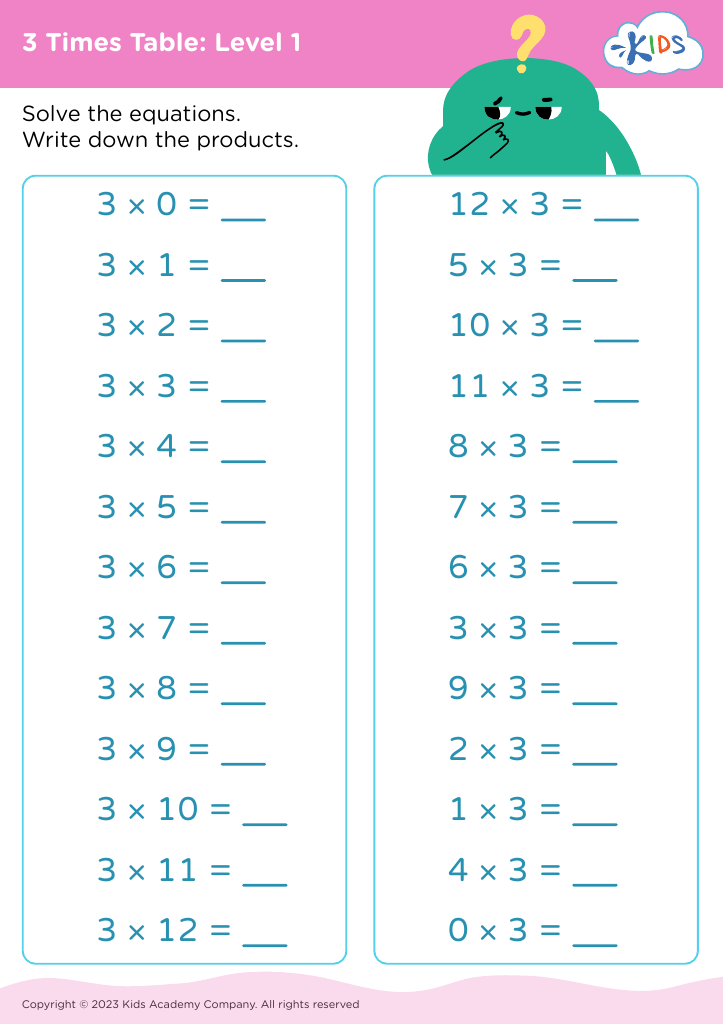
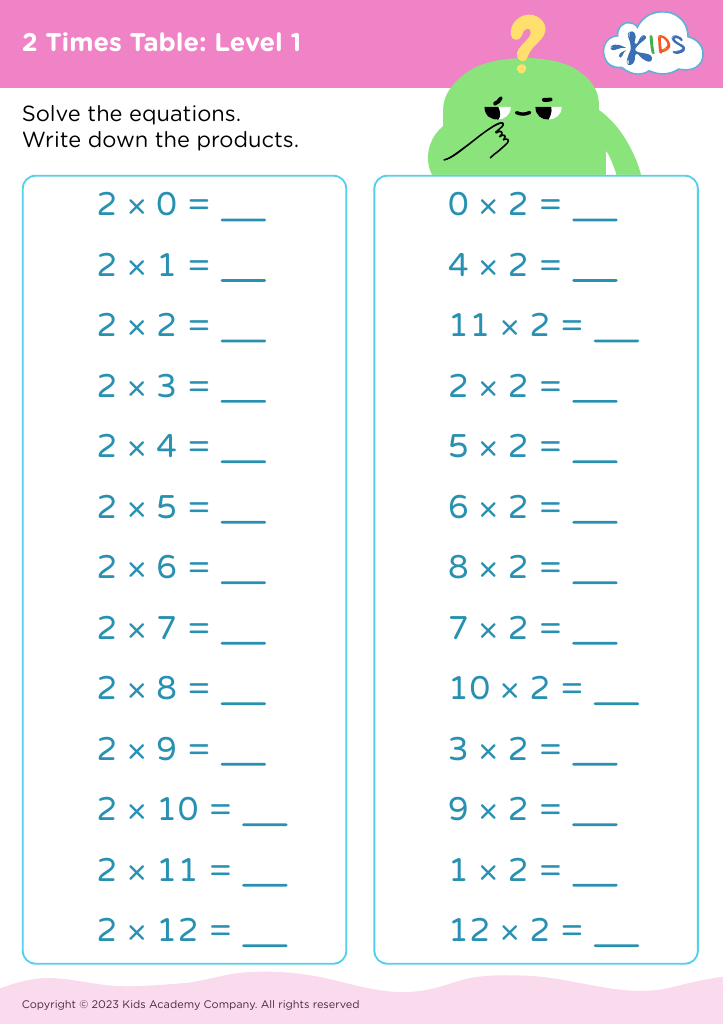
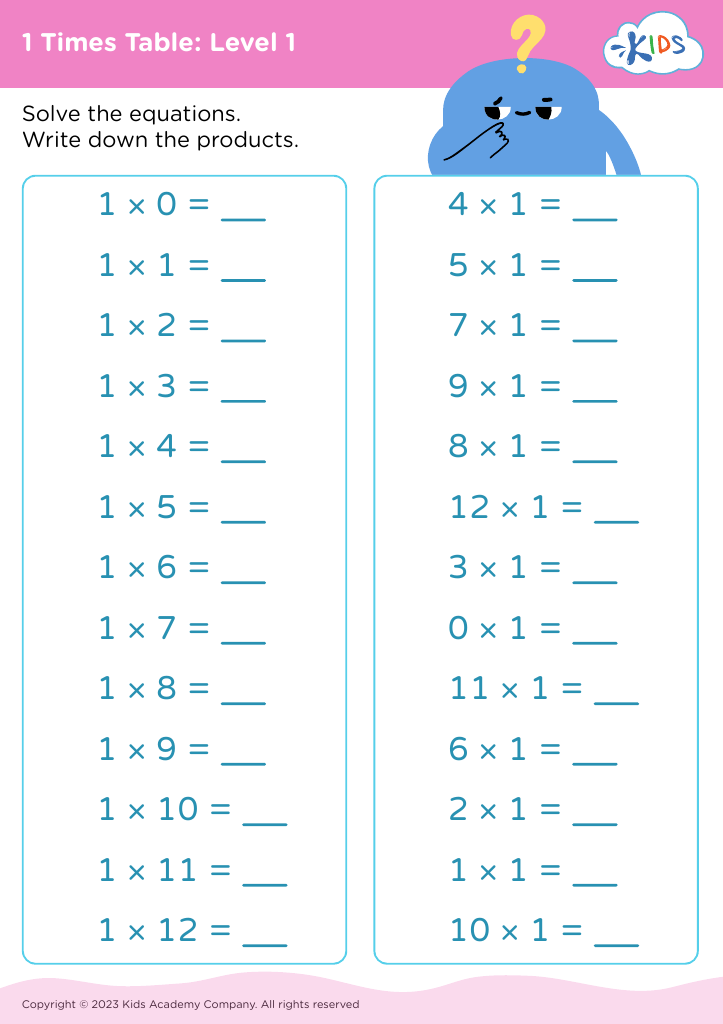
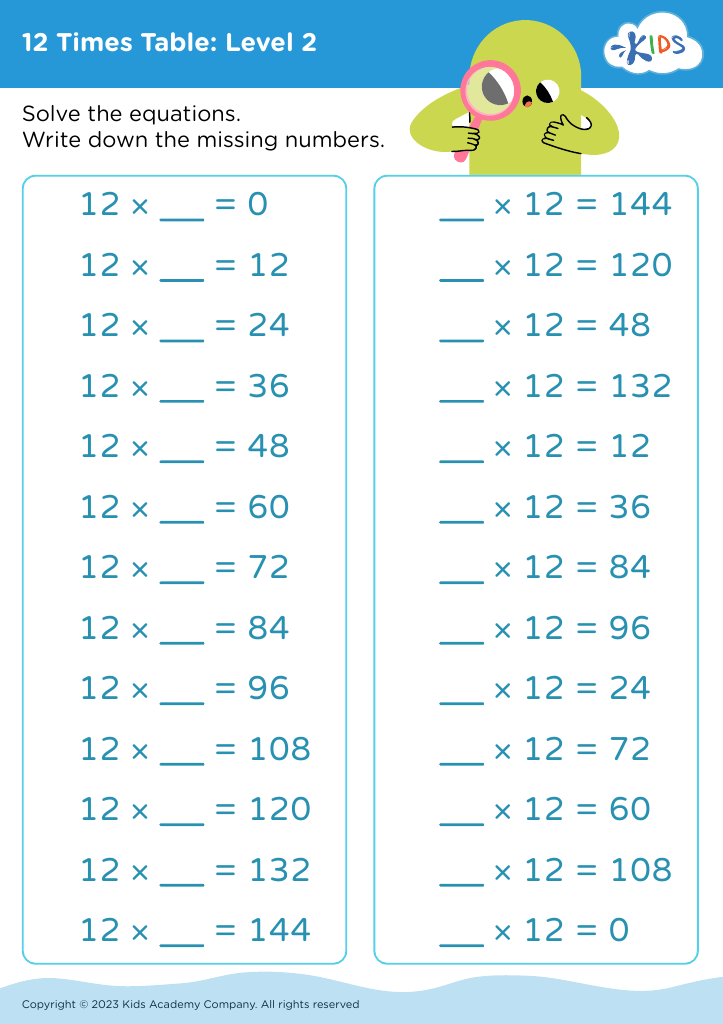
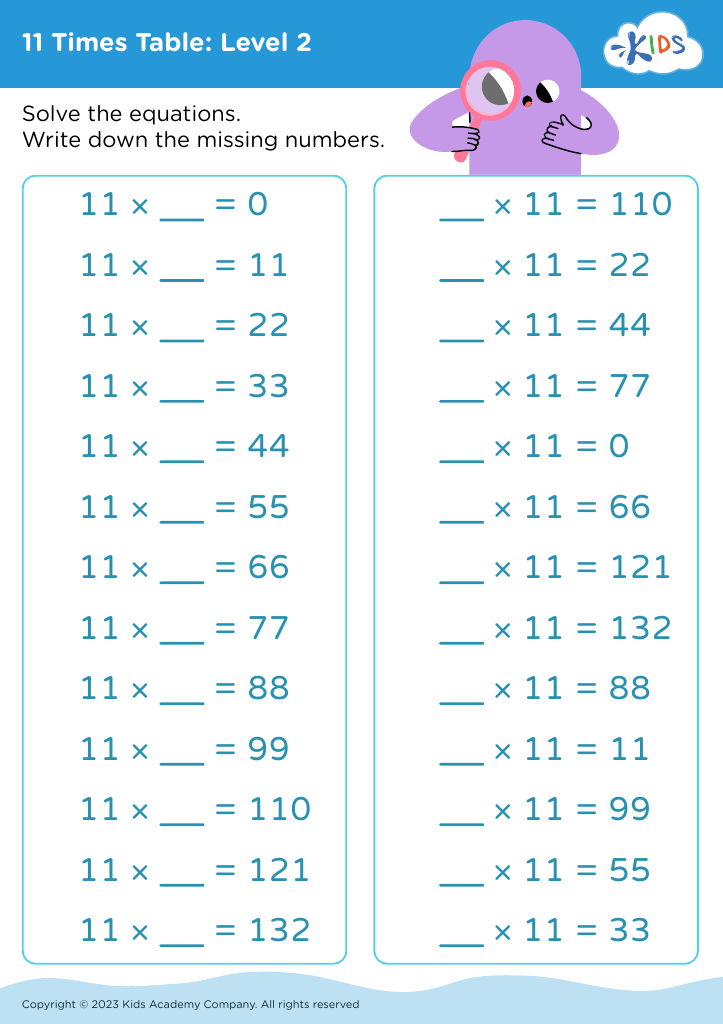
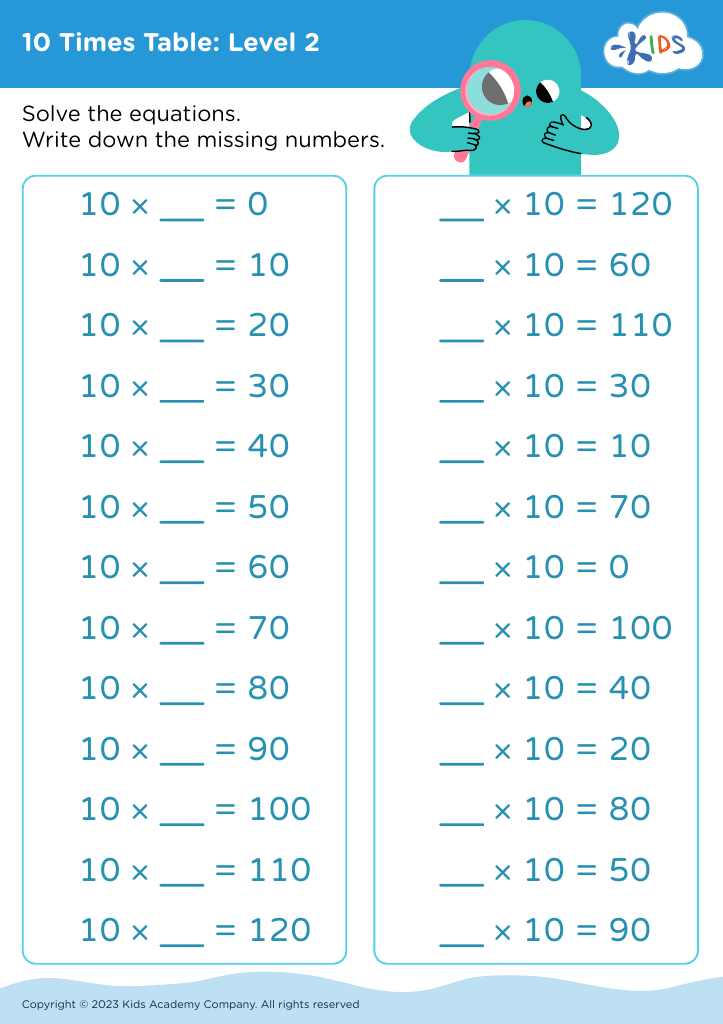
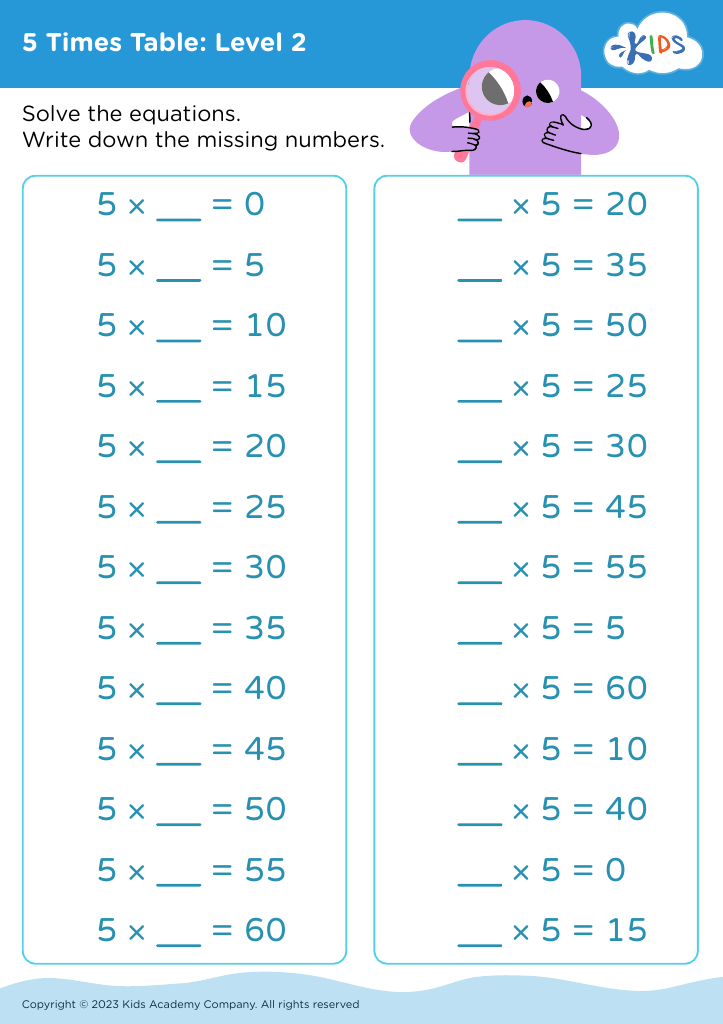
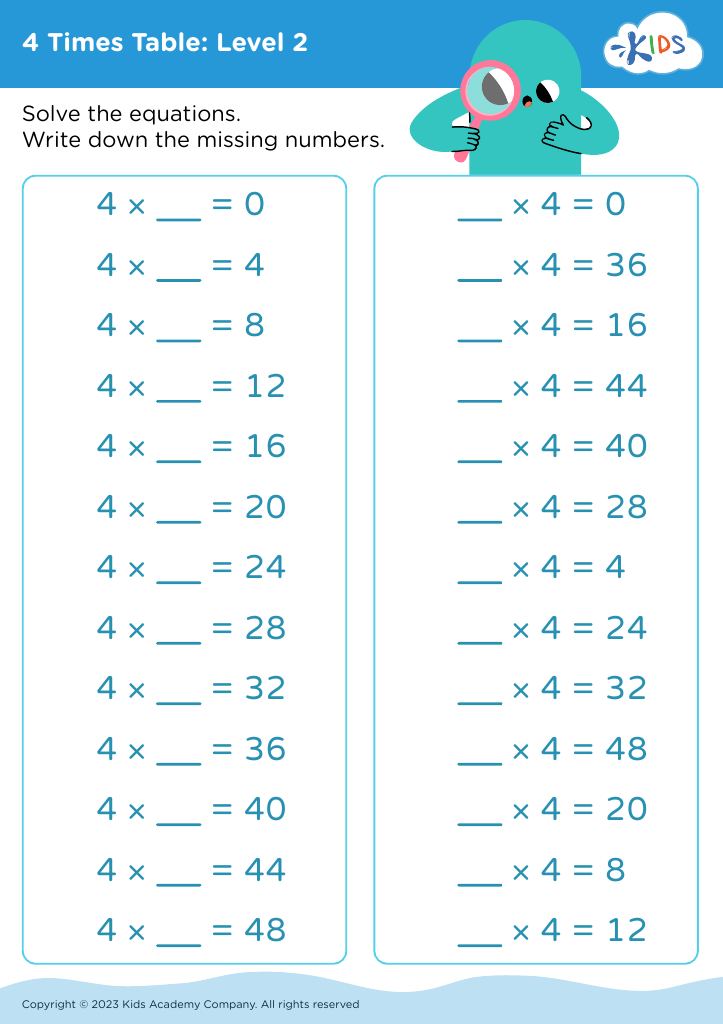
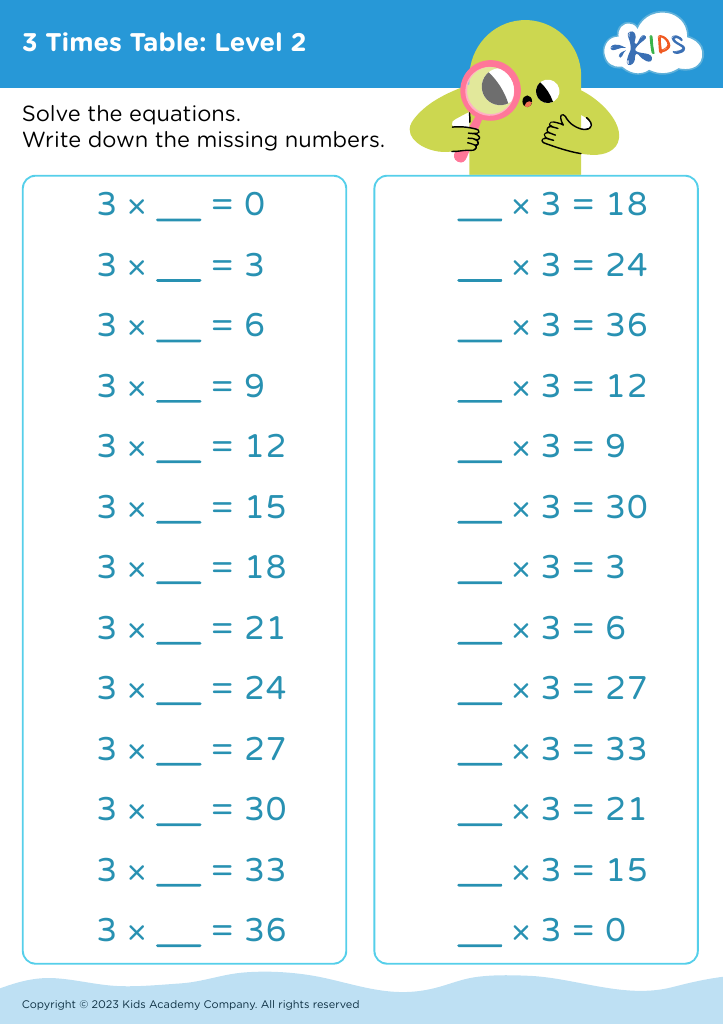
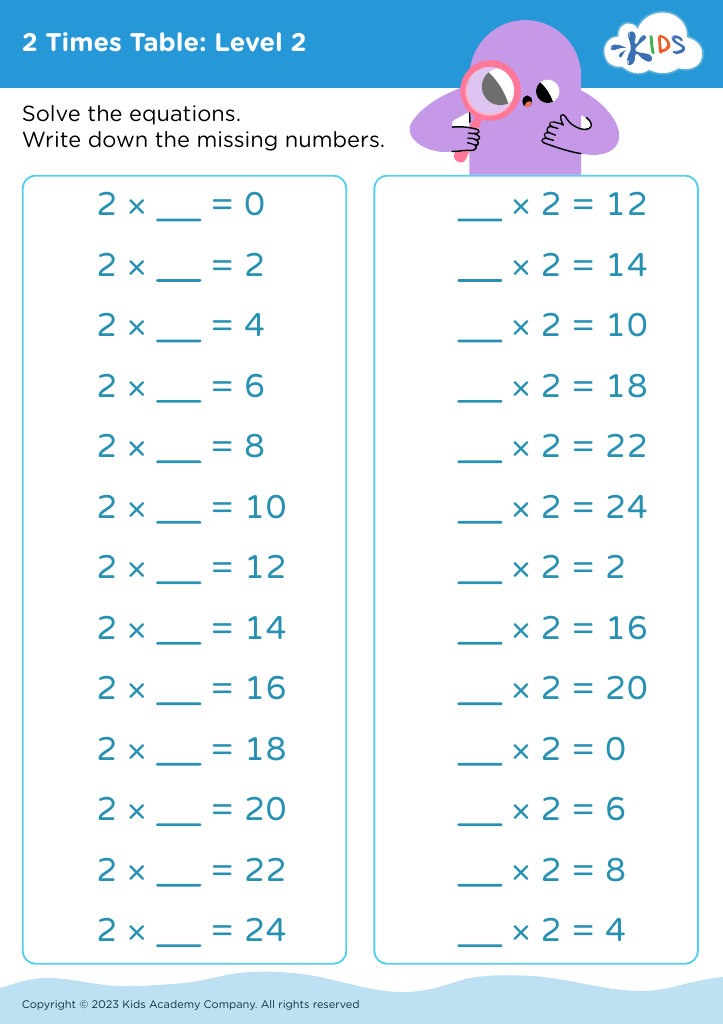
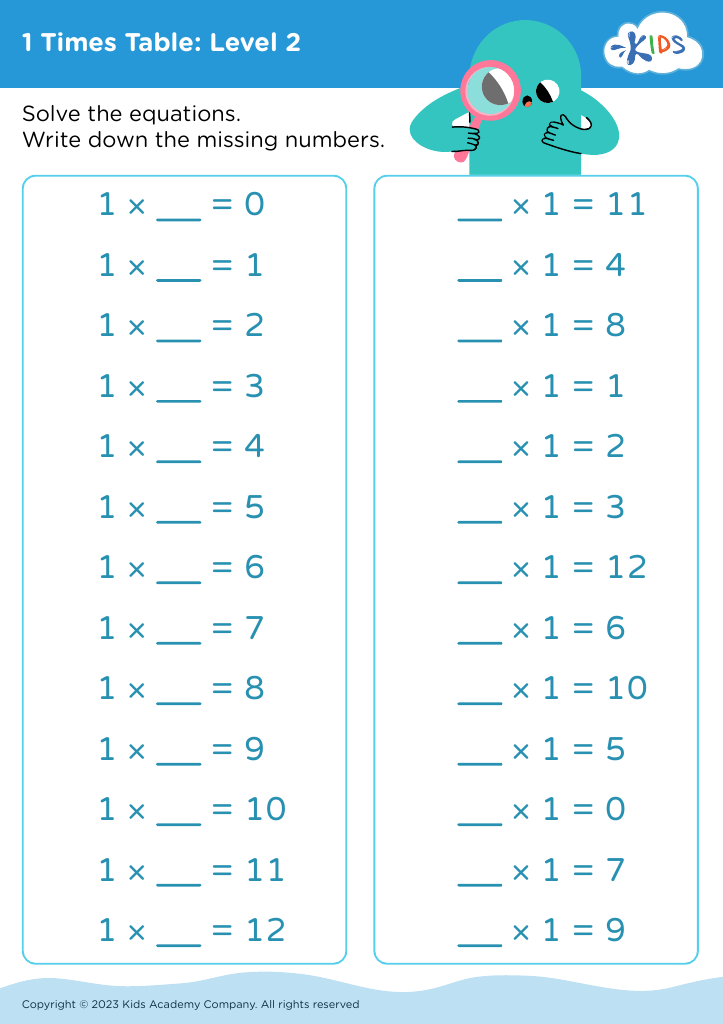
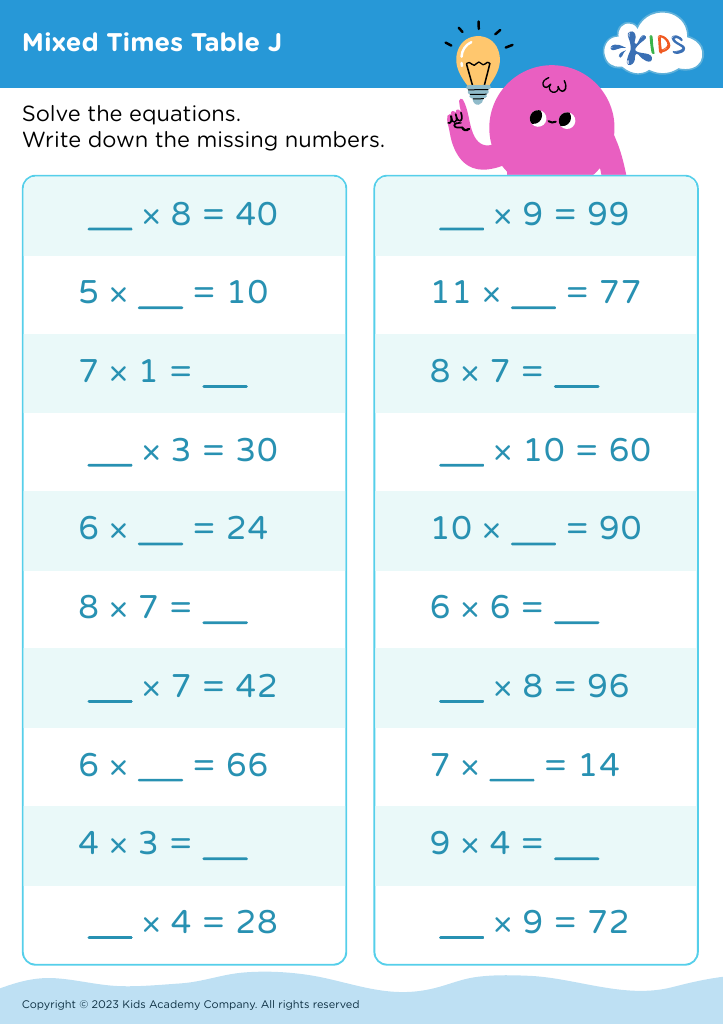
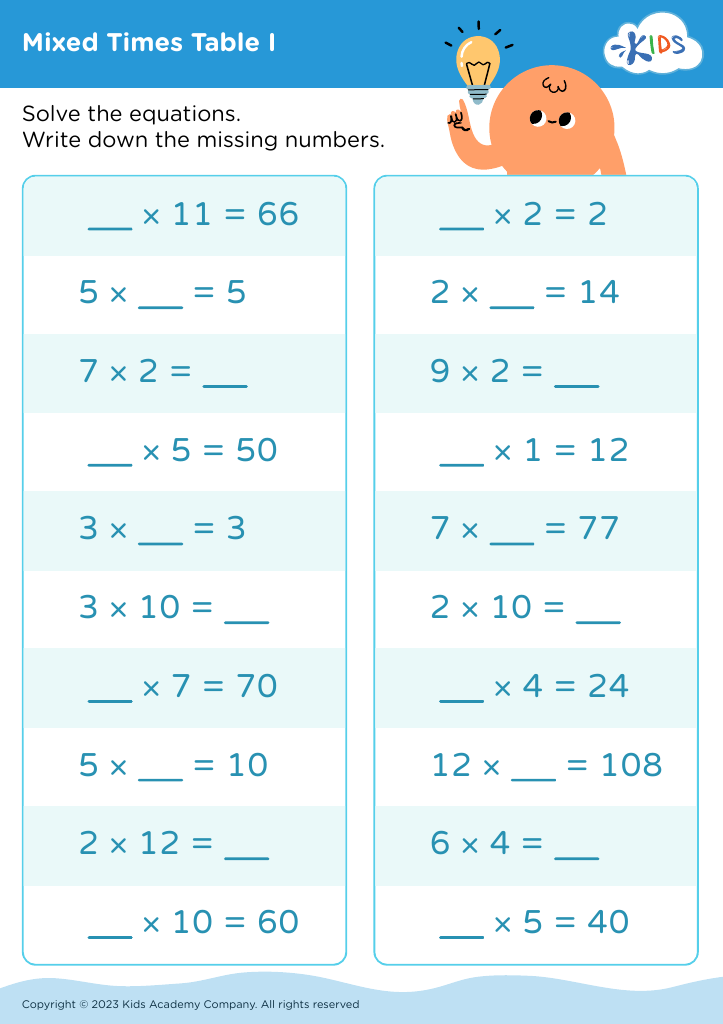
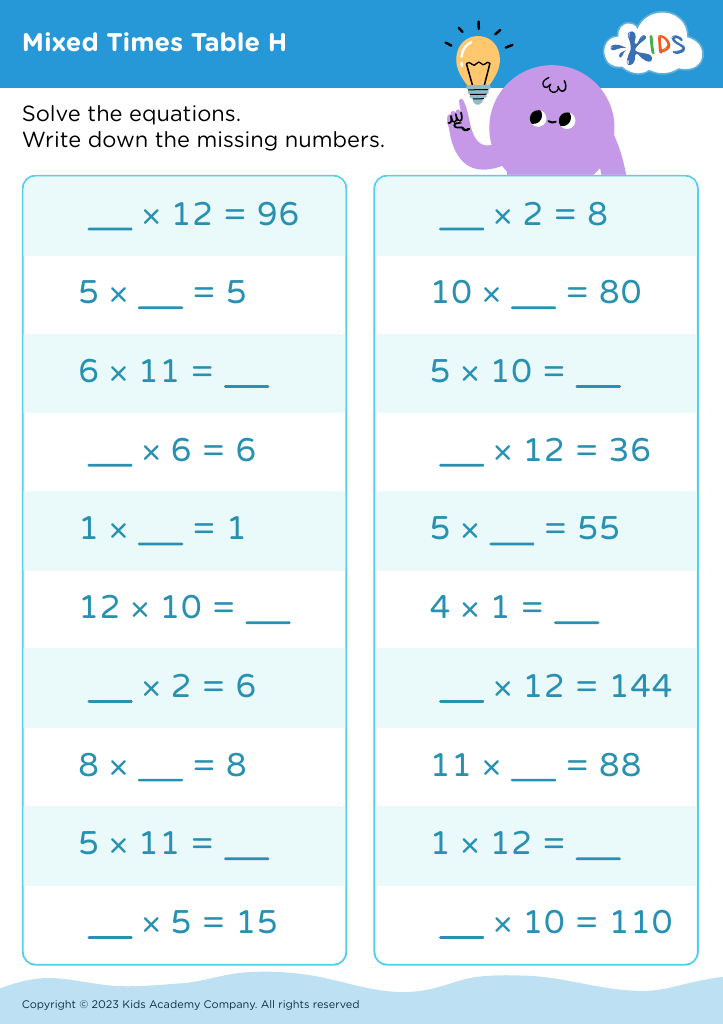





Times tables form the cornerstone of mathematical education for young learners, especially those aged 5-8. Understanding and memorizing times tables provide children with a strong foundation for advanced mathematical concepts including division, fractions, and algebra. Proficiency in times tables also contributes to enhanced problem-solving abilities and critical thinking skills.
Parents and teachers should prioritize times tables because this knowledge fosters confidence in young learners. When children can quickly recall multiplication facts, they experience a sense of achievement which encourages continued engagement with math. Mastery of times tables can further reduce math anxiety and prepare students for more challenging aspects of the subject in later grades.
Moreover, times tables are used in real-world scenarios such as shopping, cooking, and time management. A solid grasp of basic multiplication supports lifelong numeracy skills, aiding children in everyday tasks and future professional endeavors. For teachers, incorporating times tables into daily lessons can be done using games, songs, flashcards, and everyday classroom activities which makes learning fun and interactive.
Considering the broad impact on both academic success and practical life skills, times tables for ages 5-8 should be viewed not just as a curriculum requirement, but as an essential building block for long-term educational and personal growth.








