Handwriting practice Tracing Numbers Worksheets for Ages 3-8
7 filtered results
Difficulty Level
Grade
Age
-
From - To
Subject
Activity
Standards
Discover our Handwriting Practice Tracing Numbers Worksheets, specially designed for kids aged 3-8. These engaging worksheets provide an enjoyable path for young learners to master number recognition and build essential handwriting skills. By tracing numbers, children enhance their fine motor coordination and establish muscular memory, laying a strong foundation for future writing tasks. Perfect for parents and educators, our fun, interactive sheets make learning numbers intriguing and rewarding. Download now to support your child's early math and writing adventures, fostering confidence and academic success in a creative, playful environment. Start their educational journey with us today!
Favorites
With answer key
Interactive
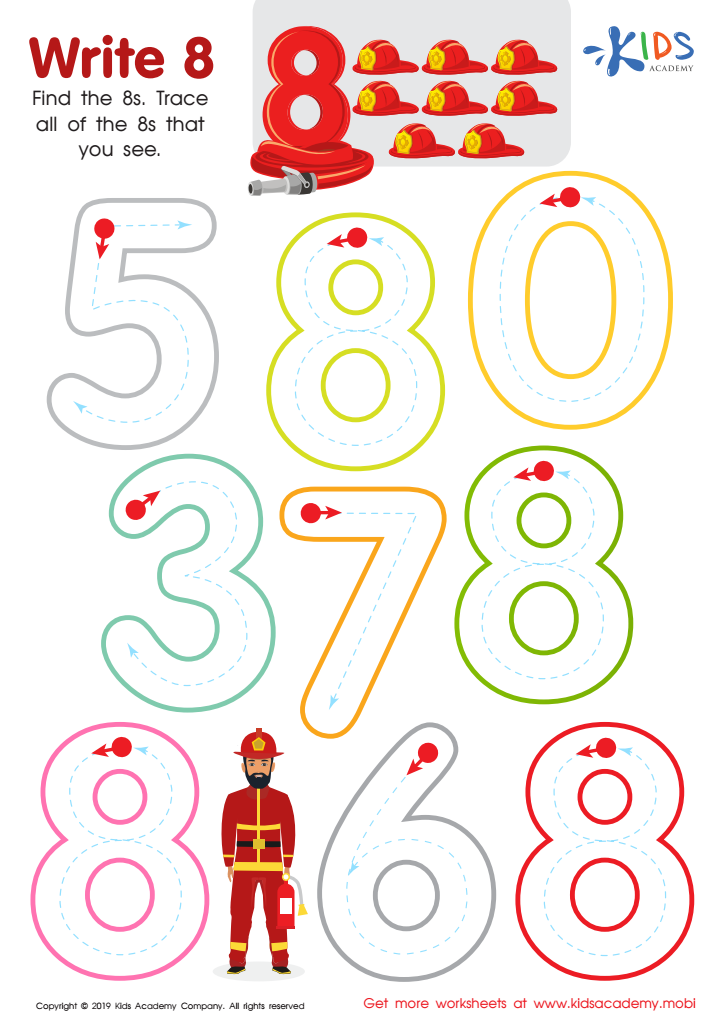
Write 8 Worksheet
Once your kids can count small numbers, it's time to learn how to write them. With your help and patience, they will soon be pros! This worksheet will make learning easier. Help them spot the 8s in the picture, then help them trace them.
 Assign to My Students
Write 8 Worksheet
Worksheet
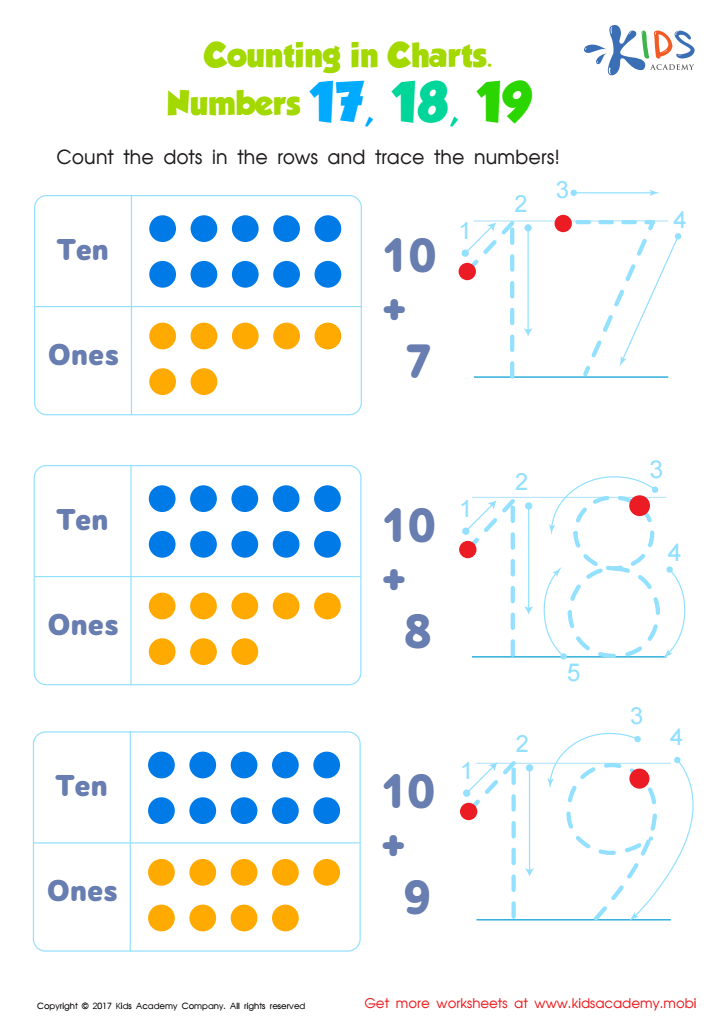
Kindergarten Number Tracing: Counting in Charts Worksheet
Little learners can find big numbers tricky! Help them practice counting and build early math skills, like place value and addition, with this kindergarten number tracing PDF worksheet. Count the dots to solve the problem and trace each answer!
Kindergarten Number Tracing: Counting in Charts Worksheet
Worksheet
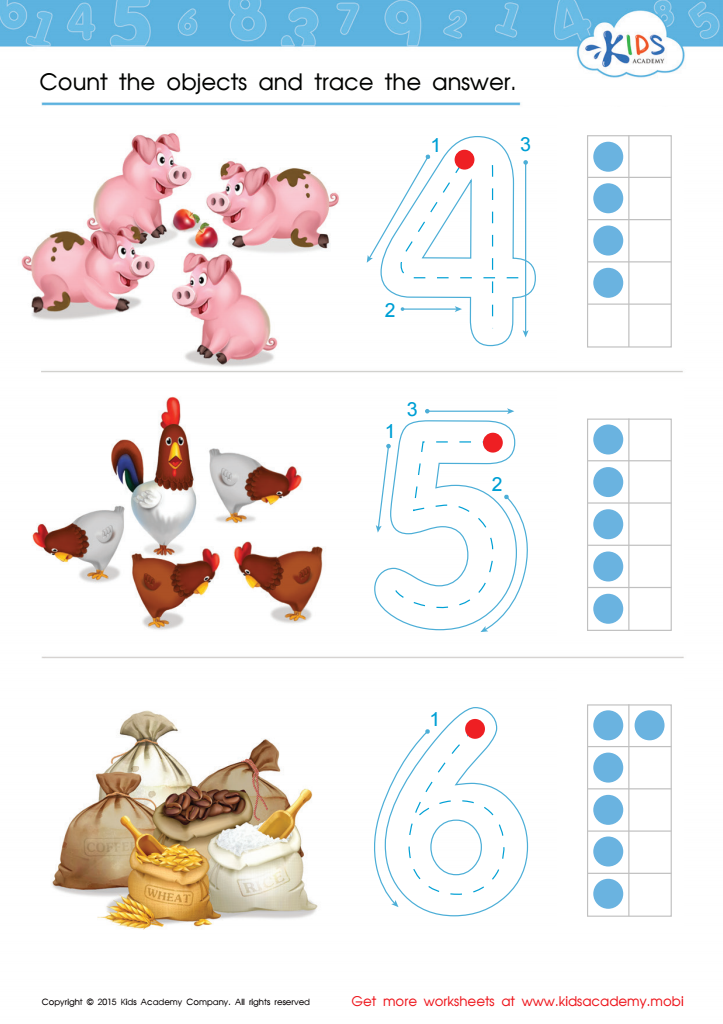
Count and Trace 4 – 6 Worksheet
Download Kids Academy's brightly colored math worksheet for a fun and rewarding math experience for your little learner. Using Singapore Math, this worksheet helps children visualize, solve and practice fine motor skills. Click here for more math worksheets!
Count and Trace 4 – 6 Worksheet
Worksheet
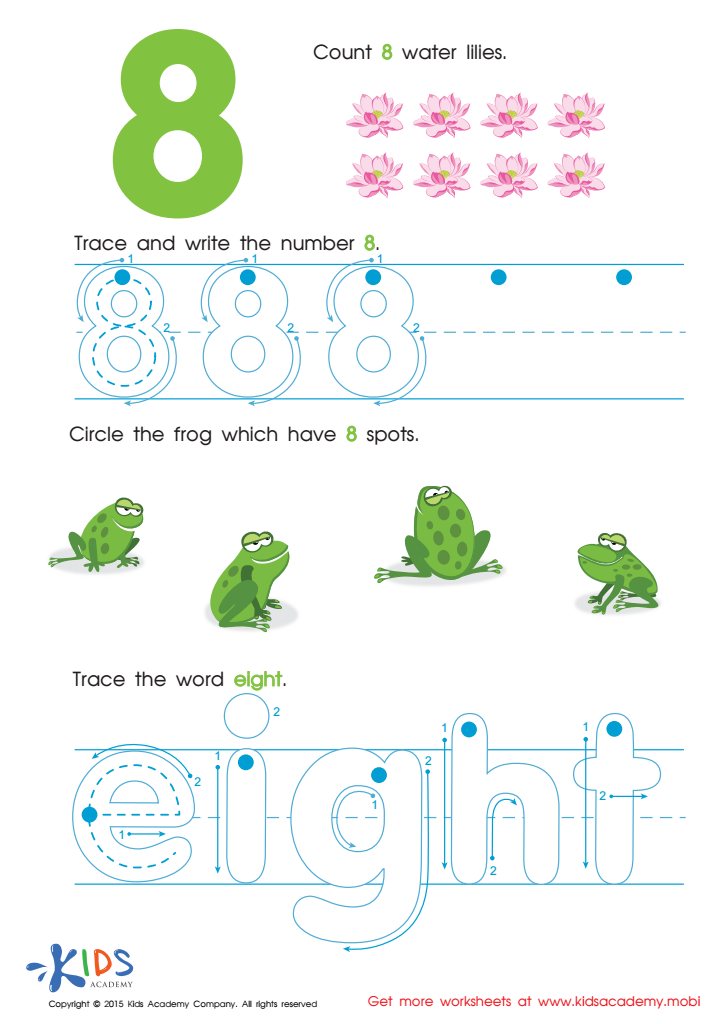
Learn Number 8 Easily Worksheet
Kids can trace, write numbers and learn to pronounce them through exciting activities and games. Try our number worksheets for preschoolers to make learning fun!
Learn Number 8 Easily Worksheet
Worksheet
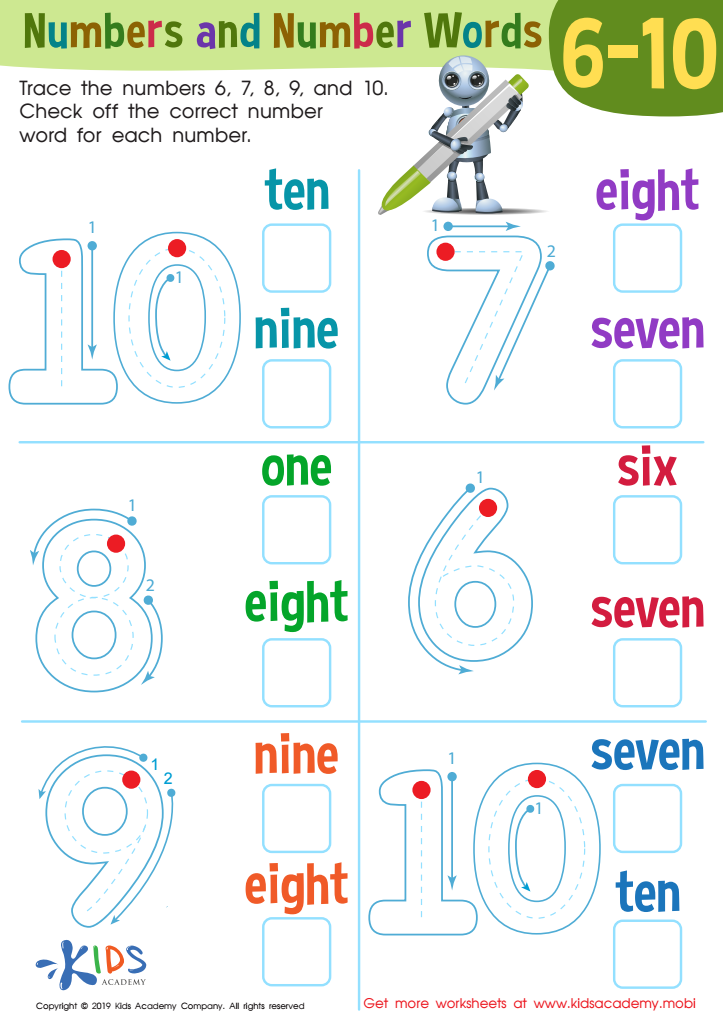
Numbers and Number Words 6–1 Worksheet
As children explore numbers and words, parents and teachers can help them learn to count and read with activities such as this worksheet. Here, the student traces numbers 6-10 and then selects the right number words to match. A fun and interactive way to learn!
Numbers and Number Words 6–1 Worksheet
Worksheet
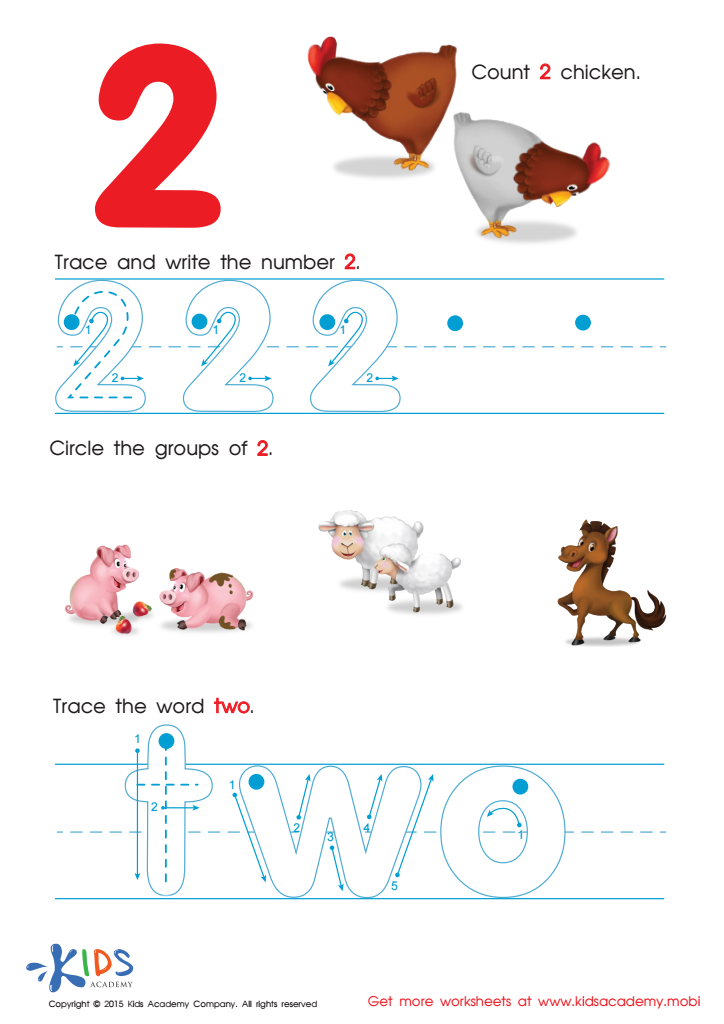
Learn to Write the Number 2 Worksheet
Teaching numbers should be fun! Ask your kids to count the two chicks, circle the groups of two among the animals, then trace and write the number and word. Get more fun worksheets from Kids Academy.
Learn to Write the Number 2 Worksheet
Worksheet
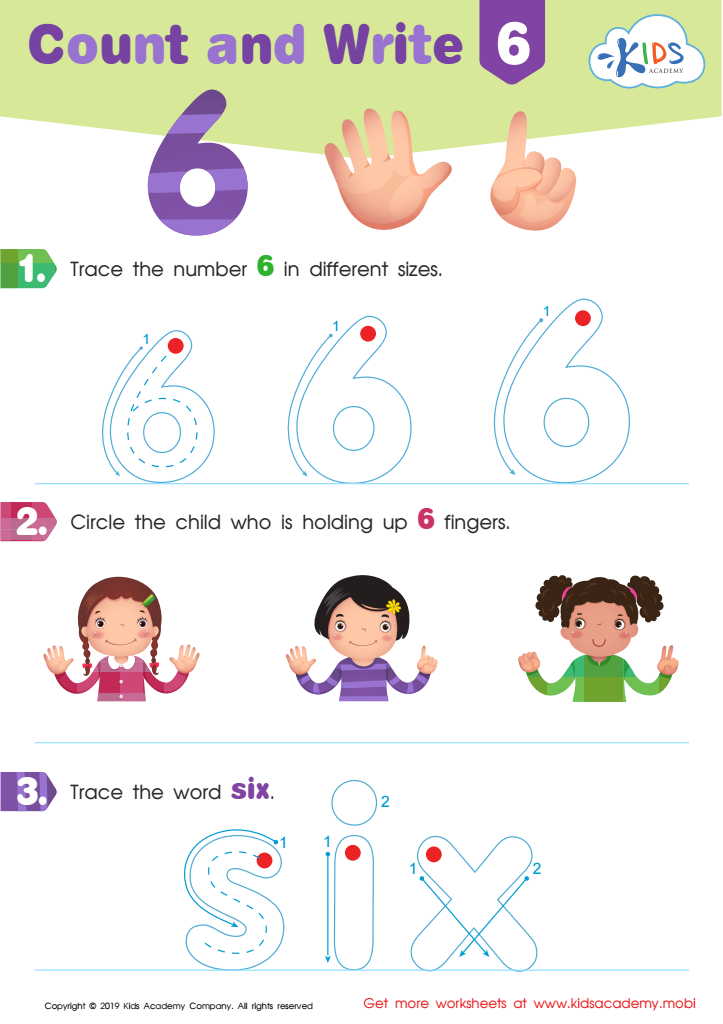
Count and Write 6 Worksheet
Kids begin math by mastering recognition skills. This worksheet helps with that by giving them practice writing "six" and the numeral 6, with guide dots and traceable lines. Giving kids multiple ways to learn the basics helps them build a strong math foundation.
Count and Write 6 Worksheet
Worksheet
Join Kids Academy for Free
Who is primarily going to use this learning content?








Handwriting practice, particularly tracing numbers for children aged 3-8, is highly beneficial in promoting early developmental skills. For parents and teachers, investing time and effort into this activity offers multiple advantages.
Firstly, tracing numbers nurtures fine motor skills. As children trace various shapes and numbers, they develop crucial muscle control and dexterity in their hands and fingers. This fine motor development is essential for everyday tasks such as buttoning clothes, using utensils, and eventually writing legible letters and numbers.
Secondly, it reinforces number recognition and mathematics readiness. By repeatedly tracing numbers, children become more familiar with their shapes and forms, facilitating quicker and more accurate recognition. This practice lays a foundation for arithmetic skills and number sense, enhancing their readiness for more advanced math learning.
Furthermore, tracing numbers fosters hand-eye coordination. As children match their hand movements with the visual guidance of the traced lines, they enhance their ability to coordinate their visual and motor systems, an essential skill for numerous activities beyond writing.
Additionally, this practice promotes focus and concentration. The repetitive and structured nature of tracing requires sustained attention, helping children develop the ability to concentrate for longer periods, an important attribute for academic success.
In essence, handwriting practice by tracing numbers is a foundational activity that supports fine motor development, cognitive skills in math, hand-eye coordination, and concentration abilities in young children, making it an invaluable component of early education.