Identification skills Reading Worksheets for Ages 3-8
3 filtered results
-
From - To
Enhance your child's reading development with our Identification Skills Reading Worksheets for ages 3-8. These engaging, age-appropriate worksheets are designed to boost literacy by focusing on key identification skills such as recognizing letters, words, and pictures. Perfect for early learners, our interactive activities promote critical thinking and language development in a fun way. Whether at home or in the classroom, these printable resources support children in honing their reading abilities while fostering a love for learning. Explore our comprehensive collection of worksheets and watch your child thrive in their reading journey! Ideal for parents, teachers, and caregivers looking to inspire young learners.
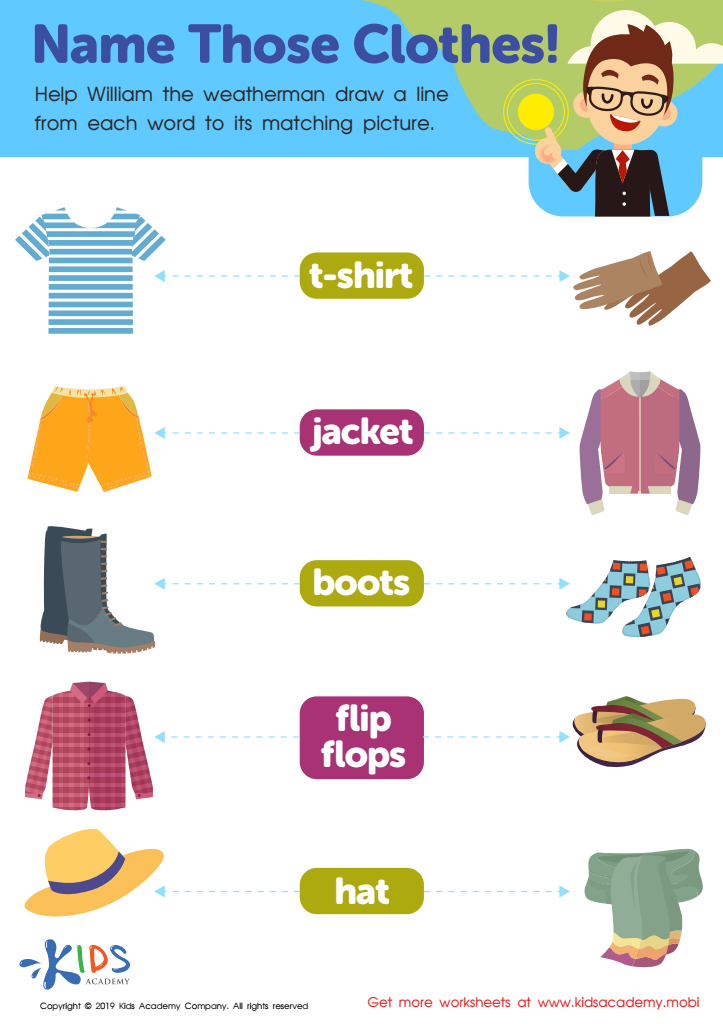
Name Those Clothes Worksheet
 Assign to My Students
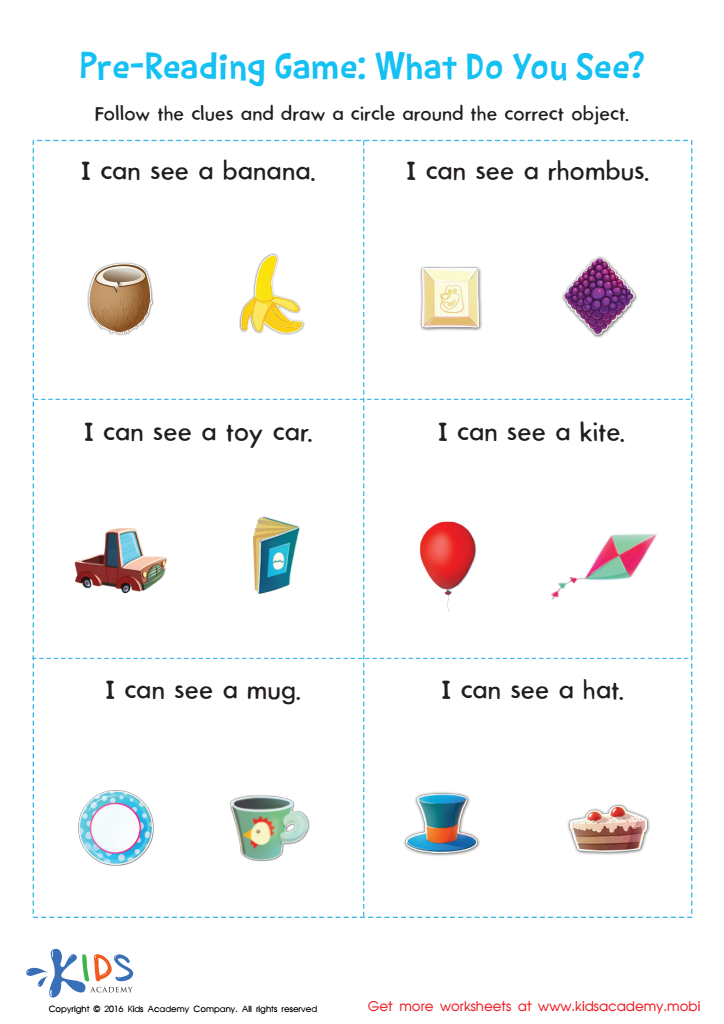
Pre–reading Worksheet: What Do You See?
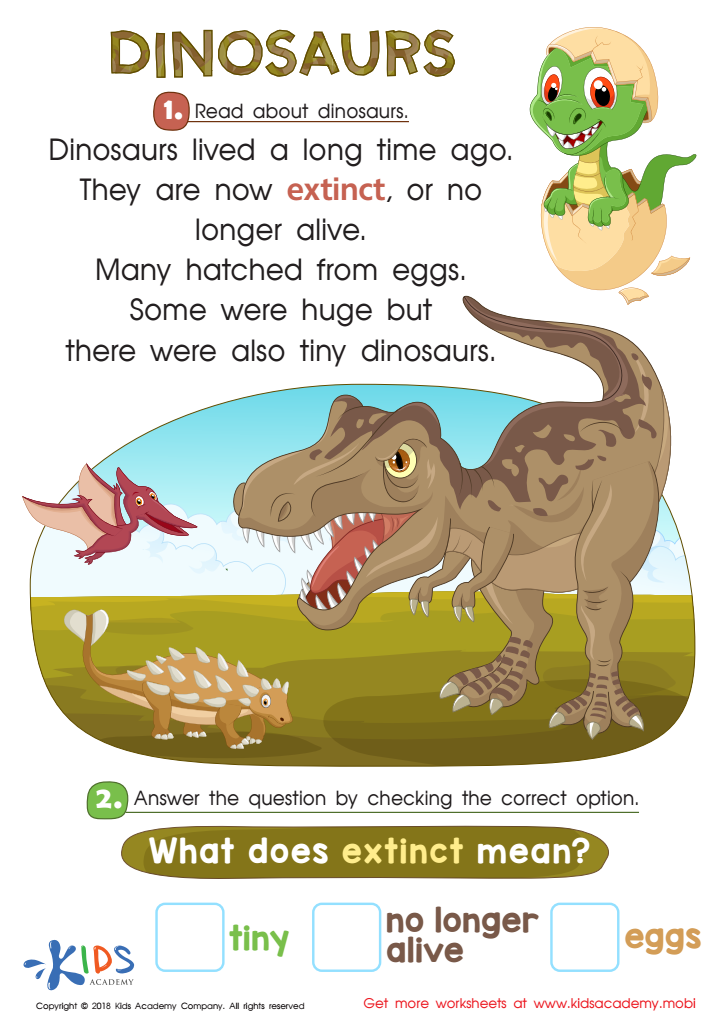
Dinosaurs Worksheet








Identification skills in reading, particularly for children aged 3-8, are crucial for several reasons. First and foremost, these skills serve as foundational elements of literacy. When children can identify letters, words, and sounds, they begin to recognize how language works and develop essential reading competence. This early literacy gives them the tools to navigate texts which is vital for their academic success.
Moreover, identifying letters and words fosters phonemic awareness, enabling children to understand the relationship between sounds and letters. This skill is pivotal in helping them decode new words, facilitating smoother reading experiences and increased confidence.
Additionally, strong identification skills can enhance cognitive development, supporting memory, attention, and all-around cognitive growth. When children engage with texts they can identify, their curiosity may lead to increased exploration of vocabulary and comprehension.
For parents and teachers, nurturing these skills means children are more likely to thrive in school and enjoy reading as a lifelong habit. Encouraging identification skills through fun activities—like games, storytelling, and reading together—can foster a love for literacy and create a supportive reading environment. Ultimately, prioritizing reading identification skills sets children on a path toward greater academic achievement and personal fulfillment.








