
Improve vocabulary Reading Worksheets for Ages 3-8
5 filtered results
Difficulty Level
Grade
Age
-
From - To
Subject
Activity
Standards
Explore our engaging collection of "Improve Vocabulary Reading Worksheets" designed for ages 3-8! These interactive worksheets foster language development and boost vocabulary through fun activities tailored for young learners. Kids will engage in exercises that encourage reading comprehension while introducing new words in context. Each worksheet combines creativity with education, making learning enjoyable and effective. Whether at home or in the classroom, these resources are perfect for parents and educators looking to enhance language skills. Help your child embark on a journey of discovery, unlocking the power of words, and building a strong foundation for lifelong learning today!
Favorites
With answer key
Interactive
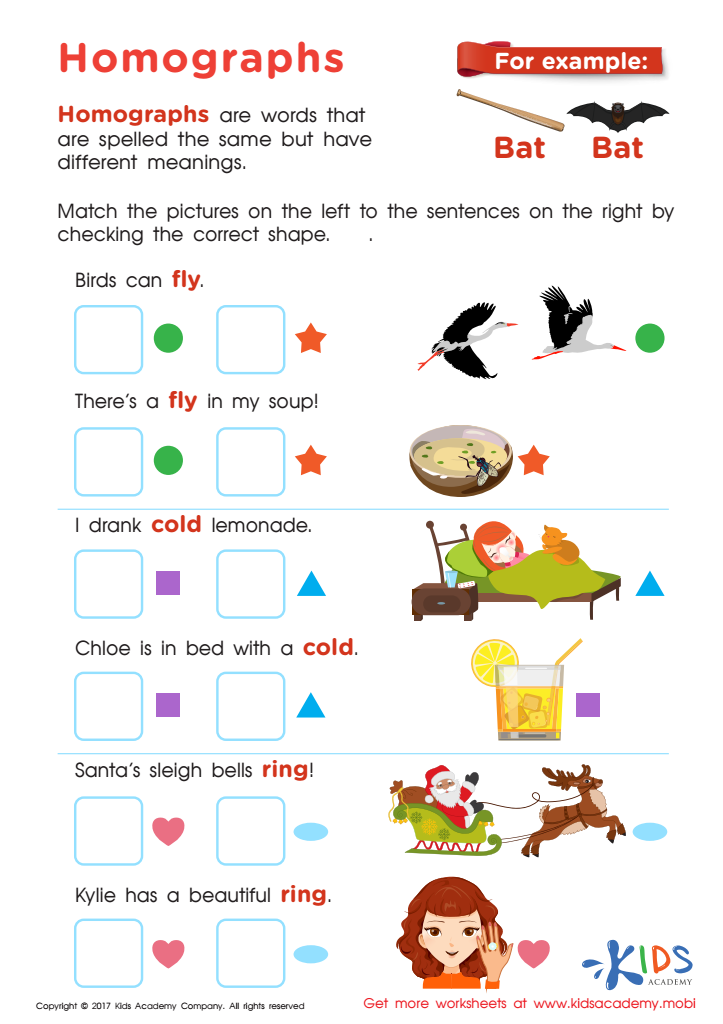
Homographs Free Printable Worksheet
Homographs can be tricky for kids. Help them gain valuable practice with this free printable worksheet. It has a selection of funny words with double meanings, and can be a great learning experience!
 Assign to My Students
Homographs Free Printable Worksheet
Worksheet
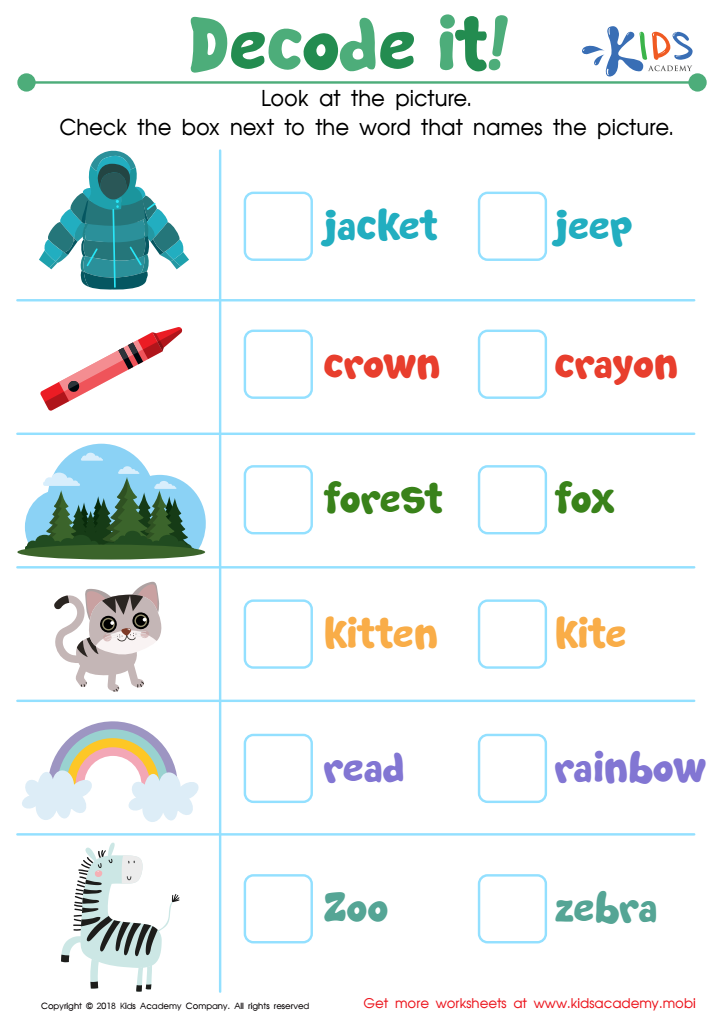
Reading: Decode It Worksheet
Look at the picture and circle the word that names it. This exercise helps kids practice picture cues and decoding words, with the same beginning sound. It builds their fluency and comprehension, giving them the skills to read unfamiliar words.
Reading: Decode It Worksheet
Worksheet
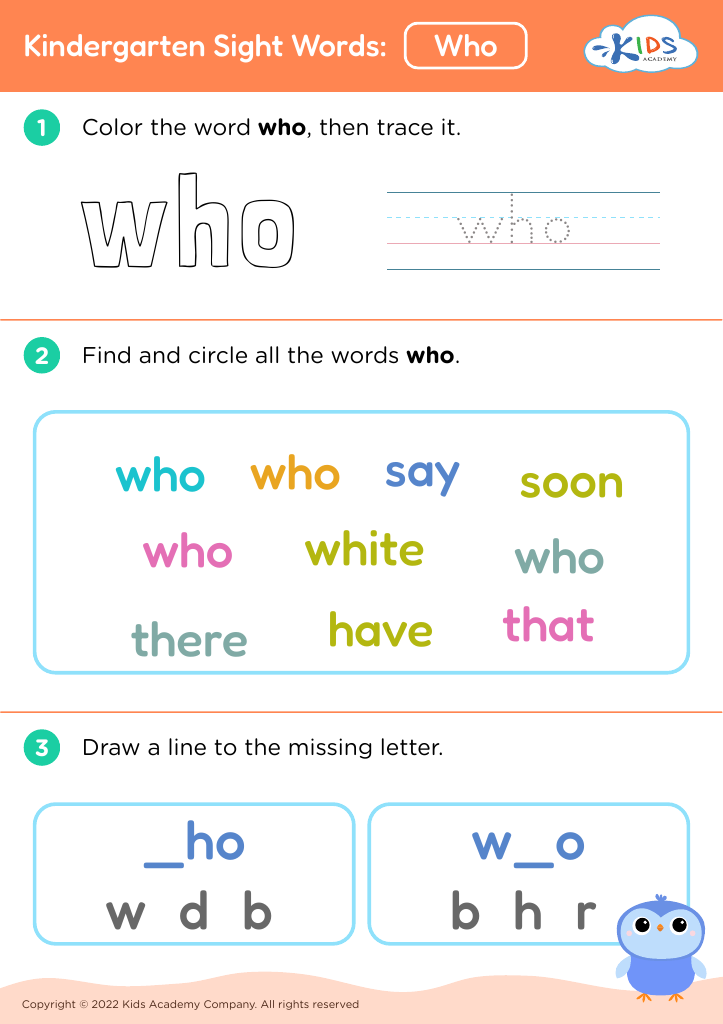
Join Kids Academy for Free
Who is primarily going to use this learning content?






Parents and teachers should prioritize improving vocabulary development for children aged 3-8 because vocabulary is fundamental to reading comprehension, communication, and overall academic success. At this age, children's language skills are rapidly expanding, and introducing a rich vocabulary lays the foundation for further learning. When children possess a robust vocabulary, they can engage more effectively with texts, making it easier to grasp concepts and ideas, thus fostering a lifelong love for reading and learning.
Additionally, a strong vocabulary enhances critical thinking skills, allowing children to articulate their thoughts and emotions clearly. This is particularly important for social interactions and emotional development, as well-nurtured vocabulary skills foster confidence in self-expression. Enhanced vocabulary also aids in a child's ability to perform better in school assessments, leading to greater success in their educational journey.
Moreover, early vocabulary enrichment helps bridge the achievement gap by ensuring all children, regardless of their background, have access to a language-rich environment. This proactive approach not only benefits individual learners but also enriches classroom dynamics, encouraging collaborative dialogue and a love for literature. Therefore, supportive efforts from parents and teachers in improving vocabulary are essential for nurturing well-rounded, literate children who are prepared for future academic challenges.








