Sound recognition Reading Worksheets for Ages 3-8
5 filtered results
-
From - To
Encourage young readers' abilities with our "Sound Recognition Reading Worksheets for Ages 3-8." Perfectly crafted for early learners, these interactive worksheets help children identify and differentiate sounds as they begin their reading journey. Through engaging activities, kids connect sounds with letters, enhancing their phonemic awareness and paving the way for confident reading fluency. Ideal for parents and educators, these worksheets offer a fun and educational approach to mastering early literacy skills. Support your child's learning adventure today with our expertly designed sound recognition resources, tailored to inspire a lifelong love of reading.
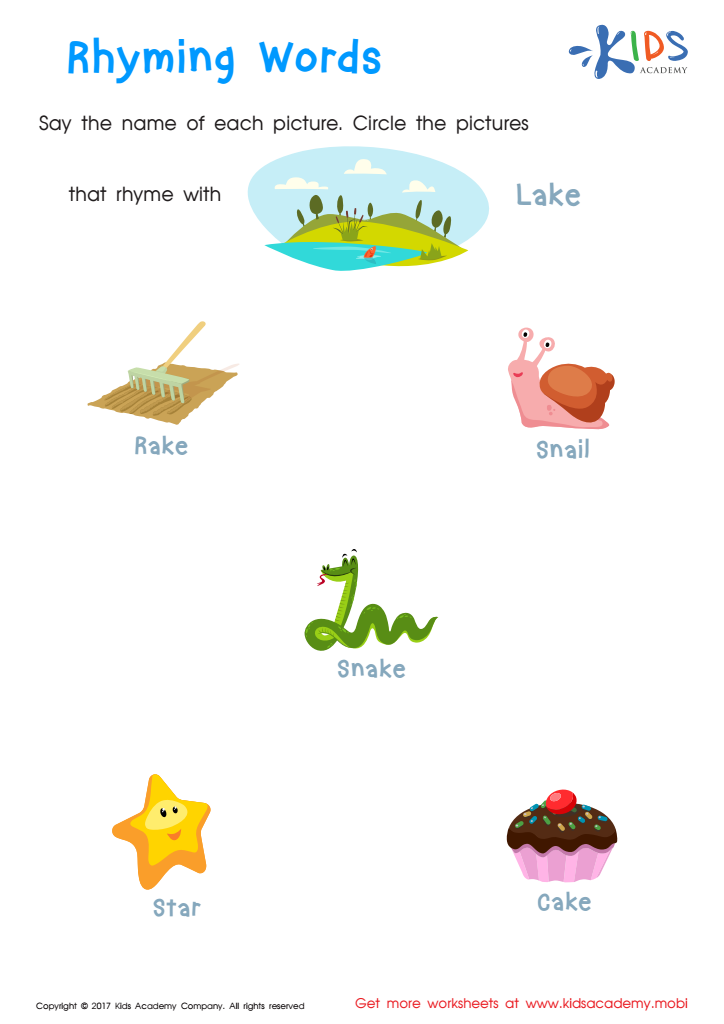
Rhyming Words Rhyming Worksheet

Long and Short U Worksheet
 Assign to My Students
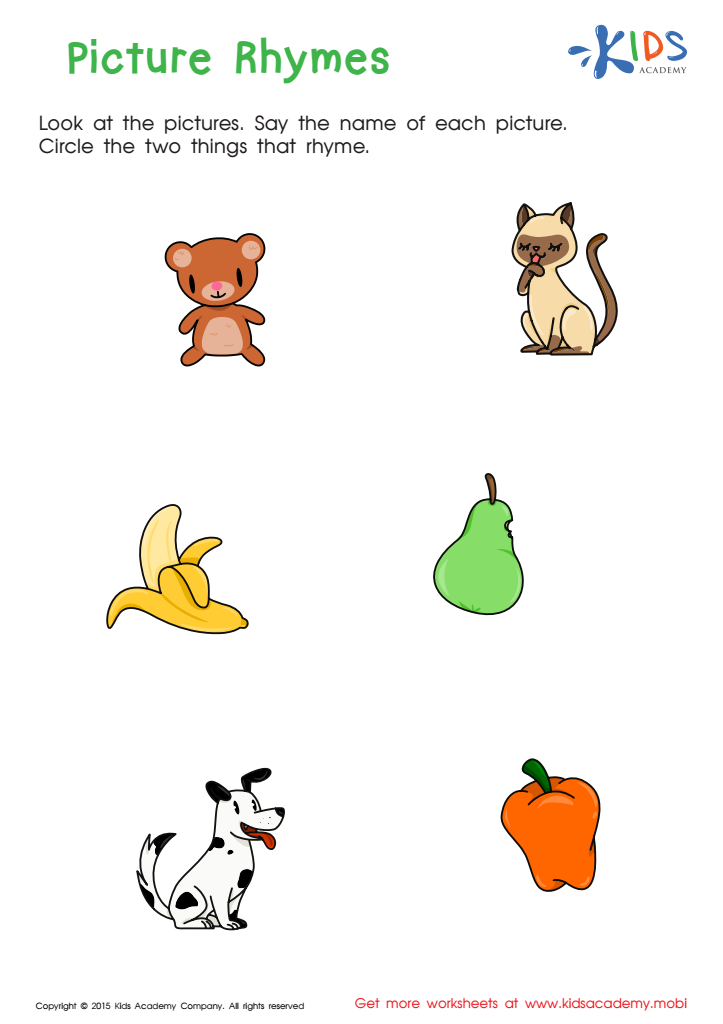
First Words: Picture Rhymes Worksheet
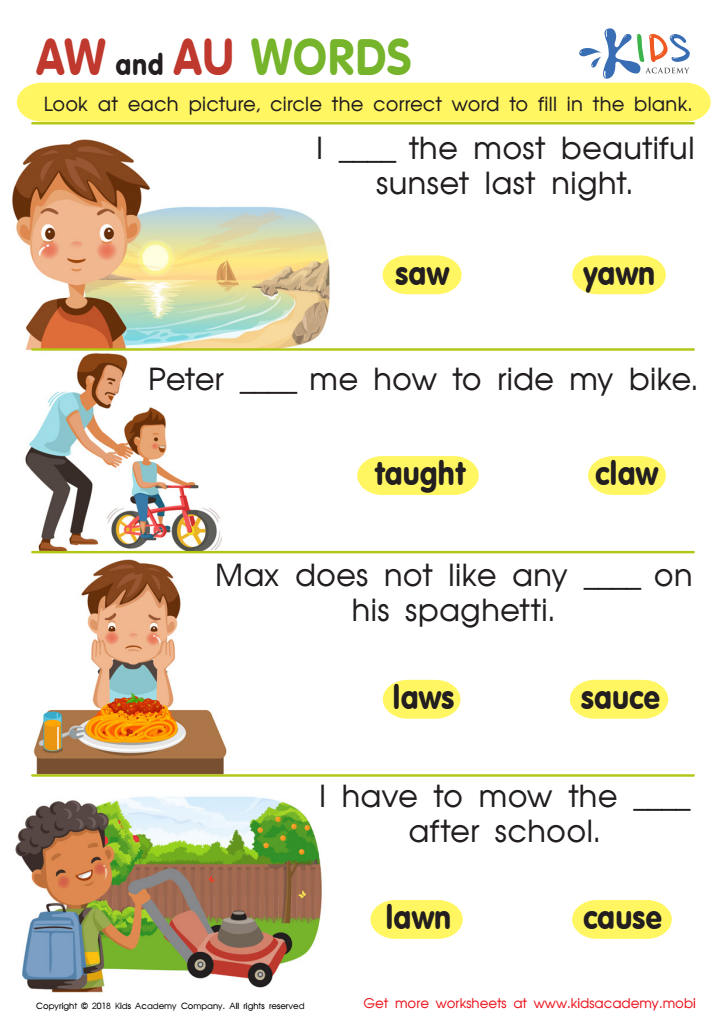
Reading: AW and AU Words Worksheet
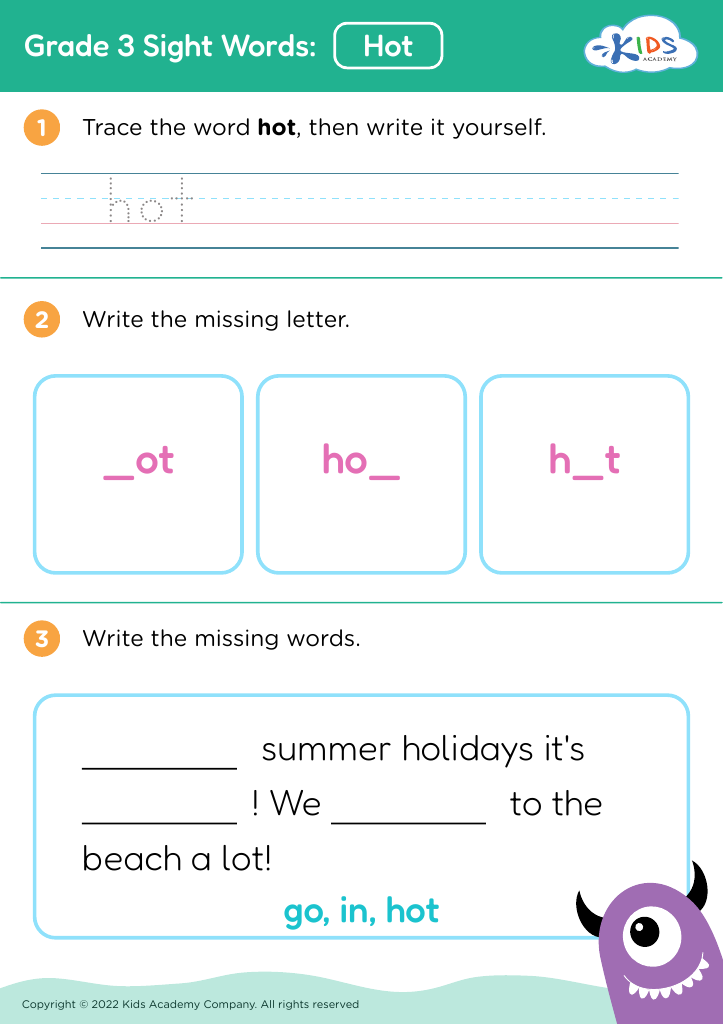




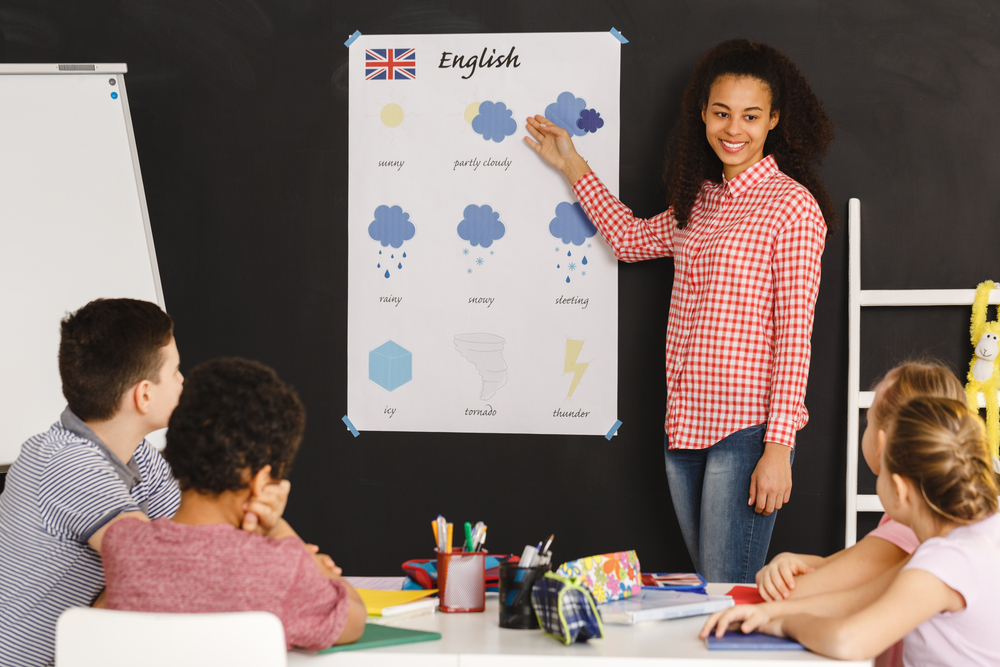


Parents and teachers should prioritize sound recognition reading for children aged 3-8 because it establishes a critical foundation for lifelong literacy and academic success. During these formative years, children’s brains are highly receptive to learning language, and sound recognition, or phonemic awareness, is a core skill in this process. By recognizing and manipulating the sounds in words, children can understand the relationship between sounds and letters, which is essential for reading fluency and comprehension.
Sound recognition activities, such as rhyming games, segmenting words into individual sounds, and blending sounds to form words, help children develop phonological awareness. This skill allows children to decode unfamiliar words, making reading less frustrating and more enjoyable. Moreover, strong phonemic awareness is linked to better spelling and writing skills, as it helps children understand that words are made up of distinct sounds that can be manipulated.
For parents and teachers, nurturing these skills during the early years means providing children with a significant advantage as they enter more formal education settings. Engaging in reading activities also strengthens the bond between children and caregivers, promoting a love for reading and learning. Overall, sound recognition reading is a gateway to more advanced literacy skills, setting children on a path to academic achievement and a love for reading.








