Information retention Reading Comprehension Worksheets for Ages 3-8
4 filtered results
-
From - To
Enhance your child's reading skills with our Information Retention Reading Comprehension Worksheets designed for ages 3-8! These engaging worksheets focus on helping young readers absorb and retain key information from their reading material. Through fun activities, children will practice identifying main ideas, recalling details, and making connections, all while building a sturdy foundation for future learning. Ideal for both home and classroom use, these worksheets foster critical thinking and comprehension skills in a playful environment. Download and watch your child's confidence grow as they master the art of understanding and retaining information in a fun, interactive way!
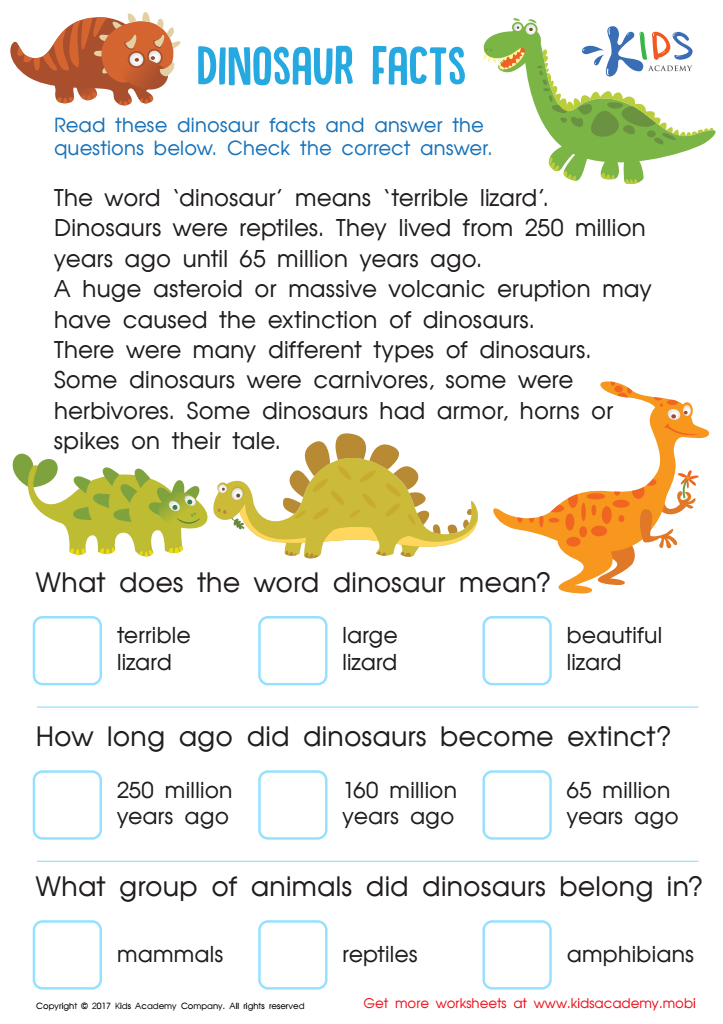
Dinosaur Facts Worksheet
 Assign to My Students
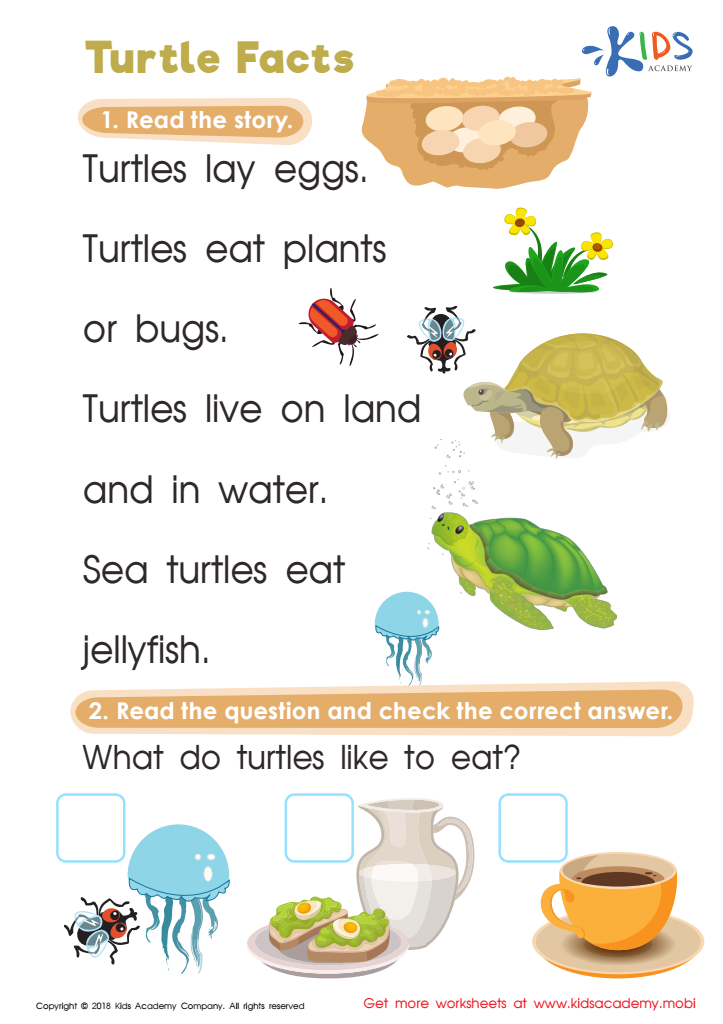
Turtle Facts Worksheet
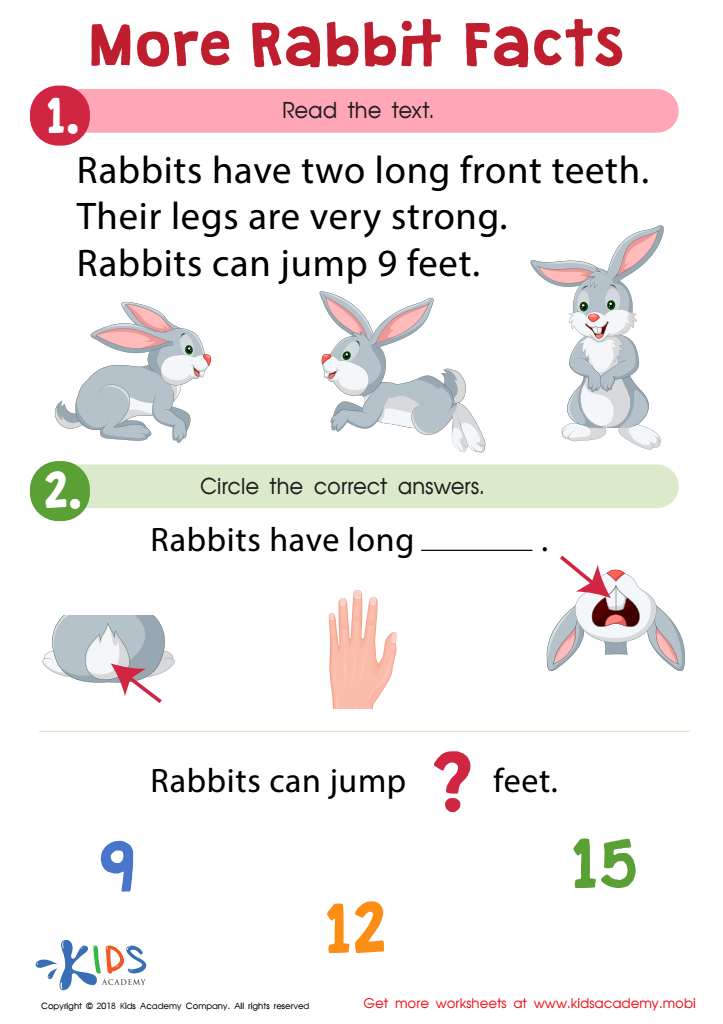
More Rabbit Facts Worksheet
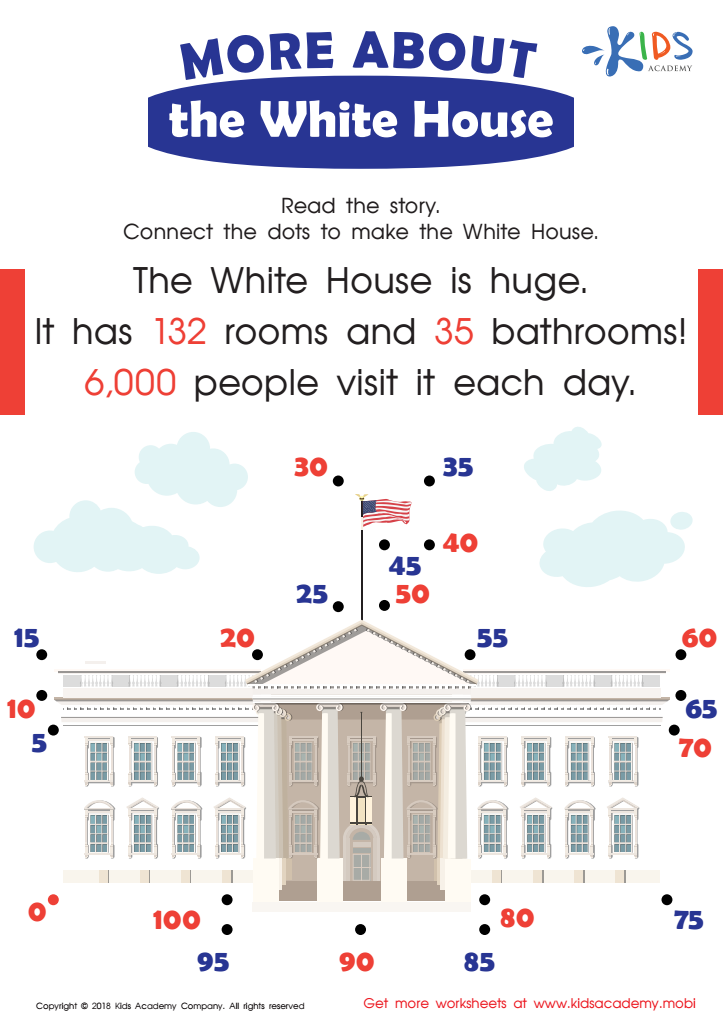
More About the White House Worksheet








Information retention and reading comprehension are critical components of early childhood education, especially for children aged 3-8. During these formative years, children develop foundational skills that significantly influence their future learning experiences. Understanding how to effectively absorb and comprehend information lays the groundwork for academic success and lifelong learning.
Parents and teachers should care about information retention because it directly impacts a child’s ability to recall facts, ideas, and concepts. Strong retention skills allow children to engage with stories and lessons meaningfully, making connections that enhance their understanding of the material. When children can remember what they read or hear, they are better equipped to participate in discussions, answer questions, and build critical thinking skills.
Reading comprehension is equally important as it involves not just understanding words but also interpreting, analyzing, and appreciating content. These skills foster a love of reading, promote vocabulary growth, and increase confidence in communication. Moreover, early emphasis on these abilities supports emotional and social development by helping children articulate their thoughts and feelings.
By prioritizing information retention and reading comprehension, parents and teachers can empower children to become engaged, confident learners, setting them on a pathway to meaningful educational journeys and lifelong achievement.








