
Analytical skills Science Worksheets for Ages 3-8
6 filtered results
Difficulty Level
Grade
Age
-
From - To
Subject
Activity
Standards
Unlock your child's potential with our Analytical Skills Science Worksheets for ages 3-8! Crafted to ignite curiosity and enhance critical thinking, our engaging worksheets cover fundamental science concepts through fun and interactive activities. Young learners will not only develop a keen understanding of the world around them but will also sharpen their problem-solving and analytical skills. Perfect for preschool and early elementary students, these printable resources are designed to support both classroom learning and homeschooling efforts. Start your child’s scientific journey today and watch their intellect blossom with Kids Academy!
Favorites
With answer key
Interactive
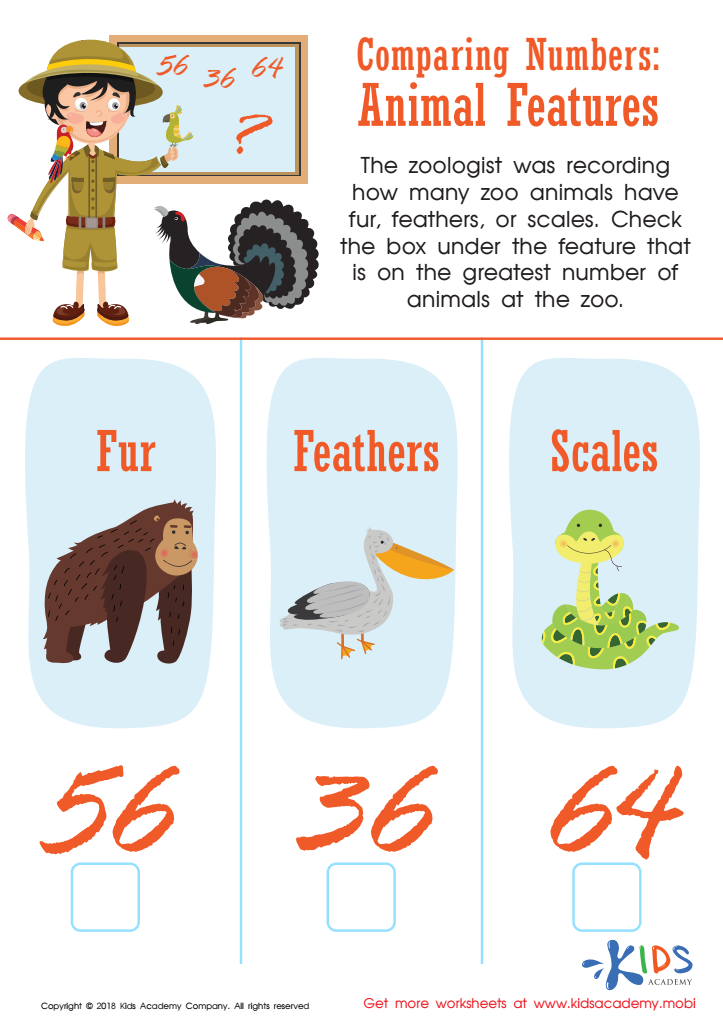
Animal Features Worksheet
Let your kids join a budding zoologist! They can count zoo animals' fur, feathers or scales, then use numbers and comparison to check the box with the most friends. The PDF will captivate them and help them understand how the value of '6' changes based on its position.
 Assign to My Students
Animal Features Worksheet
Worksheet
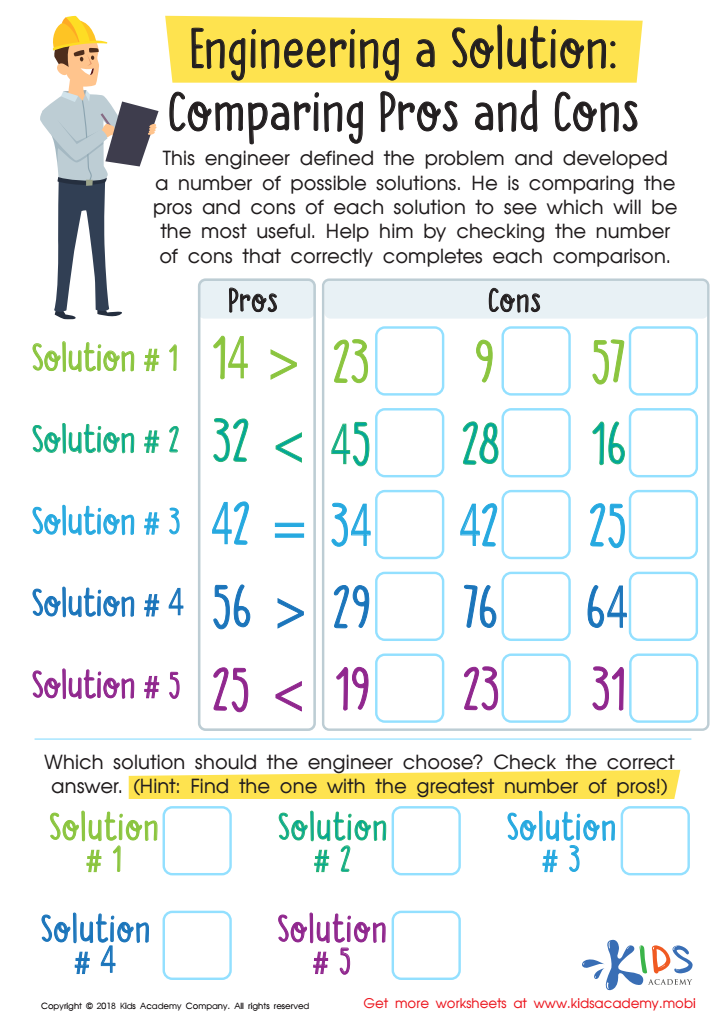
Engineering a Solution: Comparing Pros and Cons Worksheet
Help our little engineers assist the engineer in making a decision! They will solve the equations using greater than, less than, and equal to, and then decide the best solution for the problem using the pros and cons of each.
Engineering a Solution: Comparing Pros and Cons Worksheet
Worksheet
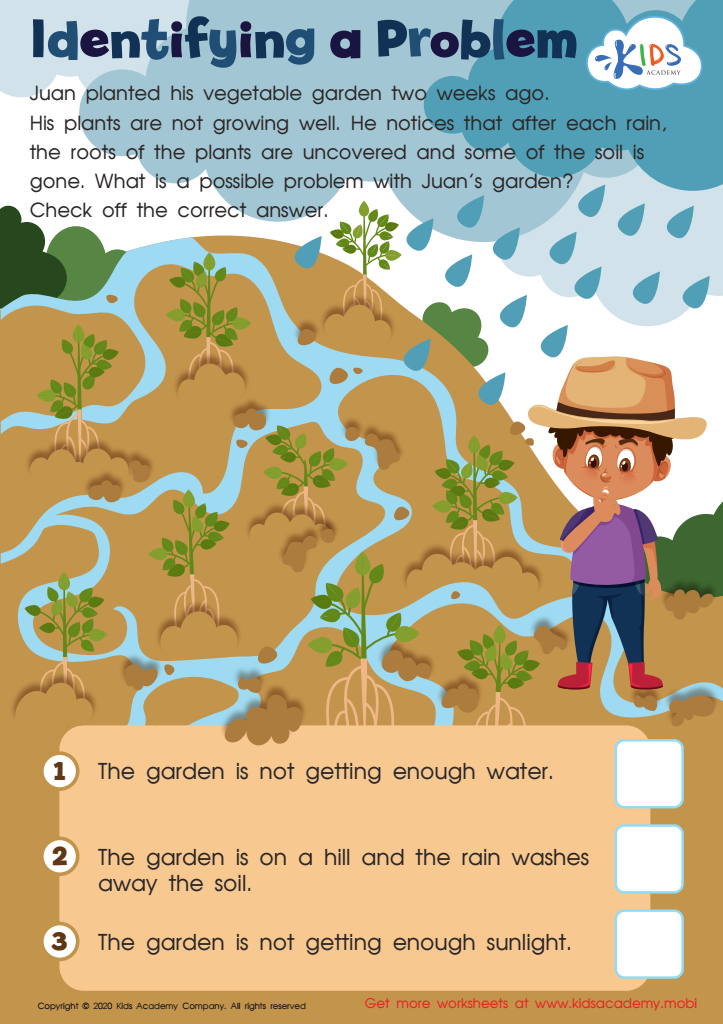
Identifying a Problem Worksheet
Help Juan figure out why his vegetable garden isn't doing well! Print this PDF science worksheet. Read the explanation and observe the scene. What could be causing the problem? Check off the correct answer to complete the challenge. Weather or soil conditions may be the cause – analyze to find out!
Identifying a Problem Worksheet
Worksheet
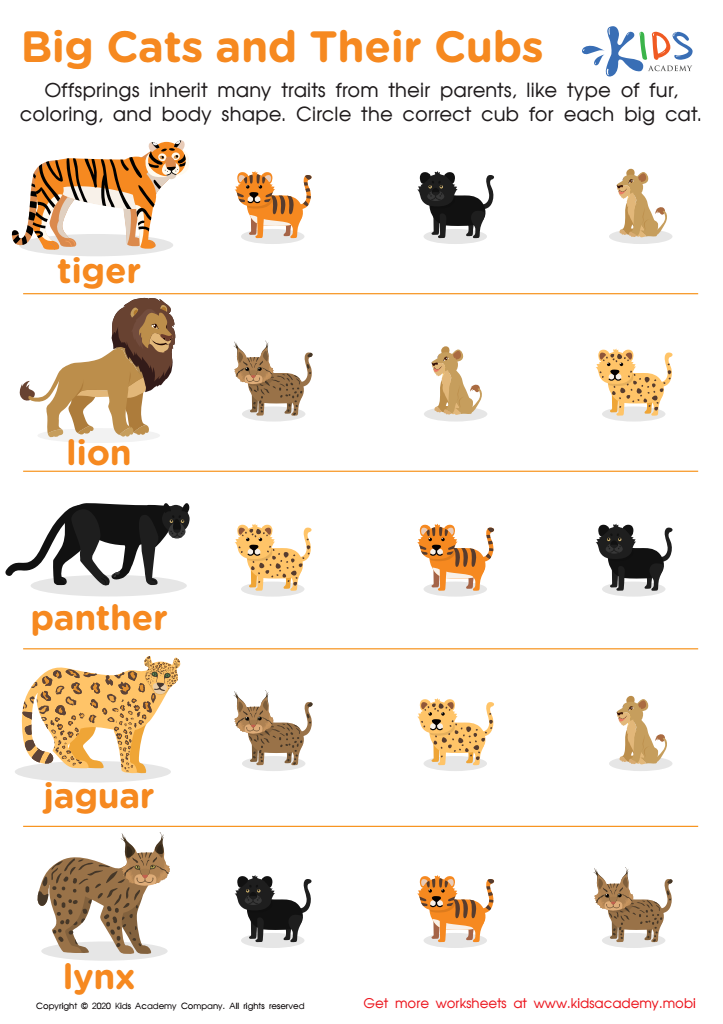
Big Cats and Their Cubs Worksheet
Kids are often like their parents, and the same is true for big cats and their cubs. Introduce your young scientists to genetics with this fun printable worksheet from Kids Academy! Observe the big cats and their cubs, then circle the right cub to complete! It's a great way to teach an early lesson in genetics.
Big Cats and Their Cubs Worksheet
Worksheet
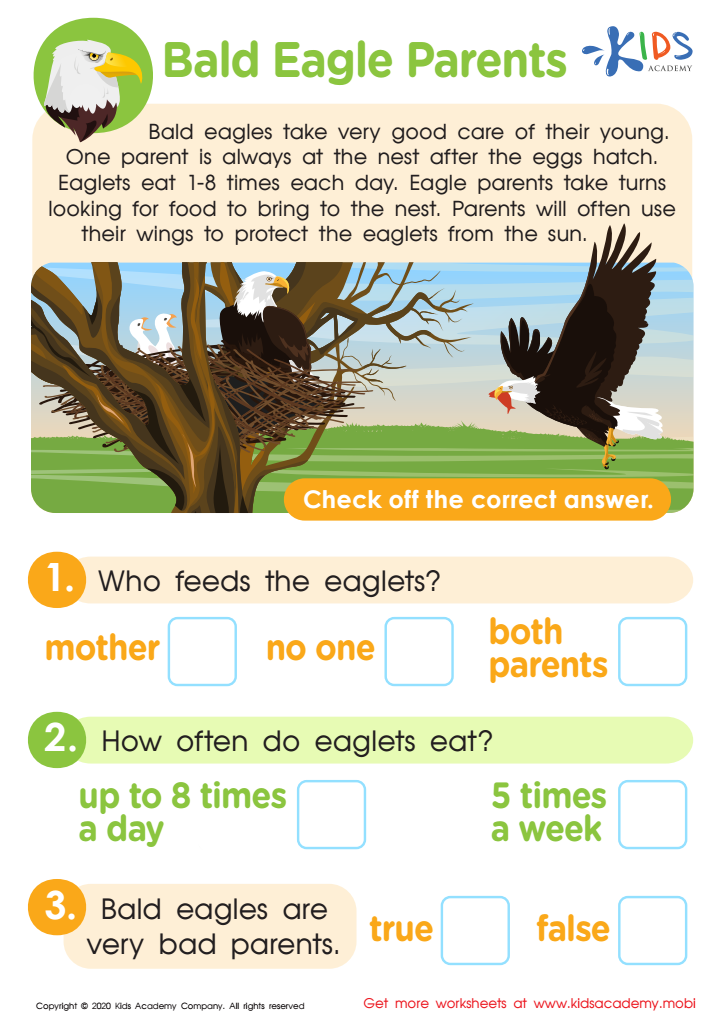
Bald Eagle Parents Worksheet
Teach your child about bald eagle parenting with this science worksheet! Read the passage and answer the questions to learn how these majestic birds protect their young from predators. Eaglets need protection, and the bald eagle parents are masters of providing it!
Bald Eagle Parents Worksheet
Worksheet
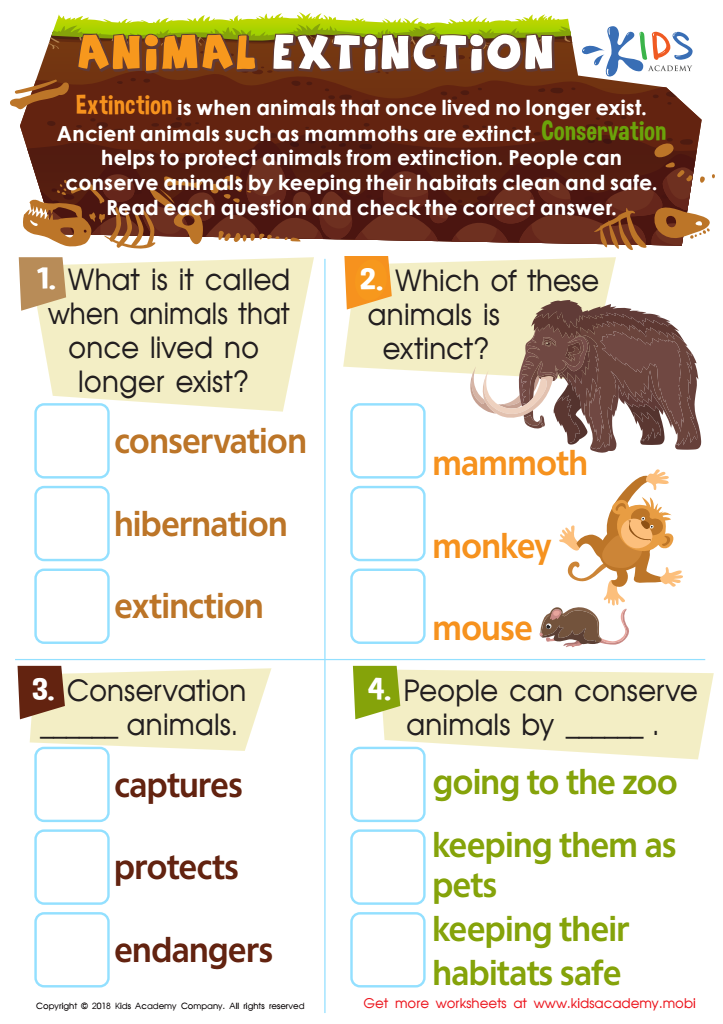
Animal Extinction Worksheet
Children can learn how their actions can help endangered animals with this free PDF worksheet. It explains extinction, looks at the mammoth as an example, and poses questions about conservation. Keeping habitats clean and safe is key to protecting animals and keeping them abundant. Learning about this now can make a huge difference for future generations.
Animal Extinction Worksheet
Worksheet
Join Kids Academy for Free
Who is primarily going to use this learning content?








Parents and teachers play a vital role in nurturing analytical skills in young children aged 3-8 through science activities. At this stage, children's brains are highly receptive, and early exposure to analytical thinking lays a solid foundation for future learning. Analytical skills involve observing, questioning, comparing, and drawing conclusions—abilities crucial for problem-solving and academic success.
Science activities are particularly well-suited for developing these skills. Simple experiments, nature explorations, and hands-on investigations spark curiosity and encourage children to ask "why" and "how." For instance, a basic experiment like mixing baking soda and vinegar to create a fizzing reaction captivates young minds and prompts them to speculate and reason.
Enhancing analytical skills in early childhood also strengthens cognitive development and promotes intellectual resilience. It prepares children to approach new situations methodically and with an open mind. Moreover, these foundational skills translate across subjects and are instrumental in understanding math, reading comprehension, and more complex science topics later on. Fostering analytical skills also helps children develop confidence in their own abilities, as they feel empowered to explore, think critically, and solve problems independently. Overall, emphasizing analytical skills through science not only supports academic growth but also builds lifelong learners capable of innovative thought and action.







