Historical Knowledge Science Worksheets for Ages 3-8
5 filtered results
-
From - To
Discover a captivating collection of Historical Knowledge Science Worksheets for children ages 3-8. Designed to make learning history engaging and educational, these printable worksheets offer young learners fun and interactive activities that explore significant historical events, figures, and timelines. Ideal for parents and teachers, each worksheet is crafted to boost memory and cognitive skills while sparking curiosity about the past. Whether in the classroom or at home, these resources enhance early childhood education, ensuring that children build a solid foundation in history through playful and hands-on activities. Unveil the wonders of history with these enriching science worksheets today!
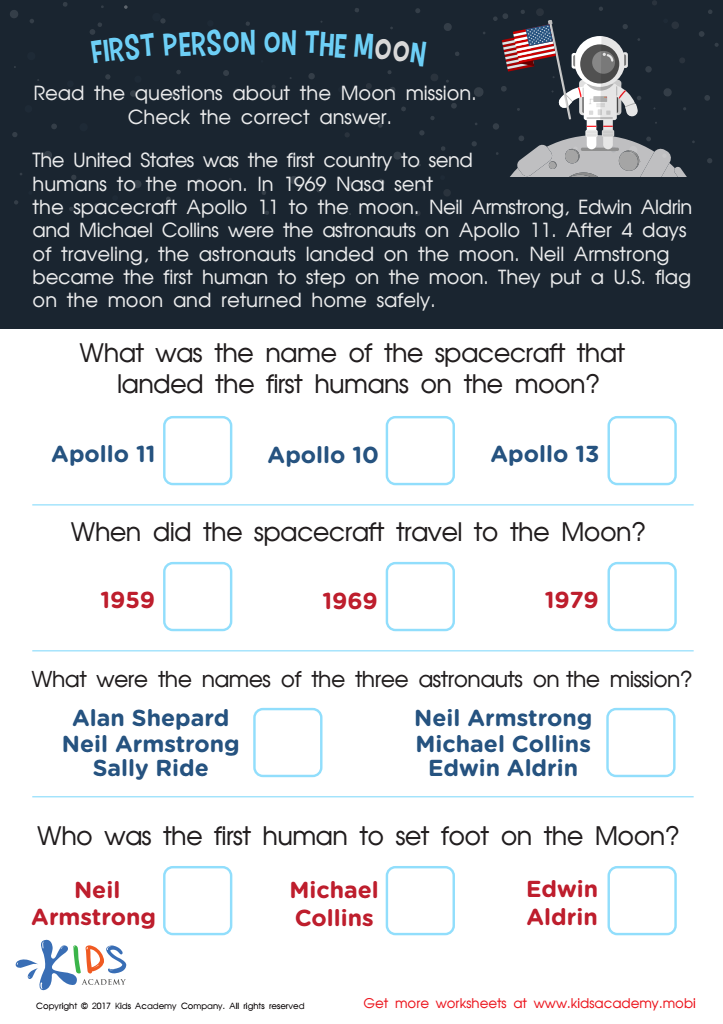
First Person on the Moon Worksheet
 Assign to My Students
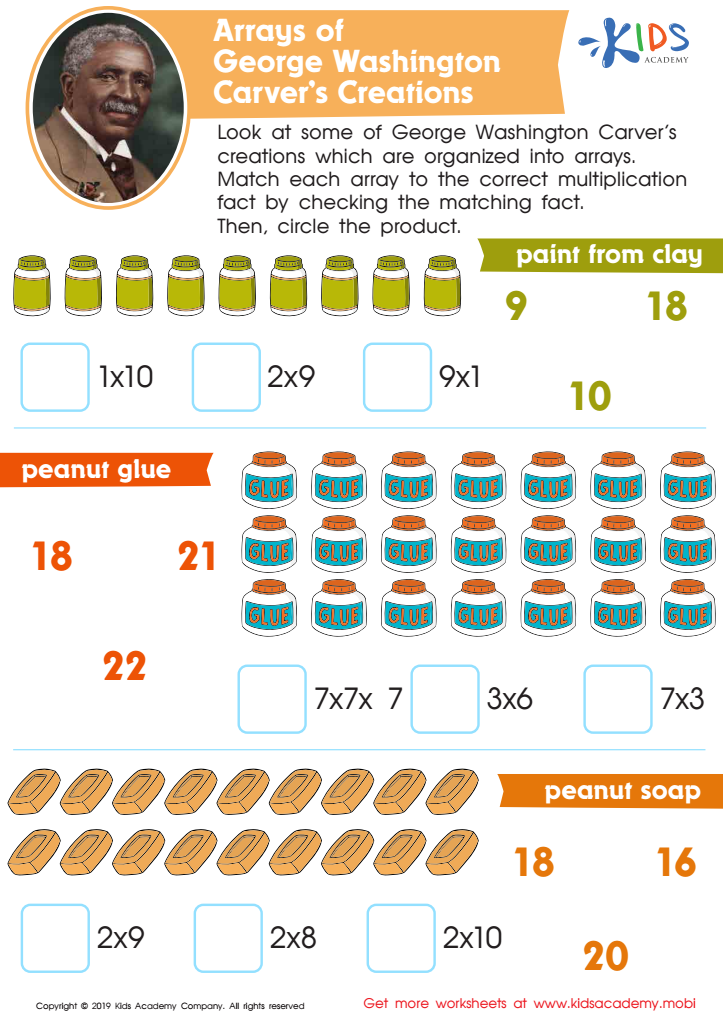
Arrays of George Washington Carver’s Creations Worksheet
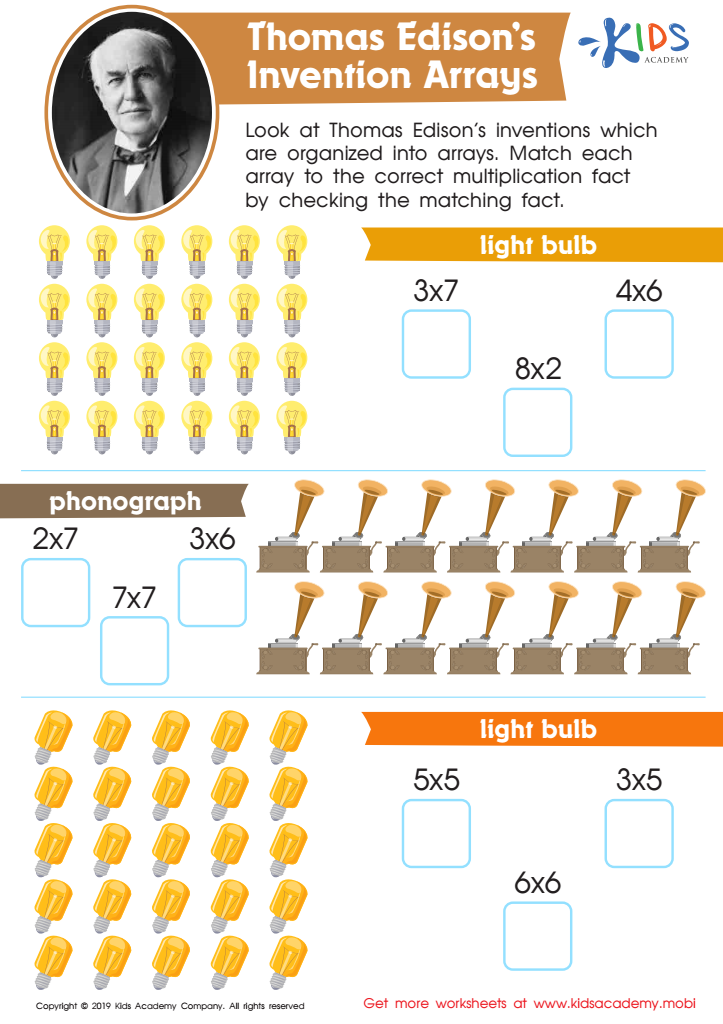
Thomas Edison’s Invention Arrays Worksheet
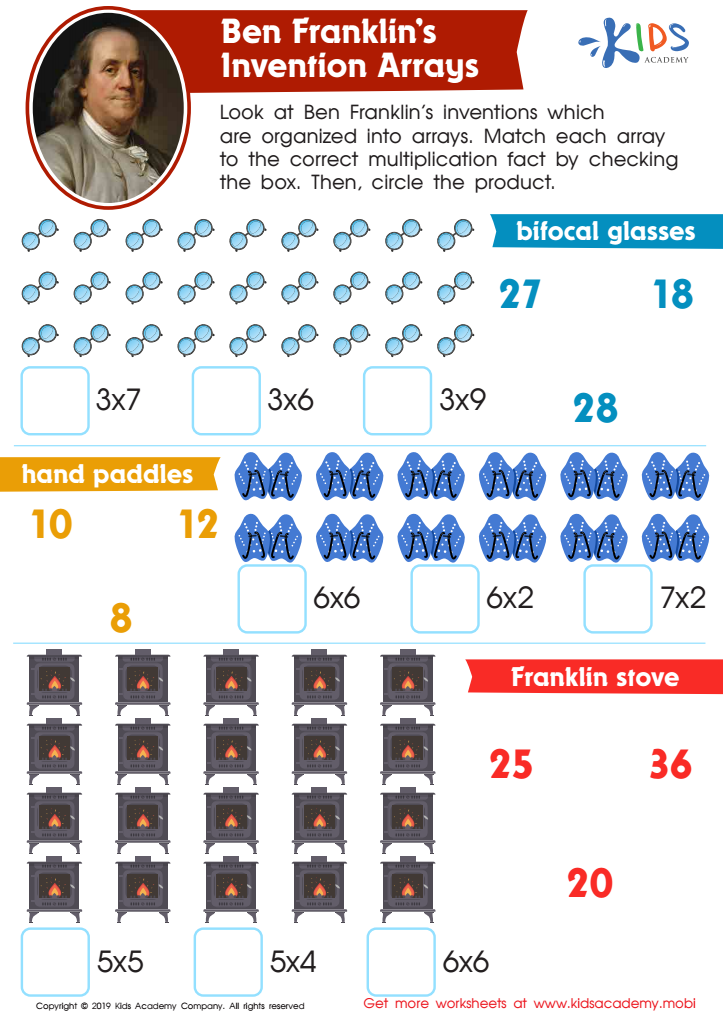
Ben Franklin’s Invention Arrays Worksheet
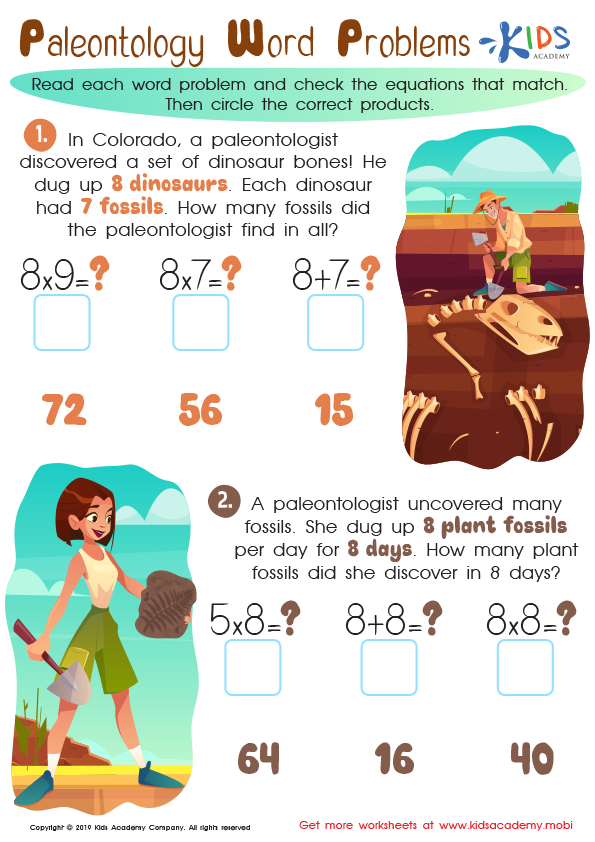
Archeology Word Problems Worksheet






Historical Knowledge Science (HKS) for early childhood is vital because it sparks curiosity and lays a foundation for lifelong learning. Encouraging ages 3-8 to explore HKS introduces them to the wonders of different eras, cultures, inventions, and significant events in the world. At this developmental stage, children's brains are incredibly receptive. Exposing them to historical tales and scientific advances can fuel their imagination and critical thinking.
By learning about the past, children develop a sense of time and place, fostering their ability to understand chronological order and cause-and-effect relationships. This awareness not only benefits history lessons but also aids in logical reasoning and problem-solving in other subjects.
Additionally, HKS can cultivate empathy and cultural understanding. Through stories of various civilizations and historical figures, children gain insight into diverse life experiences and perspectives, promoting tolerance and appreciation for different backgrounds.
Moreover, integrating HKS with play and interactive activities makes learning enjoyable, fostering a love for learning. Parents and teachers who introduce these concepts early better prepare children for more complex educational material later, creating a robust academic foundation. Thus, prioritizing Historical Knowledge Science invigorates young minds, inculcates essential skills, and nurtures a well-rounded worldview.







