Identifying Animals Science Worksheets for Ages 3-8
3 filtered results
-
From - To
Discover our engaging "Identifying Animals Science Worksheets" designed specifically for children aged 3-8! These interactive and printable resources promote early learning by helping young learners recognize and differentiate between various animals. Each worksheet is thoughtfully crafted to enhance comprehension through vibrant illustrations, fun activities, and assessments tailored to different skill levels. Perfect for homeschool settings or classroom use, our worksheets foster a love for wildlife and encourage curiosity about the animal kingdom. Encourage your child's understanding of nature while developing important skills in observation and classification. Browse our collection today, and watch your little ones' excitement soar!
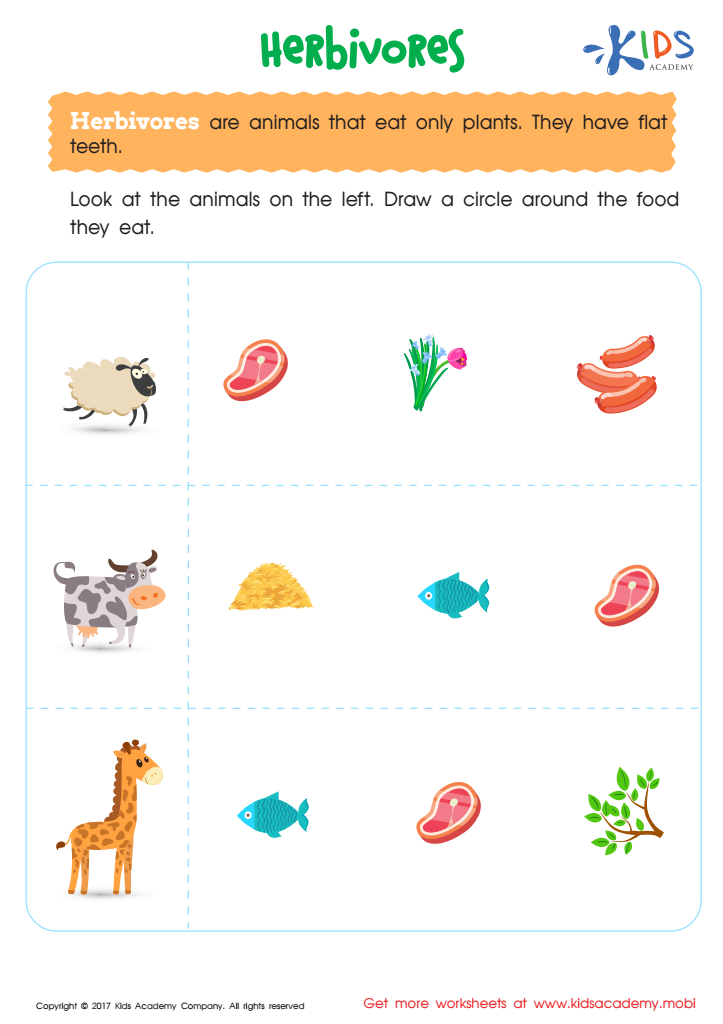
Herbivores Printable
 Assign to My Students
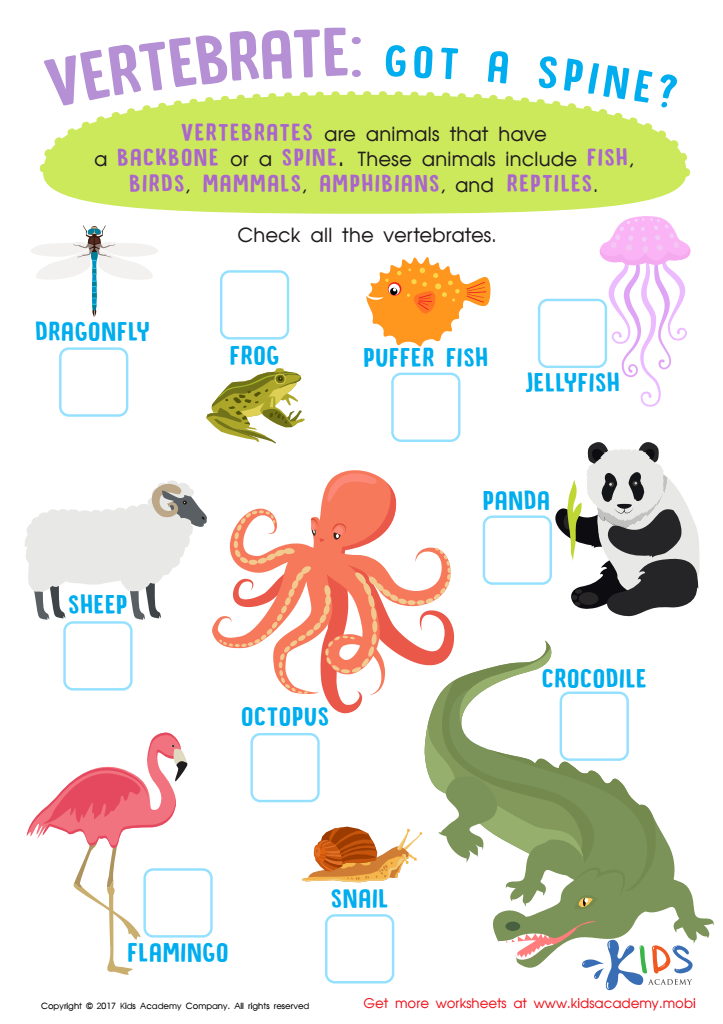
Vertebrates Animals Worksheet for 3rd Grade
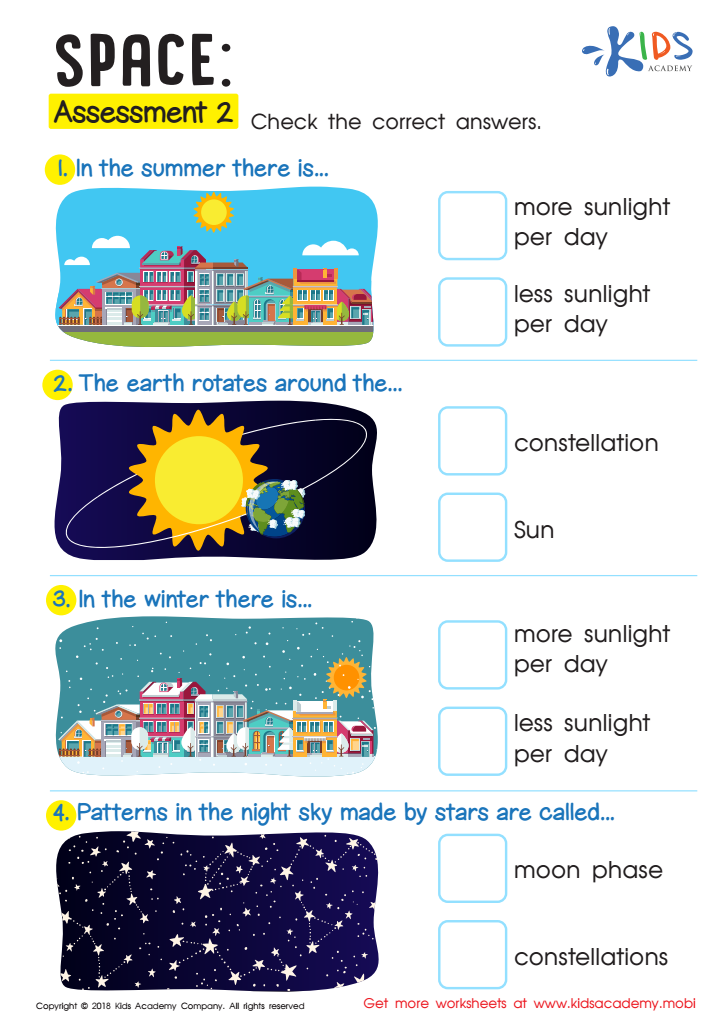
Space: Assessment 2 Worksheet








Identifying animals is a vital aspect of early science education for children ages 3-8. At this young age, children are naturally curious and eager to explore their surroundings, making it an ideal time to foster an interest in living things. Engaging with animal identification helps children cultivate observational skills, encourages critical thinking, and nurtures a sense of wonder about the natural world.
When parents and teachers prioritize learning about animals, they lay the groundwork for environmental awareness, as children develop a sense of empathy towards living creatures and their habitats. This knowledge serves as a foundation for later teaching on biodiversity, ecosystems, and conservation.
Furthermore, understanding animal characteristics enhances vocabulary and introduces scientific concepts in a fun and interactive way. Using different activities like spotting animals, reading books, or participating in nature walks fortifies learning and makes it tangible.
Moreover, cultivating this knowledge can lead to storytelling and role-play, fostering a love for learning, creativity, and social skills. By enabling young learners to identify animals, parents and teachers not only enrich their academic journey but also ignite a passion for lifelong exploration and ethical stewardship of the environment. Such efforts undoubtedly contribute to well-rounded, informed, and compassionate individuals.







