Map reading skills Science Worksheets for Ages 3-8
1 filtered results
-
From - To
Enhance your child’s understanding of map reading with our engaging Science Worksheets, designed specifically for ages 3-8. These interactive resources help young learners develop essential map skills, including understanding symbols, direction, and spatial awareness. Our worksheets offer a variety of fun activities, from coloring maps to simple direction-following tasks, fostering critical thinking and problem-solving. Perfect for at-home learning or classroom activities, these worksheets encourage exploration and curiosity about the world, while making learning enjoyable. Equip your child with foundational skills that will benefit them for years to come. Download our printable Map Reading Skills Worksheets today and watch your child thrive!
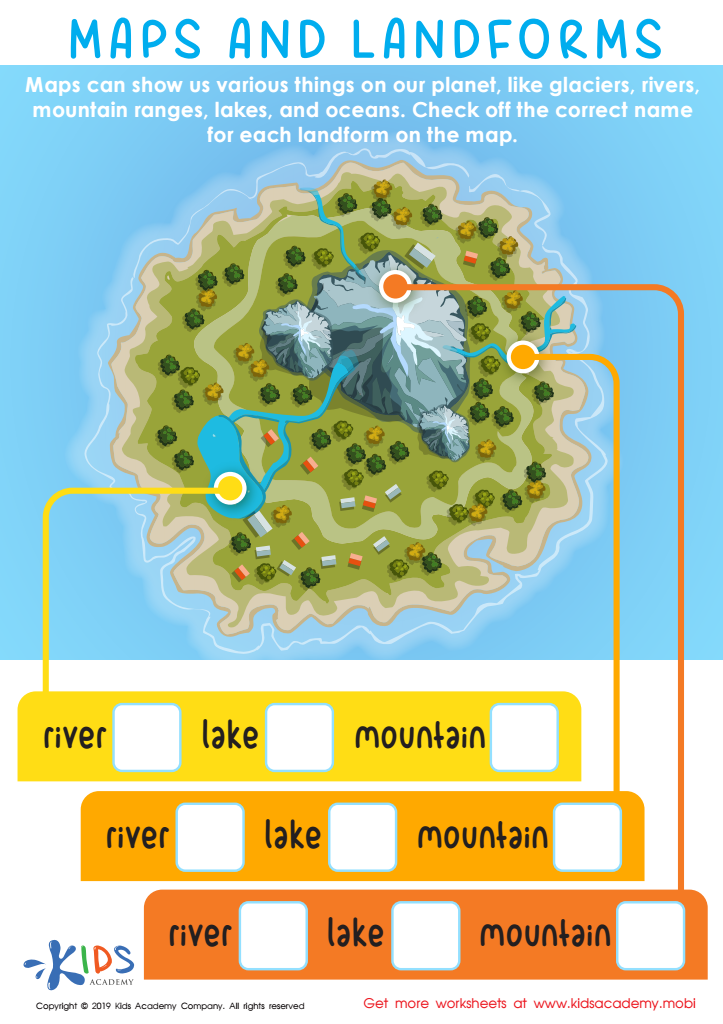
Maps and Landforms Worksheet
 Assign to My Students



%20(1).jpg)



Map reading skills are crucial for young children aged 3-8, significantly shaping their understanding of the world around them. When parents and teachers prioritize teaching these skills, they pave the way for greater spatial awareness, critical thinking, and problem-solving abilities.
First, map reading enhances spatial awareness, helping children learn how to interpret and navigate familiar environments. This foundational skill is fundamental for future learning in subjects like mathematics and geography. By understanding maps, children grasp concepts of distance, direction, and relationships between locations, making these early lessons practical for daily life.
Additionally, learning to read maps instills a sense of confidence and independence. Children learn to plan routes and visualize their journey, which builds self-reliance as well as teamwork skills when working with peers or adults.
Furthermore, integrating science through maps fosters curiosity about the environment, nurturing a love for exploration. Parents and teachers can use maps to discuss major themes in science, like ecosystems or weather patterns, enriching the educational experience.
Ultimately, supporting map reading skills not only aids in cognitive development but also cultivates essential life skills and an appreciation for learning that lasts well beyond early childhood.







