Visual perception improvement Science Worksheets for Ages 3-8
3 filtered results
-
From - To
Discover engaging Visual Perception Improvement Science Worksheets designed for children ages 3-8 at Kids Academy! Our expertly crafted activities enhance critical learning skills, fostering visual discrimination, pattern recognition, and spatial awareness through fun science themes. These worksheets make learning enjoyable, combining vibrant illustrations with thought-provoking exercises to support cognitive development. Perfect for use at home or in the classroom, they provide young learners with the foundational tools necessary for future academic success. Strengthen your child’s visual perception skills and set the stage for lifelong learning with our innovative resources. Explore our collection now and watch your child thrive!
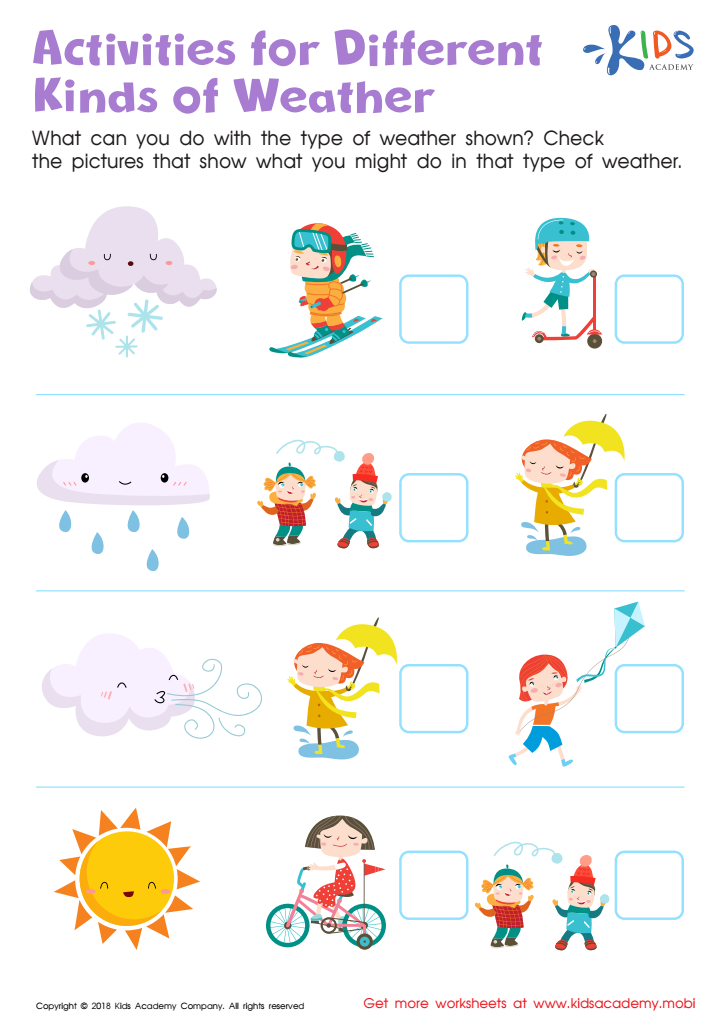
Activities for Different Kinds of Weather Worksheet
 Assign to My Students
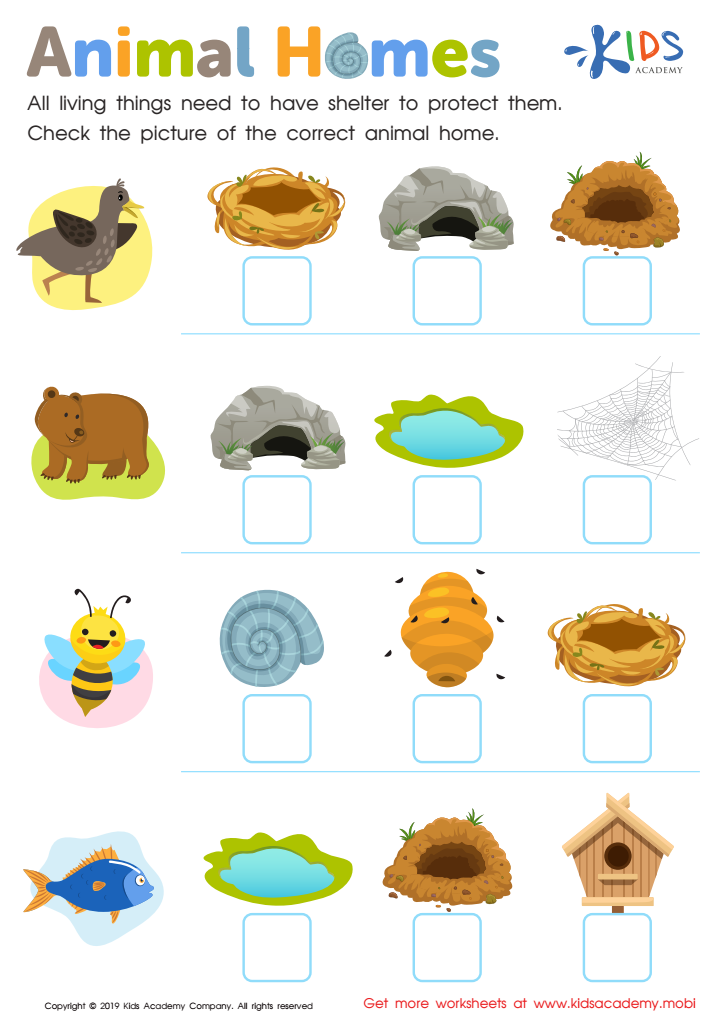
Animal Homes Worksheet
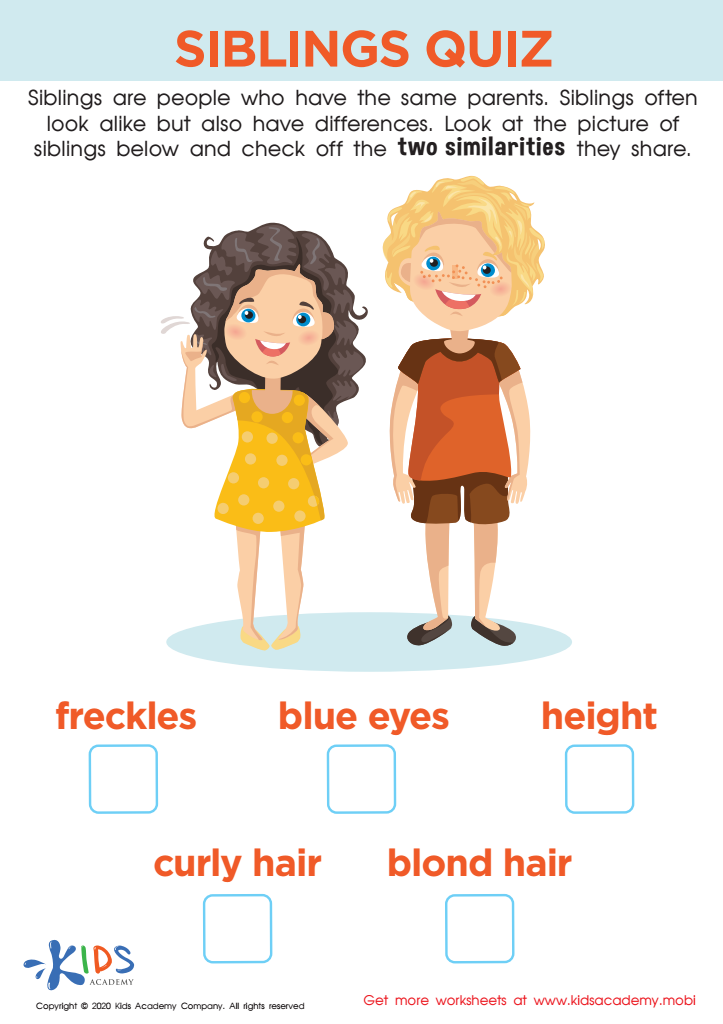
Siblings Quiz Worksheet







Visual perception is the brain’s ability to make sense of what we see, and it plays a critical role in early childhood development. For children aged 3-8, enhancing visual perception skills can have wide-ranging benefits that ripple across different areas of learning and daily life.
Parents and teachers should care about improving visual perception because it lays the foundation for essential academic and motor skills. Effective visual perception is closely tied to reading, writing, and mathematics. For instance, recognizing different shapes, letters, and numbers requires the ability to differentiate between visual stimuli. Improved visual perception skills also aid in understanding spatial relations, which are crucial for tasks like drawing, cutting with scissors, and solving puzzles.
Moreover, visual perception improvement contributes to better hand-eye coordination. This is vital not only for academic tasks but also for activities like playing sports and tying shoelaces, which enhance a child’s overall motor skills and independence.
Socially and emotionally, enhanced visual perception can help children navigate their environment more confidently, improving their interactions with peers and fostering a sense of competence and self-worth. Early investment in improving these skills can lead to long-term academic success and a higher quality of life, making it a priority for caregivers and educators.







