Vocabulary enhancement Science Worksheets for Ages 3-8 - Page 3
50 filtered results
-
From - To
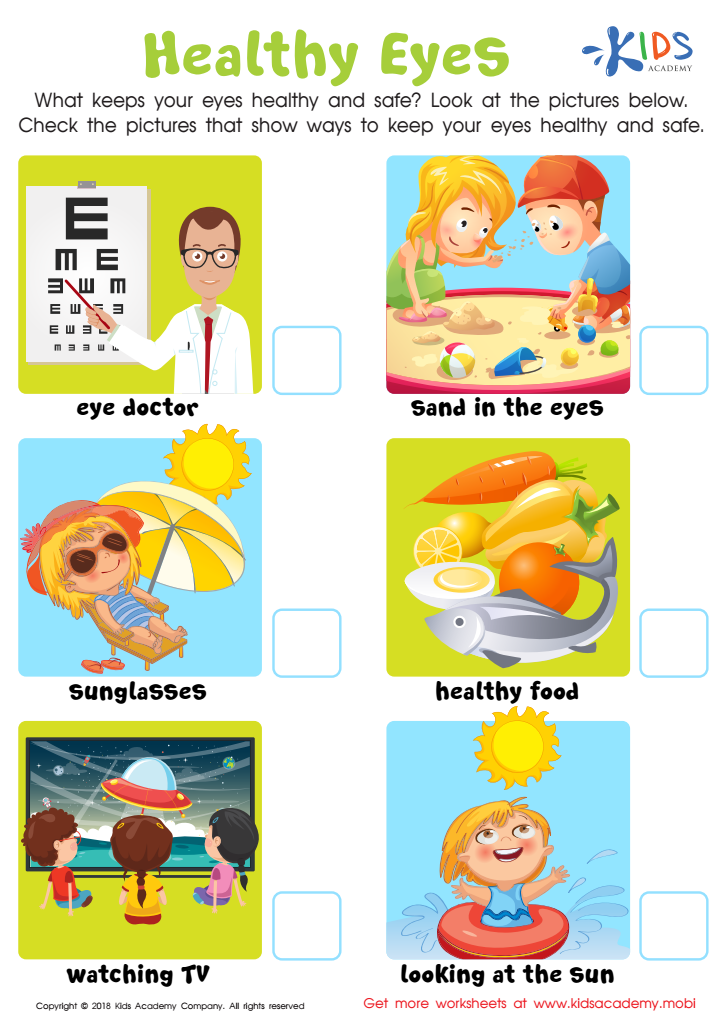
Healthy Eyes Worksheet
 Assign to My Students







Vocabulary enhancement is crucial for children aged 3-8, as it serves as the foundation for effective communication, comprehension, and overall academic success. During these formative years, children are developing their understanding of language, and a rich vocabulary allows them to express thoughts, feelings, and ideas more clearly.
Parents and teachers should prioritize vocabulary enhancement because it directly influences literacy skills; stronger vocabulary leads to better reading and writing abilities. Children with a broad vocabulary tend to comprehend texts more easily, fostering a love for reading and curiosity about the world. Furthermore, vocabulary is linked to cognitive development; children learn to categorize and conceptualize their experiences through words.
Additionally, a well-developed vocabulary is essential for social interaction and emotional expression. It helps children navigate relationships with peers and adults, reducing frustration and encouraging positive communication styles.
Investing in vocabulary enhancement through engaging activities, discussions, and reading opportunities empowers children to thrive academically and socially. Overall, fostering robust vocabulary skills in young learners is an investment in their future, setting the stage for lifelong learning, critical thinking, and successful interpersonal relationships. Understanding the importance of vocabulary at this stage is fundamental to nurturing well-rounded, capable individuals.







