
Understanding natural resources Our Planet and Environment Worksheets for Ages 3-8
4 filtered results
Difficulty Level
Grade
Age
-
From - To
Subject
Activity
Standards
Introducing "Understanding Natural Resources", a dynamic collection of worksheets designed for children ages 3-8. These engaging activities, available at Kids Academy, help young learners explore vital environmental concepts. Through colorful, easy-to-understand exercises, kids discover different natural resources, their uses, and the importance of conservation. Ideal for early graders, these hands-on worksheets foster curiosity and a love of science while teaching key skills in observation and critical thinking. Perfect for parents and teachers aiming to cultivate environmental stewardship, "Understanding Natural Resources" makes learning about our planet fun and accessible. Visit Kids Academy now to start your child's green journey!
Favorites
With answer key
Interactive
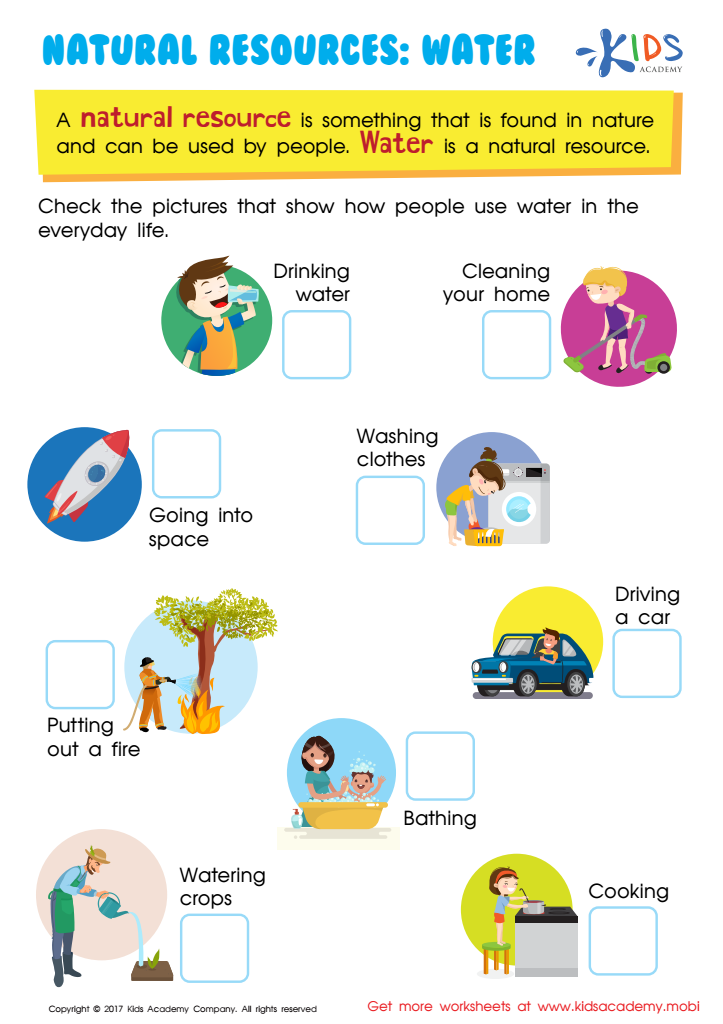
Natural Resources: Water Worksheet
With our natural resources water worksheet, your child will explore the significance of this precious resource.
Unlock your child’s understanding of water’s importance with our natural resources water worksheet. They’ll learn the many ways we use water in our day-to-day lives, and grasp the necessity of this vital natural resource.
 Assign to My Students
Natural Resources: Water Worksheet
Worksheet
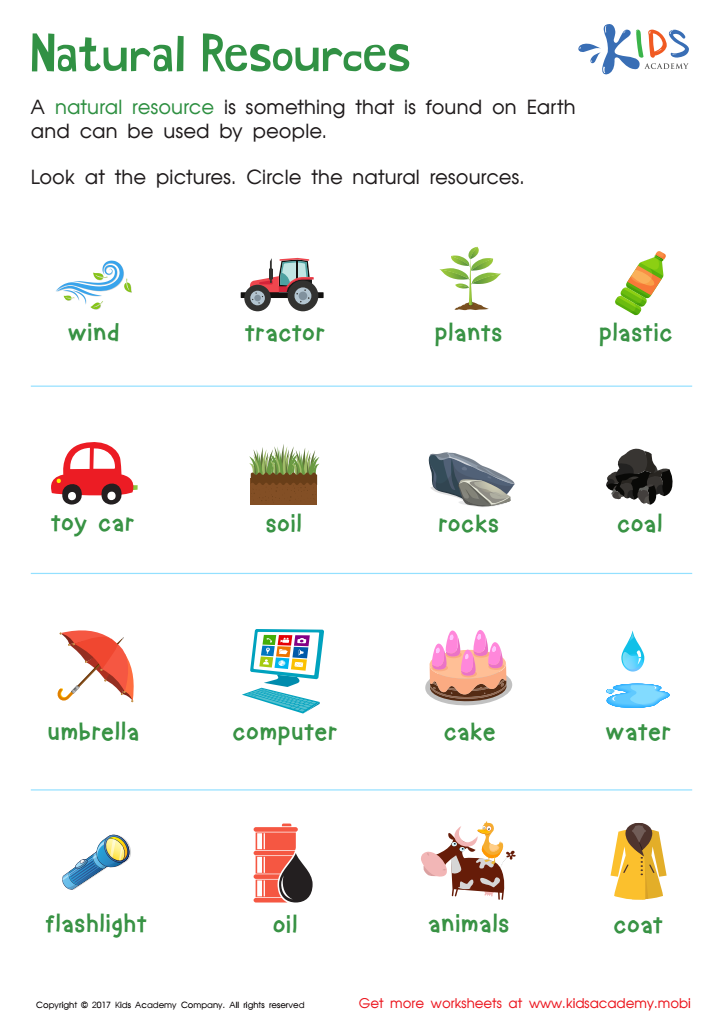
Natural Resources Worksheet
Use this engaging worksheet to explore nature’s resources and their importance. Teach your child about the importance of natural resources and how to conserve them with this fun worksheet!
Help your child explore and understand Earth's natural gifts! Use this challenging worksheet to identify natural resources and learn about their importance. Encourage your child to be mindful and conserve these precious resources. Enjoy teaching your child about nature's gifts with this fun worksheet!
Natural Resources Worksheet
Worksheet
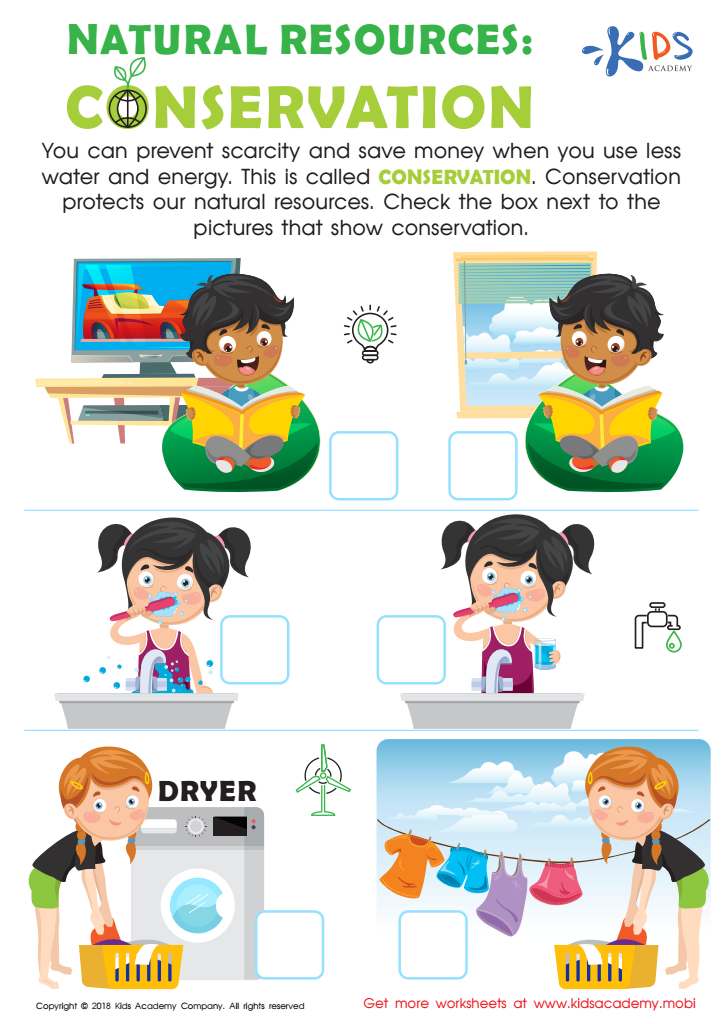
Natural Resources: Conservation Worksheet
Water scarcity is a challenge. When people don't have enough water, they can't do certain things. We can prevent this with conservation: using less energy and water. This helps protect our natural resources and saves money. Talk to your child about conservation and have them check the box next to the pictures that show it.
Natural Resources: Conservation Worksheet
Worksheet
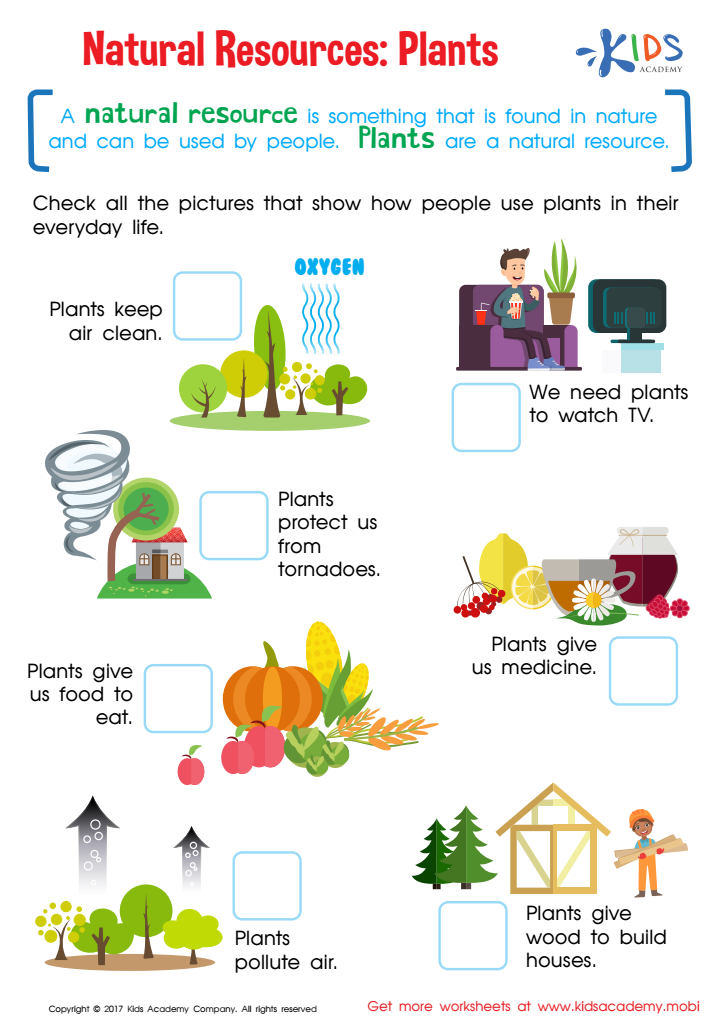
Natural Resources: Plants Worksheet
Plants provide essential natural resources: oxygen and protection from hazards. This worksheet helps 2nd graders appreciate plants more. It's the perfect way to review natural resources.
Natural Resources: Plants Worksheet
Worksheet
Join Kids Academy for Free
Who is primarily going to use this learning content?




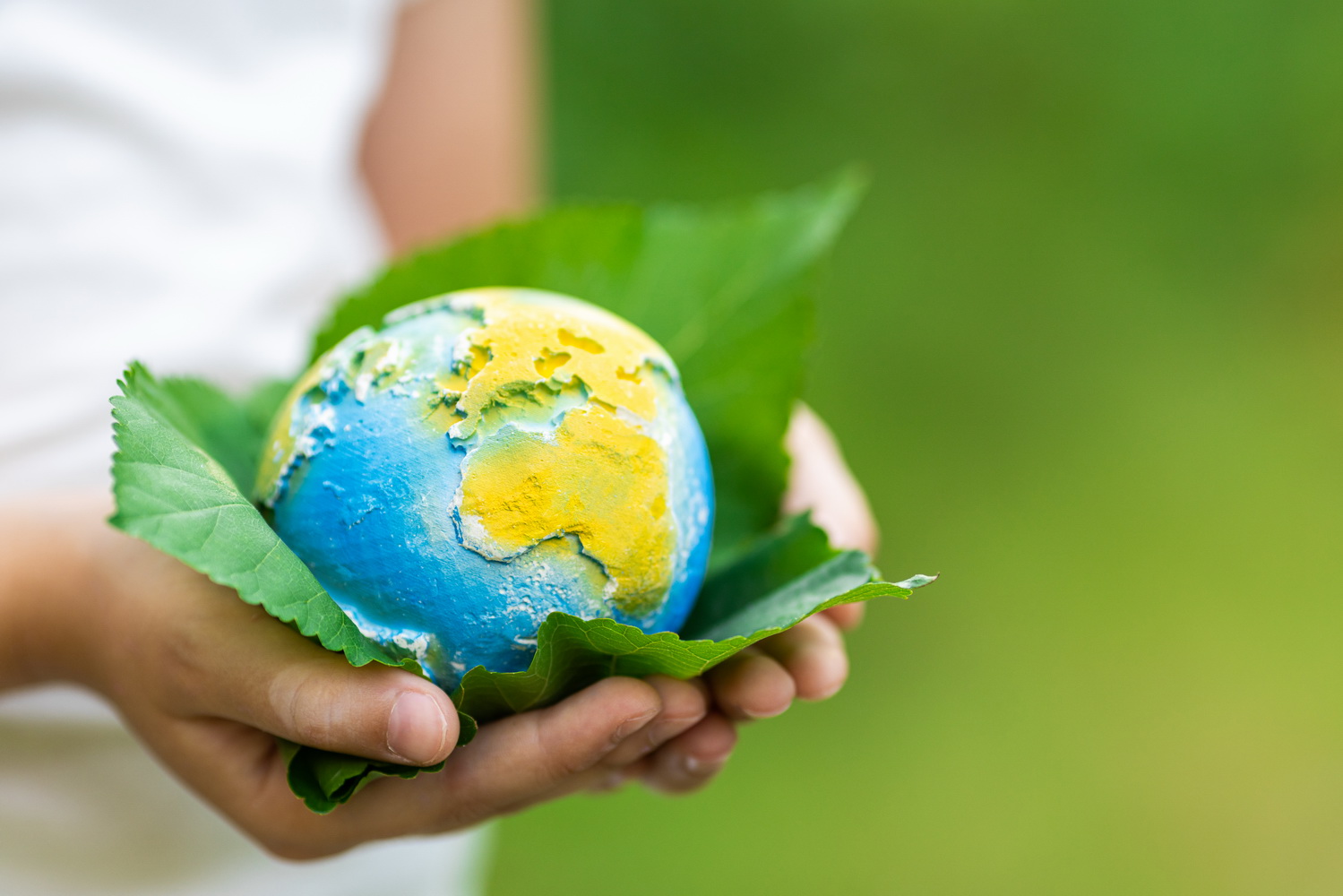


Understanding natural resources, our planet, and the environment is crucial for young children ages 3-8 because this early stage is when foundational attitudes and habits are formed. Engaging with these topics nurtures a sense of curiosity and fosters respect for the world around them. Early education about natural resources teaches children the basics of where things come from—like water, food, and energy—and how they are essential for our daily lives.
At this age, children are naturally inquisitive, so introducing concepts such as recycling, conservation, and the impact of human activity on the environment can shape their sense of responsibility and stewardship. By understanding that resources are finite and need to be used wisely, they are more likely to grow into adults who make environmentally conscious choices.
Moreover, early exposure to ideas about the environment can build a context for later learning in science and social studies, enhancing academic growth. Activities such as nature walks, gardening, simple recycling projects, and exploring local wildlife can make learning fun and memorable. It's not just about knowledge; it’s about cultivating a generation that feels connected to and passionately protective of our planet. Parents and teachers have an opportunity, and a responsibility, to instill these values at a crucial developmental stage.







