Understanding ecosystems Plants and Animals Worksheets for Ages 3-8
6 filtered results
-
From - To
Explore our vibrant "Understanding Ecosystems: Plants and Animals" worksheets, specially designed for ages 3-8! These engaging and interactive resources encourage young learners to discover the interconnections between plants and animals within their ecosystems. Ideal for educators and parents alike, each worksheet promotes essential skills such as observation, critical thinking, and creativity. Children will enjoy fun activities that enhance their awareness of biodiversity and the roles of different species. Dive into this playful world of science and help your child uncover the wonders of nature while building foundational knowledge about ecosystems! Perfect for classroom or home learning environments.
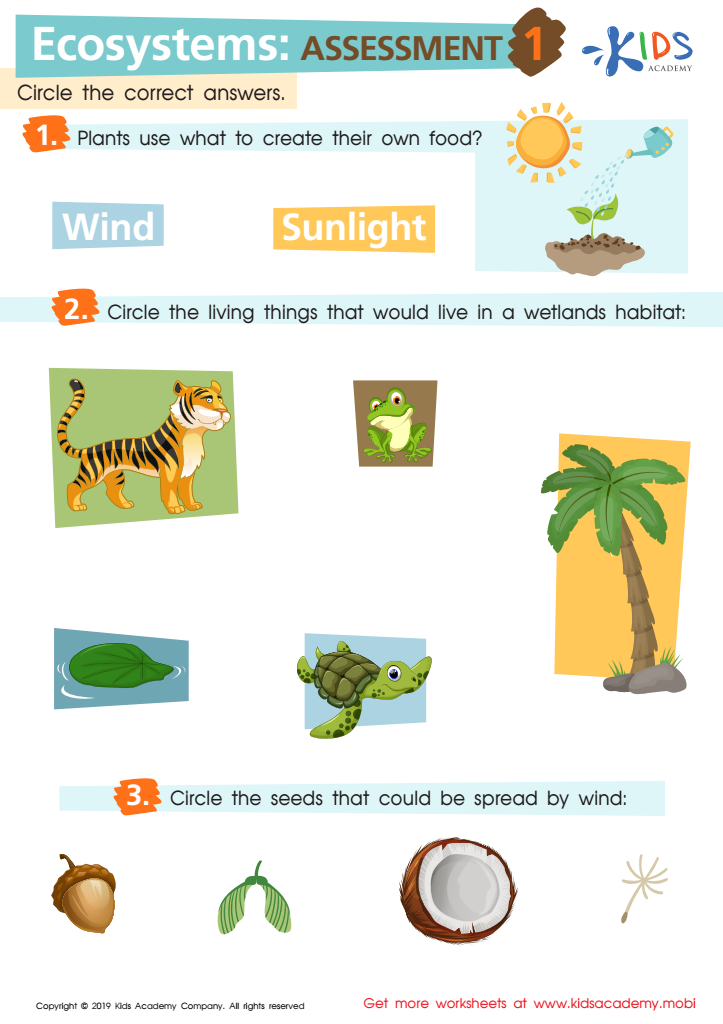
Ecosystems: Assessment 1 Worksheet
 Assign to My Students

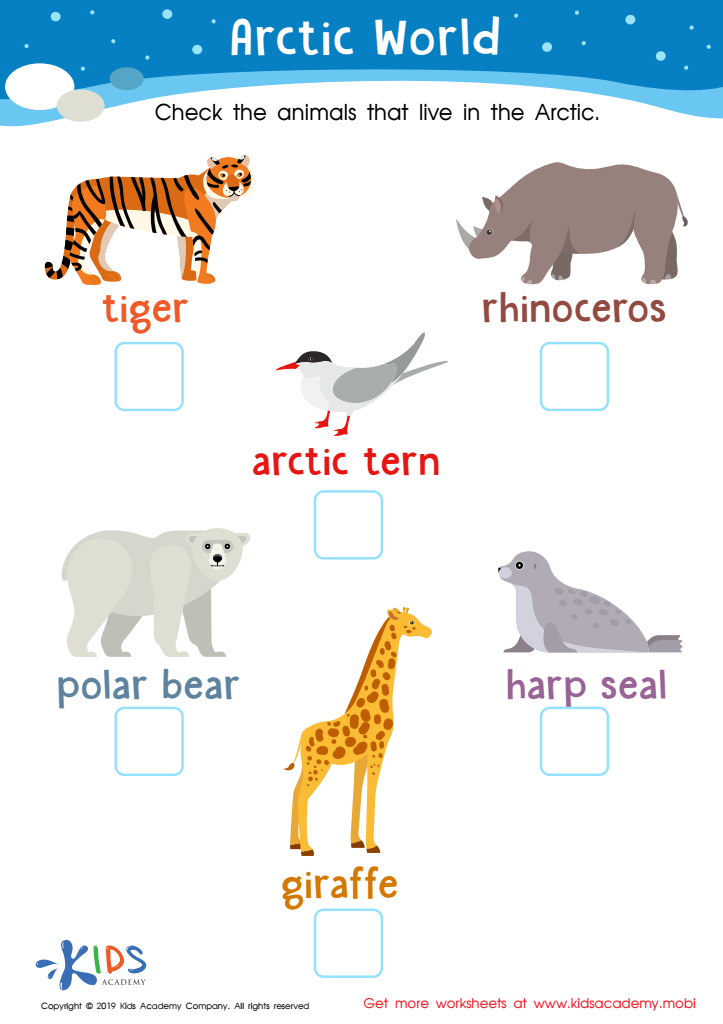
Arctic World Worksheet
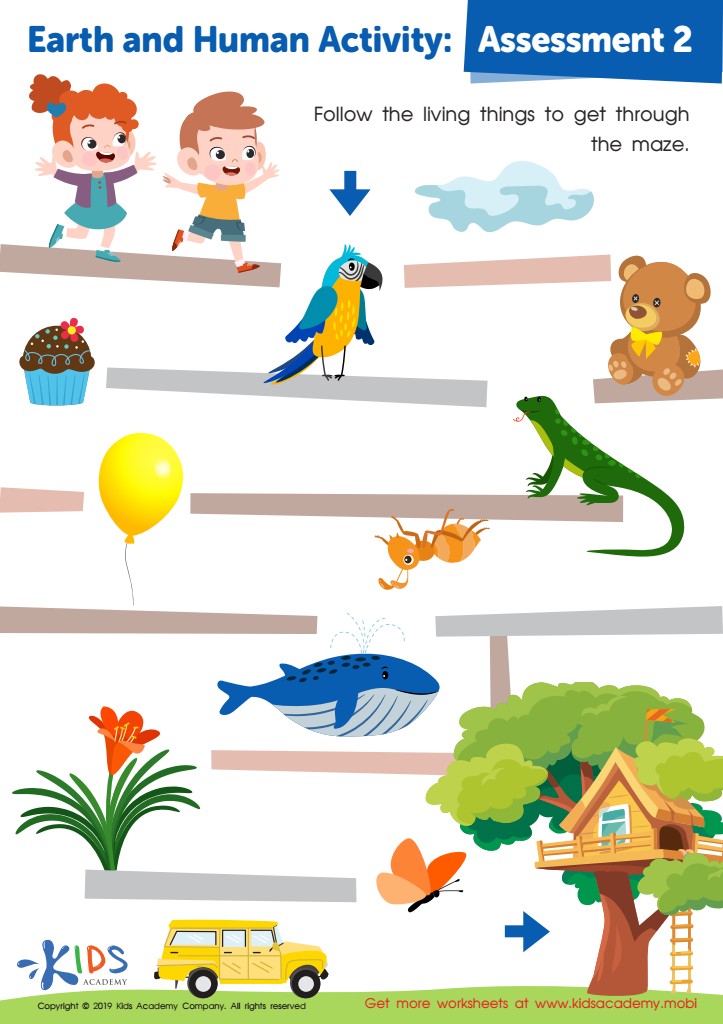
Earth and Human Activity: Assessment 2 Worksheet
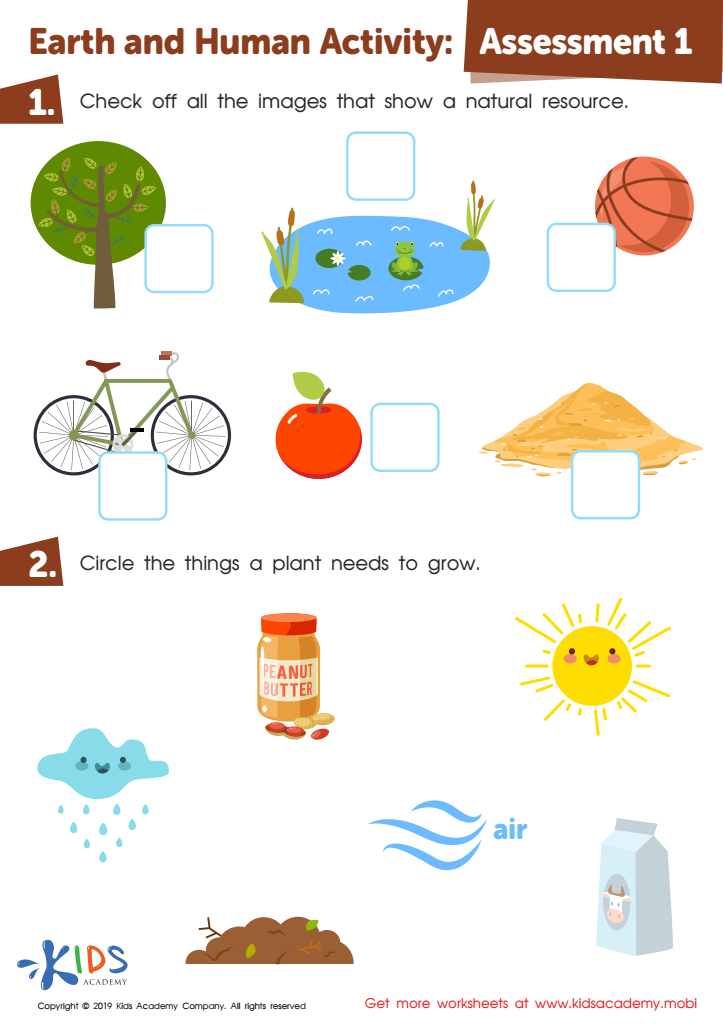
Earth and Human Activity: Assessment 1 Worksheet
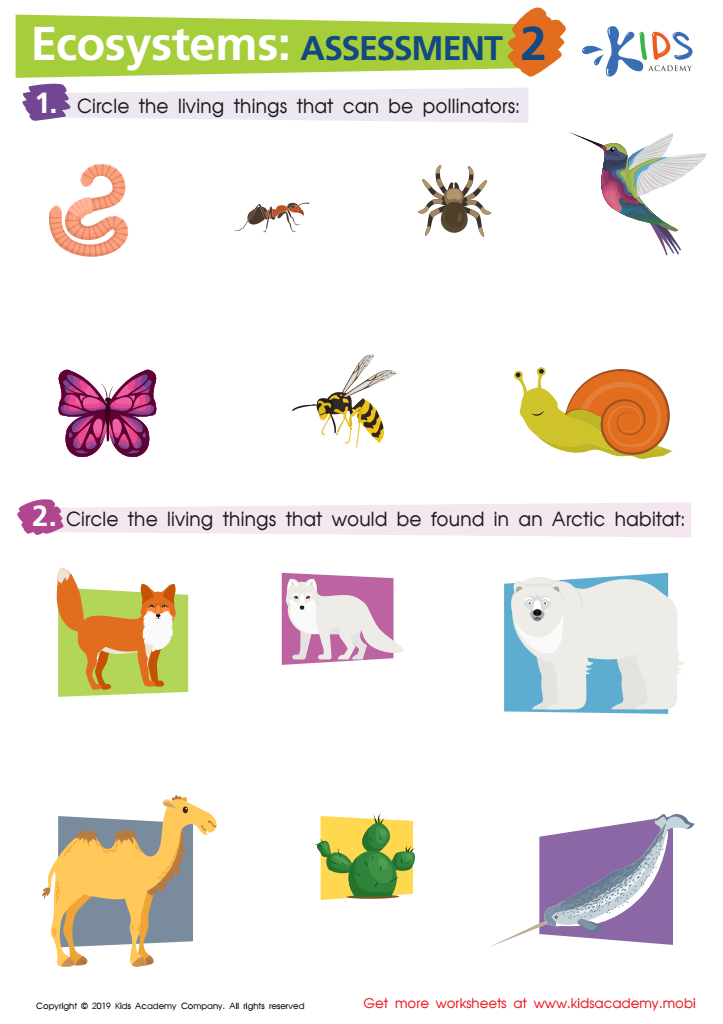
Ecosystems: Assessment 2 Worksheet
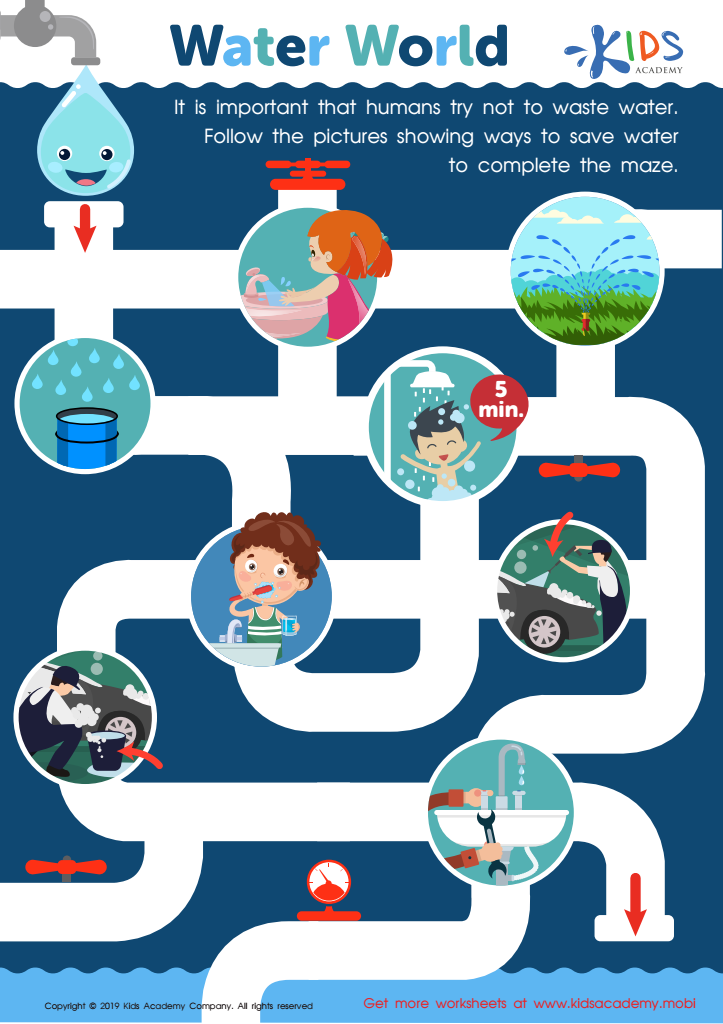
Water World Worksheet








Understanding ecosystems, particularly the relationships between plants and animals, is crucial for children aged 3-8 for several reasons. First, it fosters a sense of curiosity and appreciation for the natural world. At this age, children are naturally inquisitive, and learning about ecosystems can provide them with the foundation for lifelong environmental awareness.
Secondly, knowledge about ecosystems promotes critical thinking. Children learn how different living organisms interact with each other and their environments, helping them grasp concepts such as cause and effect, interdependence, and biodiversity. Through engaging activities such as planting seeds or observing animals, children develop observational skills and enhance their understanding of scientific processes.
Additionally, fostering this knowledge encourages stewardship for the environment. Children who understand the importance of ecosystems are more likely to grow into environmentally conscious adults, advocating for sustainability and conservation.
Finally, discussing ecosystems allows for interdisciplinary learning, combining science with art, math, and language development. Involving families and larger school communities in these discussions can strengthen connections and encourage collaborative exploration. In summary, teaching young children about ecosystems lays the groundwork for responsible citizenship and nurturing a deeper connection to the world around them.