Understanding pollination Plants and Animals Worksheets for Ages 3-8
3 filtered results
-
From - To
Explore the fascinating world of pollination with our "Understanding Pollination: Plants and Animals Worksheets" designed for kids aged 3 to 8! These engaging and interactive worksheets introduce young learners to the vital process of pollination, highlighting the roles of both plants and pollinators. Through colorful illustrations and fun activities, children will discover how plants reproduce and the importance of bees, butterflies, and other creatures in this process. Perfect for homeschooling or classroom settings, these worksheets promote creativity and critical thinking while fostering a love for science and nature. Dive into the wonders of the plant world and inspire environmental consciousness in children today!
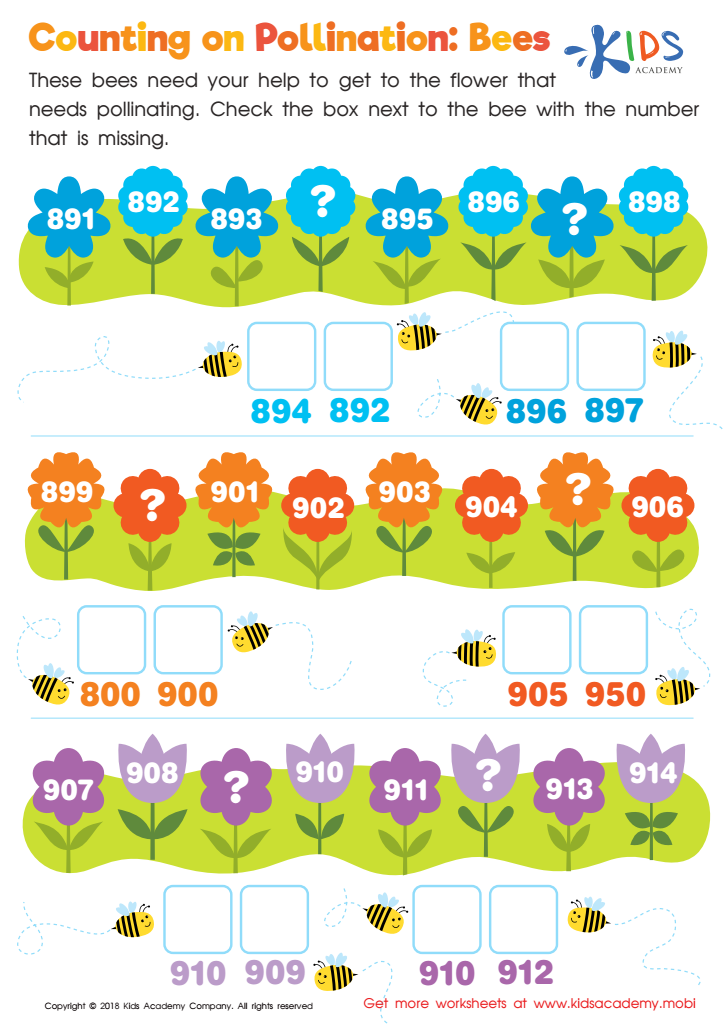
Counting on Pollination: Bees Worksheet
 Assign to My Students











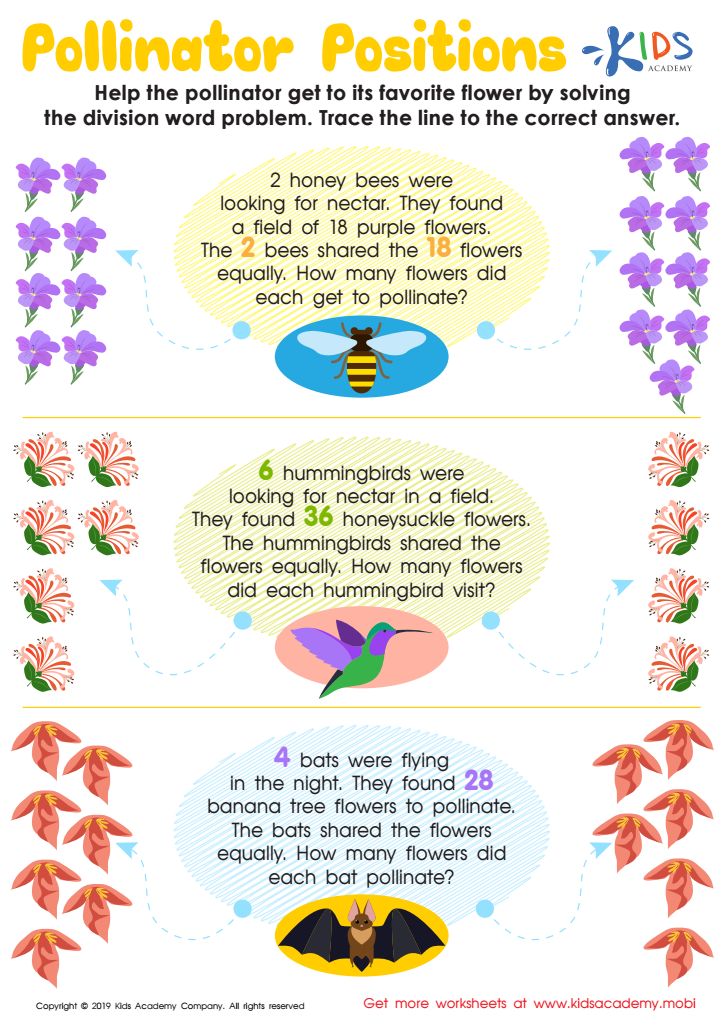
Pollinator Positions Worksheet
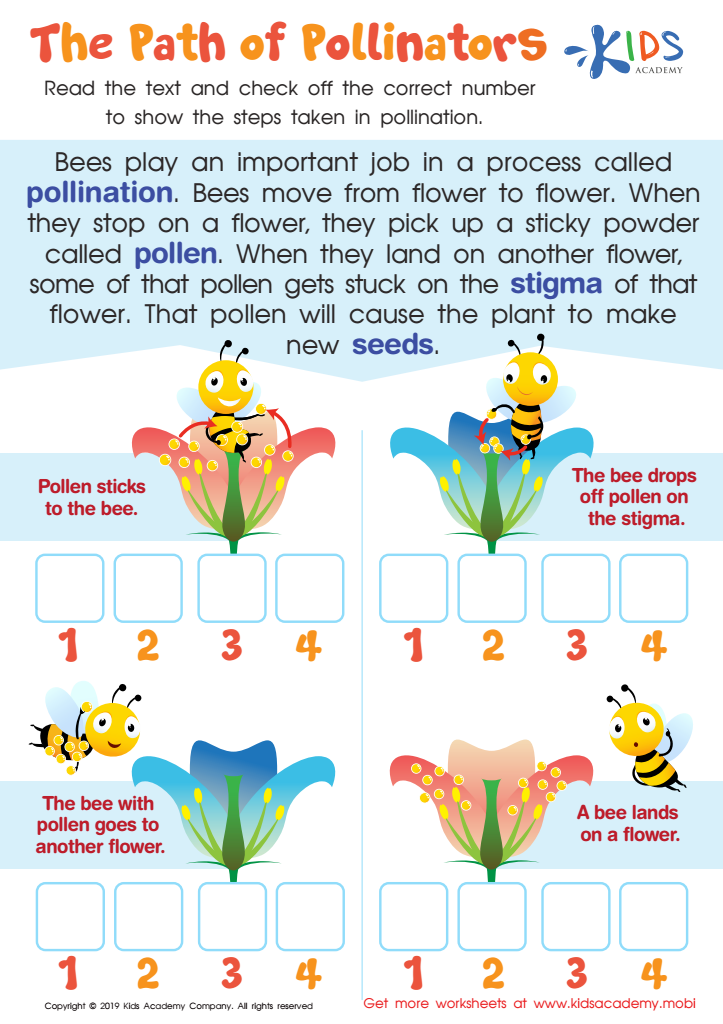
The Path of Pollinators Worksheet








Understanding pollination is crucial for children ages 3-8, as it lays the foundation for their ecological awareness and appreciation for nature. Teaching young learners about pollination highlights the interdependence of plants and animals, showcasing how bees, butterflies, and even wind play essential roles in the life cycle of many plants. This knowledge promotes curiosity about the natural world and encourages inquiry-based learning.
Pollination impacts many aspects of human life, including the food they eat. Introducing children to concepts like bees as pollinators can help them grasp the importance of biodiversity and the delicate balance of ecosystems. Educating children about these concepts fosters respect for nature and can instill lifelong habits of conservation and stewardship.
Moreover, discussions around pollination can be interactive and engaging, making use of storytelling, arts and crafts, or outdoor exploration. Such activities support cognitive development and enhance skills like observation and critical thinking. In an age of increasing environmental concerns, early education about pollination ensures children are well-informed citizens of tomorrow, capable of advocating for the protection of our planet, its creatures, and its plants. Ultimately, parents and teachers should care about this topic as it plants seeds for a sustainable future.








