Vocabulary development Plants and Animals Worksheets for Ages 3-8
4 filtered results
-
From - To
Enhance your child's understanding of the natural world with our engaging "Vocabulary Development Plants and Animals Worksheets for Ages 3-8." Specially designed for young learners, these worksheets focus on building fundamental vocabulary while exploring the fascinating realms of flora and fauna. Each activity is crafted to make learning fun and interactive, combining colorful illustrations with straightforward exercises. From identifying plant parts to naming various animals, children develop essential language skills that bolster their science knowledge. Ideal for both classroom use and home study, these worksheets provide a delightful and educational resource for early-grade students.
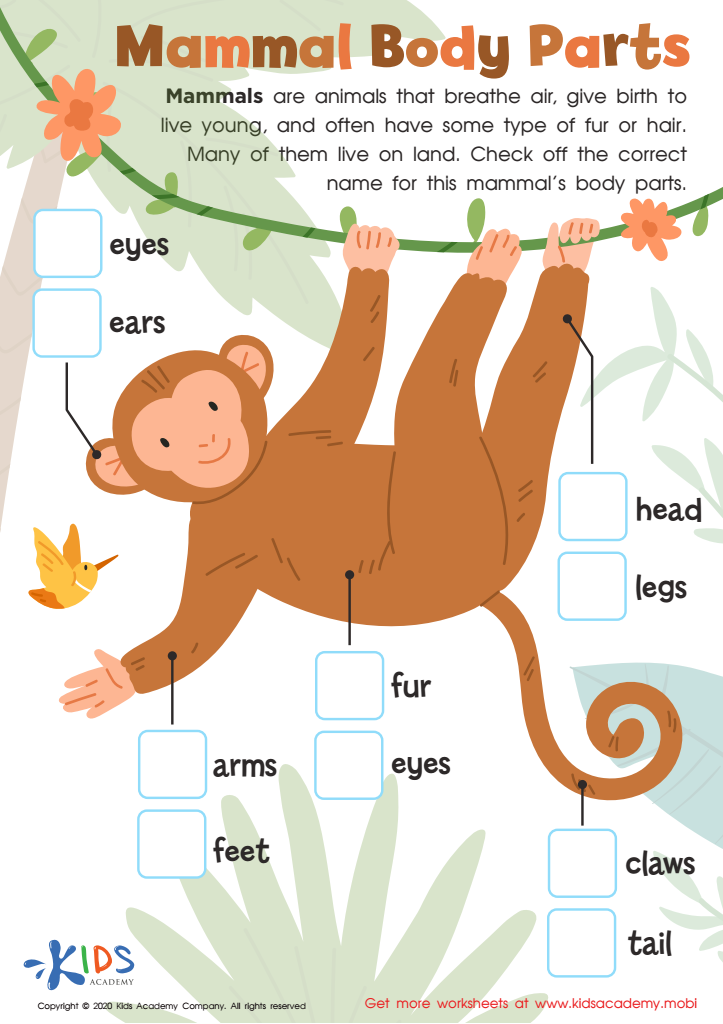
Mammal Body Parts Worksheet
 Assign to My Students











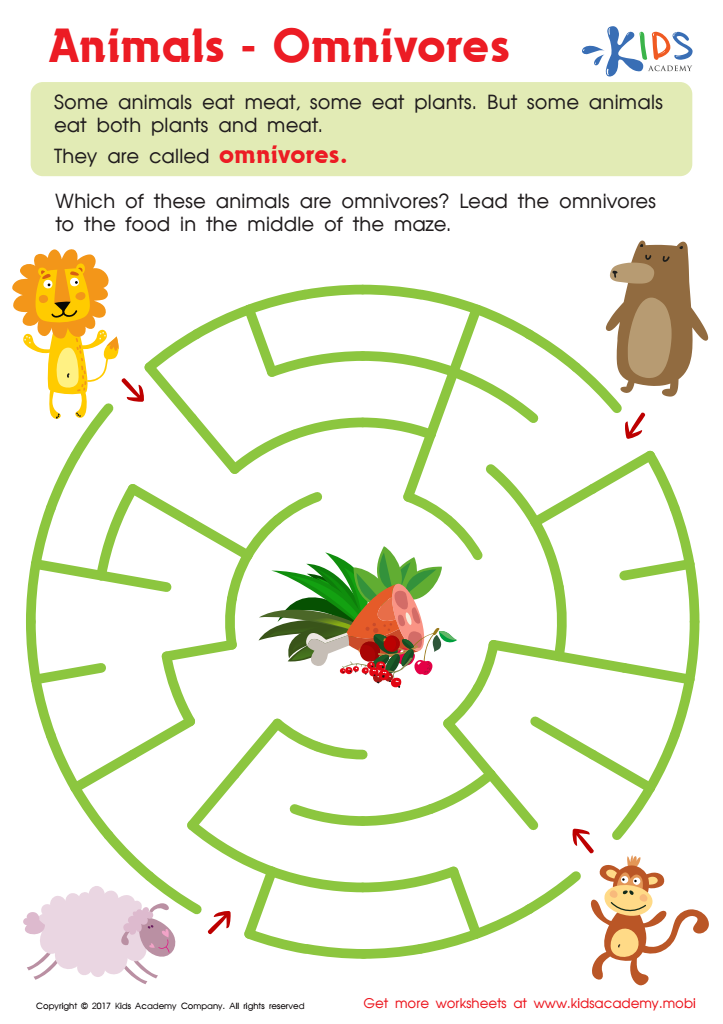
Omnivores Animals Worksheet
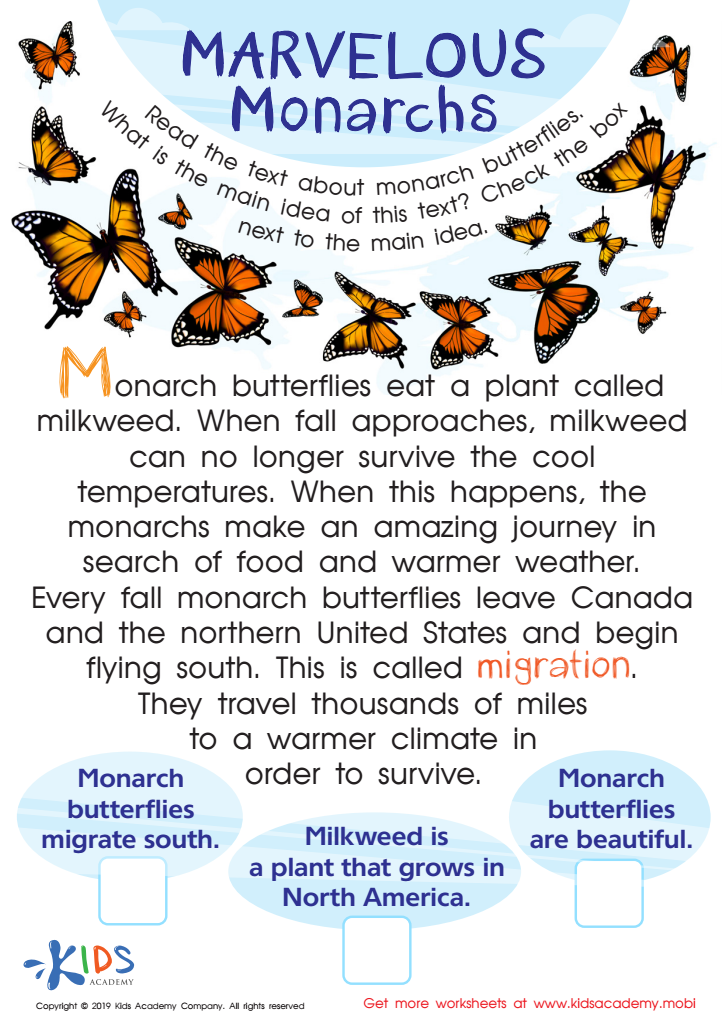
Marvelous Monarchs Worksheet
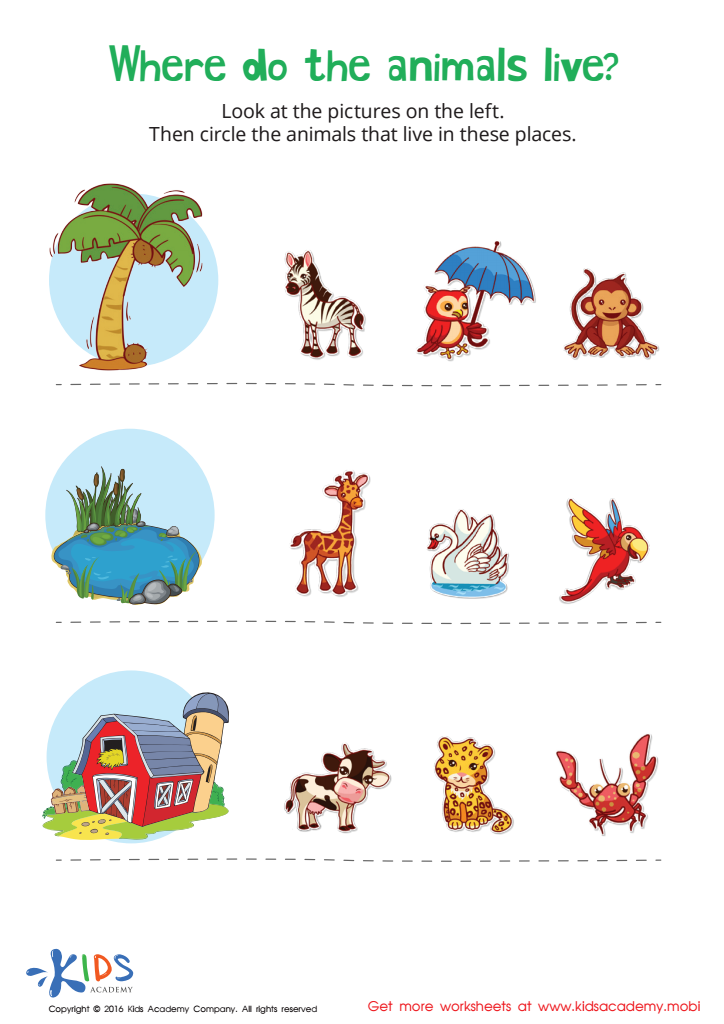
Where Animals Live Worksheet








Vocabulary development in young children is critical for multiple aspects of their growth, particularly in the study of plants and animals. For ages 3-8, this foundational knowledge opens doors to understanding the world around them, fostering curiosity and appreciation for nature.
Early vocabulary acquisition sets the stage for later learning. When children learn terms related to plants and animals—such as "roots," "stems," "photosynthesis," "herbivores," and "habitats"—they build a framework that helps them comprehend more complex scientific concepts in the future. This vocabulary not only aids in cognitive development but also improves language skills, reading comprehension, and communication abilities.
By introducing terms and concepts related to plants and animals early, parents and teachers encourage observational skills and critical thinking. Children start making connections like how plants provide oxygen and how animals have diverse roles in ecosystems. These realizations help in instilling an ecological and environmental consciousness, understanding interdependencies, and promoting responsible actions towards nature.
Moreover, discussing these topics can be engaging and exciting, fostering a love for learning. Activities like gardening, nature walks, and animal-assisted learning make the vocabulary tangible, which helps with retention and practical understanding. In essence, vocabulary development in this area enriches their knowledge, hones their capabilities, and nurtures a lifelong respect for the natural world.








