
Vocabulary Building Weather Worksheets for Ages 3-8
3 filtered results
Difficulty Level
Grade
Age
-
From - To
Subject
Activity
Standards
Explore our engaging Vocabulary Building Weather Worksheets designed specifically for children ages 3-8! These worksheets make learning fun and interactive, helping young learners expand their vocabulary related to weather concepts like sunny, rainy, stormy, and more. With a variety of activities that include matching words to images, fill-in-the-blanks, and coloring, kids will improve their language skills while gaining a foundational understanding of weather patterns. Perfect for classrooms or at-home learning, these worksheets encourage curiosity and support early literacy development. Download now and embark on a sunny learning adventure that brightens young minds with the wonders of weather!
Favorites
With answer key
Interactive
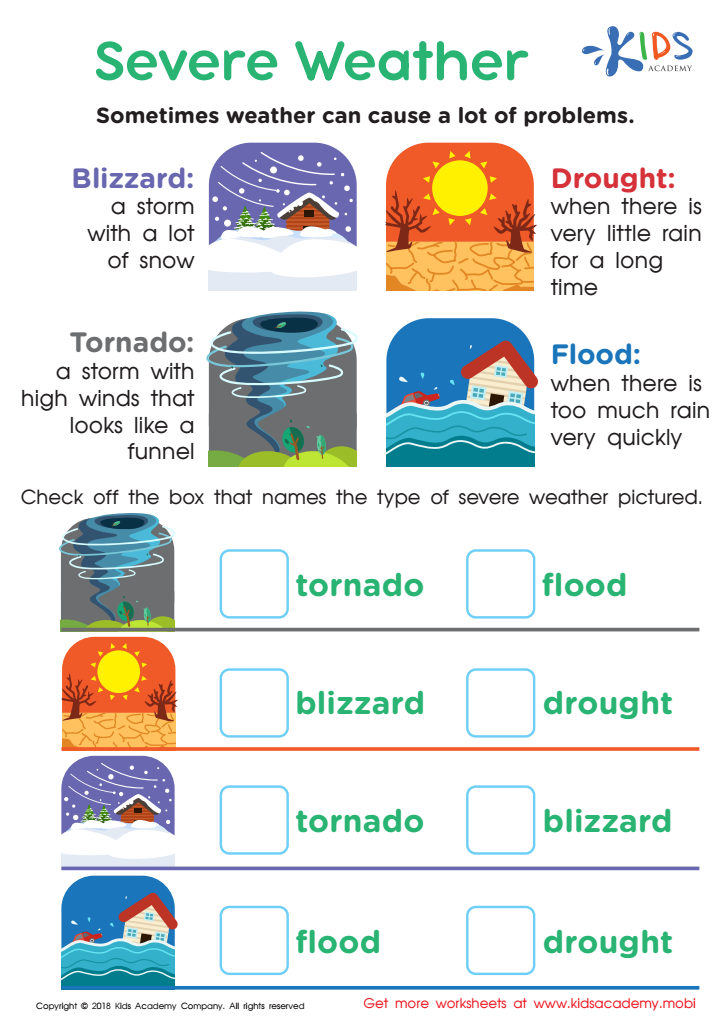
Severe Weather Worksheet
Weather can be dangerous, so teach your kids to stay safe with this interactive weather worksheet. Review the descriptions of tornadoes, blizzards, floods, and drought and match them with the colorful pictures. Tick the boxes to correctly identify each image and complete the sheet.
 Assign to My Students
Severe Weather Worksheet
Worksheet
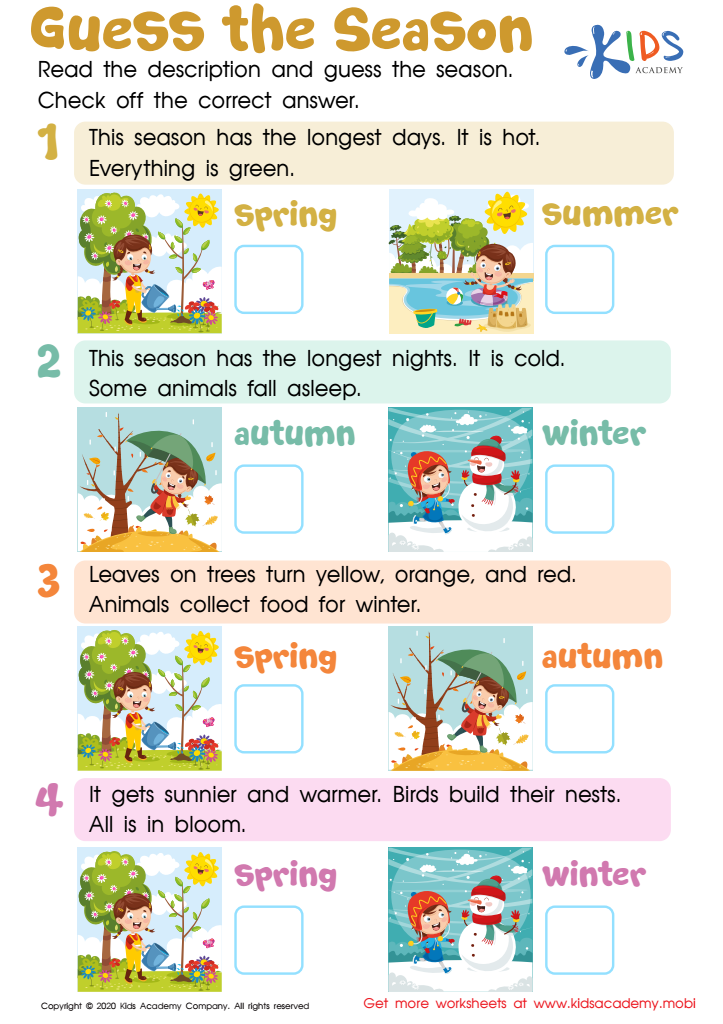
Guess the Season Worksheet
Winter and summer bring different weather! Help kids recognize the changes with this free Kids Academy PDF worksheet. Students read each description, look at the pictures, and check the box next to the season depicted. Make learning fun and easy with interactive activities.
Guess the Season Worksheet
Worksheet
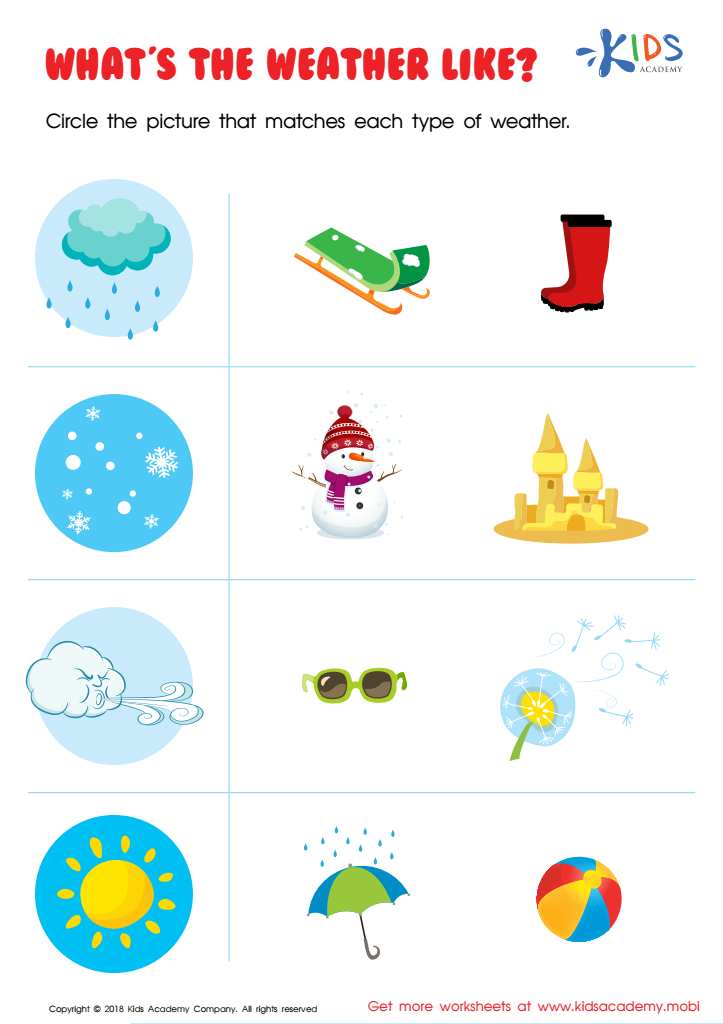
What's the Weather Like? Worksheet
Help budding meteorologists practice matching weather to seasons with this PDF worksheet. Picture clues help identify seasons and fine motor skills are practiced circling the correct weather patterns. Bright and engaging characters make learning fun and reinforce weather knowledge.
What's the Weather Like? Worksheet
Worksheet
Join Kids Academy for Free
Who is primarily going to use this learning content?








Vocabulary building in early childhood, particularly around themes like weather, is crucial for development. For children aged 3-8, vocabulary knowledge enhances communication skills, academic readiness, and cognitive development. When children learn specific terms related to weather—like sunny, rainy, windy, or precipitation—they not only expand their vocabulary but also improve their ability to observe, describe, and comprehend their surroundings.
Engaging children in discussions about weather fosters observation skills and encourages them to ask questions, promoting inquiry and critical thinking. This serves as a springboard for broader scientific and environmental understanding, essential in today’s world. Teachers and parents can integrate fun activities—like weather charts, storybooks about different weather events, or arts and crafts related to seasons—to make learning interactive, enjoyable, and memorable.
Moreover, strong vocabulary skills correlate with better literacy development. The more words children know, the more complex materials they can engage with as they grow. This foundational knowledge lays the groundwork for future learning across subjects, from science to social studies. By prioritizing weather-related vocabulary, parents and teachers equip children with essential skills that benefit not just language acquisition but overall cognitive and social development, enabling them to thrive academically and in everyday life.







