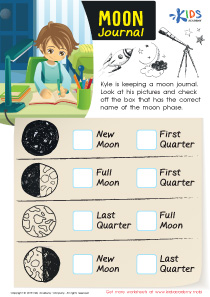
Weather identification Weather Worksheets for Ages 3-8
5 filtered results
-
From - To
Explore our engaging "Weather Identification Worksheets" designed for children aged 3-8! These fun and educational resources help young learners recognize and understand various weather conditions such as sunny, rainy, snowy, and cloudy. With vibrant illustrations and interactive activities, children will develop essential observation skills while enhancing their vocabulary related to weather phenomena. Perfect for both classroom use and at-home learning, these worksheets facilitate hands-on learning that makes discovering the wonders of the weather exciting. Equip your little ones with the knowledge they need about their environment while sparking their curiosity about the world around them. Download today and let the learning begin!
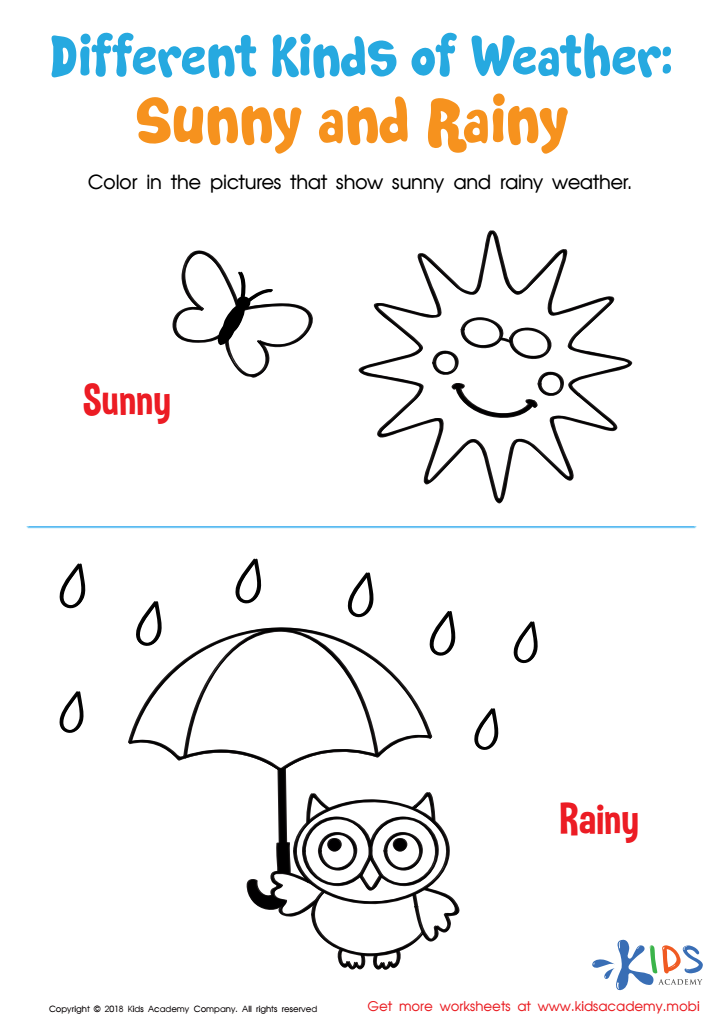
Different Kinds of Weather: Sunny and Rainy Worksheet
 Assign to My Students
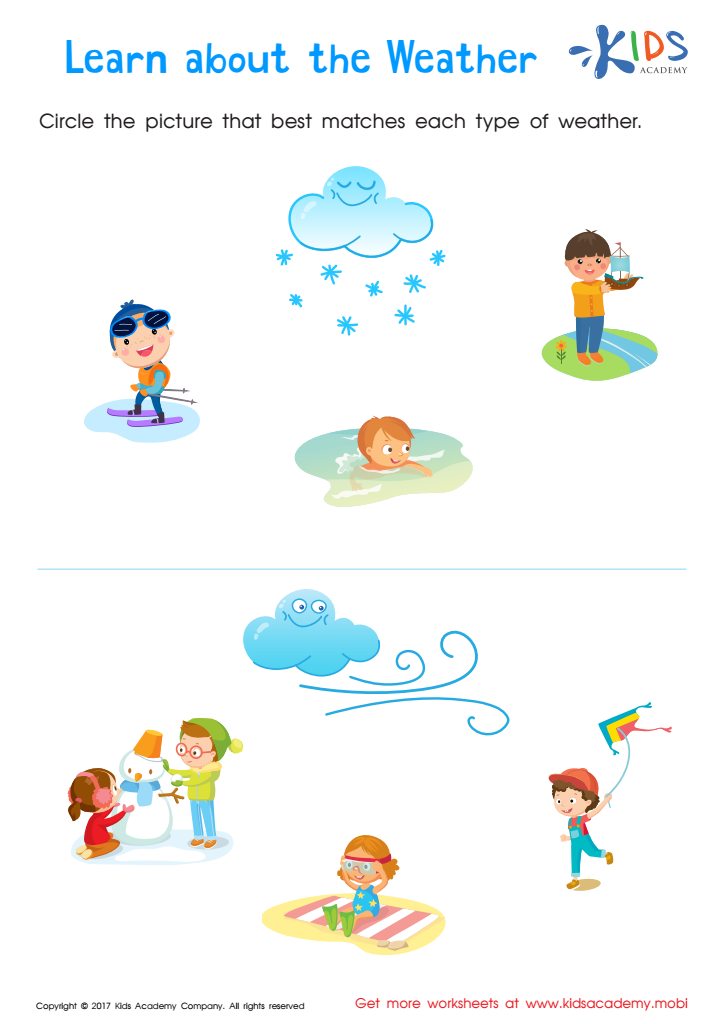
About the Weather Printable
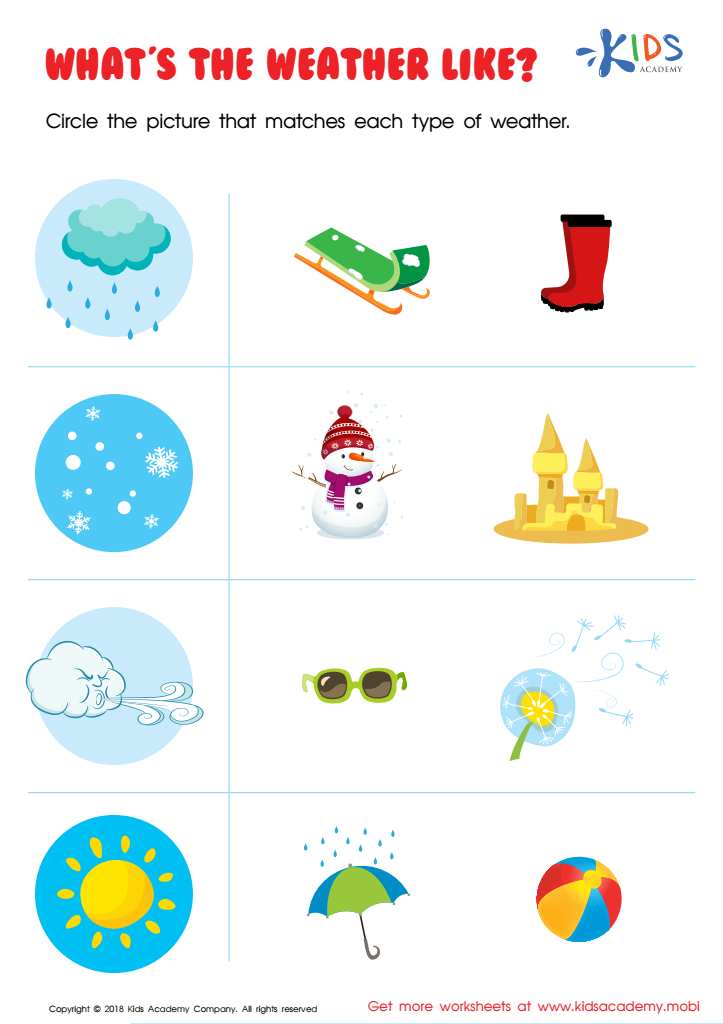
What's the Weather Like? Worksheet
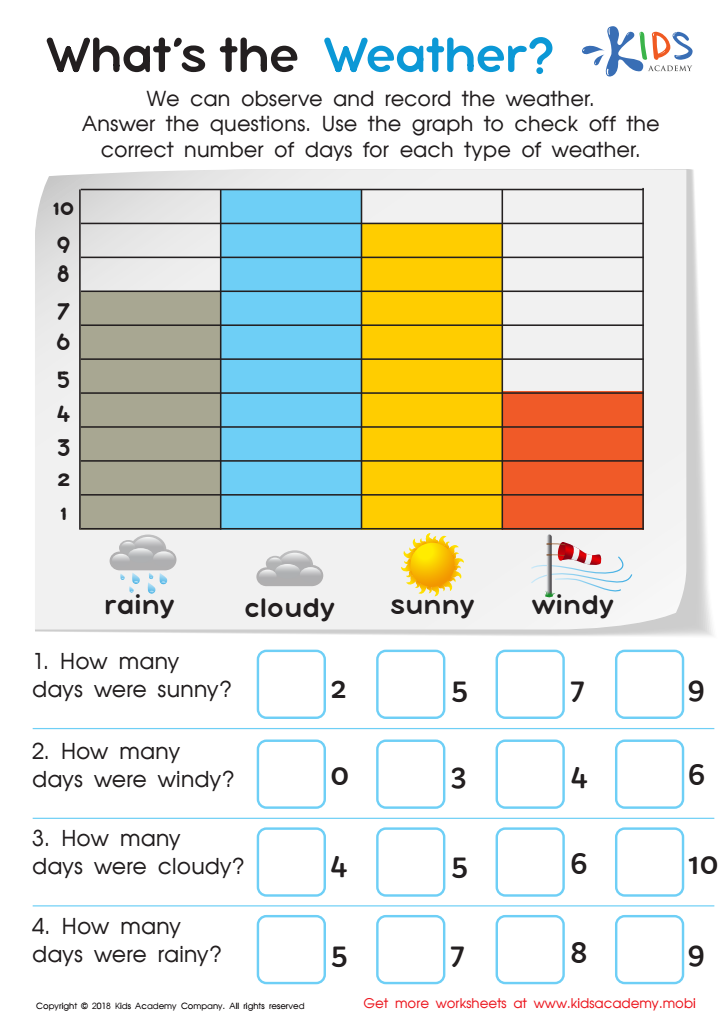
What's the Weather? Worksheet
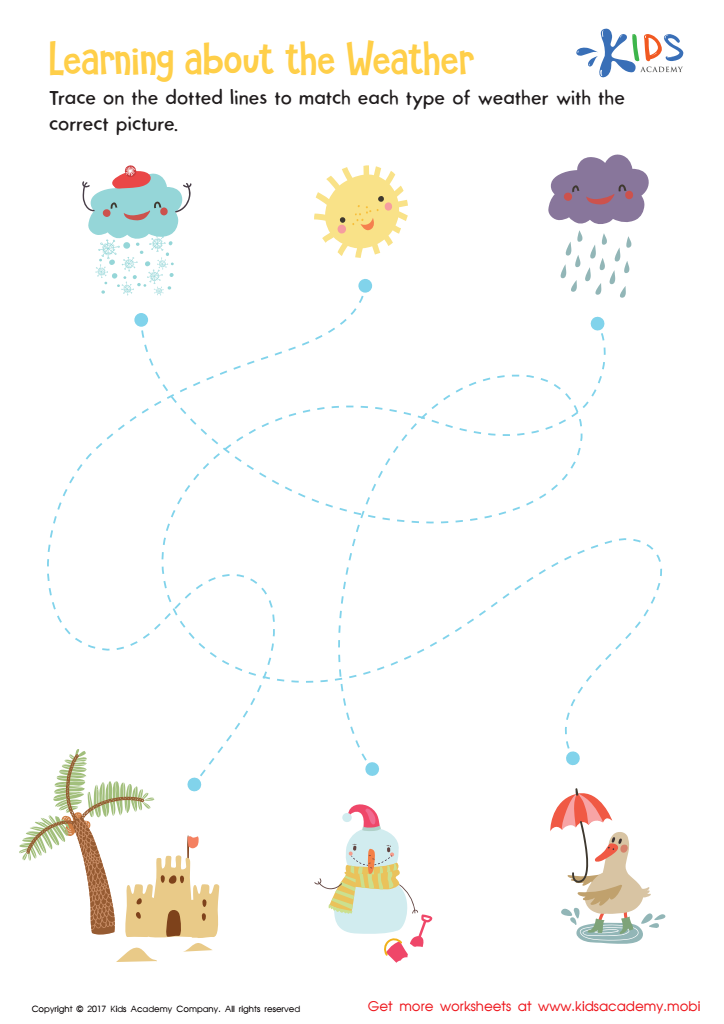








Teaching weather identification to children aged 3-8 is vital for several reasons. First, it cultivates curiosity about the world around them. By exploring concepts like rain, sun, snow, and storms, children become keen observers, eager to learn about nature's processes. This curiosity nurtures critical thinking and observational skills, laying a strong foundation for scientific understanding.
Second, understanding weather helps promote safety. Discussing different weather conditions equips young children with essential knowledge—what to wear when it's cold or how to recognize storm signals. This awareness encourages responsible behavior, fostering confidence and decision-making abilities in various weather scenarios.
Moreover, identifying weather is essential for early literacy and vocabulary development. Engaging with weather-related terms like "cloudy," "sunny," or "windy" expands their language skills and encourages effective communication.
Finally, incorporating weather studies can enhance social skills. Children often discuss and share personal experiences related to the weather, which fosters collaboration and enhances their social interactions.
In essence, teaching weather concepts to young children promotes exploration, safety awareness, language skills, and social development, making it a crucial area of focus for parents and teachers alike.