Governance and Civics Worksheets for Ages 3-8 - Page 3
51 filtered results
-
From - To
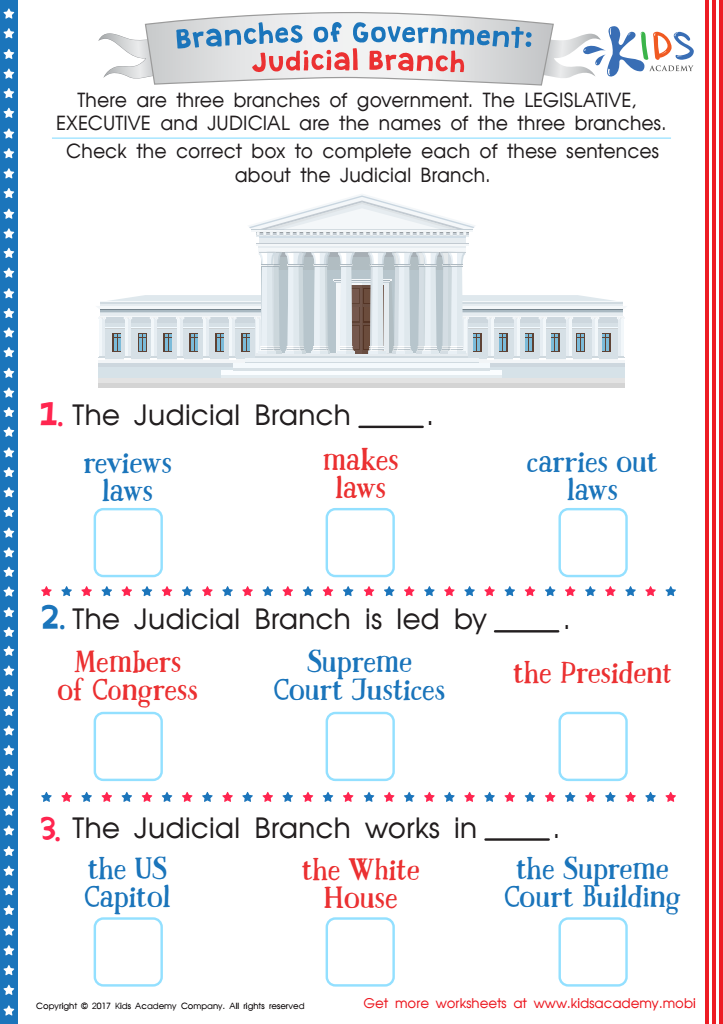
Braches of the Government: Judicial Branch Worksheet
 Assign to My Students
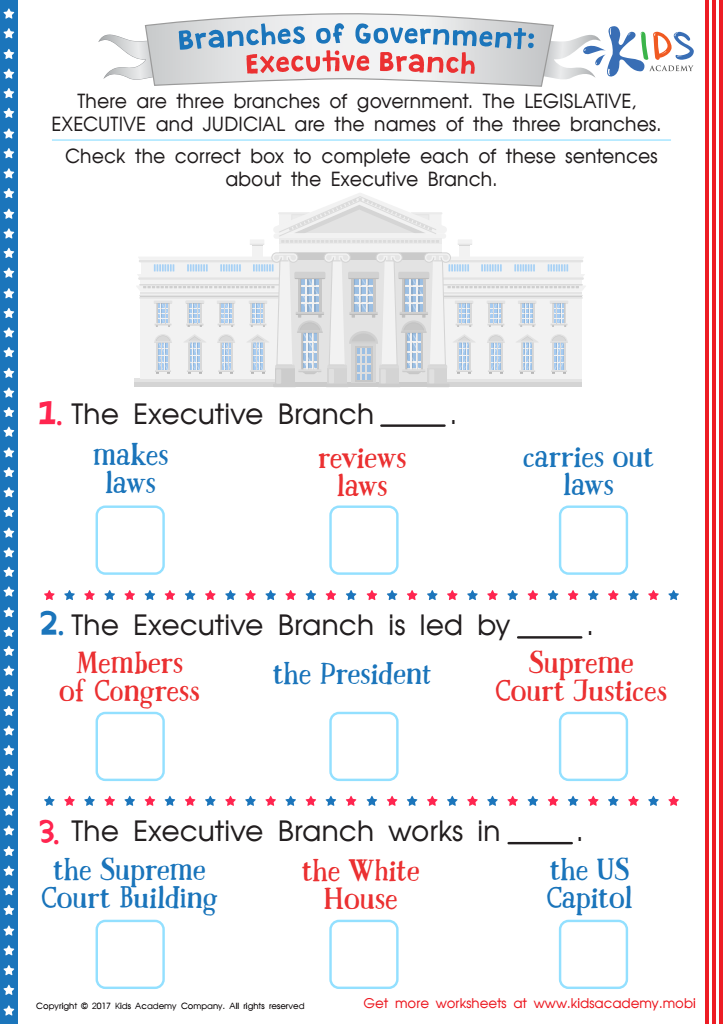
Branches of the Government: Executive Branch Printable
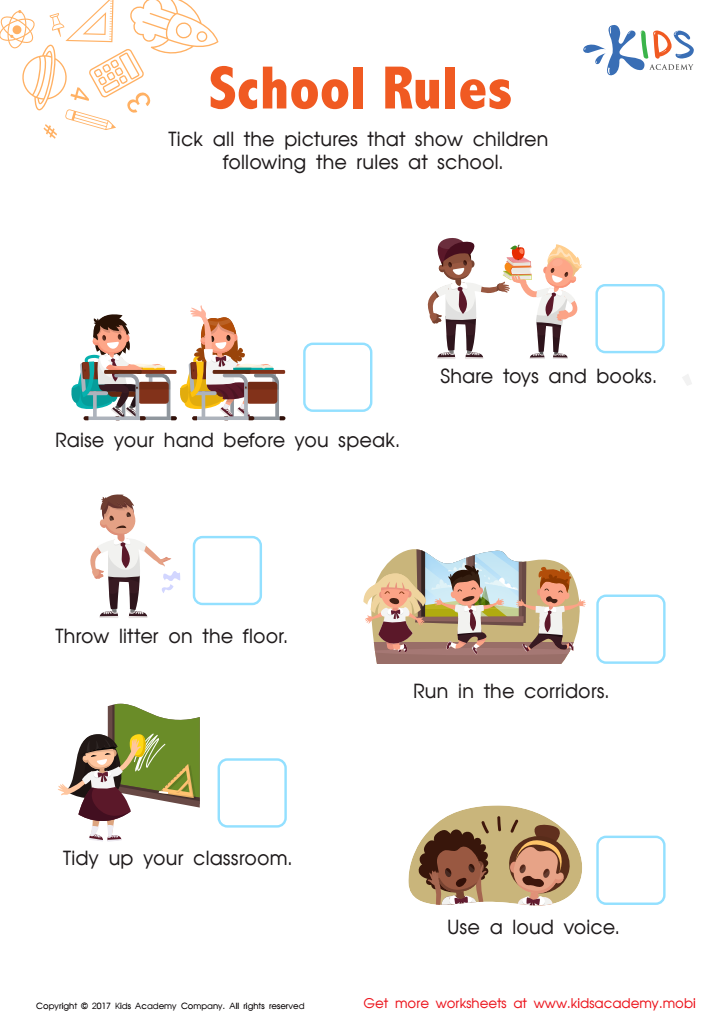
School Rules Worksheet


Parents and teachers should prioritize governance and civics education for children ages 3-8 because it lays the groundwork for responsible citizenship and community engagement. Early exposure to these concepts helps young minds understand the importance of rules, fairness, and cooperation in their daily interactions. By exploring ideas about community, authority, and rights, children develop critical thinking skills and learn how their actions impact others.
Introducing governance and civics at a young age fosters empathy and respect for diversity. Children begin to appreciate different viewpoints and recognize the importance of dialogue in resolving conflicts. These lessons promote the values of sharing, teamwork, and contributing to the greater good, which are foundational to a healthy society.
Furthermore, engaging children in civics-related activities, such as role-playing or participating in classroom decision-making, cultivates a sense of belonging and accountability. As they become more aware of their roles within their families, schools, and communities, children gain the confidence to express their opinions and advocate for themselves and others.
Incorporating governance and civics education in early childhood paves the way for informed, conscientious citizens who recognize their power to effect change in the world around them throughout their lives.








