Developing analytical skills Social Studies Worksheets for Ages 3-8
4 filtered results
-
From - To
Enhance your child's learning experience with our Developing Analytical Skills Social Studies Worksheets, designed specifically for ages 3-8. These engaging resources foster critical thinking by encouraging young learners to explore concepts such as community roles, maps, and cultural diversity. Through fun activities and captivating illustrations, children will develop essential analytical skills as they analyze information, draw conclusions, and connect ideas. Our worksheets promote interactive learning, making it easy for parents and educators to support cognitive growth. Discover a variety of age-appropriate exercises to inspire curiosity and deepen understanding of the world, laying the groundwork for lifelong analytical abilities in young minds!
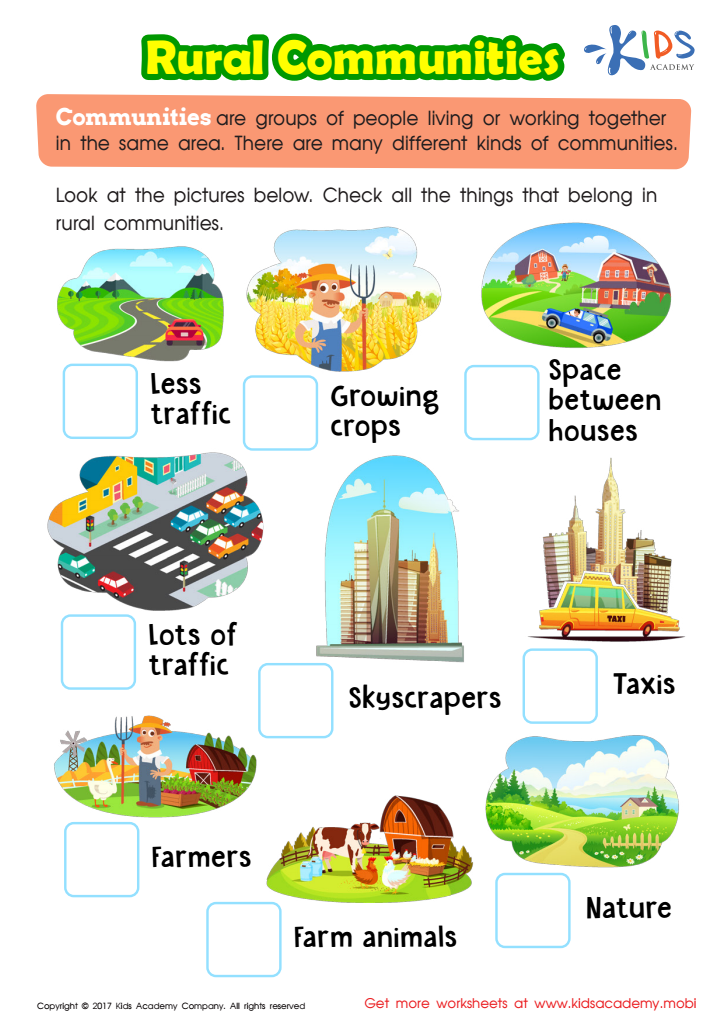
Rural Communities Printable
 Assign to My Students

What Needs Electricity Printable
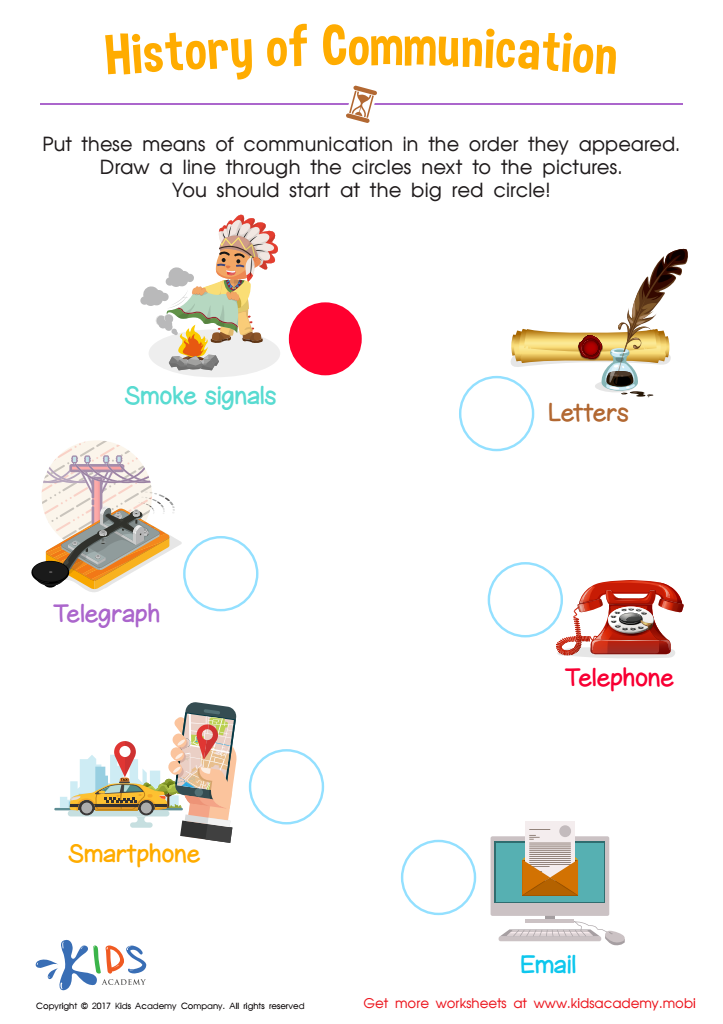
History of Communication Worksheet
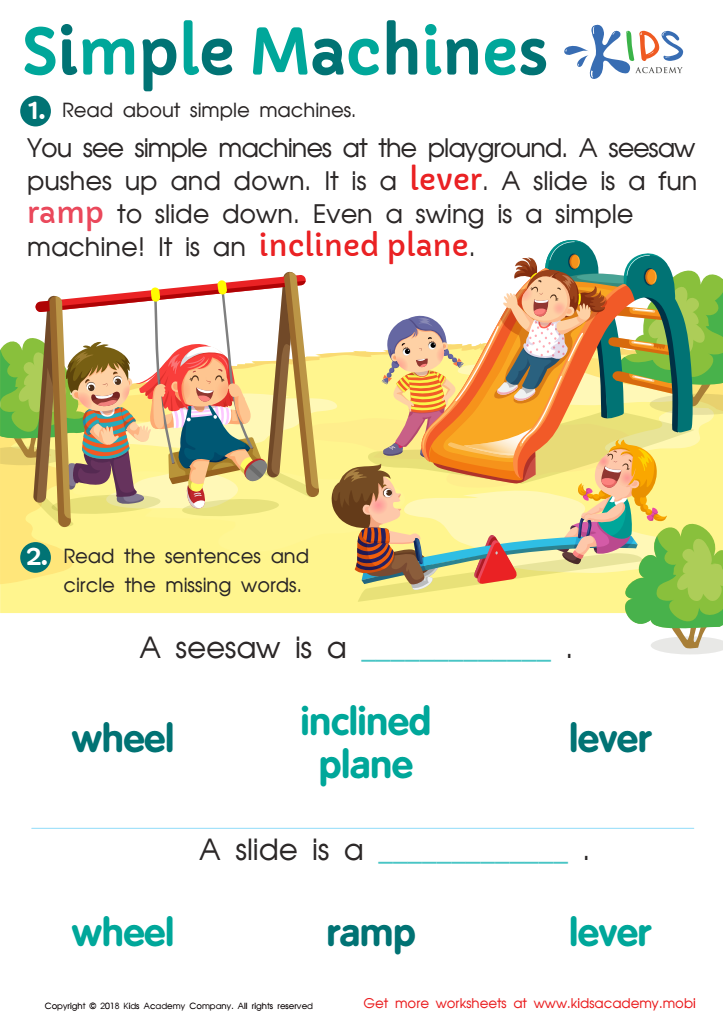
Simple Machines Worksheet








Developing analytical skills in Social Studies for children aged 3-8 is crucial for nurturing informed, critical-thinking individuals. Early exposure to basic concepts of geography, history, culture, and community helps children understand their place in the world and fosters empathy for others. By engaging with these subjects, young learners begin to ask questions, investigate answers, and think critically about different perspectives and contexts.
Parents and teachers play a vital role in this developmental process. Analytical skills enable children to identify patterns, make connections, and construct their own understanding of complex societal issues. These skills enhance their ability to interpret information and form reasoned opinions, fostering responsible citizenship even at a young age.
Moreover, Social Studies promotes social awareness and emotional intelligence, as children learn to appreciate diversity, recognize the importance of cooperation, and value ethical considerations. By integrating these subjects into activities and discussions, educators and parents can guide children in connecting their personal experiences to broader societal contexts.
Ultimately, cultivating analytical skills in young learners prepares them for academic success, empowering them to navigate a complex world with confidence and insight, fostering not only their growth as students but also as active, thoughtful members of society.