Understanding adjectives Writing Worksheets for Ages 3-8
5 filtered results
-
From - To
Welcome to our "Understanding Adjectives Writing Worksheets" designed specifically for children ages 3 to 8! These engaging worksheets help young learners explore the world of adjectives, enhancing their vocabulary and descriptive skills. Through fun and interactive exercises, children will identify and use adjectives in sentences, encouraging creativity and boosting their writing abilities. Our carefully crafted worksheets cater to various learning levels, making them perfect for home or classroom use. Foster a love for language and improve essential writing skills with these exciting resources. Dive into the adventure of adjectives today and watch your child's imagination flourish!
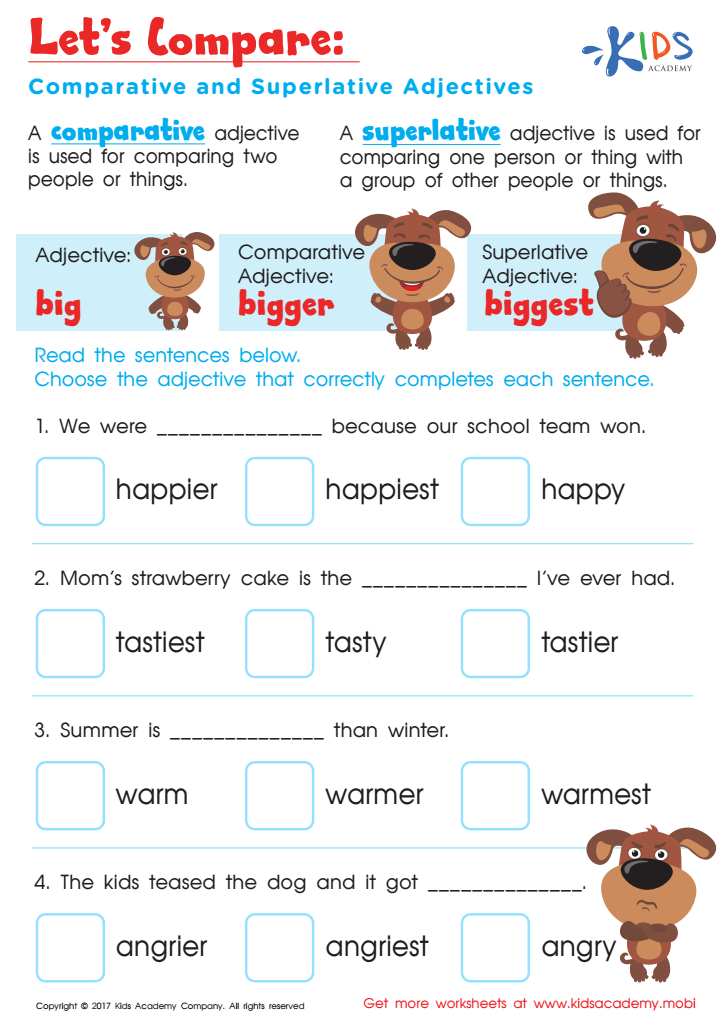
Comparative and Superlative Worksheet
 Assign to My Students
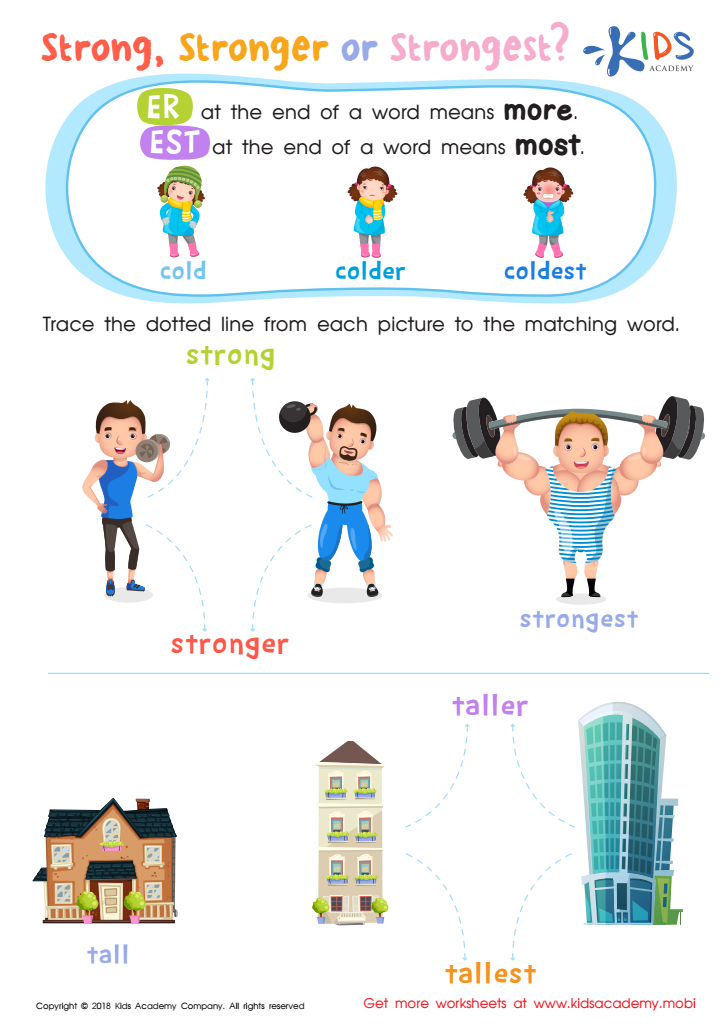
Strong or Stronger? Worksheet
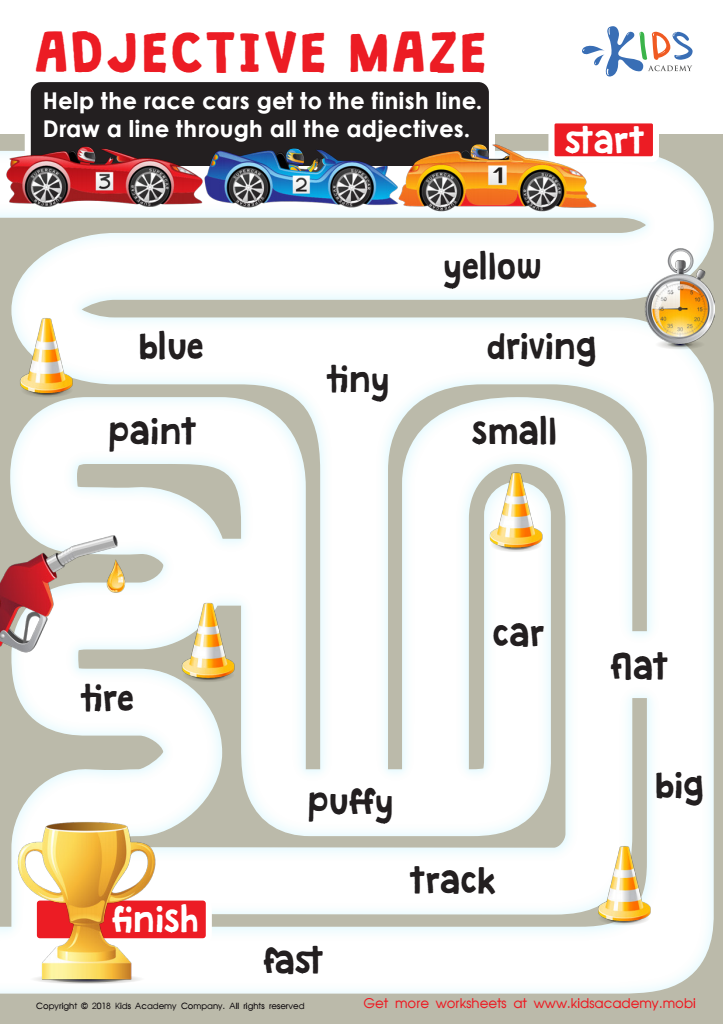
Adjective Maze Worksheet
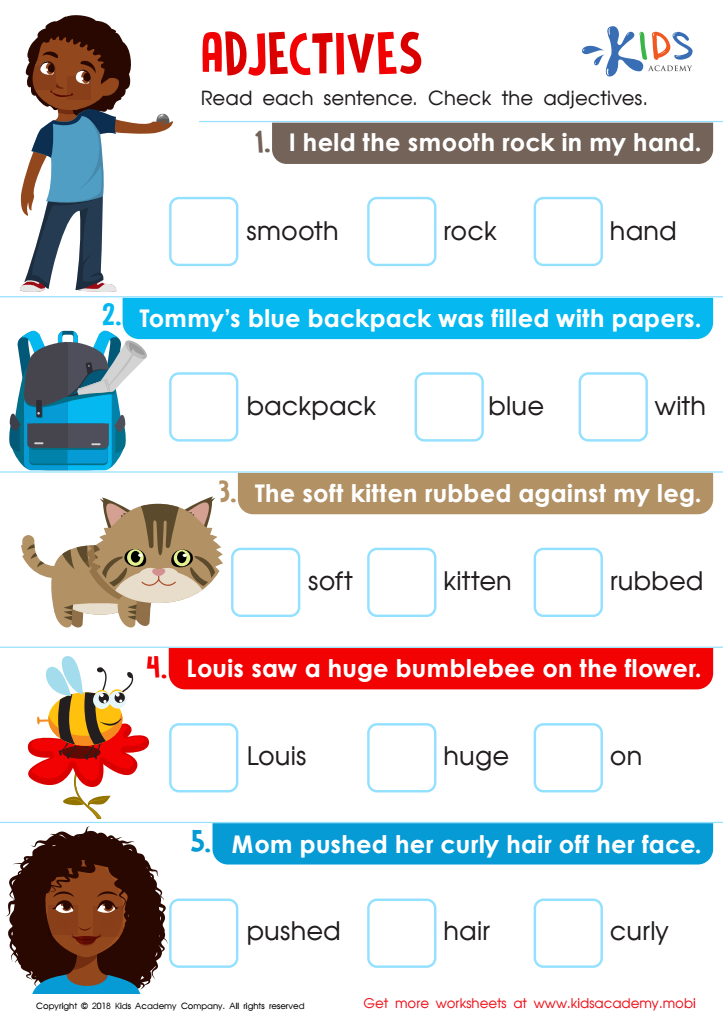
Adjectives Worksheet
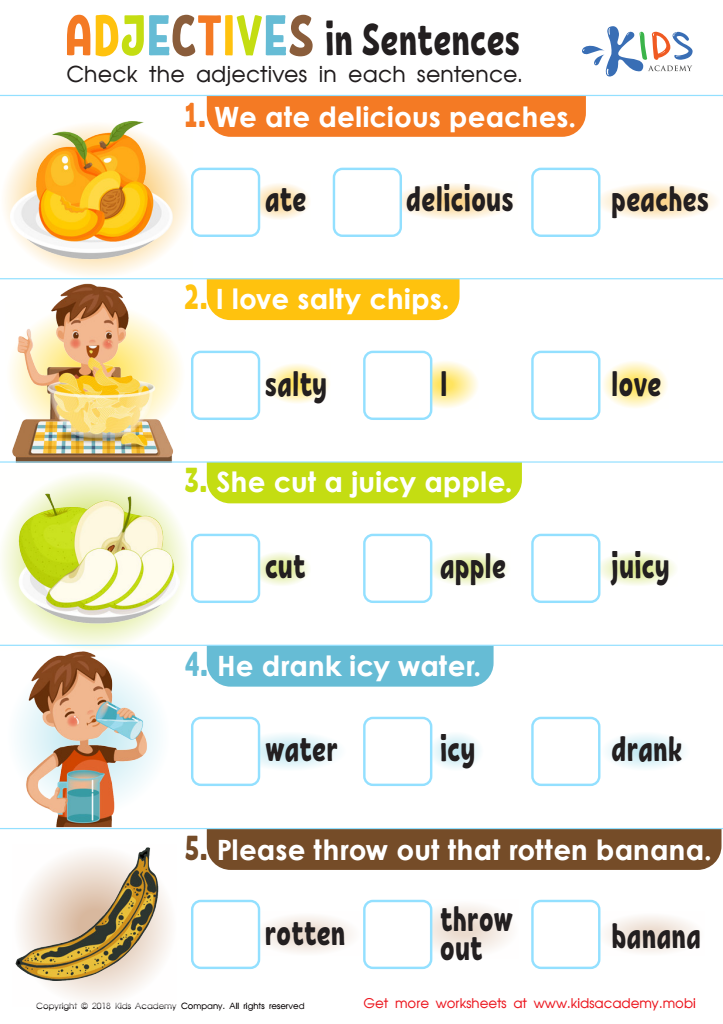
Adjectives in Sentences Worksheet







Understanding adjectives is crucial for young learners aged 3-8, as they form the building blocks of language development and literacy. Adjectives enhance communication by adding detail, enabling children to express themselves clearly and vividly. When children learn to identify and use adjectives, they enrich their vocabulary, which is essential for reading comprehension and writing skills. For parents and teachers, introducing adjectives during this formative stage helps children develop their creativity and imaginative expression, making storytelling more engaging.
Moreover, adjectives play a significant role in helping children categorize and understand the world around them. For instance, using adjectives to describe objects fosters observational skills and critical thinking. This understanding also aids in their emotional development, as it encourages them to explore and articulate their feelings with greater precision.
Encouraging the use of adjectives in everyday conversations, storytelling, and writing promotes not only language skills but also boosts confidence. As children practice using adjectives, they become more enthusiastic and capable writers and communicators. By focusing on adjectives, parents and teachers can empower children to convey their thoughts and experiences more richly, laying a strong foundation for successful communication in their academic journey and beyond.








