Adding in the Sea Worksheets for Ages 3-9 - Page 4
77 filtered results
-
From - To
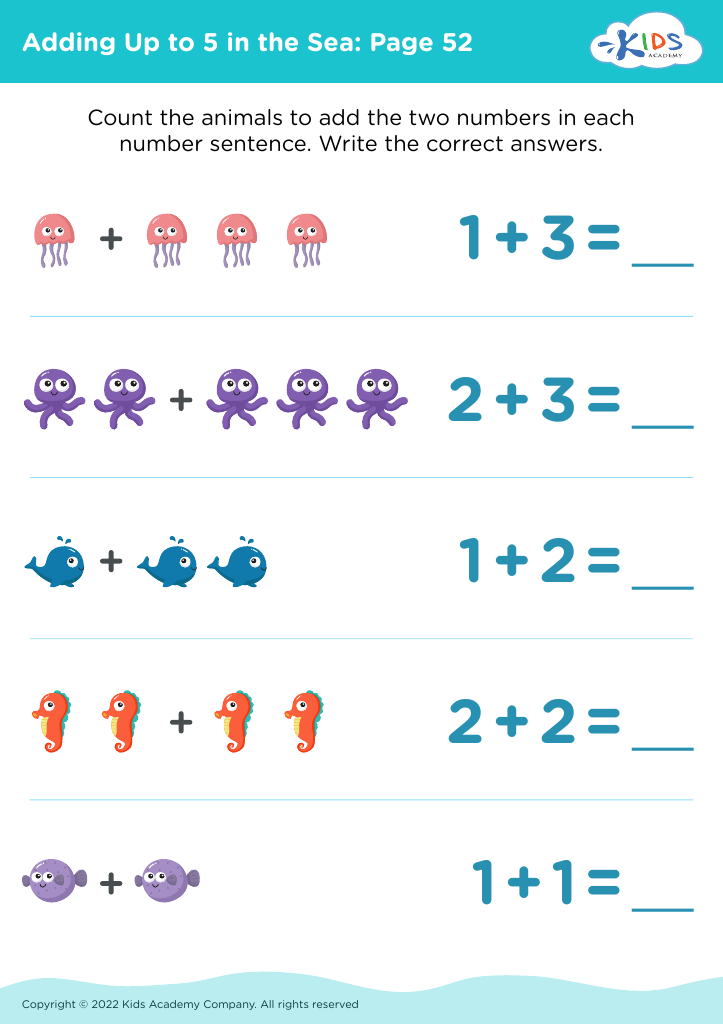
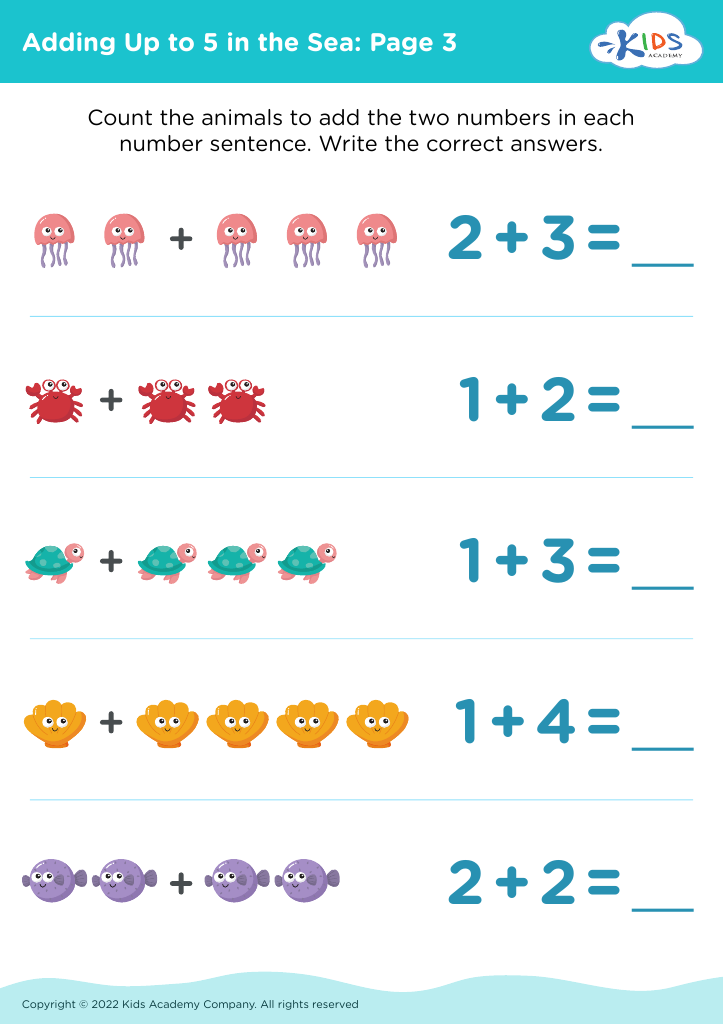
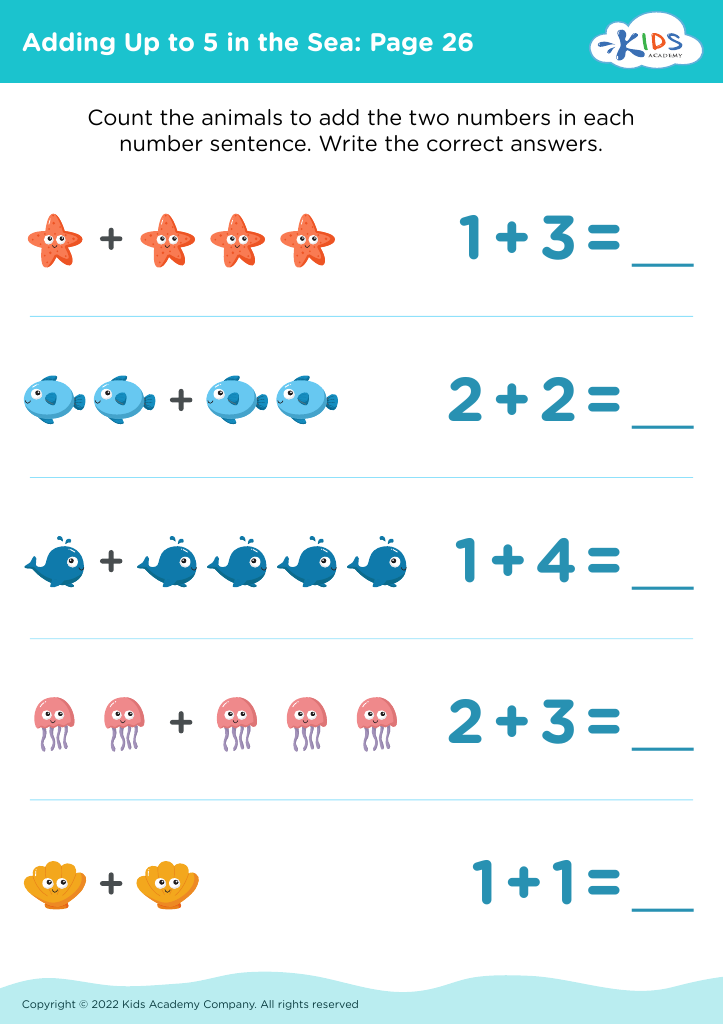
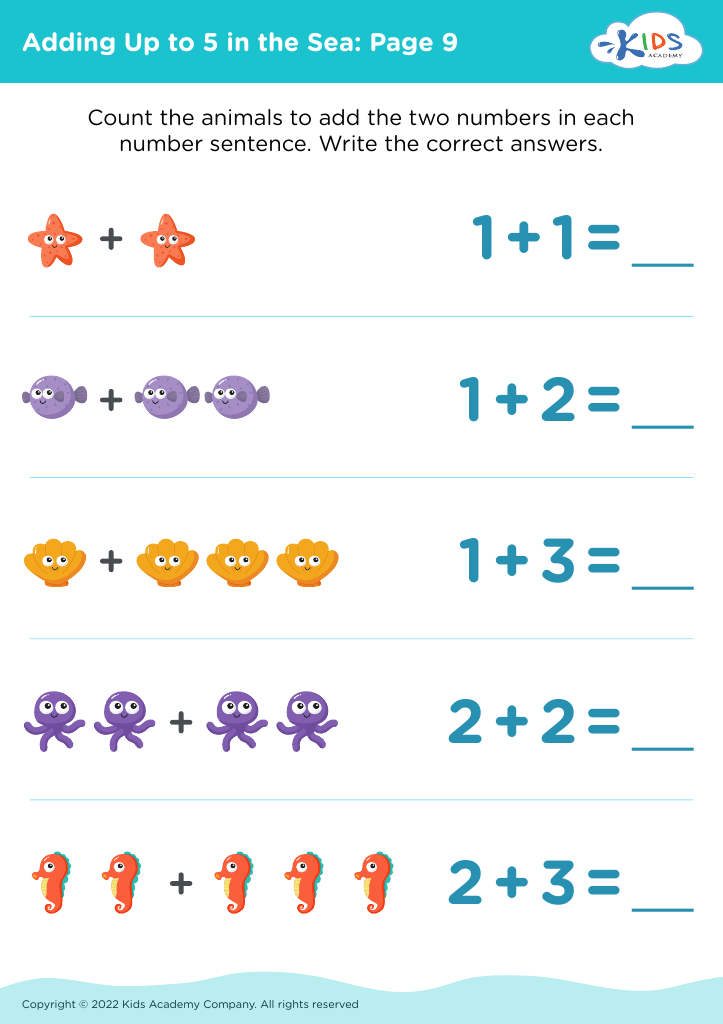
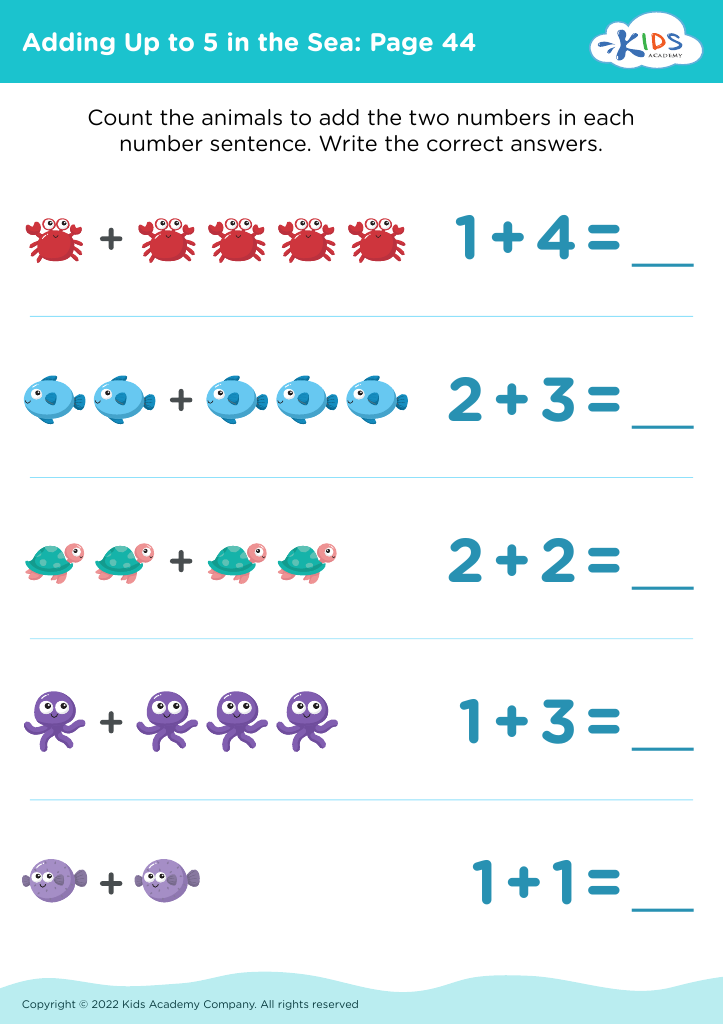



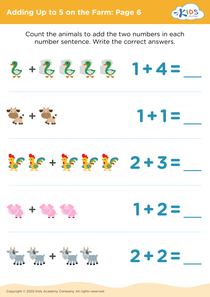
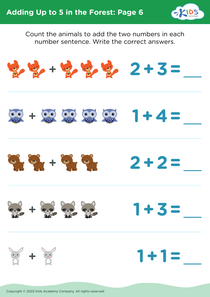
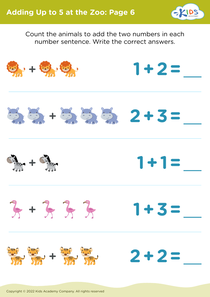
"Adding in the Sea" is a captivating educational resource for children aged 3-9 that can greatly benefit both parents and teachers. One primary reason for its significance is that it introduces foundational mathematical concepts in a fun and engaging way. With bright illustrations and a whimsical undersea theme, this resource makes learning addition enjoyable, sparking children's curiosity and boosting their motivation to learn.
Additionally, "Adding in the Sea" encourages critical thinking and problem-solving skills. By presenting math in a contextual and playful setting, children develop a deeper understanding of numerical relationships, helping them to make connections between math and real-life situations. This approach solidifies the learning process and fosters a sense of achievement as they overcome challenges in a playful manner.
Moreover, interactive elements within "Adding in the Sea" support various learning styles, accommodating visual, auditory, and kinesthetic learners. This diversity in approach allows parents and teachers to cater to individual needs, ensuring every child can thrive.
In conclusion, parents and teachers should care about this resource because it not only enhances mathematical understanding, problem-solving, and critical skills but also makes learning a joyful journey, laying a solid foundation for future academic success.